
Kirjailija
Richard Griffiths
Kirjat ja teokset yhdessä paikassa: 22 kirjaa, julkaisuja vuosilta 1980-2025, suosituimpien joukossa Revolution a Rebours: Le Renouveau Catholique Dans La Litterature Francaise (1870-1914). Vertaile teosten hintoja ja tarkista saatavuus suomalaisista kirjakaupoista.
22 kirjaa
Kirjojen julkaisuhaarukka 1980-2025.
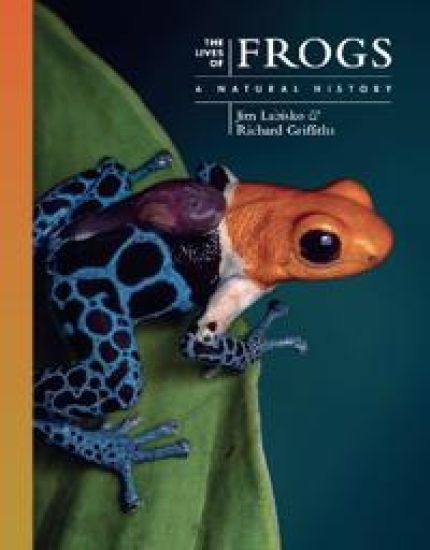
A marvelously illustrated introductory guide to frogs and their natural historyFrogs are among the most diverse and adaptable animals on the planet, with a rich evolutionary history and a vitally important role in global ecosystems. With more than 7,700 species known to exist, they come in all shapes, sizes, and colors, and can be found in habitats ranging from rainforests and frozen tundras to deserts and your own backyard. This unique guide explores the physiology, behavior, ecology, and evolution of frogs, shedding invaluable light on every facet of their lives, both on land and in the water. Blending stunning photos and illustrations with engaging and informative profiles of selected species, The Lives of Frogs is an essential introduction to the natural history of these magnificent amphibians.Features a wealth of color images that bring vividly to life the remarkable world of frogsRepresentative species profiles cover key topics such as communication, reproduction, feeding habits, survival tactics, and conservationDiscusses the impact of human activity on the planet’s frog populationsWritten by leading experts and packed with the latest scientific findingsEssential reading for nature lovers everywhere

China and the Ports of the Indian Ocean
Richard Griffiths
International Institute for Asian Studies (IIAS)
2023
sidottu

China and the Ports of the Indian Ocean
Richard Griffiths
International Institute for Asian Studies (IIAS)
2022
pokkari
Ports play an integral part in the global supply chain. They form the backbone of global economy as well as gateway to international trade. The Indian Ocean is of immense strategic importance as it carries half of the world's container traffic, one third of its cargo and eighty per cent of its maritime oil shipments. About forty per cent of global trade transits the Indian Ocean. In 2004 a US Defense Department report described China's investment in ports in South Asia as a 'string of pearls', the implication being that these were prized assets in extending China's naval reach in the Indian Ocean. Twenty years on and none of the three sites usually signalled for attention are functioning as fully developed ports and none have adequate road and rail connections with their hinterlands. Foreign interest in the region's ports, however, is not limited to China. This volume examines all the major ports in Pakistan, India, Sri Lanka, Bangladesh and Myanmar, and explores their countries' experience in encouraging, or resisting, foreign or private investment in developing their maritime potential. Success or failure in this endeavour will determine their ability to expand the overseas trade upon which their fast-growing economies will ultimately depend. (45 illustrations, 15 tables)
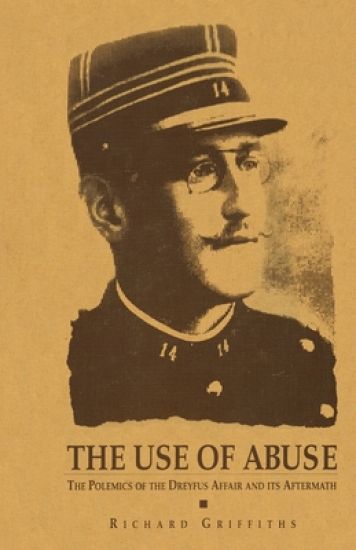
In this book, which closely examines the techniques used by the polemists of the Dreyfus Affair, much is learned not only about the Mair itself, but also about the polemic of the age in which it was situated, and the interaction between writers and their public. The discourse within which people's thoughts were imprisoned is seen not merely to have reflected events, but to have created them, in an increasingly vicious circle whereby the language of popular abuse, incorporated into the written polemic of the Press, produced simple but distorted ideas which in turn were fed back into the people. The age's complete lack of concern for the libel laws led to particularly vivid examples of the art. We are shown how authors' shifts in vocabulary, and in stylistic techniques, unconsciously signal to us fundamental changes in their aims; and how, in the give-and-take of battle, words and concepts subtly changed their meaning, with certain abstract notions such as Truth and Justice becoming completely devalued.

This book examines the extreme right in France during the interwar period.It begins by describing the background of the French right before 1914 and then provides commentary and analysis of the broad range of the extra-parliamentary right in interwar France. Organisations such as Action Française and the militant ligues are examined as well as prominent extreme-right intellectuals such as Lucien Rebatet, Robert Brasillach and Pierre Drieu la Rochelle. The various forms of French anti-Semitism are assessed, and the book also situates the French extreme right within a broader context by assessing its impact on other European countries, including the UK. It concludes by exploring the complicated politics of wartime France where some extreme-right activists collaborated with the Nazis while others opposed them, and where few generalisations prove possible.This volume will be of great interest to scholars and students of French history, the extreme right and interwar politics.
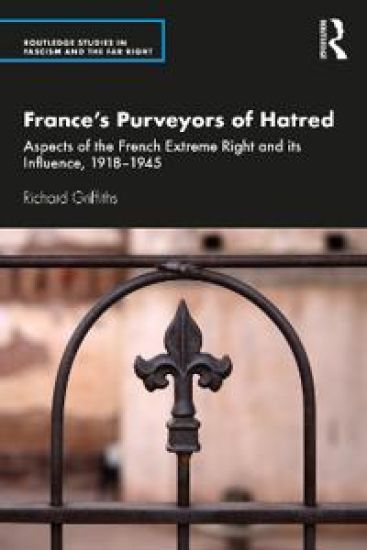
This book examines the extreme right in France during the interwar period.It begins by describing the background of the French right before 1914 and then provides commentary and analysis of the broad range of the extra-parliamentary right in interwar France. Organisations such as Action Française and the militant ligues are examined as well as prominent extreme-right intellectuals such as Lucien Rebatet, Robert Brasillach and Pierre Drieu la Rochelle. The various forms of French anti-Semitism are assessed, and the book also situates the French extreme right within a broader context by assessing its impact on other European countries, including the UK. It concludes by exploring the complicated politics of wartime France where some extreme-right activists collaborated with the Nazis while others opposed them, and where few generalisations prove possible.This volume will be of great interest to scholars and students of French history, the extreme right and interwar politics.

Revolution a Rebours: Le Renouveau Catholique Dans La Litterature Francaise (1870-1914)
Richard Griffiths
Classiques Garnier
2020
sidottu
This book is a general overview of Catholic literature in France between 1870 and 1914. Not only does it explore the great Catholic authors, but, in positioning them within the trend of thought of the period, which was both religious and secular, it helps us to uncover little-known aspects of this unique moment in time.
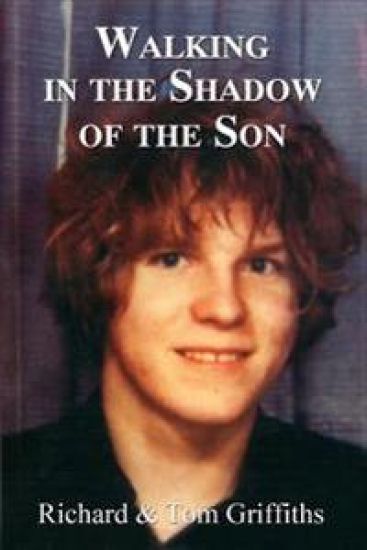
Walking In The Shadow Of The Son
Richard Griffiths; Tom Griffiths
Createspace Independent Publishing Platform
2017
nidottu

This book is a sequel to Richard Griffiths’s two highly successful previous books on the British pro-Nazi Right, Fellow Travellers of the Right: British Enthusiasts for Nazi Germany 1933-39 and Patriotism Perverted: Captain Ramsay, the Right Club and British Anti-Semitism 1939-1940. It follows the fortunes of his protagonists after the arrests of May-June 1940, and charts their very varied reactions to the failure of their cause, while also looking at the possible reasons for the Government’s failure to detain prominent pro-Nazis from the higher strata of society. Some of the pro-Nazis continued with their original views, and even undertook politically subversive activity, here and in Germany. Others, finding that their pre-war balance between patriotism and pro-Nazism had now tipped firmly on the side of patriotism, fully supported the war effort, while still maintaining their old views privately. Other people found that events had made them change their views sincerely. And then there were those who, frightened by the prospect of detention or disgrace, tried to hide or even to deny their former views by a variety of subterfuges, including attacking former colleagues. This wide variety of reactions sheds new light on the equally wide range of reasons for their original admiration for Nazism, and also gives us some more general insight into what could be termed ‘the psychology of failure’.

This book is a sequel to Richard Griffiths’s two highly successful previous books on the British pro-Nazi Right, Fellow Travellers of the Right: British Enthusiasts for Nazi Germany 1933-39 and Patriotism Perverted: Captain Ramsay, the Right Club and British Anti-Semitism 1939-1940. It follows the fortunes of his protagonists after the arrests of May-June 1940, and charts their very varied reactions to the failure of their cause, while also looking at the possible reasons for the Government’s failure to detain prominent pro-Nazis from the higher strata of society. Some of the pro-Nazis continued with their original views, and even undertook politically subversive activity, here and in Germany. Others, finding that their pre-war balance between patriotism and pro-Nazism had now tipped firmly on the side of patriotism, fully supported the war effort, while still maintaining their old views privately. Other people found that events had made them change their views sincerely. And then there were those who, frightened by the prospect of detention or disgrace, tried to hide or even to deny their former views by a variety of subterfuges, including attacking former colleagues. This wide variety of reactions sheds new light on the equally wide range of reasons for their original admiration for Nazism, and also gives us some more general insight into what could be termed ‘the psychology of failure’.

IT Service Management
John Sansbury; Ernest Brewster; Aidan Lawes; Richard Griffiths
BCS, The Chartered Institute for IT
2016
nidottu
Whether you're preparing for your service management foundation exam, or simply want to understand service management better, this new edition of our popular book covers the latest thinking and provides a comprehensive, practical introduction to IT service management. Building on their collective service management experience, the authors walk you through essential concepts including processes, functions and roles and illustrate these with real-life examples.

AAGBI Core Topics in Anaesthesia 2015
William Harrop-Griffiths; Richard Griffiths; Felicity Plaat
John Wiley Sons Inc
2015
nidottu
Based on the Association of Anaesthetists of Great Britain & Ireland's (AAGBI) continuing education lecture series, this clinically-oriented book covers the latest developments in research and the clinical application of anesthesia and pain control. Reviews latest developments in research and practiceClinically-oriented but rooted in basic scienceConcise and informative articles on key topicsRoad-tested through CPD roadshowsDesigned specifically for continuing medical education

Marshal Philippe Pétain was, in the words of historian Andrew Roberts, 'the most controversial Frenchman of the twentieth century.' A truly distinguished soldier who rose from humble origins, he commanded French forces at Verdun in 1916 and became a national hero. But though by 1940 he had become French Deputy Prime Minister his political abilities were meagre. And after France fell to the Nazis it was Pétain who signed the armistice and, from the spa town of Vichy, ruled over the Etat Francais Hitler had left him.Richard Griffiths tells this sorry story in outstanding detail, all the way to Pétain's ignominious end, and not stinting to show his culpability in the Vichy persecution of French Jews and its suppression of the internal Resistance.'Petain, utterly obscure until the age of 58, was hurled to fame by his defence of Verdun in 1916. This saved his country's bacon (he would say her honour) at a crisis point of the Great War. Thereafter he became an almost monarchical figure, more revered than any living Frenchman, even after the disaster of 1940. But then, as head of the puppet Vichy government, he slid into ignominy after failing to square honour with military humiliation. Griffiths's durable biography... paints not a devil but a courageous, misguided man with a hole where others keep their political acumen.'Robin Blake, Independent
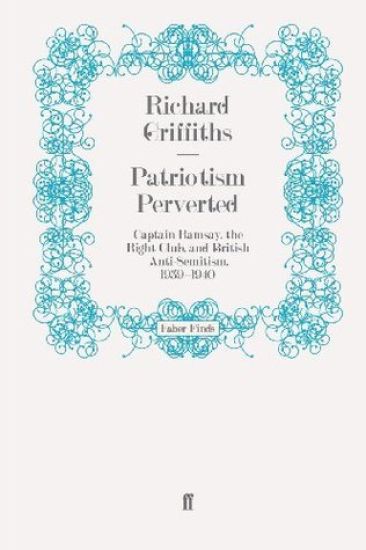
Patriotism Perverted is an exploration of British anti-Semitism in the last six months of peace and the first year of the Second World War. It shows how, against the backdrop of an endemic British 'social anti-Semitism', a virulent form of this tendency was able to emerge in the late Thirties in a variety of extremist movements. These movements gained their strength from the popular obsessions, in 1939, with Jewish responsibility for the approaching war (seen as 'The War of the Jews' Revenge'), and with the myth of the Judaeo-Bolshevik Plot. In many cases, these views were closely related with pro-Nazism and were often held by the most patriotic of people. For most, the outbreak of war was a signal to perform their patriotic duty. But there were others who found themselves in a considerable dilemma, torn between patriotism and their desire to subvert a war they believed Britain to have been tricked into undertaking. Researching many prominent figures of the day, including Captain Ramsay and Sir Oswald Mosley, Patriotism Perverted offers a fascinating insight into the views and activities of those in the various anti-Semitic and/or pro-Nazi circles in 1939.
When reviewing the first edition in the Times Literary Supplement, Stephen Koss wrote, 'should be required reading for those who believe that ignorance under any circumstances, can deter evil'. One can see why. So topsy-turvy had attitudes become in certain circles that the accusation of being 'unquestionably the biggest war-monger in the world today' was levelled at Churchill not Hitler! In the author's words 'this book is an attempt to study the various forms of motivation which led to this phenomenon (pro-Nazi sympathies in Britain). It is also an attempt to assess the years in which approval for Nazi Germany became greater or less, and the possible reasons for these changes.' The author goes on to say, 'The pattern of British pro-Nazism is at first sight surprising. After a slow start in the 1933-35 period, it reached a high peak in the years 1936 and 1937, after which it gradually declined until, at the outbreak of the way, it was confined to extremist groups and isolated outcrops of specially motivated approval.' From misguided writers like Edmund Blunden and Henry Williamson to altogether more sinister figures like Lord Londonderry and Sir Arnold Wilson, the roll-call of 'fellow travellers of the Right' is disturbing. Richard Griffiths acclaimed and much-sought after book remains the best on the subject.'a book of high scholarship which is also very entertaining' A. J. P. Taylor, Observer'this fascinating and highly original study . . . This excellent book' Ben Pimlott, New Society'this important study is pioneering' David Pryce-Jones, New Statesman'this sobering, witty and well-written book' Michael Ratcliffe, The Times
"The 2006 Mowbray Lent" book is an original and refreshing new concept of a well worn category of publication. The human story behind the writing of this book is also remarkable. Richard Griffiths was until recently Professor of French at King's College in the University of London. Having rediscovered his Christian belief, he decided as a new career to be ordained into the Anglican Church (The Church in Wales) and this is his first religious book - his first book on a specifically Christian theme, but not his first book for a wide popular audience. Since ordination, Griffiths has been in constant demand as a preacher and retreat giver and this Lent book emerges from that demand. Each of the chapters in this book covering the Lentern season focuses on one poem or part of one poem. Using all his skills as a literary critic, Griffiths now turns his attention in deeply meditative fashion to the study of Christian poetry as a means of raising the heart, mind and soul to God. In the process, we recognise an author of deep intelligence and religious belief. Starting with an examination of various forms of prayer, Griffiths then looks at the poetic imagination as a way into private prayer. The author is profoundly aware of the capacity of the soul not just for joy but also for doubt and questioning. The writers to whom we are introduced include T.S.Eliot, R.S. Thomas but also some who may well be less familiar- Alice Meynell, Edwin Muir. To Griffiths, God is not a funk-hole or an oxygen tank. This book is based on the raw experience in all its aspects.
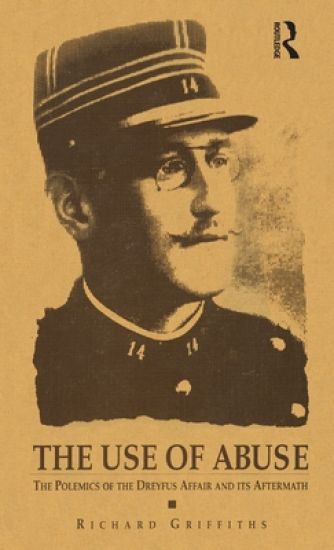
In this book, which closely examines the techniques used by the polemists of the Dreyfus Affair, much is learned not only about the Mair itself, but also about the polemic of the age in which it was situated, and the interaction between writers and their public. The discourse within which people's thoughts were imprisoned is seen not merely to have reflected events, but to have created them, in an increasingly vicious circle whereby the language of popular abuse, incorporated into the written polemic of the Press, produced simple but distorted ideas which in turn were fed back into the people. The age's complete lack of concern for the libel laws led to particularly vivid examples of the art. We are shown how authors' shifts in vocabulary, and in stylistic techniques, unconsciously signal to us fundamental changes in their aims; and how, in the give-and-take of battle, words and concepts subtly changed their meaning, with certain abstract notions such as Truth and Justice becoming completely devalued.