Kirjojen hintavertailu. Mukana 12 595 353 kirjaa ja 12 kauppaa.

Kirjailija

Richard H. Bloomer

Kirjat ja teokset yhdessä paikassa: 11 kirjaa, julkaisuja vuosilta 2015-2018, suosituimpien joukossa Professor Bloomer's No-Nonsense First Phonetic Reader: Student's Book. Vertaile teosten hintoja ja tarkista saatavuus suomalaisista kirjakaupoista.

11 kirjaa

Kirjojen julkaisuhaarukka 2015-2018.

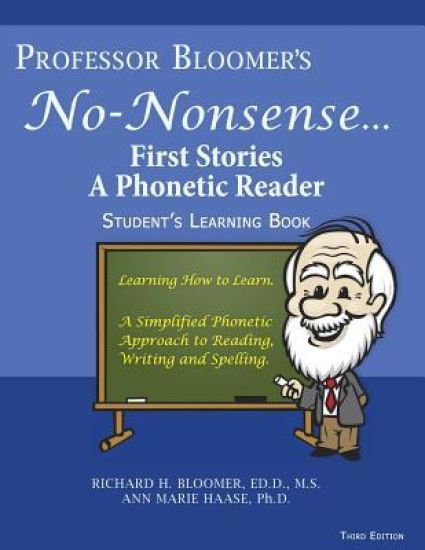
Professor Bloomer's No-Nonsense First Phonetic Reader: Student's Book

Professor Bloomer's No-Nonsense First Phonetic Reader: Student's Book

Ann-Marie Bernazza Haase; Richard H. Bloomer

Bloomer's Books LLC.
2017
nidottu
Help your home-schooled or classroom learner to attain reading fluency with the interesting stories in Professor Bloomer's Phonetic Readers. These books are ideal for any learner who has acquired his letter/sounds, and learned how to sequence them. Learner's can rapidly improve their reading fluency with these interesting stories and follow-up questions. These involving stories are easy to teach following the straight-forward instructions and questions in the teachers manual. Professor Bloomer's Phonetic Readers are designed to enhance your child's reading, vocabulary, memory, and thinking skills, in addition to giving practice in both writing and spelling. Give your children a boost toward fluent reading ease, and a life of enjoying the written word with Professor Bloomer's No-Nonsense Phonetic Readers. These Phonetic Readers are excellent for home schooling, or as a classroom reader. They are designed for learners at any grade level, who have learned the basic English letter/sounds, and are moving toward greater reading, writing, and spelling fluency. Give your learner a head start on reading success with Professor Bloomer's No-Nonsense Phonetic Readers.

Professor Bloomer's No-Nonsense First Phonetic Reader: Teacher's Guide

Professor Bloomer's No-Nonsense First Phonetic Reader: Teacher's Guide

Ann-Marie Bernazza Haase; Richard H. Bloomer

Bloomer's Books LLC.
2017
nidottu
These Phonetic Readers are excellent for home schooling, or as a classroom reader to help learner's attain reading fluency with the interesting stories. These books are ideal for any learner who has acquired his letter/sounds, and learned how to sequence them. Learner's can rapidly improve their reading fluency with these interesting stories and follow-up questions. These involving stories are easy to teach following the straight-forward instructions and questions in the teachers manual. Professor Bloomer's Phonetic Readers are designed to enhance your child's reading, vocabulary, memory, and thinking skills, in addition to giving practice in both writing and spelling. Give your children a boost toward fluent reading ease, and a life of enjoying the written word with Professor Bloomer's No-Nonsense Phonetic Readers.Professor Bloomer's Phonetic readers are designed for learners at any grade level, who have learned the basic English letter/sounds, and are moving toward greater reading, writing, and spelling fluency. Give your learner a head start on reading success with Professor Bloomer's Phonetic Readers.
Bloomer's Delopmental Neuropsychological Assessments DNA Volume 1: Individual Response Speed
Response speed: Most learning problems begin with a dissonance between the rate of stimulation and ability of the learners neurons to accept and process that stimulation. Response Speed, the most basic executive process, indexes the speed of neural transmission, a Personal Equation for each learner.Our response speed measures, indicate the rate at which our learner processes information. Scaling an individual learners Response speed is critical information for psychologists, teachers or anyone who is concerned with effective learning. Indexing a learner's response speed is most critical in schools where rate and complexity of the stimulation progresses in an orderly time-bound fashion and the Response Speed itself varies widely among the learners. Regardless of the time bound demands of the public school curriculum, a learner will accept new information only on the basis of the rate of neural transmission of his own individual nervous system.
Professor Bloomer's No-Nonsense Reading Program: A Phonetic Approach to Reading, Writing, and Spelling
This a true phonetic Teacher's Guide Book for the most perfect reading program ever written. It carefully blends the true phonetic methods of the ancient Greeks and Phoenicians with the most recent findings of modern neuroscience. It teaches children how to teach themselves to read.Research on this program shows us:1. It teaches 100% of the beginning children to read.2. It teaches Dyslexics to read.3. There are no Learning Disabilities, b/d confusions, or'reversals.' 5. In Federally sponsored research it taught adolescent delinquents and Adult learners to read better than programs from the three major publishers.4. It reduces referrals to Special Education by two thirds.5. It teaches low SES and ethnic minorities to read at, or above grade level.6. Children taught by Professor Bloomer's reading program excel in all school subjects, even science, and math.7. It readily teaches bilingual children to read and speak English.8. It easily teaches foreign language speakers to read and speak English.9. It is eight to ten times more efficient than public school reading programs.You can use it to home-school teach your children or your grandchildren.You can give it to a first-grade teacher, and see her children excel in school.You can prescribe it for failing readers and watch them grow into strong readers. You can write a review and post it on Amazon. Professor Bloomer strongly believes that every child in a democracy must be taught to read. These easy to use books will help you develop skilled independent readers from very beginning students, and help students with learning disabilities, or poor readers recover those skills that escaped them on their first school attempts at learning.
Bloomer's Developmental Neuropsychological Assessments(DNA) Volume III: Reading Skills Diagnostic Test
Reading problems are the major source of referral to Special Education or to a psychologist. Poor reading, the learners inability to read sufficiently well, inhibits progress in all other school subjects. This Volume III of the DNA takes the mystery out of reading failure. We illuminate the major causes of poor reading for each chilld, and using the Reading Skills Diagnostic Test, pinpoint those elements at fault for each individual learner. We break the reading process down to it's elements of essential Knowledge, Capacity, and Cognitive processes. The Reading Skills Diagnostic Test (RSDT) is a teaching test. It tells a teacher, parent, or school psychologist specifically where to focus her attention to help a learner become a skilled independent reader. It gives no scores for the record books. It provides no standard scores, but it does tell the teacher specifically which letter/sounds are deficient, whether the learner has developed the sufficient capacity too learn specific reading tasks, and how skilled the learner is at performing the simple reading processes that make an independent reader.. With such specific information, the psychologist, teacher, parent, or rehabilitation therapist can easily design a remedial program to correct each individual child's faults and speed him, toward skilled reading. The RSDT helps you cut away the frills and focus on teaching your learner to read more proficiently.
Professor Bloomer's No-Nonsense Basic Reading Program: A simplified Phonetic Approach, Student's Learning Book
Learning reading, writing, and spelling are the corner stones of a good education. Multiply your home-schooled or classroom learner's chances for long-term academic success using Professor Bloomer's keystone approach to developing reading, writing, spelling, and learning skills. With this single, inexpensive program, developed by a leader in research and practical application of educational tools, your learner will excel. Professor Bloomer's No-Nonsense Phonetic Reading Program is the perfect solution for new learners to get them started out on the road to reading success Children learn HOW to learn new words, to increase their vocabulary, organizational skills, attention span, as well as reading, writing, memory, and ALL language related skills - skills that are fundamental to independent and critical thinking We teach children how to read and learn so they will excel in learning all future school subjects Professor Bloomer's No-Nonsense Phonetic Reading Program is ideal for home schooling or as a classroom, and is designed for any learner who can write the alphabet. By the time they have successfully completed the program learners are able to read, write, and spell running text independently, and will have the skills to increase their language skills and knowledge throughout their lives. Introducing The Basic Reader Professor Bloomer strongly believes that every child in a democracy must be taught to read. Concerned with the growing reading failure rate in the public schools, Professor Bloomer studied the science of learning to develop the most effective reading program possible. His resulting No-Nonsense Phonetic Reading Program is very different, and much more efficient, than the current public school curricula; which try to teach children by memorizing a few common words in contrived stories. This public school memorization approach restricts the child's language and limits their vocabulary growth to only very highly frequent words. Current teaching methods keep the learner forever dependent upon a teacher for each new word, stifeling independant reading. This is a Phonetic Reading Program. Professor Bloomer's method teaches all children to build each new word they contact from letters/sounds. Learners need little to help grow and expand their reading skill with each new letter/sound they learn. Skill with Phonetics allows a child to read any new word and children can enjoy expanding their own reading vocabulary. Teachers who use Professors No-Nonsense Reading Program find their students failure to learn to read at the Basic level drops from the customary 35 to 50 percent down to 3 to 8 percent. These easy to teach books will help you make skilled independent readers from beginning students, and help students with learning disabilities, or poor readers recover those skills that escaped them on their first school attempts at learning.
Bloomer's Developmental Neuropsychological Assessments Volume II: Individual Short Term Memory
Short Term Memory Capacity is one of the most important measures of a child s potential. It dictates how much information a learner can handle at one time and thus his or her rate of progress in school.. Short Term Memory (STM) is a protective device to prevent stimulus overload to the brain. Seen in an alternative light, STM can be seen as a gateway for stimulation into the learning process. Each individual learners Short Term Memory may vary within limits. It is because of this gateway function that persons focused on teaching or rehabilitation are interested in short term memory. Limitation of stimulation by the short term memory process controls the flow of information to the brain. While the Short Term Memory represents an upper limit for information received by the brain it is subject to some improvement through training. We present five measures if Short Term Memory in visual and auditory presentation and verbal and written response mode for comparison of stimulus and response efficiency. We are habituated from the past to think of Short Term Memory as a unitary concept and thus a measure like digit span is often seen as an adequate measure of memory, but this is not so. We now know that different types of information travel different routes in the brain and differing response modes activate differing potions of the motor nerves. Auditory verbal tasks have been found to be relatively unrelated to reading, but visual simultaneous STM tasks are highly related. Therefore, we ask children to respond to in both auditory and visual modes and to provide verbal and written responses for both letters and words to answer questions concerning specific memory capacities. Volume II measures visual and auditory sequential, and visual simultaneous Short Term Memory with written responses; and probes auditory and visual simultaneous short term memory with verbal response thus allowing separate indices for inferior and superior temporal lobe functioning the most useful STM measures when assessing learners for language processing difficulties.
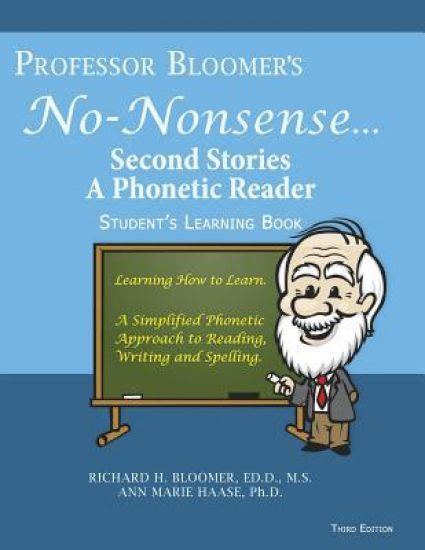
Professor Bloomer's No-Nonsense: Second Stories: Student's Learning Book

Professor Bloomer's No-Nonsense: Second Stories: Student's Learning Book

Ann Marie Bernazza Haase; Richard H. Bloomer

Createspace Independent Publishing Platform
2017
nidottu
A true phonetic reader. These books will help you make skilled independent readers from beginning students and to help students with learning disabilities recover the skills that escaped them on their forst attempts at learning. Professor Bloomer believes that every child in a democracy must be taught to read. He studied the science of learning to develop the most effective reading program possible. Professor Bloomer's method teaches children to build each new word he contacts without help and allows the child to grow and expand words from their letter/sounds. Skill with Phonetics allows a child to read any new word and children can enjoy expanding their own reading vocabulary. Teachers who use Professors No-Nonsense Reading Program find their students failure to learn to read at the Basic level drops from the customary 35 to 50 percent down to 3 to 8 percent.
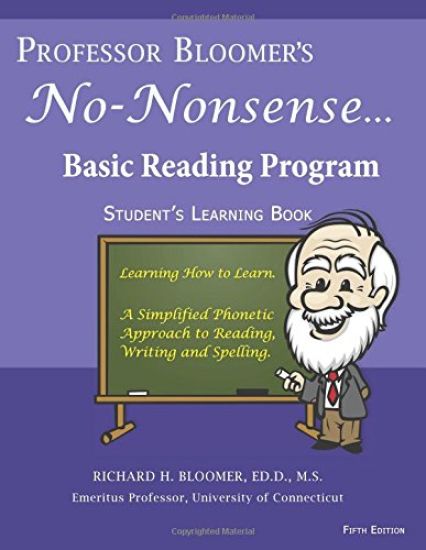
Professor Bloomer's No-Nonsense Basic Reading Program: Student's Learning Book
This is the Student's Learning Book of the most perfect reading program ever written. It carefully blends the phonetic methods of the ancient Greeks and Phoenicians with most recent findings of modern neuroscience. It teaches children how to teach themselves to readResearch on this program shows us:1. It teaches 100% of the beginning children to read.2. It teaches Dyslexics to read.3. There are no Learning Disabilities, b/d confusions, or'reversals.' 5. In Federally sponsored research it taught adolescent delinquents and Adult learners to read better than programs from the three major publishers.4. It reduces referrals to Special Education by two thirds.5. It teaches low SES and ethnic minorities to read at, or above grade level.6. Children taught by Professor Bloomer's reading program excel in all school subjects, even science, and math.7. It readily teaches bilingual children to read and speak English.8. It easily teaches foreign language speakers to read and speak English.9. It is eight to ten times more efficient than the common public school reading programs.You can use it to home-school teach your children or your grandchildren to read.You can give it to a first-grade teacher, and see her children excel in school.You can prescribe it for failing readers and watch them grow into effective readers.Introducing Professor Bloomer s No-Nonsense Series for Young Learners.This series focuses on mastering the cornerstones of a sound education; Reading, Writing, Spelling andlearning how to learn. Professor Bloomer peels away the frills of our modern educational system and presentsa straightforward teaching method in this No-Nonsense Series. These methods include learning both factualknowledge and the mental processing skills that are fundamental to independent and critical thinking.These easy to teach books will help you make skilled independent readers of beginning students, or help those thatneed additional work to build strong skills. No-Nonsense series is a self paced program for assurance of mastery ateach incremental learning level. The accompanying Teacher Resources are clear with detailed instruction on howto implement each step of the programProfessor Bloomer strongly believes that every child in a democracy must be taught to read. Concerned with thegrowing reading failure rate in the public schools, Professor Bloomer studied the science of learning to develop themost effective reading program possible. His resulting No-Nonsense Phonetic Reading Program is very different, and much more efficient, than the current public school curricula; whichtry to teach children by memorizing a few common words in contrivedstories. This public school memorization approach restricts the child slanguage and limits their vocabulary growth to only very highly frequentwords. Current teaching methods keep the learner forever dependentupon a teacher for each new word, stifeling independant reading.This is a Phonetic Reading Program. Professor Bloomer s methodteaches all children to build each new word they contact from letters/sounds. Learners need little to help grow and expand their reading skillwith each new letter/sound they learn. Skill with Phonetics allows achild to read any new word and children can enjoy expanding their ownreading vocabulary. Teachers who use Professors No-Nonsense ReadingProgram find their students failure to learn to read at the Basic leveldrops from the customary 35 to 50 percent down to 3 to 8 percent. These easy to teach books will help you make skilled independent readers from beginning students, and help students with learning disabilities, or poor readers recover those skills that escaped them on their first school attempts at learning.
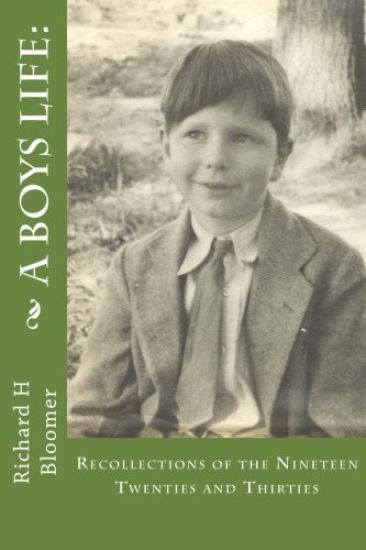
A Boys Life: : Recollections of the Nineteen Twenties and Thirties

A Boys Life: : Recollections of the Nineteen Twenties and Thirties

Richard H. Bloomer

Createspace Independent Publishing Platform
2016
nidottu
I am the most fortunate of beings I went to school before progressive education tightened its grip on American education. I missed being diagnosed as learning disabled (LD), with attention deficit disorder (ADD) and perhaps with a bit of Asperger's Syndrome thrown in. Or, perhaps, or one or another of those pseudo-medical diseases the schools dream up to account for those mis-fortunates who do not fit into their narrow concept of a curriculum. I am doubly fortunate to also have Perseverance, a malady that has not yet been credited with a diagnosis. Perseverance the ability to stick to some task beyond any reasonable limits, to the point of absolute stupidity.This combination of pseudo maladies is one of the happiest recipes for life. Being an LD provided the motivation to solve the problem of teaching children to read, and solve it I did. Why am I not famous and rich? It is just that .the rest of the world is content with their 35% failure rate. We Dyslexics are likely to have a visual- spatial hunter/gatherer mind. Much of our language must be translated from glorious dynamic mental images into paltry linear speech. Words do not come naturally. It is difficult for us to achieve ease with the written word, and so we learn to be slower and more careful as we read. For us Attention Deficit folks the world always has something new to explore, or some new way to look at the old. ADD folks are eclectic, have wide interests and much more fun than the rest of the world. Being ADD compliments the Perseverance by keeping one out of a single rut into many ruts. The touch of Aspbergers makes me a little odd, and inclined to view the world a little differently.
World War II Chronicles: A view of War from the Bottom

World War II Chronicles: A view of War from the Bottom

Richard H. Bloomer

Createspace Independent Publishing Platform
2015
nidottu
World War II Chronicles: A View of War From the Bottom.What is war for the Private soldier? Perhaps not as dull as you might think. Wars are usually told of in terms of heroes and generals, of great feats of derring-do, of battles large and small, of miles, gained or lost. of snow or storm, or tropic heat, and of men, dead or dying. There is little of that in this book.We often speak of tank movements, of divisions deployed, of strategies, of air strikes and bombs, but seldom do we countenance the sole ordinary soldier. Rarely is the individual soldier, this single replaceable cog in the great war machine brought to account. This book takes the unusual perspective of looking at war through the eyes of a young volunteer soldier in the U.S. Army during World War II. We follow his travels through America to Europe and thence to the far East. We observe the development of this maturing adolescent as war impinges on his unfledged mind. We look at officers from the perspective of those they lead. We see the foibles of command as seen by those who must carry out orders and directives. And we glimpse the off duty activities of an adolescent soldier overseas. Here we chronicle many actions that will never make the daily news. This book is indeed, a view of war from the very bottom