Kirjojen hintavertailu. Mukana 12 595 353 kirjaa ja 12 kauppaa.

Kirjailija

Richard H. R. Harper

Kirjat ja teokset yhdessä paikassa: 2 kirjaa, julkaisuja vuosilta 2003-2025, suosituimpien joukossa The Shape of Thought. Vertaile teosten hintoja ja tarkista saatavuus suomalaisista kirjakaupoista.

Mukana myös kirjoitusasut: Richard H.R. Harper

2 kirjaa

Kirjojen julkaisuhaarukka 2003-2025.

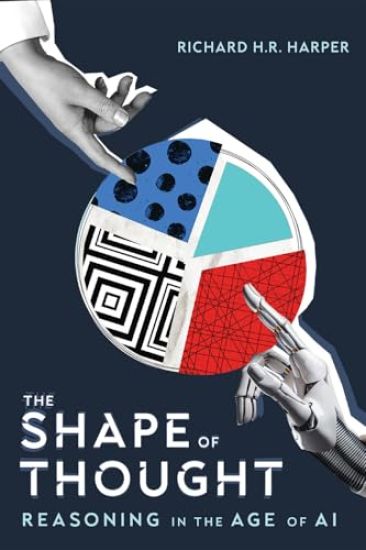
The Shape of Thought

The Shape of Thought

Richard H.R. Harper

MCGILL-QUEEN'S UNIVERSITY PRESS
2025
sidottu
Artificial intelligence (AI) consists of a dazzling set of computational tools that few fully understand. From our cars to our homes to how we socialize and work, AI is everywhere and makes life so much better. It might irritate in some instances but mostly it helps. Or it seems to.Yet AI developers have an unusually narrow perspective on intelligence, reducing all judgments to a calculus. Machines excel at this form of intelligence, but it is not how most people define the word. While this narrowing has provided useful direction for the development of computers, Richard Harper argues, it also constrains what people are capable of. When we reach for AI to help us unwind, connect with others, or even create art, it’s not analytical intelligence that we are after. The human behaviours that AI seeks to supplement are shaped as much by mood, morals, indolence, and interrelation as they are by calculation. Drawing on three decades of inquiry, Harper reveals that when we are misled about what AI cannot do, we fail to see what it can.The Shape of Thought shows how to break free from this narrow view. By better understanding the many different things that people achieve with computers, we can improve and diversify AI to allow for richer, more beneficial human-computer interaction.
The Myth of the Paperless Office

The Myth of the Paperless Office

Abigail J. Sellen; Richard H. R. Harper

MIT Press
2003
pokkari
An examination of why paper continues to fill our offices and a proposal for better coordination of the paper and digital worlds.Over the past thirty years, many people have proclaimed the imminent arrival of the paperless office. Yet even the World Wide Web, which allows almost any computer to read and display another computer's documents, has increased the amount of printing done. The use of e-mail in an organization causes an average 40 percent increase in paper consumption. In The Myth of the Paperless Office, Abigail Sellen and Richard Harper use the study of paper as a way to understand the work that people do and the reasons they do it the way they do. Using the tools of ethnography and cognitive psychology, they look at paper use from the level of the individual up to that of organizational culture.Central to Sellen and Harper's investigation is the concept of "affordances"-the activities that an object allows, or affords. The physical properties of paper (its being thin, light, porous, opaque, and flexible) afford the human actions of grasping, carrying, folding, writing, and so on. The concept of affordance allows them to compare the affordances of paper with those of existing digital devices. They can then ask what kinds of devices or systems would make new kinds of activities possible or better support current activities. The authors argue that paper will continue to play an important role in office life. Rather than pursue the ideal of the paperless office, we should work toward a future in which paper and electronic document tools work in concert and organizational processes make optimal use of both.