Kirjojen hintavertailu. Mukana 12 602 819 kirjaa ja 12 kauppaa.
Kirjailija
Richard Harding Davis
Kirjat ja teokset yhdessä paikassa: 752 kirjaa, julkaisuja vuosilta 2001-2026, suosituimpien joukossa The Princess Aline (1895). By: Richard Harding Davis, illustrated By: C. (Charles) D.(Dana) Gibson: Novel (Original Classics). Vertaile teosten hintoja ja tarkista saatavuus suomalaisista kirjakaupoista.
Paul Charles Joseph Bourget (French:2 September 1852 - 25 December 1935) was a French novelist and critic. Paul Bourget was born in Amiens in the Somme d partement of Picardy, France. His father, a professor of mathematics, was later appointed to a post in the college at Clermont-Ferrand, where Bourget received his early education. He afterwards studied at the Lyc e Louis-le-Grand and at the cole des Hautes tudes. Between 1872 and 1873, he produced a volume of verse, Au Bord de la Mer, which was followed by others, the last, Les Aveux, appearing in 1882. Meanwhile, he was making a name in literary journalism and in 1883 he published Essais de Psychologie Contemporaine, studies of eminent writers first printed in the Nouvelle Revue, and now brought together. In 1884 Bourget paid a long visit to Britain, where he wrote his first published story (L'Irr parable). Cruelle Enigme followed in 1885; then Andr Cornelis (1886) and Mensonges (1887) - inspired by Octave Mirbeau's life - were received with much favour. 4] Bourget, who had abandoned Catholicism in 1867, began a gradual return to it in 1889, fully converting only in 1901. In 1893, in an interview he gave in America, he spoke about his changed views: "For many years I, like most young men in modern cities, was content to drift along in agnosticism, but I was brought to my senses at last by the growing realization that...the life of a man who simply said 'I don't know, and not knowing I do the thing that pleases me, ' was not only empty in itself and full of disappointment and suffering, but was a positive influence for evil upon the lives of others." On the other hand, "those men and women who follow the teachings of the church are in a great measure protected from the moral disasters which...almost invariably follow when men and women allow themselves to be guided and swayed by their senses, passions and weaknesses." 5] These were the themes of his novel Le Disciple (1889), which he wrote, as he says in his American interview, just after abandoning his "drifting and comfortable belief in agnosticism". It is the story of philosopher Adrien Sixte, whose advocacy of materialism and positivism wields a terrible influence over an admiring but unstable student, Robert Geslon, whose actions, in turn, lead to the tragic death of a young woman. Le Disciple caused a stir in France and became a bestseller. Exemplifying the novelist's graver side, it was one of Gladstone's favourite books.John Cowper Powys listed Le Disciple at number 33 in his One Hundred Best Books... Charles Dana Gibson (September 14, 1867 - December 23, 1944) was an American graphic artist, best known for his creation of the Gibson Girl, an iconic representation of the beautiful and independent American woman at the turn of the 20th century. His wife, Irene Langhorne, and her four beautiful sisters, inspired his images. He published his illustrations in Life magazine and other major national publications for more than 30 years, becoming editor in 1918 and later owner of the general interest magazine.... Richard Harding Davis (April 18, 1864 - April 11, 1916) was an American journalist and writer of fiction and drama, known foremost as the first American war correspondent to cover the Spanish-American War, the Second Boer War, and the First World War. 1] His writing greatly assisted the political career of Theodore Roosevelt and he also played a major role in the evolution of the American magazine. His influence extended to the world of fashion and he is credited with making the clean-shaven look popular among men at the turn of the 20th century....
Richard Harding Davis (April 18, 1864 - April 11, 1916) was an American journalist and writer of fiction and drama, known foremost as the first American war correspondent to cover the Spanish-American War, the Second Boer War, and the First World War.His writing greatly assisted the political career of Theodore Roosevelt and he also played a major role in the evolution of the American magazine. His influence extended to the world of fashion and he is credited with making the clean-shaven look popular among men at the turn of the 20th century. Davis was born on April 18, 1864 in Philadelphia, Pennsylvania.His mother Rebecca Harding Davis was a prominent writer in her day. His father, Lemuel Clarke Davis, was himself a journalist and edited the Philadelphia Public Ledger. As a young man, Davis attended the Episcopal Academy. In 1882, after an unhappy year at Swarthmore College, Davis transferred to Lehigh University, where his uncle, H. Wilson Harding, was a professor.While at Lehigh, Davis published his first book, The Adventures of My Freshman (1884), a collection of short stories. Many of the stories had originally appeared in the student magazine the Lehigh Burr. In 1885, Davis transferred to Johns Hopkins University. After college, his father helped him gain his first position as a journalist at the Philadelphia Record but he was soon dismissed. After another brief position at the Philadelphia Press, Davis accepted a better-paying position at the New York Evening Sun where he gained attention for his flamboyant style and his writing on controversial subjects such as abortion, suicide and execution.He first attracted attention in May to June 1889, by reporting on the devastation of Johnstown, Pennsylvania, following the infamous flood and added to his reputation by reporting on other noteworthy events such as the first electrocution of a criminal (the execution of William Kemmler in 1890)...... Frederick Coffay Yohn (February 8, 1875 - June 6, 1933), often recognized only by his initials, F. C. Yohn, was an artist and magazine illustrator.Yohn's work appeared in publications including Scribner's Magazine, Harper's Magazine, and Collier's Weekly. Books he illustrated included Jack London's A Daughter of the Snows, Frances Hodgson Burnett's The Dawn of a To-morrow and Henry Cabot Lodge's Story of the American Revolution. He studied at the Indianapolis Art School during his first student year and then studied at the Art Students League of New York under Henry Siddons Mowbray (1858-1928). Mowbray studied at the Atelier of L on Bonnat in Paris. Yohn often specialized in historical military themes, especially of the American Revolution, as well as the First World War. He designed the 2 cent US Postal Service stamp in 1929 to commemorate the 150th Anniversary of George Rogers Clark's Victory over the British at Sackville. He is best known for his painting of George Washington at Valley Forge.
Miss Celestine Terrell, who was Mrs. Grahame West in private life, and young Grahame West, who played the part opposite to hers in the Gilbert and Sullivan Opera that was then in the third month of its New York run, were among the honored patrons of the Hotel Salisbury. Miss Terrell, in her utter inability to adjust the American coinage to English standards, and also in the kindness of her heart, had given too generous tips to all of the hotel waiters, and some of this money had passed into the gallery window of the Broadway Theatre, where the hotel waiters had heard her sing and seen her dance, and had failed to recognize her young husband in the Lord Chancellor's wig and black silk court dress. So they knew that she was a celebrated personage, and they urged thema tre d'h tel to invite her to the ball, and then persuade her to take a part in their volunteer concert.
The log of the "Jolly Polly" explores the pressure of ambition and the search for belonging when creative purpose becomes uncertain. The narrative reflects on the emotional weight carried by someone who once felt secure in talent and recognition, only to face silence from the world that previously applauded. Within this struggle arises a tempting possibility of stepping into comfort and approval offered by others who see value not in the individual but in an image. The movement toward this new life reveals how admiration can be transactional, shaped by expectation rather than genuine connection. Quiet internal questions grow louder, expressing doubt about exchanging personal agency for convenience. Gradually, understanding forms that fulfillment develops not from praise but from staying aligned with inner conviction. The work emphasizes that identity becomes stronger when a person chooses integrity over validation. Through reflection, choice, and resilience, the book suggests that authentic belonging develops when decisions are guided by personal truth. Ultimately, the narrative reveals that commitment to one's path creates a deeper kind of wealth, one supported by purpose, clarity, and freedom within.
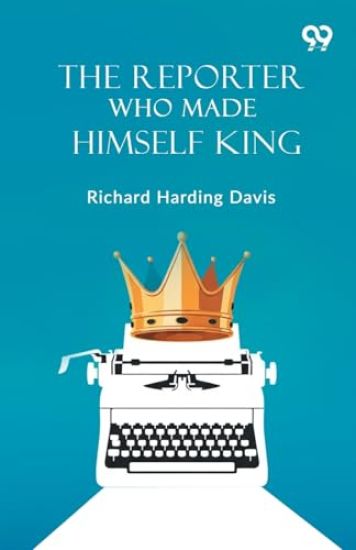
The reporter who made himself king presents a satirical tale about ambition, vanity, and the folly of power. The story traces the whimsical rise of a restless journalist who, longing for peace and creative freedom, accepts a political appointment on a remote tropical island. His attempt at a quiet life quickly spirals into chaos as chance, ambition, and imagination lead him into an accidental reign. The narrative unfolds with humor and irony, as the protagonist's flair for exaggeration and fabrication transforms local politics into an international farce. Through miscommunication and misplaced confidence, he blurs the line between truth and invention, turning his fantasies into absurd realities. The island becomes a microcosm of imperial posturing and journalistic spectacle, exposing the fragility of authority and the ease with which fiction can shape perception. Blending adventure with satire, the tale critiques the pursuit of fame, the moral ambiguity of storytelling, and the comic consequences of human pretension in the face of power and consequence.
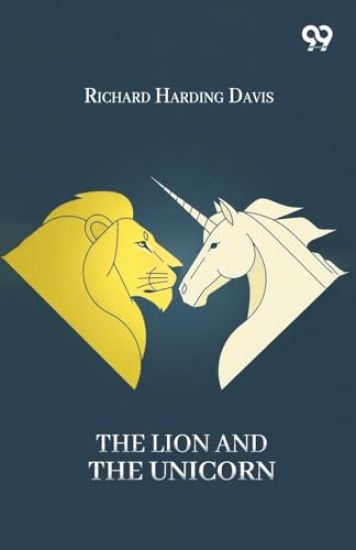
The lion and the unicorn presents a lively and emotional portrait of personal ambition and romantic possibility within a bustling city shaped by social change and the tension of upcoming conflict. The story opens inside a modest flower shop marked by traditional heraldry, a symbol of identity and pride. Everyday interactions in this space reveal glimpses of hope, dreams, and uncertainty as individuals prepare for journeys that could alter their lives. A traveler heading toward war embodies duty and sacrifice, while a visitor from across the ocean seeks success in the creative world, convinced that a new city can reshape destiny. Relationships form quickly, fueled by curiosity, admiration, and a longing for connection. The narrative shifts between moments of light social banter and deeper reflections on ambition as characters navigate expectations, rivalry, and emotional vulnerability. Love appears intertwined with opportunity, suggesting that affection and success can both inspire and unsettle. The lion and the unicorn ultimately explores how personal aspirations collide with unpredictable circumstances, showing that the pursuit of purpose and belonging often leads individuals to confront hidden fears and surprising truths.
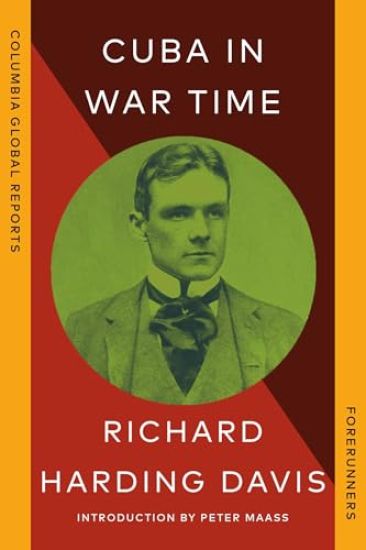
Celebrating a decade of Columbia Global Reports, the Forerunners series revives groundbreaking works of investigative journalism and incisive analysis published a century before CGR’s founding. These texts, once forgotten or underexplored, reflect CGR’s core mission: fearless reporting, global perspective, and intellectual rigor. Each selection remains strikingly relevant today, offering historical insights that challenge contemporary perspectives and reaffirm the power of journalism to shape the world. A pioneering foreign war correspondent, Richard Harding Davis provides a vivid account of Cuba’s struggle for independence from Spain, capturing the harsh realities of guerrilla warfare and the suffering of civilians. First published in 1897, Cuba in War Time offers readers an unfiltered look at the brutal conditions faced by both fighters and the people caught in the conflict. With an introduction by Peter Maass, who reported on war and national security for New York Times Magazine, the New Yorker, and the Washington Post.





![Soldiers of Fortune ... [A Novel.] with Illustrations by C. D. Gibson.](/covers/9781240900817.jpg)