Kirjojen hintavertailu. Mukana 12 595 353 kirjaa ja 12 kauppaa.

Kirjailija

Richard Haswell

Kirjat ja teokset yhdessä paikassa: 7 kirjaa, julkaisuja vuosilta 2001-2019, suosituimpien joukossa Early Holistic Scoring of Writing. Vertaile teosten hintoja ja tarkista saatavuus suomalaisista kirjakaupoista.

7 kirjaa

Kirjojen julkaisuhaarukka 2001-2019.

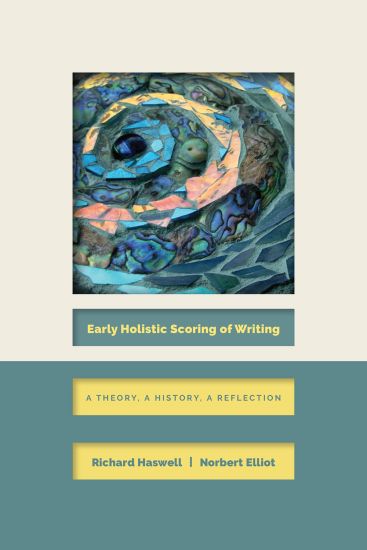
Early Holistic Scoring of Writing

Early Holistic Scoring of Writing

Richard Haswell; Norbert Elliot

University Press of Colorado
2019
nidottu
What is the most fair and efficient way to assess the writing performance of students? Although the question gained importance during the US educational accountability movement of the 1980s and 1990s, the issue had preoccupied international language experts and evaluators long before. One answer to the question, the assessment method known as holistic scoring, is central to understanding writing in academic settings. Early Holistic Scoring of Writing addresses the history of holistic essay assessment in the United Kingdom and the United States from the mid-1930s to the mid-1980s--and newly conceptualizes holistic scoring by philosophically and reflectively reinterpreting the genre's origin, development, and significance. The book chronicles holistic scoring from its initial origin in the United Kingdom to the beginning of its heyday in the United States. Chapters cover little-known history, from the holistic scoring of school certificate examination essays written by Blitz evacuee children in Devon during WWII to teacher adaptations of holistic scoring in California schools during the 1970s. Chapters detail the complications, challenges, and successes of holistic scoring from British high-stakes admissions examinations to foundational pedagogical research by Bay Area Writing Project scholars. The book concludes with lessons learned, providing a guide for continued efforts to assess student writing through evidence models. Exploring the possibility of actionable history, Early Holistic Scoring of Writing reconceptualizes writing assessment. Here is a new history that retells the origins of our present body of knowledge in writing studies.
Faculty Development and Student Learning

Faculty Development and Student Learning

William Condon; Ellen R. Iverson; Cathryn A. Manduca; Carol Rutz; Gudrun Willett; Mary Taylor Huber; Richard Haswell

Indiana University Press
2016
sidottu
Colleges and universities across the US have created special initiatives to promote faculty development, but to date there has been little research to determine whether such programs have an impact on students' learning. Faculty Development and Student Learning reports the results of a multi-year study undertaken by faculty at Carleton College and Washington State University to assess how students' learning is affected by faculty members' efforts to become better teachers. Extending recent research in the Scholarship of Teaching and Learning (SoTL) to assessment of faculty development and its effectiveness, the authors show that faculty participation in professional development activities positively affects classroom pedagogy, student learning, and the overall culture of teaching and learning in a college or university.
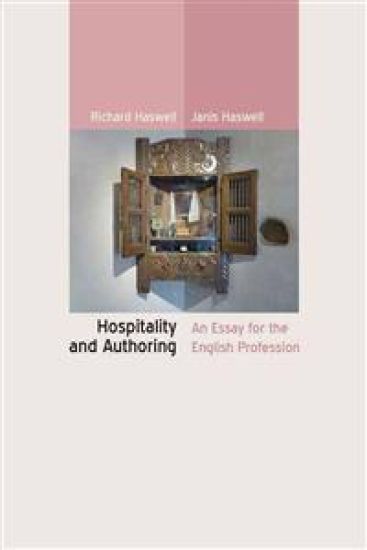
Hospitality and Authoring

Hospitality and Authoring

Richard Haswell; Janis Haswell

Utah State University Press
2015
nidottu
"Hospitality and Authoring," a sequel to the Haswells 2010 volume "Authoring," attempts to open the path for hospitality practice in the classroom, making a strong argument for educational use and offering an initial map of the territory for teachers and authors. Hospitality is a social and ethical relationship not only between host and guest but also between writer and reader or teacher and student. Hospitality initiates, maintains, and completes acts of authoring. This extended essay explores the ways that a true hospitable classroom community can be transformed through assigned reading, one-on-one conferencing, interpretation, syllabus, reading journals, topic choice, literacy narrative, writing centers, program administration, teacher training, and many other passing habitations. "Hospitality and Authoring" strives to offer a few possibilities of change to help make college an institution where singular students and singular teachers create a room to learn with room to learn."
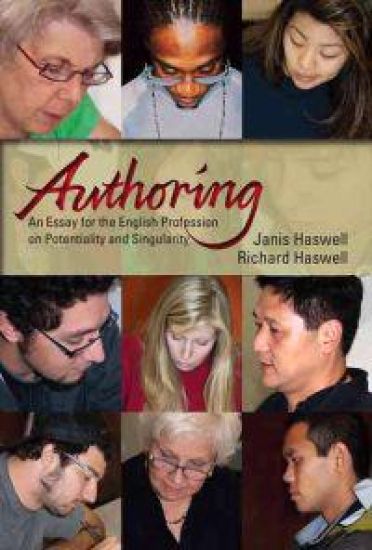
Authoring

Authoring

Janis Haswell; Richard Haswell

Utah State University Press
2010
sidottu
The postmodern conviction that meaning is indeterminate and self is an illusion, though fascinating and defensible in theory, leaves a number of scholarly and pedagogical questions unsatisfied. Authoring the phenomenological act or felt sense of creating a text is a remarkably black box, say Haswell and Haswell, yet it should be one of the central preoccupations of scholars in English studies. Not only can the study of authoring accommodate the social turn since postmodernism, they argue, but it accommodates as well conceptions of, and the lived experience of, personal potentiality and singularity. Without abandoning the value of postmodern perspectives, Haswell and Haswell use their own perspective of authorial potentiality and singularity to reconsider staple English-studies concerns such as gender, evaluation, voice, character, literacy, feminism, self, interpretation, assessment, signature, and taste. The essay is unique as well in the way that its authors embrace often competing realms of English studies, drawing examples and arguments equally from literary and compositionist research. In the process, the Haswells have created a Big Idea book, and a critique of the field. Their point is clear: the singular person/mysterious black box/author merits deeper consideration than we have given it, and the book s crafted and woven explorations provide the intellectual tools to move beyond both political divisions and theoretical impasses. "
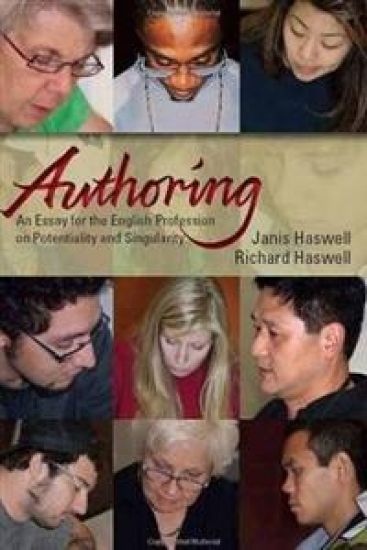
Authoring

Authoring

Janis Haswell; Richard Haswell

Utah State University Press
2010
pokkari
The post-modern conviction that meaning is indeterminate and self is an illusion, though fascinating and defensible in theory, leaves a number of scholarly and pedagogical questions unsatisfied. Authoring the phenomenological act or felt sense of creating a text is "a remarkably black box," say Haswell and Haswell, yet it should be one of the central preoccupations of scholars in English studies. Not only can the study of authoring accommodate the "social turn" since post-modernism, they argue, but it accommodates as well conceptions of, and the lived experience of, personal potentiality and singularity.
Beyond Outcomes

Beyond Outcomes

Richard Haswell

Praeger Publishers Inc
2001
nidottu
Writing assessment programs help place entering and mid-career students in composition courses at the appropriate level, monitor the progress of those students, and assist in placing them in writing courses throughout their undergraduate careers. These same universities also have writing instruction programs, which might include writing centers, writing-across-the-curriculum initiatives, and freshman and advanced composition programs. At many institutions, though, writing assessment is not necessarily considered fundamental to writing instruction, and there is little communication between the assessment program and the composition program. This book demonstrates that writing assessment and instruction programs may be successfully integrated. The contributors analyze the development of the writing assessment and instruction program at Washington State University, which is nationally recognized for its success. In doing so, they provide guidance to other institutions planning to develop similar integrated programs. The volume argues that writing assessment and instruction should inform and influence each other; that they should evolve together; and that they should be developed locally. By tracing the success of the WSU program, the authors directly challenge the use of national packaged assessment programs, such as standardized placement tests.
Beyond Outcomes

Beyond Outcomes

Richard Haswell

Praeger Publishers Inc
2001
sidottu
Writing assessment programs help place entering and mid-career students in composition courses at the appropriate level, monitor the progress of those students, and assist in placing them in writing courses throughout their undergraduate careers. These same universities also have writing instruction programs, which might include writing centers, writing-across-the-curriculum initiatives, and freshman and advanced composition programs. At many institutions, though, writing assessment is not necessarily considered fundamental to writing instruction, and there is little communication between the assessment program and the composition program. This book demonstrates that writing assessment and instruction programs may be successfully integrated.The contributors analyze the development of the writing assessment and instruction program at Washington State University, which is nationally recognized for its success. In doing so, they provide guidance to other institutions planning to develop similar integrated programs. The volume argues that writing assessment and instruction should inform and influence each other; that they should evolve together; and that they should be developed locally. By tracing the success of the WSU program, the authors directly challenge the use of national packaged assessment programs, such as standardized placement tests.