Kirjojen hintavertailu. Mukana 12 390 323 kirjaa ja 12 kauppaa.

Kirjailija

Richard Heinberg

Kirjat ja teokset yhdessä paikassa: 8 kirjaa, julkaisuja vuosilta 2005-2021, suosituimpien joukossa Our Renewable Future. Vertaile teosten hintoja ja tarkista saatavuus suomalaisista kirjakaupoista.

8 kirjaa

Kirjojen julkaisuhaarukka 2005-2021.

Power

Power

Richard Heinberg

New Society Publishers
2021
pokkari
Impeccably researched and masterfully written, this book explains how and why humanity is driving itself off the cliff. — Dahr Jamail, author, The End of Ice Weaving together findings from a wide range of disciplines, Power traces how four key elements developed to give humans extraordinary power: tool making ability, language, social complexity, and the ability to harness energy sources - most significantly, fossil fuels. It asks whether we have, at this point, overpowered natural and social systems, and if we have, what we can do about it. Has Homo sapiens — one species among millions — become powerful enough to threaten a mass extinction and disrupt the Earth's climate? Why have we developed so many ways of oppressing one another? Can we change our relationship with power to avert ecological catastrophe, reduce social inequality, and stave off collapse? These questions — and their answers — will determine our fate.
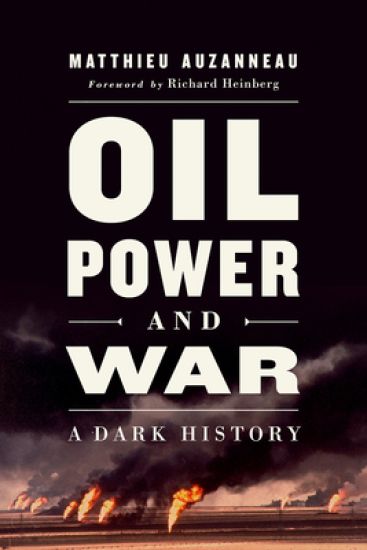
Oil, Power, and War

Oil, Power, and War

Matthieu Auzanneau; Richard Heinberg

Chelsea Green Publishing Co
2020
nidottu
Catholic Herald Book Awards 2019 Finalist, Current Affairs "Auzanneau has created a towering telling of a dark and dangerous addiction.”—Nature The story of oil is one of hubris, fortune, betrayal, and destruction. It is the story of a resource that has been undeniably central to the creation of our modern culture, and ever-present during the darkest exploits of empire the world over. For the past 150 years, oil has become the most essential ingredient for economic, military, and political power. And it has brought us to our present moment in which political leaders and the fossil-fuel industry consider extraordinary, and extraordinarily dangerous, policy on a world stage marked by shifting power bases. Upending the conventional wisdom by crafting a “people’s history,” award-winning journalist Matthieu Auzanneau deftly traces how oil became a national and then global addiction, outlines the enormous consequences of that addiction, sheds new light on major historical and contemporary figures, and raises new questions about stories we thought we knew well: What really sparked the oil crises in the 1970s, the shift away from the gold standard at Bretton Woods, or even the financial crash of 2008? How has oil shaped the events that have defined our times: two world wars, the Cold War, the Great Depression, ongoing wars in the Middle East, the advent of neoliberalism, and the Great Recession, among them? With brutal clarity, Oil, Power, and War exposes the heavy hand oil has had in all of our lives—and illustrates how much heavier that hand could get during the increasingly desperate race to control the last of the world’s easily and cheaply extractable reserves.
Our Renewable Future

Our Renewable Future

Richard Heinberg; David Fridley

Island Press
2016
nidottu
The next few decades will see a profound energy transformation throughout the world. By the end of the century, we will shift from fossil fuel dependence to reply primarily on renewable sources like solar, wind biomass, and geothermal power. Driven by the need to avert catastrophic climate change and by the depletion of easily-accessible oil, coal, and natural gas, this transformation will entail a major shift in how we live. What might a 100% renewable future look like? Which technologies will play a critical role in our energy future? What challenges will we face in this transition? And how we can make sure our new system is just and equitable? In Our Renewable Future, expert Richard Heinberg and scientist David Frindley explore the challenges and opportunities presented by the shift to renewable energy. Beginning with a comprehensive overview of our current energy system, the author's survey issues of energy supply and demand in key components of society, including electricity generation, transportation, housing and manufacturing. In their detailed review of each sector, the authors examine the most crucial challenges we face, from intermittency in fuel sources to energy storage and grid redesign. The book concludes with a discussion of energy and equity and a summary of key lessons and steps forward at the individual, community, and national level. The transition to clean energy will not be a simple matter of replacing coal with wind power of oil with solar; it will require society to adapt our energy usage as dramatically as we adapt our energy sources. Our Renewable Future is a clear eyed and urgent guide to this transformation that will be a crucial resource for policymakers and energy activists. The Authors - Richard Heiberg is a Senior Fellow of the Post Carbon Institute and is widely regarded as one of the world's foremost educators about the need to transition away from fossil fuels. He has authored twelve books, including The party's Over: Oil, War, and the Fate of Industrial Societies and After burn: Society Beyond Fossil Fuels, and scores of essays and articles that have appeared in such journals as Nature, The American Prospect, The pacific standard, Public Policy Research, Quarterly Review, The Ecologist, Resurgence, The Futurist, European Business Review, Earth Island Journal and The Sun. David Fridley has been staff scientists at the Energy Analysis Program at the Lawrence Berkeley National Laboratory in California since 1995. He is also Dubiety Group Leader of Lawrence Berkeley's China Energy Group, which collaborates with China on end-user energy efficiency, government energy management programmes and energy policy research. Fridley has written and spoken extensively on the energy and ecological limits of biofuels and serves as Renewable Energy & Energy Efficiency Fellow at Post Carbon Institute.
End of Growth

End of Growth

Richard Heinberg

Clairview Books
2011
pokkari
Economists insist that recovery is at hand, yet unemployment remains high, real estate values continue to drop, and governments stagger under record deficits. This title focuses on the financial crisis, explaining how and why it occurred, and what we must do to avert the worst potential outcomes.
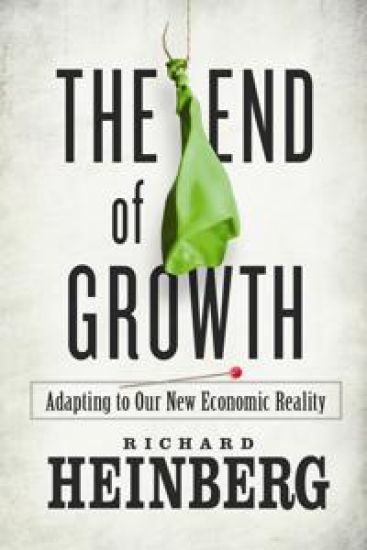
The End of Growth

The End of Growth

Richard Heinberg

New Society Publishers
2011
pokkari
Economists insist that recovery is at hand, yet unemployment remains high, real estate values continue to sink, and governments stagger under record deficits. "The End of Growth" proposes a startling diagnosis: humanity has reached a fundamental turning point in its economic history. The expansionary trajectory of industrial civilisation is colliding with non-negotiable natural limits. Richard Heinberg's latest landmark work goes to the heart of the ongoing financial crisis, explaining how and why it occurred, and what we must do to avert the worst potential outcomes. Written in an engaging, highly readable style, it shows why growth is being blocked by three factors: resource depletion; and, environmental impacts and crushing levels of debt. These converging limits will force us to re-evaluate cherished economic theories and to reinvent money and commerce. This book describes what policy makers, communities, and families can do to build a new economy that operates within Earth's budget of energy and resources. We can thrive during the transition if we set goals that promote human and environmental well-being, rather than continuing to pursue the now-unattainable prize of ever-expanding GDP.
Peak Everything

Peak Everything

Richard Heinberg

Clairview Books
2007
pokkari
The 20th century saw unprecedented growth in population, food production and energy consumption. As the population shifted from rural areas to urban cities, the human impact on the environment increased dramatically. This book addresses various cultural, psychological and practical changes we need to make as nature rapidly dictates our new limits.
Powerdown

Powerdown

Richard Heinberg

Clairview Books
2007
pokkari
Includes an overview of the likely impacts of oil and natural gas depletion and then outlines four options for industrial societies. This book explores how three important groups within global society - the power elites, the organized opposition to the elites (the 'activist' movements), and ordinary people - are likely to respond to these options.
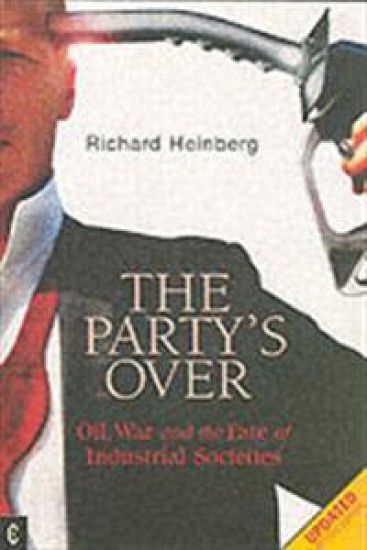
Party's Over

Party's Over

Richard Heinberg

Clairview Books
2005
pokkari
Dealing with the imminent decline of cheap oil, this book shows how oil and war have been closely related in the 20th century. Tracing the crucial role of fossil fuels in the rise of industrialism, it discusses the degree to which energy alternatives can compensate for oil, and recommends a global programme of resource conservation and sharing.