Kirjojen hintavertailu. Mukana 12 290 406 kirjaa ja 12 kauppaa.

Kirjailija

Richard Holmes

Kirjat ja teokset yhdessä paikassa: 74 kirjaa, julkaisuja vuosilta 1989-2026, suosituimpien joukossa Noah. Vertaile teosten hintoja ja tarkista saatavuus suomalaisista kirjakaupoista.

74 kirjaa

Kirjojen julkaisuhaarukka 1989-2026.

Fighting for the Fatherland

Fighting for the Fatherland

David Stone; Richard Holmes

Potomac Books Inc
2009
pokkari
Fighting for the Fatherland traces and analyzes three and a half centuries of the evolution of the German fighting man and the armies in which he served. It sets his patriotism against his cultural background and against the ever-changing national imperatives of his time.The German soldier's cultural legacy encompasses the romanticized Teutonic legends of Germanic mythology. The more immediate and pragmatic imperatives of Brandenburg's and Prussia's national survival during the seventeenth and eighteenth centuries reinforced the Germans' emerging awareness of their wider national identity, precipitating the heady brew of spectacular military victories and imperialist aspirations that dominated the following century. But then came the humiliating Versailles Treaty and the pervasive lure of National Socialism, a perverse path that left Germany divided in 1945 after a world war that saw both the zenith and nadir of the German soldier's fortunes. Finally, yet another culture, with its very different priorities, today underwrites the post-Cold War Bundeswehr of a reunified Germany. David Stone explores the true nature of the German soldier-his motivation, his preparation for war, his conduct in battle-and those aspects of his training, organization, leadership, and lifestyle that reveal why this fighter for his fatherland has proven so formidable and has had such a pronounced impact upon European and world history during the past 350 years. With a foreword by Richard Holmes.
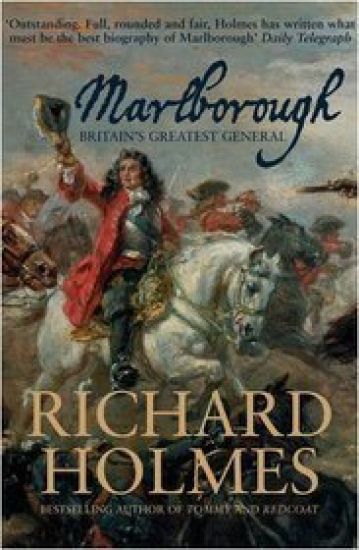
Marlborough

Marlborough

Richard Holmes

HARPERCOLLINS PUBLISHERS
2009
nidottu
Bestselling military historian Richard Holmes delivers an expertly written and exhilarating account of the life of John Churchill, the Duke of Marlborough and Britain's finest soldier, who rose from genteel poverty to lead his country to glory, cementing its position as a major player on the European stage and saviour of the Holy Roman Empire. John Churchill is, by any reasonable analysis, Britain’s greatest-ever soldier. He mastered strategy, tactics and logistics. His big four battles, Blenheim (which saved the Holy Roman Empire), Ramilies, Oudenarde and Malplaquet were events at the very centre of the European stage. He captured Lille, France’s second city, overran Bavaria and beat a succession of French marshals so badly that one, the squat and energetic Bofflers, was rewarded by Louis XIV for only losing moderately. A coalition manager long before the phrase was invented, he commanded a huge polyglot army with centrifugal political tendencies and bending it to his will by sheer force of personality. Yet John Churchill was also deeply controversial. He accepted a pension from one of Charles II’s mistresses for services vigorously rendered. He owed his rise and his peerage to James II yet, determined to be on the winning side, he deserted him in his hour of need in 1688. He maintained regular correspondence with the Jacobites while serving William and Mary and with the French while fighting Louis XIV. He made money on a prodigious scale, but was notoriously tight-fisted, long regretting an annuity given to a secretary whose quick-wittedness saved him from capture. But in the age when commissions were bought and sold, and commanders often owed their position to the hue of their blood, he never lost his soldier’s confidence.
Fatal Avenue

Fatal Avenue

Richard Holmes

Vintage Publishing
2008
pokkari
De Gaulle called it a 'fatal avenue' - that broad sweep of low-lying country stretching north-east of Paris. Over the centuries, invading armies have swept back and forth over this bloody terrain, and the names of battles fought here read like a dictionary of military history - from Agincourt, Calais and Crecy to Verdun, Vimy and Ypres.
Hitler's Bandit Hunters

Hitler's Bandit Hunters

Phillip W. Blood; Richard Holmes

Potomac Books Inc
2008
pokkari
In August 1942, Hitler directed all German state institutions to assist Heinrich Himmler, the chief of the SS and the German police, in eradicating armed resistance in the newly occupied territories of Eastern Europe and Russia. The directive for "combating banditry" (Bandenbekämpfung), became the third component of the Nazi regime's three-part strategy for German national security, with genocide (Endlösung der Judenfrage, or "the Final Solution of the Jewish Question") and slave labor (Erfassung, or "Registration of Persons to Hard Labor") being the better-known others.An original and thought-provoking work grounded in extensive research in German archives, Hitler's Bandit Hunters focuses on this counterinsurgency campaign, the anvil of Hitler's crusade for empire. Bandenbekämpfung portrayed insurgents as political and racial bandits, criminalized to a greater degree than enemies of the state; moreover, violence against them was not constrained by the prevailing laws of warfare. Philip Blood explains how German forces embraced the Bandenbekämpfung doctrine, demonstrating the equal culpability of both the SS police forces and the "heroic" Waffen-SS combat arm and shattering the contrived postwar distinctions between them. He challenges the traditional view of Himmler as an armchair general and bureaucrat, exposing him as the driving force behind one of the most successful security campaigns in history, and delves into the contentious issue of the complicity of ordinary German police, soldiers, and citizens, as well as the citizens of occupied territories, in these state-sponsored manhunts. This book provokes new debates on the Nazi terrorization of Europe, the blind acquiescence of many, and the courageous resistance of the few.
Troop Leader

Troop Leader

Bill Bellamy; Richard Holmes

The History Press Ltd
2007
nidottu
Bill Bellamy was a young officer in the 8th King's Royal Irish Hussars from 1943 to 1955. He served in 7th Armoured Division in the North West Europe campaign, landing in Normandy on D+3, fought throughout the Battle for Normandy and into the Low Countries as a troop leader in Cromwell tanks, and was latterly a member of the initial occupying force in Berlin in May 1945. Against the rules, Bill kept diaries and notes of his experiences. His account is fresh and open, and his descriptions of battle are vivid. He witnessed many of his contemporaries killed in action, and this life-altering experience clearly informs his narrative. The accounts of tank fighting in the leafy Normandy bocage in the height of summer, or in the iron hard fields of Holland in winter, are graphic and compelling.
Dusty Warriors

Dusty Warriors

Richard Holmes

HARPERCOLLINS PUBLISHERS
2007
nidottu
Our foremost military historian offers us a compelling and at times terrifying account of what it means to be a contemporary soldier. In this remarkable book, Richard Holmes draws on the testimonies of the 700 soldiers of the Princess of Wales Royal Regiment to capture in vivid detail the average soldier's day-to-day experience of war. Embroiled in a conflict often too dangerous for reporters to cover, these soldiers – most of them young, many without any previous experience of warfare – have kept ongoing records of the drudgery, anxiety and horror involved in fighting a violent and increasingly unpopular war against a ruthless and resourceful enemy. All have risked their lives, and many have died. Others have been recognised and awarded for their courage, resourcefulness and gallantry – Private Johnson Beharry recently became the first man to be awarded the Victoria Cross in twenty-three years. With these intimate and revealing glimpses of life in the modern army, Richard Holmes paints a sweeping portrait of a new generation of soldiers – grunts, gallants and heroes – and the sacrifices their decision to fight for their country entails.
Hitler's Bandit Hunters

Hitler's Bandit Hunters

Phillip W. Blood; Richard Holmes

Potomac Books Inc
2006
sidottu
In August 1942, Hitler directed all German state institutions to assist Heinrich Himmler, the chief of the SS and the German police, in eradicating armed resistance in the newly occupied territories of Eastern Europe and Russia. The directive for "combating banditry" (Bandenbekämpfung), became the third component of the Nazi regime's three-part strategy for German national security, with genocide (Endlösung der Judenfrage, or "the Final Solution of the Jewish Question") and slave labor (Erfassung, or "Registration of Persons to Hard Labor") being the better-known others.An original and thought-provoking work grounded in extensive research in German archives, Hitler's Bandit Hunters focuses on this counterinsurgency campaign, the anvil of Hitler's crusade for empire. Bandenbekämpfung portrayed insurgents as political and racial bandits, criminalized to a greater degree than enemies of the state; moreover, violence against them was not constrained by the prevailing laws of warfare. Philip Blood explains how German forces embraced the Bandenbekämpfung doctrine, demonstrating the equal culpability of both the SS police forces and the "heroic" Waffen-SS combat arm and shattering the contrived postwar distinctions between them. He challenges the traditional view of Himmler as an armchair general and bureaucrat, exposing him as the driving force behind one of the most successful security campaigns in history, and delves into the contentious issue of the complicity of ordinary German police, soldiers, and citizens, as well as the citizens of occupied territories, in these state-sponsored manhunts. This book provokes new debates on the Nazi terrorization of Europe, the blind acquiescence of many, and the courageous resistance of the few.
Sahib

Sahib

Richard Holmes

HarperPerennial
2006
nidottu
From bestselling author of ‘Tommy’ and ‘Redcoat’, the rich history of the British soldier in India from Clive to the end of empire considered to be the jewel in Britain’s imperial crown. ‘Sahib’ is a broad and sweeping military history of the British soldier in India, but its focus, like that of Tommy and Redcoat before it, will be on the men who served in India and the women who followed them across that vast and dusty continent, bore their children, and, all too often, mopped their brows as they died. The book begins with the remarkable story of India's rise from commercial enclave to great Empire, from Clive’s victory of Plassey, through the imperial wars of the 18th-century and the Afghan and Sikh Wars of the 1840s, through the bloody turmoil of the Mutiny, and the frontier campaigns at the century’s end. With its focus on the experience of ordinary soldiers, ‘Sahib’ explains to us why soldiers of the Raj had joined the army, how they got to India and what they made of it when they arrived. The book examines Indian soldiering in peace and war, from Kipling’s ‘snoring barrack room’ to storming parties assaulting mighty fortresses, cavalry swirling across open plains, and khaki columns inching their way between louring hills. Making full use of extensive and often neglected archive material in the India Office Library and National Army Museum, ‘Sahib’ will do for the British soldier in India – whether serving a local ruler, forming part of the Indian army, or soldiering with a British regiment – what ‘Tommy’ has done for the ordinary soldier in World War I.
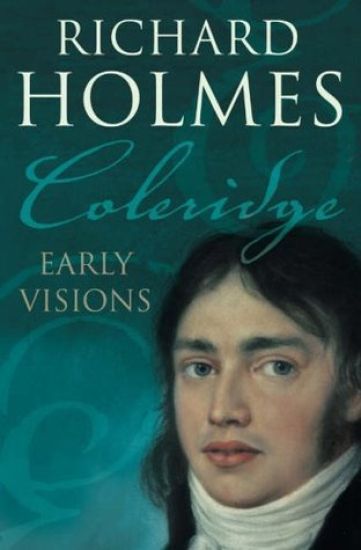
Coleridge

Coleridge

Richard Holmes

Harpercollins Publishers
2005
pokkari
Winner of the 1989 Whitbread Prize for Book of the Year, this is the first volume of Holmesâ??s seminal two-part examination of Samuel Taylor Coleridge, one of Britainâ??s greatest poets.
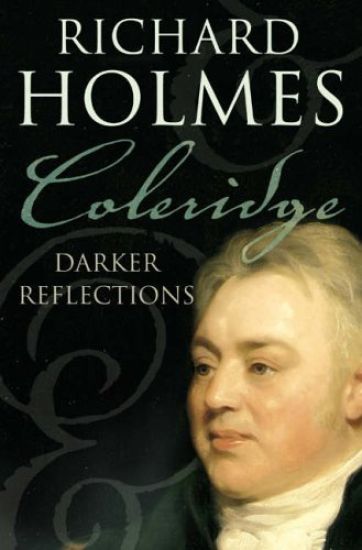
Coleridge

Coleridge

Richard Holmes

HARPERCOLLINS PUBLISHERS
2005
nidottu
Timely reissue of the second volume of Holmes’s classic biographies of one of the greatest Romantic poets. Richard Holmes’s biography of Coleridge transforms our view of the poet of ‘Kubla Khan’ forever. Holmes’s Coleridge leaps out of these pages as the brilliant, animated and endlessly provoking poet of genius that he was. This second volume covers the last 30 years of Coleridge’s career (1804-1834) during which he travelled restlessly through the Mediterranean, returned to his old haunts in the Lake District and the West Country, and finally settled in Highgate. It was a period of domestic and professional turmoil. His marriage broke up, his opium addiction increased, he quarrelled with Wordsworth, his own son Hartley Coleridge (a gifted poet himself) became an alcoholic. And after a desperate time of transition, Coleridge re-emerged on the literary scene as a new kind of philosophical and meditative author.
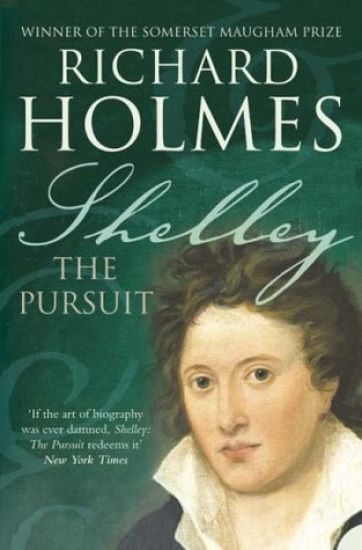
Shelley

Shelley

Richard Holmes

Harpercollins Publishers
2005
pokkari
A fantastic reissue of Richard Holmesâ?? epic biography of this most enigmatic and intriguing of the Romantic poets. This is simply one of the greatest biographical achievements of recent years.
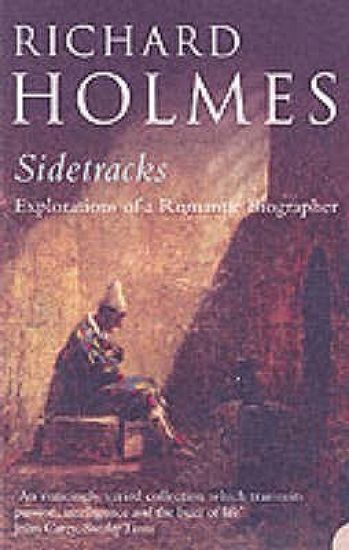
Sidetracks

Sidetracks

Richard Holmes

HARPERCOLLINS PUBLISHERS
2005
nidottu
In this classic work, the author of 'Footsteps' collects the biographical stories that have captured his fancy in the course of researching his books on the romantic poets, creating a captivating mixture of biography and memoir. ‘Sidetracks' is a sister book to 'Footsteps', conjured up from decades of 'wanderings from the straight and narrow' of his major biographies of Shelley and Coleridge. As Holmes himself says, 'to be sidetracked is, after all, to be led astray by a path or an idea, a scent or a tune, and maybe lost forever.' The centerpiece of the book is the poignant, inspiring story of Mary Woolstonecraft, the great feminist crusader and philosopher and her husband, William Godwin. But 'Sidetracks' winds through an extraordinary and eclectic assortment of Romantic and Gothic writers and personalities, all made hypnotically alive through Holmes's transforming touch. We meet Chatterton and Gautier, Pierrot and Voltaire, Scott Fitzgerald and Zelda, James Boswell and Zelide, MR James and some very unpleasant gothic apparitions. 'Sidetracks' is a renewed examination of the strange and sometimes shadowy pathways of biography.
Footsteps

Footsteps

Richard Holmes

HARPERCOLLINS PUBLISHERS
2005
nidottu
Richard Holmes’s great work of biographical exploration, published alongside its sister volume ‘Sidetracks’. In 1985, Richard Holmes published a small book of essays called Footsteps and the writing of biography was changed forever. A daring mix of travel, biographical sleuthing and personal memoir, it broke all the conventions of the genre and remains ons of the most intoxicating, magical works of modern literary exploration ever published. Sleeping rough, he retraces Robert Louis Stevenson's famous journey through the Cevennes. Caught up in the Parisian riots of the 1960s, he dives back in time to the terrors of Wordsworth and of Mary Wollstonecraft marooned in Revolutionary Paris and then into the strange tortured worlds of Gérard de Nerval. Wandering through Italy, he stalks Shelley and his band of Romantic idealists to Casa Magni on the Gulf of Spezia.
The Little Field Marshal

The Little Field Marshal

Richard Holmes

Cassell Military
2005
pokkari
The definitive biography of Sir John French, by the increasingly famous Richard Holmes.Sir John French is a figure who has always aroused controversy. Douglas Haig despised him, while Churchill thought his leadership qualities unsurpassed. Despite being the most capable cavalry leader of his generation, posterity has judged him an unfeeling butcher, responsible for more deaths in the first two hours of the battle of Loos than all the casualties on both sides in the 1944 D-Day landings.But there was another side to French, which is only revealed in his private papers. If his public life was controversial, his private life was positively scandalous: he courted dismissal after an affair with a fellow officer's wife, and had a string of beautiful and well-connected mistresses. And far from being the unfeeling butcher of popular myth, he was personally tormented by what he termed 'glory and her twin sister murder'. The lengthening casualty lists on the Western Front filled him with despair, as he envisaged his room at GHQ filled with the 'silent army' of the dead.
Hannibal's War

Hannibal's War

John Peddie; Richard Holmes

The History Press Ltd
2005
nidottu
Here, John Peddie provides a challenging re-evaluation of the Carthaginian's generalship of Hannibal, and asks how was it that a man so often described by historians as a military genius and a brilliant tactician could have plunged so deeply into a situation in which he was, almost inevitably, to fail?John Peddie questions the role of the war-elephant, Hannibal's choice of route over the Alps, re-examines the purpose of the campaign and suggests the purpose of the campaign was not so much the destruction of Rome but the re-conquest of Sicily. Exploring the Carthaginian's generalship he concludes that Hannibal's War was lost at sea, not on land.
Tommy

Tommy

Richard Holmes

HarperPerennial
2005
nidottu
The first history of World War I to place centre-stage the British soldier who fought in the trenches, this superb and important book tells the story of an epic and terrible war through the letters, diaries and memories of those who fought it. Of the six million men who served in the British army, nearly one million lost their lives and over two million were wounded. This is the story of these men – epitomised by the character of Sgt Tommy Atkins – and the women they left behind. Using previously unseen letters, diaries, memoirs and poetry from the years 1914-1918, Richard Holmes paints a moving picture of the generation that fought and died in the mud of Flanders. He follows men whose mental health was forever destroyed by shell shock, women who lost husbands and brothers in the same afternoon and those who wrote at lunchtime and died before tea. Groundbreaking and critically-acclaimed, this book tells the real story of trench warfare, the strength and fallibility of the human spirit, the individuals behind an epic event, and their legacy. It is an emotional and unforgettable masterpiece from one of our most important historians.