
Kirjailija
Richard Howard
Kirjat ja teokset yhdessä paikassa: 28 kirjaa, julkaisuja vuosilta 1989-2024, suosituimpien joukossa The Complete Poems of James Dickey. Vertaile teosten hintoja ja tarkista saatavuus suomalaisista kirjakaupoista.
28 kirjaa
Kirjojen julkaisuhaarukka 1989-2024.

A devastating novel about the treachery of love by Maupassant, now in a new translation by National Book Award and Pulitzer Prize winning poet and translator Richard HowardOlivier Bertin is at the height of his career as a painter. After making his name as a young man with his Cleopatra, he has gone on to establish himself as "the chosen painter of Parisiennes, the most adroit and ingenious artist to reveal their grace, their figures, and their souls." And though his hair may be white, he remains a handsome, vigorous, and engaging bachelor, a prized guest at every table and salon. Olivier's lover is Anne, the Countess de Guilleroy, the wife of a busy politician. Their relationship is long-standing, close, almost conjugal. The countess's daughter is Annette, and she is the spitting image of her mother in her lovely youth. Having finished her schooling, Annette is returning to Paris. Her parents have put together an excellent match. Everything is as it should be--until the painter and countess are each seized by an agonizing suspicion, like death. . . . In its devastating depiction of the treacherous nature of love, Like Death is more than the equal of Swann's Way. Richard Howard's new translation brings out all the penetration and poetry of this masterpiece of nineteenth-century fiction.

The Complete Poems of James Dickey
James Dickey; Richard Howard
University of South Carolina Press
2013
sidottu
The Complete Poems of James Dickey is an authoritative edition of all 331 poems published by one of America's most distinguished poets, collected in one volume for the first time. Dickey's most-admired and most-anthologised poems—such as ""The Performance,"" ""Cherrylog Road,"" ""The Firebombing,"" ""Falling,"" and ""May Day Sermon""—along with his epic poem The Zodiac are placed in chronological order of publication, affording a poetic autobiography that reveals the intellectual development and the constant experimentation of an iconic American literary figure. This collection includes 93 poems Dickey did not publish in The Whole Motion (1992), 238 poems that he collected as an overview of his whole career. The Complete Poems of James Dickey also includes an apparatus listing publication data and textual variants for the poems, as well as explanatory notes placing Dickey's poetry in biographical and historical context. Edited with an introduction by Ward Briggs, this authoritative and complete edition will be the definitive primary source for Dickey's poetry.This collection includes a foreword by poet Richard Howard, president of the PEN American Center and winner of the Pulitzer Prize for his 1969 collection, Untitled Subjects.

Science fiction might not be the first thing that springs to mind when we think of Irish literature. But in the post-war period in Belfast, two authors, Bob Shaw and James White, began producing science fiction stories, eventually selling them to international markets and gaining the respect of luminaries such as Arthur C. Clarke, Brian Aldiss and Stanley Kubrick.Although lauded in the international science fiction scene for their innovations in the genre, Shaw and White’s work has been relatively ignored within Irish Studies. This book connects the emergence of science fiction in Belfast with the position of the city as the locus of technological development on the island of Ireland, and the development of a corresponding technological imaginary. Breaking new ground in the study of Irish modernity, Richard Howard draws parallels between the narratives of Shaw and White and the persistent influence of historical narratives embodied by the two-traditions paradigm in the region, as well as exploring the figure of the alien both in science fiction and in the history of Northern Ireland. He also considers the works of Shaw and White as utopian gestures against the backdrop of the Irish Troubles, finding both repressive and redemptive elements therein. The book makes an important contribution to the growing conversation about Irish science fiction and our understanding of modernity in Ireland.


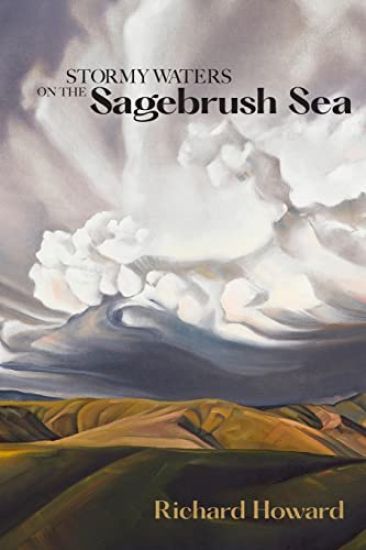
Between the covers of Stormy Waters on the Sagebrush Sea are adventures, raw commentary, and humor that will entertain, educate, and move a reader to step outside and see the Northwest with fresh eyes. A native Idaho son, author Richard Howard takes us into the fields of fishing, falconry, and yoga. His "green tea revelations" reflect on a life filled with summits and sunsets, anguish and doubt, courage and adventure. Second Edition: February 2023, with updated stories, new chapters, and more photographs. Printed in the United States of America.
A fallen aristocrat must prove himself in the furnace of Napoleon’s army...1795: Confusion and fear reign in the French Republic. With her troops facing starvation and annihilation on three fronts, France is killing her patriots.Alain Lausard, an aristocrat whose family were massacred in The Terror, rots in prison. But in a desperate move to save the Italian campaign, now commanded by a young Napoleon Bonaparte, the Directory enlists condemned criminals. For Lausard, the promise of death on the battlefield is all he wants.Trained as a soldier, Lausard commands respect for turning his ragged miscreants into ruthless cavalry. Yet tensions remain. As the unit falls under the command of the despotic Cezar, a hazardous mission behind enemy lines threatens everything…Bonaparte’s Sons, the first of the Alain Lausard adventures, is perfect for fans of Bernard Cornwell’s Sharpe, Paul Fraser Collard and Iain Gale.Praise for Richard Howard‘Lovers of historical fiction won’t be able to wait to get their teeth into this one’ Newcastle Upon Tyne Evening Chronicle‘A realistic look at the brutality of Napoleonic warfare. An enjoyable read’ Historical Novel Review‘Howard writes with authority about life in the French army under Napoleon’ Cork Examiner
Napoleon’s mighty army face the inferno of the Egyptian desert in this thrilling historical adventureSeventeen thousand French troops leave Toulon harbour in May 1798 unaware of their ultimate destination. Barely three months after taking Rome, Napoleon Bonaparte has rewarded his finest regiments with a place among the Army of the Orient, bound for Egypt.Alain Lausard, along with his cavalry unit are on board the frigate L’Esperance. Their first battle is merely to survive the degradation that is life at sea. By the time they stagger, starved and exhausted, upon the shores of Egypt, Lausard’s dragoons have more than glory to fight for.As his beleaguered soldiers march into the desert, Bonaparte watches his tactical gamble collapse. Even when the Mameluke army is defeated beneath the pyramids, Nelson’s destruction of the French fleet and Bonaparte’s obsessive war-mongering convince Lausard that he will never see Paris again…The second blood-soaked instalment of the Alain Lausard Adventures is perfect for fans of Simon Scarrow, Julian Stockwin and Adrian Goldsworthy.‘Lovers of historical fiction won’t be able to wait to get their teeth into this one’ Newcastle Upon Tyne Evening Chronicle‘A realistic look at the brutality of Napoleonic warfare. An enjoyable read’ Historical Novel Review‘Howard writes with authority about life in the French army under Napoleon’ Cork Examiner
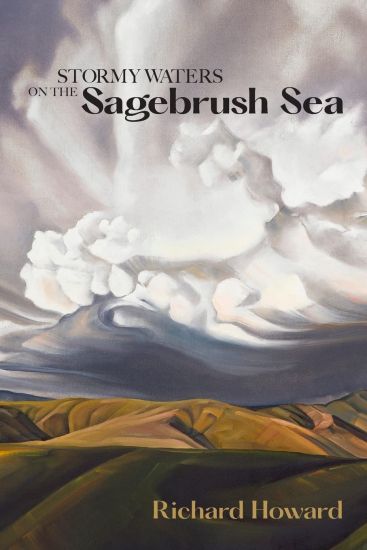
Between the covers of Stormy Waters on the Sagebrush Sea are adventures, raw commentary, and humor that will entertain, educate, and move a reader to step outside and see the Northwest with fresh eyes. A native Idaho son, author Richard Howard takes us into the fields of fishing, falconry, and yoga. His "green tea revelations" reflect on a life filled with summits and sunsets, anguish and doubt, courage and adventure.


Science fiction might not be the first thing that springs to mind when we think of Irish literature. But in the post-war period in Belfast, two authors, Bob Shaw and James White, began producing science fiction stories, eventually selling them to international markets and gaining the respect of luminaries such as Arthur C. Clarke, Brian Aldiss and Stanley Kubrick.Although lauded in the international science fiction scene for their innovations in the genre, Shaw and White’s work has been relatively ignored within Irish Studies. This book connects the emergence of science fiction in Belfast with the position of the city as the locus of technological development on the island of Ireland, and the development of a corresponding technological imaginary. Breaking new ground in the study of Irish modernity, Richard Howard draws parallels between the narratives of Shaw and White and the persistent influence of historical narratives embodied by the two-traditions paradigm in the region, as well as exploring the figure of the alien both in science fiction and in the history of Northern Ireland. He also considers the works of Shaw and White as utopian gestures against the backdrop of the Irish Troubles, finding both repressive and redemptive elements therein. The book makes an important contribution to the growing conversation about Irish science fiction and our understanding of modernity in Ireland.
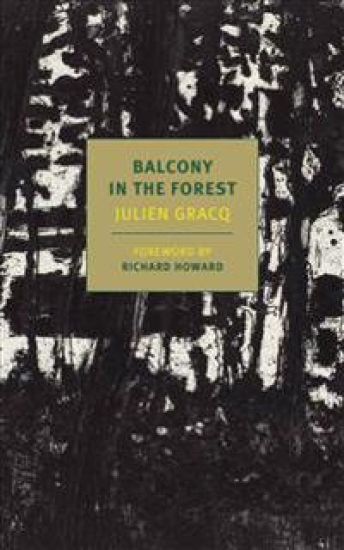
It is the fall of 1939, and Lieutenant Grange and his men are living in a chalet above a concrete bunker deep in the Ardennes forest, charged with defending the French-Belgian border against the Germans in a war that seems unreal, distant, and unlikely. Far more immediate is the earthy life of the forest itself and the deep sensations of childhood it recalls from Grange's memory. Ostensibly readying for war, Grange instead spends his time observing the change in seasons, falling in love with a young free-spirited widow, and contemplating the absurd stasis of his present condition. This novel of long takes, dream states, and little dramatic action culminates abruptly in battle, an event that is as much the real incursion of the German army into France as it is the sudden intrusion of death into the suspended disbelief of life. Richard Howard's skilled translation captures the fairy-tale otherworldliness and existential dread of this unusual, elusive novel (first published in 1958) by the supreme prose stylist Julien Gracq.
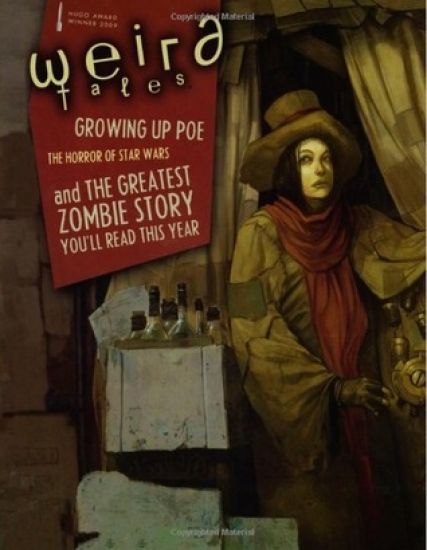
Weird Tales 354 (Special Edgar Allan Poe Issue)
Edgar Allan Poe; Richard Howard
Wildside Press
2017
pokkari
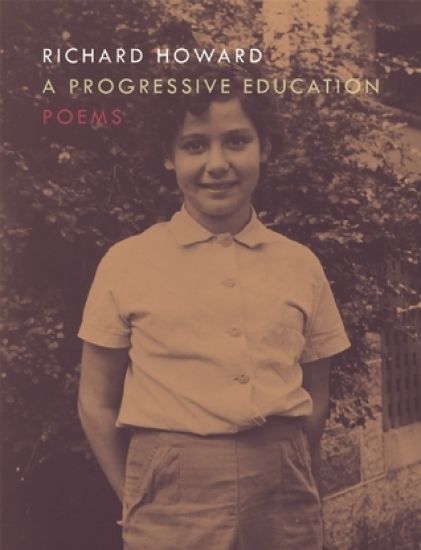
In the Pulitzer Prize-winning poet's 15th collection, Richard Howard looks back with humour, humanity and gusto at his own education in a small progressive Midwest private school. An entire sixth grade class comes to life and captivates the reader as it grapples with science and literature; teacher and principal; and the hard facts and comic fancies of life itself. This work is fresh and free-handed, an achievement the more readily made since the book's contents involve the disciplines and exemptions, as well as the vocabulary of his own schooling.

Eat Your Spinach: Spend Less & Invest More (And How to do it)
Richard Howard; John Gordon
Createspace Independent Publishing Platform
2013
nidottu
In Richard Howard’s new collection, voices of myth and memory prevail, if only by means of prevarication: the voice of Medea’s mother trying to explain her daughter’s odd behavior to an indiscreet interviewer; or first and last the voice of Henry James, late in life, faced with the disputed prospect of meeting L. Frank Baum and then, later on, “managing” not only Maeterlinck’s Blue Bird but his own unruly cast of characters, including Mrs. Wharton and young Hugh Walpole. Richard Howard’s honors include the Pulitzer Prize, the PEN Medal for Translation, and grants from the Guggenheim and MacArthur foundations.
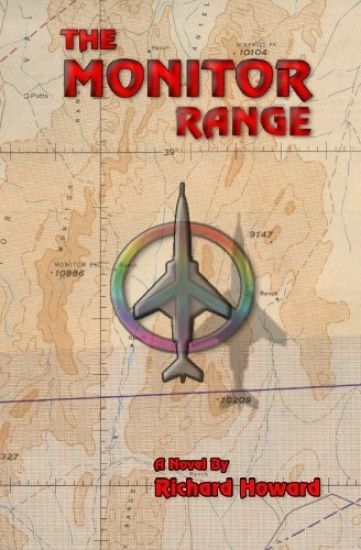
In his first novel, Howard takes the reader on the fascinating and somewhat mystical journey of a young fighter pilot, Steven Anderson, whose odyssey of self discovery begins, and ends, in a remote area of central Nevada called the Monitor Range.Set against historical and technical events of the sixties, Howard's storyline of love, betrayal and war is intricately woven with a fascinating array of characters from Nevada and California to Vietnam, of whom you will come to know as their own lives wrestle with history in the making.In the end, Steven's search has lead him back to the Monitor Range. What will he discover there?

The poems of Richard Howard are noted for their unique dramatic force and for preserving, in their graceful, exquisitely wrought lines, human utterance at its most urbane. Inner Voices, the first volume to draw together material from Howard's twelve books of poems, leaves no doubt as to why he has been called "a powerful presence in American poetry for 40 years" (The New York Times Book Review).