Kirjojen hintavertailu. Mukana 12 112 070 kirjaa ja 12 kauppaa.

Kirjailija

Richard I. Cohen

Kirjat ja teokset yhdessä paikassa: 3 kirjaa, julkaisuja vuosilta 1998-2027, suosituimpien joukossa Visual Imaginations and Modern Jewish History. Vertaile teosten hintoja ja tarkista saatavuus suomalaisista kirjakaupoista.

3 kirjaa

Kirjojen julkaisuhaarukka 1998-2027.

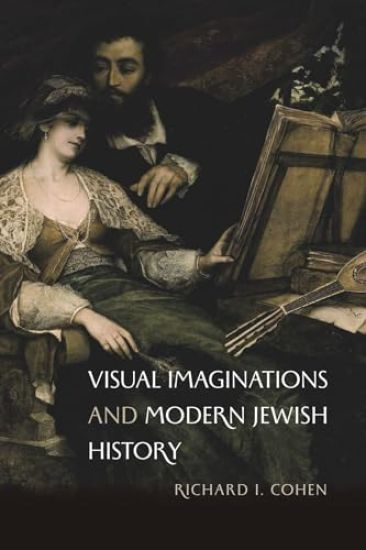
Visual Imaginations and Modern Jewish History

Visual Imaginations and Modern Jewish History

Richard I. Cohen

Brandeis University Press
2027
sidottu
Establishes the centrality of visual culture within Judaism and Jewish history. Visual Imaginations and Modern Jewish History traces how visual experience reflected and shaped Jewish life from the late seventeenth century onward. Richard I. Cohen shows how images, spaces, and objects were central to the making of modern Jewish identities and how the act of seeing itself became a site of cultural negotiation. Cohen claims that the prominence of visual art in modern Jewish life cannot be overlooked. Visual expression has become such a significant factor in Jewish life that it serves as both a mirror and an agent of Jewish modernity. Cohen engages with a range of artists, figures like Moses Mendelssohn, Uriel Da Costa, and Baruch Spinoza, and such topics as the visual imaginings of the Mishnah, Jews in the military, and the motif of the Wandering Jew. Taken as a whole, the studies in this book argue that approaching modern Jewish history through images is not to replace the written word, but to restore to it the world of sight that Jews inhabited, created, and transformed.
Samuel Hirszenberg, 1865–1908

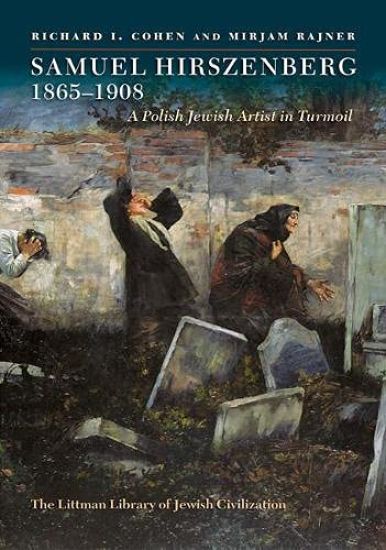
Samuel Hirszenberg, 1865–1908

Richard I. Cohen; Mirjam Rajner

LIVERPOOL UNIVERSITY PRESS
2022
sidottu
Samuel Hirszenberg is an artist who deserves to be more widely known: his work intertwined modernism and Jewish themes, and he influenced later artists of Jewish origin.Born into a traditional Jewish family in Lódz in 1865, Hirszenberg gradually became attached to Polish culture and language as he pursued his artistic calling. Like Maurycy Gottlieb before him, he studied at the School of Art in Kraków, which was then headed by the master of Polish painting, Jan Matejko. His early interests were to persist with varying degrees of intensity throughout his life: his Polish surroundings, traditional east European Jews, historical themes, the Orient, and the nature of relationships between men and women. He also had a lifelong commitment to landscape painting and portraiture.Hirszenberg’s personal circumstances, economic considerations, and historical upheavals took him to different countries, strongly influencing his artistic output. He moved to Jerusalem in 1907 and there, as a secular and acculturated Jew who had adopted the world of humanism and universalism, he strove also to express more personal aspirations and concerns. This fully illustrated study presents an intimate and detailed picture of the artist’s development.
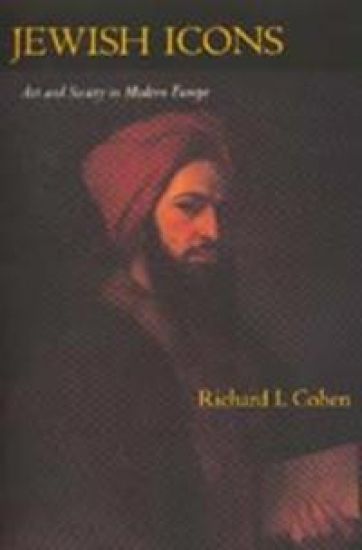
Jewish Icons

Jewish Icons

Richard I. Cohen

University of California Press
1998
sidottu
With the help of over one hundred illustrations spanning three centuries, Richard Cohen investigates the role of visual images in European Jewish history. The interaction of Jews with the visual arts takes place, as Cohen says, in a vast gallery of prints, portraits, books, synagogue architecture, ceremonial art, modern Jewish painting and sculpture, political broadsides, monuments, medals, and memorabilia. Pointing to recent scholarship that overturns the stereotype of Jews as people of the text, unconcerned with the visual, Cohen shows how the coming of the modern period expanded the relationship of Jews to the visual realm far beyond the religious context. Toward the end of the nineteenth century, the study and collecting of Jewish art became a legitimate and even passionate pursuit, and signaled the entry of Jews into the art world as painters, collectors, and dealers.