Kirjailija
Richard J. Ellis
Kirjat ja teokset yhdessä paikassa: 23 kirjaa, julkaisuja vuosilta 1990-2026, suosituimpien joukossa Politics, Policy, And Culture. Vertaile teosten hintoja ja tarkista saatavuus suomalaisista kirjakaupoista.
Mukana myös kirjoitusasut: Richard J Ellis
23 kirjaa
Kirjojen julkaisuhaarukka 1990-2026.
This new set of original case studies is designed to offer an empirical counterpart to Cultural Theory (Westview, 1990 ), the landmark statement of political culture theory authored by Michael Thompson, Richard Ellis, and Aaron Wildavsky, and to extend and challenge the analysis developed there. Here, the theoretical concepts laid out in that book
This new set of original case studies is designed to offer an empirical counterpart to Cultural Theory (Westview, 1990 ), the landmark statement of political culture theory authored by Michael Thompson, Richard Ellis, and Aaron Wildavsky, and to extend and challenge the analysis developed there.
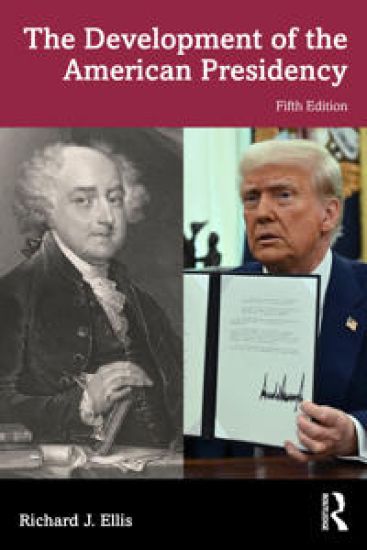
The Development of the American Presidency provides students with a full examination of the historical development of the American presidency. Organized by the topics and concepts relevant to political science, the textbook keeps the constitutional origins and political development of the presidency as its central focus. Through comprehensive and in-depth coverage, Richard J. Ellis looks at how the presidency has evolved in relation to the public, to Congress, to the executive branch, and to the law, showing how different aspects of the presidency have followed distinct trajectories of change. Each chapter promotes active learning for students, beginning with an illustrative puzzle that brings to life a central concept. A wealth of photos, figures, and tables allow for the visual presentations of concepts. In this new edition, the author incorporates new research in each chapter, takes the full measure of the Biden presidency and grapples with what the second Trump presidency means for the institution -assessing how the constitutional system of checks and balances functions depends on assumptions of presidential self-restraint. Analyzing how historical turns have shaped the modern institution, this book helps undergraduate political science students gain a rich, nuanced understanding of the American presidency.
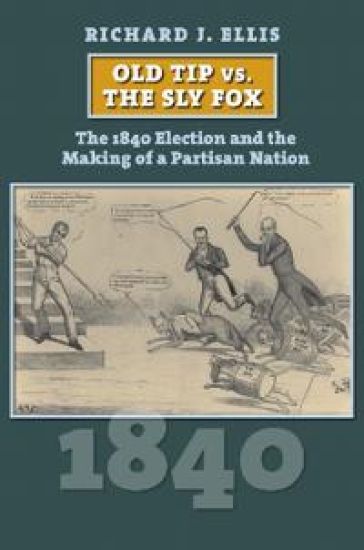
Usually remembered for its slogan “Tippecanoe and Tyler too,” the election of 1840 is also the first presidential election of which it might be truly said, “It’s the economy, stupid.” Tackling a contest best known for log cabins, cider barrels, and catchy songs, this timely volume reveals that the election of 1840 might be better understood as a case study of how profoundly the economy shapes the presidential vote. Richard J. Ellis, a veteran scholar of presidential politics, suggests that the election pitting the Democratic incumbent Martin Van Buren against Whig William Henry Harrison should also be remembered as the first presidential election in which a major political party selected—rather than merely anointed—its nominee at a national nominating convention. In this analysis, the convention’s selection, as well as Henry Clay’s post-convention words and deeds, emerge as crucial factors in the shaping of the nineteenth-century partisan nation. Exploring the puzzle of why the Whig Party’s political titan Henry Clay lost out to a relative political also-ran, Ellis teases out the role the fluctuating economy and growing antislavery sentiment played in the party’s fateful decision to nominate the Harrison-Tyler ticket. His work dismantles the caricature of the 1840 campaign (a.k.a. the “carnival campaign”) as all froth and no substance, instead giving due seriousness to the deeply held moral commitments, as well as anxieties about the political system, that informed the campaign. In Old Tip vs. the Sly Fox, the campaign of 1840 can finally be seen clearly for what it was: a contest of two profoundly different visions of policy and governance, including fundamental, still-pressing questions about the place of the presidency and Congress in the US political system.
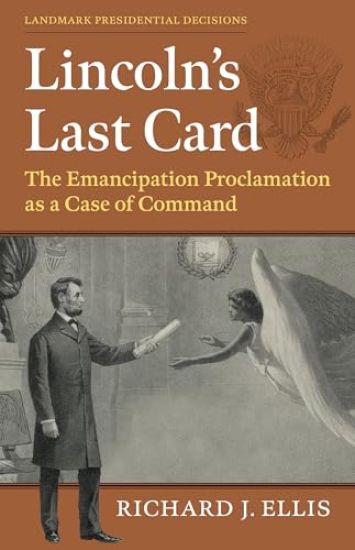
A fresh reassessment of the Emancipation Proclamation that looks beyond the Lincoln mythos and sees the decision as Lincoln's last resort after his failure to persuade a divided country.There is a certain comfort in being able to see Lincoln—or any president—simply as either a hero or a villain. The truth, however, is more complicated. Lincoln’s Last Card helps us look beyond the myths to see Lincoln as the flawed and consequential leader that he was.Few presidential edicts are more famous or misunderstood than the Emancipation Proclamation. The traditional myth about the proclamation is that President Lincoln freed the slaves with a bold stroke of his pen. This popular understanding deifies Lincoln as the sagacious Great Emancipator and constructs a narrative of American history centered around the heroic deeds of our “great” presidents. A more cynical view, bolstered by recent historical examinations of Lincoln’s own racial biases, says the proclamation was much ado about nothing; a largely hollow gesture that freed no slaves at all and lacked even a moral indictment of slavery. Both views, however, see presidential power as largely unrestricted and unilateral, so that Lincoln’s decisions occur in a virtual vacuum—a timeless display of his moral virtue, or lack thereof.Richard Ellis, a veteran scholar of the American presidency, suggests that we look at Lincoln’s proclamation through the lens of presidential weakness rather than greatness. To do so, Ellis draws on the work of renowned political scientist Richard Neustadt, who explored “three cases of command” from the twentieth century in his 1960 work, Presidential Power. Where the public saw presidential success, Neustadt saw presidents engaged in “a painful last resort,” suggesting not political mastery but rather the failure to achieve goals through other means. Ellis applies this same perspective to the Emancipation Proclamation, showing how Lincoln’s great success was, in fact, his last card. Lincoln’s original hope was to persuade the border states to endorse his plan for gradual, compensated abolition, preferably coupled with some level of voluntary colonization. Contrary to conventional wisdom and in contrast to Lincoln’s reputation as the greatest presidential orator, Ellis shows how the Emancipation Proclamation was a sign of Lincoln’s failure to persuade.
A full understanding of the institution of the American presidency requires us to examine how it developed from the founding to the present. This developmental lens, analyzing how historical turns have shaped the modern institution, allows for a richer, more nuanced understanding. The Development of the American Presidency pays great attention to that historical weight but is organized by the topics and concepts relevant to political science, with the constitutional origins and political development of the presidency its central focus. Through comprehensive and in-depth coverage, Richard J. Ellis looks at how the presidency has evolved in relation to the public, to Congress, to the executive branch, and to the law, showing at every step how different aspects of the presidency have followed distinct trajectories of change. Each chapter promotes active learning, beginning with a narrative account of some illustrative puzzle that brings to life a central concept. A wealth of photos, figures, and tables allow for the visual presentations of concepts.New to the Fourth Edition Explicit and expanded attention to the role of norms in shaping and constraining presidential power, with special focus on Trump’s norm-breaking and Biden’s efforts to shore up norms; Enhanced focus on the prospects for institutional reform, including in the electoral college, presidential relations with Congress, war powers, and the selection of Supreme Court justices; A full reckoning with the Trump presidency and its significance for the future of American democracy, presidential rhetoric, the unilateral executive, and the administrative state; Coverage of the first year of Biden’s presidency, including presidential rhetoric, relations with Congress and the bureaucracy, use of the war powers, and unilateral directives; Comprehensive updating of debates about the removal power, including the Supreme Court cases of Seila Law v. CFPB and Collins v. Yellen; In-depth exploration of the impact of partisan polarization on the legislative presidency and effective governance; Analysis of the 2020 election and its aftermath; Expanded discussion of impeachment to incorporate Trump’s two impeachments; Examination of presidential emergency powers, with special attention to Trump’s border wall declaration; Review of Biden’s and Trump’s impact on the judiciary; Assessment of Biden’s and Trump’s place in political time.
Choice Outstanding TitleH. R. Haldeman, President Nixon's former chief of staff, is said to have boasted: "Every president needs a son of a bitch, and I'm Nixon's. I'm his buffer and I'm his bastard. I get done what he wants done and I take the heat instead of him."Richard Ellis explores the widely discussed but poorly understood phenomenon of presidential "lightning rods"-cabinet officials who "take the heat" instead of their bosses. Whether by intent or circumstance, these officials divert criticism and blame away from their presidents. The phenomenon is so common that it's assumed to be an essential item in every president's managerial toolbox. But, Ellis argues, such assumptions can oversimplify our understanding of this tool.Ellis advises against indiscriminate use of the lightning rod metaphor. Such labeling can hide as much as it reveals about presidential administration and policymaking at the cabinet level. The metaphor often misleads by suggesting strategic intent on the president's part while obscuring the calculations and objectives of presidential adversaries and the lightning rods themselves.Ellis also illuminates the opportunities and difficulties that various presidential posts-especially secretaries of state, chiefs of staff, and vice presidents-have offered for deflecting blame from our presidents. His study offers numerous detailed and instructive examples from the administrations of Truman (Dean Acheson); Eisenhower (Richard Nixon, John Foster Dulles, Herbert Brownell, and Ezra Taft Benson); LBJ (Hubert Humphrey); Ford (Henry Kissinger); and Reagan (James Watt).These examples, Ellis suggests, should guide our understanding of the relationship between lightning rods and presidential leadership, policymaking, and ratings. Blame avoidance, he warns, does have its limitations and may even backfire at times. Nevertheless, President Clinton and his successors may need to rely on such tools. The presidency, Ellis points out, finds itself the object of increasingly intense partisan debate and microscopic scrutiny by a wary press. Lightning rods can deflect such heat and help the president test policies, gauge public opinion, and protect his political power and public image. Ellis's book is an essential primer for helping us understand this process.
Culture Matters explores the role of political culture studies as one of the major investigative fields in contemporary political science. Culture theory was the focal point of the late Aaron Wildavsky's teaching and research for the last decade of his life, a life that profoundly affected many fields of political science from the study of the pres
Cultural Theory
Michael Thompson; Richard J Ellis; Aaron Wildavsky; Mary Wildavsky
Routledge
2019
sidottu
Why do people want what they want? Why does one person see the world as a place to control, while another feels controlled by the world? A useful theory of culture, the authors contend, should start with these questions, and the answers, given different historical conditions, should apply equally well to people of all times, places, and walks of li
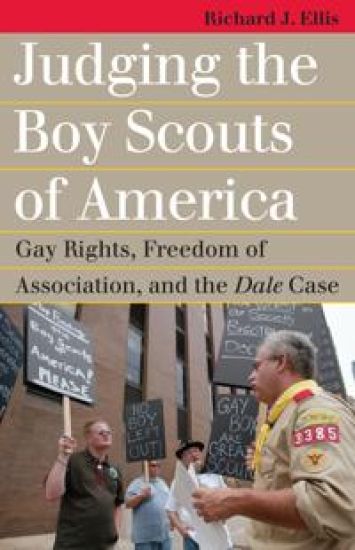
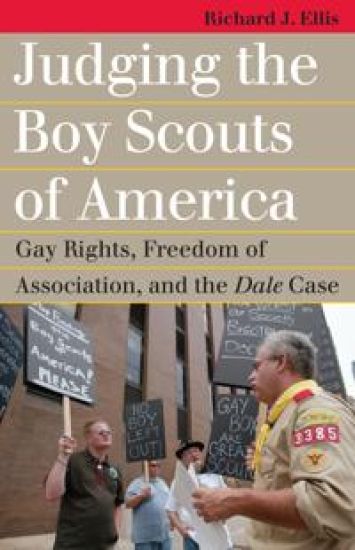
As Americans, we cherish the freedom to associate. However, with the freedom to associate comes the right to exclude those who do not share our values and goals. What happens when the freedom of association collides with the equally cherished principle that every individual should be free from invidious discrimination? This is precisely the question posed in Boy Scouts of America v. James Dale, a lawsuit that made its way through the courts over the course of a decade, culminating in 2000 with a landmark ruling by the U.S. Supreme Court. In Judging the Boy Scouts of America, Richard J. Ellis tells the fascinating story of the Dale case, placing it in the context of legal principles and precedents, Scouts policies, gay rights and the “culture wars” in American politics.The story begins with James Dale, a nineteen-year old Eagle Scout and assistant scoutmaster in New Jersey, who came out as a gay man in the summer of 1990. The Boy Scouts, citing their policy that denied membership to “avowed homosexuals,” promptly terminated Dale’s membership. Homosexuality, the Boy Scout leadership insisted, violated the Scouts’ pledge to be “morally straight.” With the aid of the Lambda Legal Defense Fund, Dale sued for discrimination.Ellis tracks the case from its initial filing in New Jersey through the final decision of the U.S. Supreme Court in favour of the Scouts. In addition to examining the legal issues at stake, including the effect of the Supreme Court’s ruling on the law of free association, Ellis also describes Dale’s personal journey and its intersection with an evolving gay rights movement. Throughout he seeks to understand the puzzle of why the Boy Scouts would adopt and adhere to a policy that jeopardised the organisation’s iconic place in American culture - and, finally, explores how legal challenges and cultural changes contributed to the Scouts’ historic policy reversal in May 2013 that ended the organisation’s ban on gay youth (though not gay adults).
George W. Bush's presidency has helped accelerate a renewed interest in the legal or formal bases of presidential power. It is now abundantly clear that presidential power is more than the sum of bargaining, character, and rhetoric. Presidential power also inheres in the Constitution or at least assertions of constitutional powers. Judging Executive Power helps to bring the Constitution and the courts back into the study of the American presidency by introducing students to sixteen important Supreme Court cases that have shaped the power of the American presidency. The cases selected include the removal power, executive privilege, executive immunity, and the line-item veto, with particularly emphasis on a president's wartime powers from the Civil War to the War on Terror. Through introductions and postscripts that accompany each case, landmark judicial opinions are placed in their political and historical contexts, enabling students to understand the political forces that frame and the political consequences that follow from legal arguments and judgments.
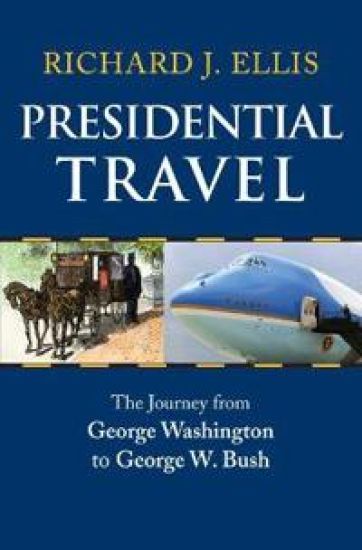
In office less than half a year, President George Washington undertook an arduous month-long tour of New England to promote his new government and to dispel fears of monarchy. More than two hundred years later, American presidents still regularly traverse the country to advance their political goals and demonstrate their connection to the people.In this first book-length study of the history of presidential travel, Richard Ellis explores how travel has reflected and shaped the changing relationship between American presidents and the American people. Tracing the evolution of the president from First Citizen to First Celebrity, he spins a lively narrative that details what happens when our leaders hit the road to meet the people.Presidents, Ellis shows, have long placed travel at the service of politics: Rutherford ""the Rover"" Hayes visited thirty states and six territories and was the first president to reach the Pacific, while William Howard Taft logged an average of 30,000 rail miles a year. Unearthing previously untold stories of our peripatetic presidents, Ellis also reveals when the public started paying for presidential travel, why nineteenth-century presidents never left the country, and why earlier presidents - such as Andrew Jackson, once punched in the nose on a riverboat - journeyed without protection.Ellis marks the fine line between accessibility and safety, from John Quincy Adams skinny-dipping in the Potomac to George W. clearing brush in Crawford. Particularly important, Ellis notes, is the advent of air travel. While presidents now travel more widely, they have paradoxically become more remote from the people, as Air Force One flies over towns through which presidential trains once rumbled to rousing cheers. Designed to close the gap between president and people, travel now dramatizes the distance that separates the president from the people and reinforces the image of a regal presidency.As entertaining as it is informative, Ellis' book is a sprightly account that takes readers along on presidential jaunts through the years as our leaders press flesh and kiss babies, ride carriages and trains, plot strategies on board ships and planes, and try to connect with the citizens they represent.
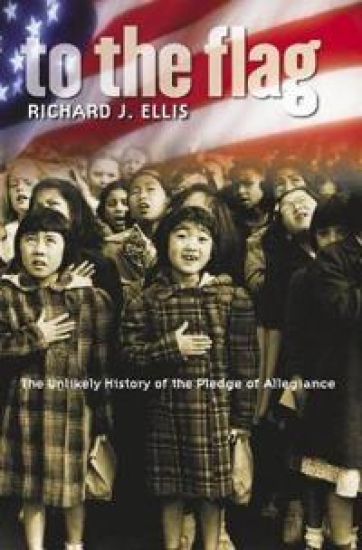
For over one hundred years, it has been deeply ingrained in American culture. Saluting the flag in public schools began as part of a national effort to Americanize immigrants, its final six words imbuing it with universal hope and breathtaking power. Now Richard Ellis unfurls the fascinating history of the Pledge of Allegiance and of the debates and controversies that have sometimes surrounded it. For anyone who has ever recited those thirty-one words, To the Flag provides an unprecedented historical perspective on recent challenges to the Pledge. As engaging as it is informative, it traces the story from the Pledge's composition by Francis Bellamy in 1892 up to the Supreme Court's action in 2004 regarding atheist Michael Newdow's objection to the words under God. Ellis is especially good at highlighting aspects of this story that might not be familiar to most readers: the schoolhouse flag movement, the codification of the Pledge at the First National Flag Conference in 1923, changing styles of salute, and the uses of the Pledge to quell public concerns over sundry strains of radicalism. Created against the backdrop of rapid immigration, the Pledge has continued for over a century to be injected into American politics at times of heightened anxiety over the meaning of our national identity. Ellis analyzes the text of the Pledge to tell how the very words indivisible and allegiance were intended to invoke Civil War sentiments-and how with liberty and justice for all forms a capsule expression of the American creed. He also examines the introduction of under God as an anti-Communist declaration in the 1950s, demonstrating that the phrase is not mere ceremonial Deism but rather a profound expression of what has been called America's civil religion. The Pledge has inspired millions but has also been used to promote conformity and silence dissent-indeed its daily recitation in schools and legislatures tells us as much about our anxieties as a nation as it does about our highest ideals. Ellis reveals how, for over a century, those who have been most fearful about threats to our national identity have often been most insistent on the importance of patriotic rituals. Indeed, by addressing this inescapable paradox of our civic life, Ellis opens a new and unexpected window on the American soul.
A critical analysis of the statewide initiative process in the United States, challenging readers to look beyond populist rhetoric and face political reality. Through prose, anecdotes and historical context, Richard Ellis seeks to reveal the ""dark side"" of direct democracy.
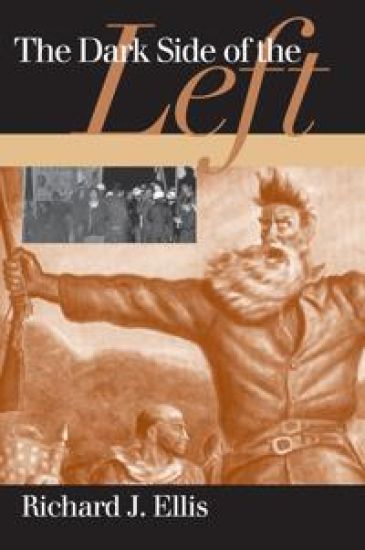
Why do people who identify themselves as liberal or egalitarian sometimes embrace intolerance or even preach violence? This book examines the illiberal tendencies of egalitarian movements in American history, from the radical abolitionists of the 1830s, to the New Left activists of the 1960s.