Kirjojen hintavertailu. Mukana 12 459 402 kirjaa ja 12 kauppaa.

Kirjailija

Richard J. Evans

Kirjat ja teokset yhdessä paikassa: 56 kirjaa, julkaisuja vuosilta 1996-2025, suosituimpien joukossa Altered Pasts. Vertaile teosten hintoja ja tarkista saatavuus suomalaisista kirjakaupoista.

Mukana myös kirjoitusasut: Richard J Evans

56 kirjaa

Kirjojen julkaisuhaarukka 1996-2025.

Society and Politics in Wilhelmine Germany (Routledge Revivals)
In the search for the causes of the First World War and the origins of Hitler’s ‘Third Reich’, the attention of historians has turned increasingly towards the development of German society under Kaiser Wilhelm II. These ten essays, first published in 1978, introduced interpretations of Wilhelmine Germany to an English-speaking audience and contributed towards the discussion of these interpretations that were taking place amongst German historians. This book is ideal for student of history, particularly German history.
The German Underworld (Routledge Revivals)
This book, which was first published in 1988, deals with the neglected history of the lowest layers of German society, of marginal, outcast and deviant groups such as arsonists, witches, bandits, infanticides, poachers, murderers, prostitutes, vagrants and thieves, from the end of the thirteenth century to the middle of the twentieth. This book is ideal for students of history, particularly the German history.
Rereading German History (Routledge Revivals)
In Rereading German History, first published in 1997, Richard J. Evans draws together his seminal review essays on the political, economic, cultural and social history of Germany through war and reunification. This book provides a study of how and why historians – mainly German, American, British and French – have provided a series of differing and often conflicting readings of the German past. It also presents a reconsideration of German history in the light of the recent decline of the German Democratic Republic, collapse of the Berlin Wall and the reunification of Germany. Rereading German History re-examines major controversies in modern German history, such as the debate over Germany’s ‘special path’ to modernity in the nineteenth and twentieth centuries, and the discussions in the 1980s on the uniqueness or otherwise of Auschwitz. Evans also analyses the arguments over the nature of German national identity. The book offers trenchant and important analytical insights into the history of Germany in the last two centuries, and is ideal reading material for students of modern history and German studies.
The German Peasantry (Routledge Revivals)

The German Peasantry (Routledge Revivals)

Richard J. Evans; W. R. Lee

Routledge
2015
sidottu
This book, first published in 1986, surveys the history of rural society in Germany from the eighteenth century to the present day. The contributions include studies of Junker estates and small farming communities, serfs and landless labourers, maidservants and worker-peasants. They demonstrate the variety and complexity of the social division that structures the rural economy. Throughout the book there is an emphasis on the conflicts that divided rural society, and the ways and means in which these were expressed, whether in serf strikes in eighteenth-century Brandenburg, village gossip in early twentieth-century Hesse, or factional struggles over planning permission in present-day Swabia. The rural world emerges not as traditional, passive and undifferentiated , but as actively participating in its own making; not only responding to the changes going on around it, but exploiting them for its own purposes and influencing them in its own way. This book is ideal for students of history, particularly German history.
Rethinking German History (Routledge Revivals)
In Rethinking German History, first published in 1987, Richard J. Evans argues for a social-historical approach to the German past that pays equal attention to objective social structures and subjective values and experiences. If German history has been seen as an exception to the ‘normal’ development of Western society, this is not least because historians have until recently largely failed to look beyond the world of high politics, institutions, organizations and ideologies to broader historical problems of German society and German mentalities. By applying and adapting approaches learned from French and British social history as they have been developed over the last quarter of a century, it is possible to achieve a rethinking of German history which does away with many of the textbook myths that have encrusted the historiogrpahy of Germany for so long. This book will be valuable for students of German history and politics, and brings together essays widely used in teaching. Its broad coverage of social history will also be useful to all those interested in contemporary historiography or the comparative study of European history.
The Feminists

The Feminists

Richard J. Evans

Routledge
2014
nidottu
Originally published in 1977, this book brings together what is known about liberal feminist and socialist movements for the emancipation of women all over the world in the nineteenth and early twentieth centuries. It deals not only with Britain and the United States but also with Australia, New Zealand, France, Germany, Russia, Austria-Hungary and the Scandinavian countries. The chapters trace the origins, development, and eventual collapse of these movements in relation to the changing social formations and political structures of Europe, America and Australasia in the era of bourgeois liberalism. The first part of the book discusses the origins of feminist movements and advances a model or ‘ideal type’ description of their development. The second part then takes a number of case studies of individual feminist movements to illustrate the main varieties of organised feminism and the differences from country to country. The third part looks at socialist women’s movements and includes a study of the Socialist Women’s International. A final part touches on the reason for the eclipse of women’s emancipation movements in the half-century following the end of the First World War, before a general conclusion pulls together some of the arguments advanced in earlier chapters and attempts a comparison between these feminist movements of 1840-1920 and the Women’s Liberation Movement.
Altered Pasts

Altered Pasts

Richard J. Evans

Little, Brown
2014
nidottu
A bullet misses its target in Sarajevo, a would-be Austrian painter gets into the Viennese academy, Lord Halifax becomes British prime minister in 1940: seemingly minor twists of fate on which world-shaking events might have hinged. Alternative history has long been the stuff of parlour games, war-gaming and science fiction, but over the past few decades it has become a popular stomping ground for serious historians. Richard J. Evans now turns a critical, slightly jaundiced eye on the subject. Altered Pasts examines the intellectual fallout from historical counterfactuals. Most importantly, Evans takes counterfactual history seriously, looking at the insights, pitfalls and intellectual implications of changing one thread in the weave of history.
The Feminists

The Feminists

Richard J. Evans

Routledge
2012
sidottu
Originally published in 1977, this book brings together what is known about liberal feminist and socialist movements for the emancipation of women all over the world in the nineteenth and early twentieth centuries. It deals not only with Britain and the United States but also with Australia, New Zealand, France, Germany, Russia, Austria-Hungary and the Scandinavian countries. The chapters trace the origins, development, and eventual collapse of these movements in relation to the changing social formations and political structures of Europe, America and Australasia in the era of bourgeois liberalism. The first part of the book discusses the origins of feminist movements and advances a model or ‘ideal type’ description of their development. The second part then takes a number of case studies of individual feminist movements to illustrate the main varieties of organised feminism and the differences from country to country. The third part looks at socialist women’s movements and includes a study of the Socialist Women’s International. A final part touches on the reason for the eclipse of women’s emancipation movements in the half-century following the end of the First World War, before a general conclusion pulls together some of the arguments advanced in earlier chapters and attempts a comparison between these feminist movements of 1840-1920 and the Women’s Liberation Movement.
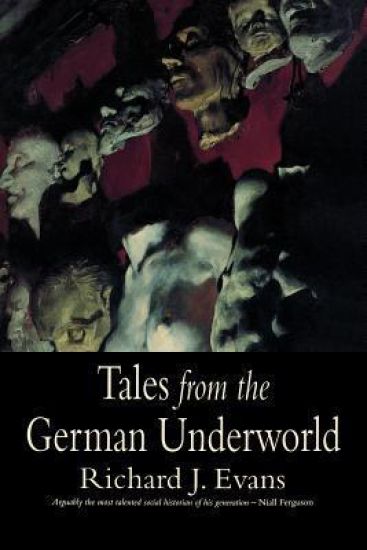
Tales from the German Underworld

Tales from the German Underworld

Richard J. Evans

Yale University Press
2012
pokkari
Through the means of four powerful and extraordinary narratives from the nineteenth-century German underworld, this book deftly explores an intriguing array of questions about criminality, punishment, and social exclusion in modern German history. Drawing on hitherto unexplored legal documents and police files, Richard J. Evans recounts the epic adventures of an art teacher imprisoned for forging bank notes, then transported to Siberia with a gang of violent Prussian felons in 1802; the tragic sufferings of a drunken female vagrant whipped repeatedly by the authorities in Bremen in the 1820s and 30s; the comical and fantastic deceptions of a con man arrested in the 1860s for not paying his hotel bill; and the ironic career of a young woman who drifts into prostitution after bearing an illegitimate child and discovers the underworld to be much less cruel and immoral than the "respectable" society from which she has been rejected. Each of these narratives sheds light on German penal policy in the nineteenth century, when a regime of public and often symbolic physical punishment was transformed into one of silent, regimented incarceration. Using these fascinating cases as starting points for a wider consideration of crime and justice, Evans investigates the complexity of the relations between deviance and control, the ambiguities of criminality in modern German history, and the ways literary models influenced perceptions of—and behavior in—the criminal underworld.
The Third Reich at War, 1939-1945

The Third Reich at War, 1939-1945

Richard J. Evans

PENGUIN BOOKS
2010
nidottu
An absorbing, revelatory, and definitive account of one of the greatest tragedies in human history, by the author of The Coming of the Third Reich, The Third Reich in Power, and Hitler's People "This is history in the grand style, the kind of large-scale narrative that few historians dare to write these days. It is difficult to imagine how it could be improved upon, let alone surpassed." --The Washington Post "This superb book is not simply a military history; it is a comprehensive portrait of a society at war...A masterpiece of historical research and analysis...Likely to remain the best study of the Third Reich at war for many years to come." --The Christian Science Monitor Adroitly blending narrative, description, and analysis, Richard J. Evans portrays a society rushing headlong to self-destruction and taking much of Europe with it. Interweaving a broad narrative of the war's progress from a wide range of people, Evans reveals the dynamics of a society plunged into war at every level. The great battles and events of the conflict are here, but just as telling is Evans's re- creation of the daily experience of ordinary Germans in wartime. At the center of the book is the Nazi extermi­nation of the Jews. The Third Reich at War lays bare the most momentous and tragic years of the Nazi regime.
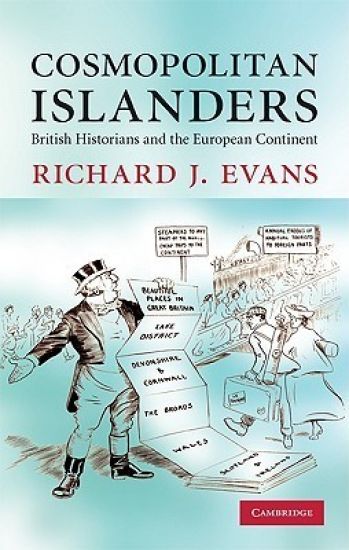
Cosmopolitan Islanders

Cosmopolitan Islanders

Richard J. Evans

Cambridge University Press
2009
sidottu
In Cosmopolitan Islanders one of the world's leading historians asks why it is that so many prominent and influential British historians have devoted themselves to the study of the European Continent. Books on the history of France, Germany, Italy, Russia, and many other European countries, and of Europe more generally, have frequently reached the best-seller lists both in Britain and (in translation) in those European countries themselves. Yet the same is emphatically not true in reverse. Richard J. Evans traces the evolution of British interest in the history of Continental Europe from the Enlightenment to the twentieth century. He goes on to discuss why British historians who work on aspects of European History in the present day have chosen to do so and why this distinguished tradition is now under threat. Cosmopolitan Islanders ends with some reflections on what needs to be done to ensure its continuation in the future.
Cosmopolitan Islanders

Cosmopolitan Islanders

Richard J. Evans

Cambridge University Press
2009
pokkari
In Cosmopolitan Islanders one of the world's leading historians asks why it is that so many prominent and influential British historians have devoted themselves to the study of the European Continent. Books on the history of France, Germany, Italy, Russia, and many other European countries, and of Europe more generally, have frequently reached the best-seller lists both in Britain and (in translation) in those European countries themselves. Yet the same is emphatically not true in reverse. Richard J. Evans traces the evolution of British interest in the history of Continental Europe from the Enlightenment to the twentieth century. He goes on to discuss why British historians who work on aspects of European History in the present day have chosen to do so and why this distinguished tradition is now under threat. Cosmopolitan Islanders ends with some reflections on what needs to be done to ensure its continuation in the future.
The Coming Of The Third Reich

The Coming Of The Third Reich

Richard J. Evans

The Penguin Press
2005
pokkari
The first in a three-volume series, a definitive history of Adolf Hitler's rise to power and the collapse of democracy in Nazi Germany explains why Nazism's ideology of hatred and racism found fertile ground in a country embittered by military defeat and economic disaster following World War I, undermined by an alienated army and civil service, and prey to widespread resentment, suspicion, and extremism. Reprint.
The Coming of the Third Reich

The Coming of the Third Reich

Richard J. Evans

Penguin Books Ltd
2004
pokkari
Richard J. Evans' The Coming of the Third Reich: How the Nazis Destroyed Democracy and Seized Power in Germany explores how the First World War, the Weimar Republic and the Great Depression paved the way for Nazi rule. They started as little more than a gang of extremists and thugs, yet in a few years the Nazis had turned Germany into a one-party state and led one of Europe's most advanced nations into moral, physical and cultural ruin and despair. In this consummate and compelling history, the first book in his acclaimed trilogy on the rise and fall of Nazi Germany, Richard Evans reveals how and why it happened, questions whether the rise of Hitler was inevitable and dramatically re-creates the maelstrom of disorder, economic disaster, violence and polarization that gave rise to the terror of the Third Reich. 'Monumental ... gripping ... the definitive account of our time' Andrew Roberts, Daily Telegraph 'Impressive ... perceptive ... humane ... the most comprehensive history in any language of the disastrous epoch of the Third Reich' Ian Kershaw, author of Hitler 'The most gripping account I've read of German life before and during the rise of the Nazis' A.S. Byatt, Times Literary Supplement Books of the Year Sir Richard J. Evans is Professor of Modern History at Cambridge University. His previous books include In Defence of History, Telling Lies about Hitler and the companions to this title, The Coming of the Third Reich and The Third Reich at War.
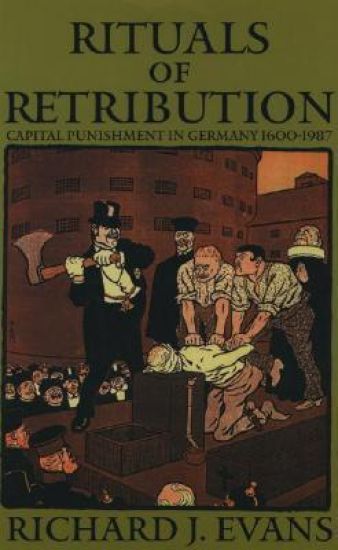
Rituals of Retribution

Rituals of Retribution

Richard J. Evans

Oxford University Press
1996
sidottu
COPYWRITER - Modern History section for 1996 cat The state has no greater power over its own citizens than that of killing them. This book examines the use of that supreme sanction in Germany, from the seventeenth century to the present. Richard Evans analyses the system of `traditional' capital punishments set out in German law, and the ritual practices and cultural readings associated with them by the time of the early modern period. He shows how this system was challenged by Enlightenment theories of punishment and broke down under the impact of secularization and social change in the first half of the nineteenth century. The abolition of the death penalty became a classic liberal case which triumphed, if only momentarily, in the 1948 Revolution. In Germany far more than anywhere else in Europe, capital punishment was identified with anti-liberal, authoritarian concepts of sovereignty. Its definitive reinstatement by Bismarck in the 1880s marked not only the defeat of liberalism but also coincided with the emergence of new, Social Darwinist attitudes towards criminality which gradually changed the terms of debate. The triumph of these attitudes under the Nazis laid the foundations for the massive expansion of capital punishment which took place during Hitler's `Third Reich'. After the Second World War, the death penalty was abolished, largely as a result of a chance combination of circumstances, but continued to be used in the Stalinist system of justice in East Germany until its forced abandonment as a result of international pressure exerted in the regime in the 1970s and 1980s. This remarkable and disturbing book casts new light on the history of German attitudes to law, deviance, cruelty, suffering and death, illuminating many aspects of Germany's modern political development. Using sources ranging from folksongs and ballads to the newly released government papers from the former German Democratic Republic, Richard Evans scrutinizes the ideologies behind capital punishment and comments on interpretations of the history of punishment offered by writers such as Foucault and Elias. He has made a formidable contribution not only to scholarship on German history but also to the social theory of punishement, and to the current debate on the death penalty.