Kirjojen hintavertailu. Mukana 12 657 676 kirjaa ja 12 kauppaa.

Kirjailija

Richard J. Jagacinski

Kirjat ja teokset yhdessä paikassa: 2 kirjaa, julkaisuja vuodelta 2002, suosituimpien joukossa Control Theory for Humans. Vertaile teosten hintoja ja tarkista saatavuus suomalaisista kirjakaupoista.

2 kirjaa

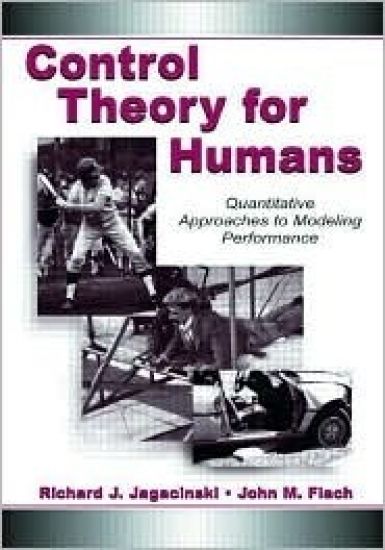
Control Theory for Humans

Control Theory for Humans

Richard J. Jagacinski; John M. Flach

CRC Press Inc
2002
nidottu
This textbook provides a tutorial introduction to behavioral applications of control theory. Control theory describes the information one should be sensitive to and the pattern of influence that one should exert on a dynamic system in order to achieve a goal. As such, it is applicable to various forms of dynamic behavior. The book primarily deals with manual control (e.g., moving the cursor on a computer screen, lifting an object, hitting a ball, driving a car), both as a substantive area of study and as a useful perspective for approaching control theory. It is the experience of the authors that by imagining themselves as part of a manual control system, students are better able to learn numerous concepts in this field. Topics include varieties of control theory, such as classical, optimal, fuzzy, adaptive, and learning control, as well as perception and decision making in dynamic contexts. The authors also discuss implications of control theory for how experiments can be conducted in the behavioral sciences. In each of these areas they have provided brief essays intended to convey key concepts that enable the reader to more easily pursue additional readings. Behavioral scientists teaching control courses will be very interested in this book.
Control Theory for Humans

Control Theory for Humans

Richard J. Jagacinski; John M. Flach

CRC Press Inc
2002
sidottu
This textbook provides a tutorial introduction to behavioral applications of control theory. Control theory describes the information one should be sensitive to and the pattern of influence that one should exert on a dynamic system in order to achieve a goal. As such, it is applicable to various forms of dynamic behavior. The book primarily deals with manual control (e.g., moving the cursor on a computer screen, lifting an object, hitting a ball, driving a car), both as a substantive area of study and as a useful perspective for approaching control theory. It is the experience of the authors that by imagining themselves as part of a manual control system, students are better able to learn numerous concepts in this field. Topics include varieties of control theory, such as classical, optimal, fuzzy, adaptive, and learning control, as well as perception and decision making in dynamic contexts. The authors also discuss implications of control theory for how experiments can be conducted in the behavioral sciences. In each of these areas they have provided brief essays intended to convey key concepts that enable the reader to more easily pursue additional readings. Behavioral scientists teaching control courses will be very interested in this book.