
Kirjailija
Richard J. Williams
Kirjat ja teokset yhdessä paikassa: 17 kirjaa, julkaisuja vuosilta 2001-2025, suosituimpien joukossa Michael. Vertaile teosten hintoja ja tarkista saatavuus suomalaisista kirjakaupoista.
Mukana myös kirjoitusasut: Richard J Williams
17 kirjaa
Kirjojen julkaisuhaarukka 2001-2025.
In the demonology of the contemporary city, is there anything more toxic than the expressway? Dividing neighbourhoods, depressing land values, concentrating atmospheric pollutants, the mammoth infrastructure of the expressway is now increasingly crumbling into the ground. How did we build the expressway world in the first place? And what are we going to do now with it now? This eye-opening book explores these questions partly through the great expressway abolitions of recent years, such as Boston’s Central Artery (buried and covered by a park) and Seoul’s Cheonggyecheon (replaced with an artificial river). But the book also uncovers the hidden stories of expressways that have become weird attractions in their own right, from London’s Westway to São Paulo’s Minhocão, celebrated in art and literature. Above all, the book proposes, counterintuitively, that we find ways to live with the expressway world and to adapt it to a different future, inspired by the many examples where people have already reinvented this challenging legacy on their own terms. Engaging with case studies across the world and recent thinking in the environmental humanities and architectural theory, this is a thought-provoking invitation to reconsider the most maligned structures of the recent urban past.
The Culture Factory: Architecture and the Contemporary Art Museum explores the key battlegrounds in the design of the contemporary-art museum, describing the intersection of art, aesthetics and politics at the highest levels, and the commitment of states, cities and wealthy individuals to the display of art. Global in scope, the book examines key examples from Europe and the Americas to contemporary China. It describes museum building as the projection of political power, but also as a desire to acquire power. So it is a book about ambitious peripheries as much as the traditional centres: Dundee and Bilbao as well as New York and Paris. It is commonplace to assume that the contemporary-art museum has become ever more spectacular, and the place of art ever more subservient within it. This book argues that a tendency to spectacle coexists with another equally powerful tendency, to make art museums that celebrate the artistic process, typically attempting to recreate the feeling of the artist's studio. That tendency is strongly represented in the designs for the Centre Georges Pompidou, completed in 1977, and arguably in the many contemporary art museums which have adapted former industrial buildings. Richard J. Williams's stimulating text includes many historical examples to illustrate how we got to where we are now, from the Centre Pompidou in Paris, to the Guggenheim museums in New York and Bilbao, London’s Tate Modern, Oscar Niemeyer's work in Brazil and beyond, and the 798 Art District in Beijing.
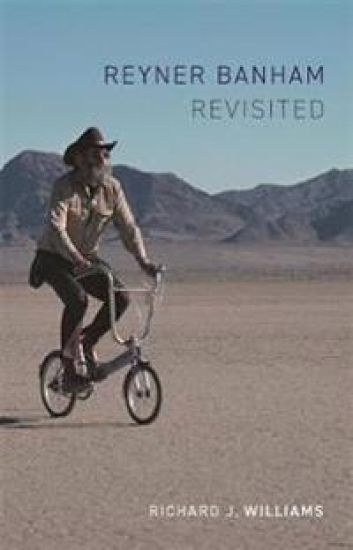
Reyner Banham (1922-88) was a prolific, iconoclastic critic of modern architecture, cities and mass culture in Britain and the US, and his provocative writings are inescapable in these areas. His 1971 book on Los Angeles was ground-breaking in what it told Californians about their own metropolis, and architects about what cities might be if freed from tradition. Banham's obsession with technology, and his talent for thinking the unthinkable, mean his work still means a lot now, more than thirty years after his death. This book explores the full breadth of his career and his legacy, dealing not only with the major books, but a wide range of his journalism and media outputs, as well as the singular character of Banham himself.
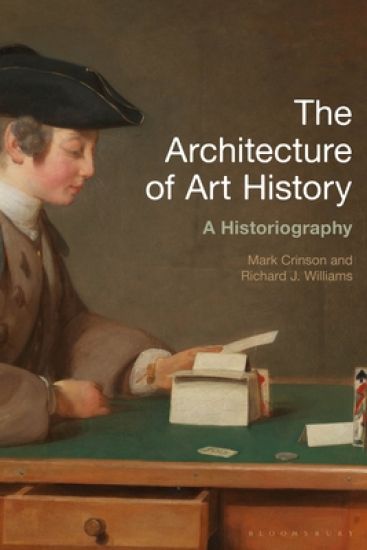
The Architecture of Art History
Mark Crinson; Richard J. Williams
Bloomsbury Visual Arts
2019
nidottu
What is the place of architecture in the history of art? Why has it been at times central to the discipline, and at other times seemingly so marginal? What is its place now? Many disciplines have a stake in the history of architecture – sociology, anthropology, human geography, to name a few. This book deals with perhaps the most influential tradition of all – art history – examining how the relation between the disciplines of art history and architectural history has waxed and waned over the last one hundred and fifty years. In this highly original study, Mark Crinson and Richard J. Williams point to a decline in the importance attributed to the role of architecture in art history over the last century – which has happened without crisis or self-reflection. The book explores the problem in relation to key art historical approaches, from formalism, to feminism, to the social history of art, and in key institutions from the Museum of Modern Art, to the journal October. Among the key thinkers explored are Banham, Baxandall, Giedion, Panofsky, Pevsner, Pollock, Riegl, Rowe, Steinberg, Wittkower and Wölfflin. The book will provoke debate on the historiography and present state of the discipline of art history, and it makes a powerful case for the reconsideration of architecture.
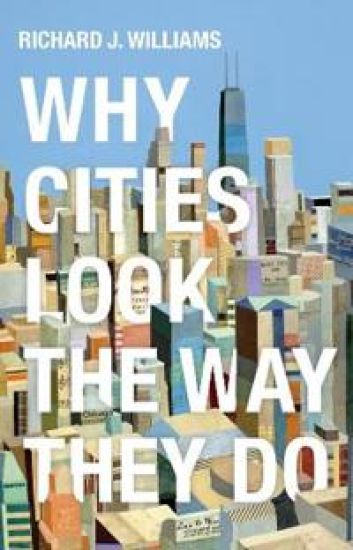
We tend to think cities look the way they do because of the conscious work of architects, planners and builders. But what if the look of cities had less to do with design, and more to do with social, cultural, financial and political processes, and the way ordinary citizens interact with them? What if the city is a process as much as a design? Richard J. Williams takes the moment construction is finished as a beginning, tracing the myriad processes that produce the look of the contemporary global city. This book is the story of dramatic but unforeseen urban sights: how financial capital spawns empty towering skyscrapers and hollowed-out ghettoes; how the zoning of once-illicit sexual practices in marginal areas of the city results in the reinvention of culturally vibrant gay villages; how abandoned factories have been repurposed as creative hubs in a precarious postindustrial economy. It is also the story of how popular urban clichés and the fictional portrayal of cities powerfully shape the way we read and see the bricks, concrete and glass that surround us. Thought-provoking and original, Why Cities Look the Way They Do will appeal to anyone who wants to understand the contemporary city, shedding new light on humanity’s greatest collective invention.
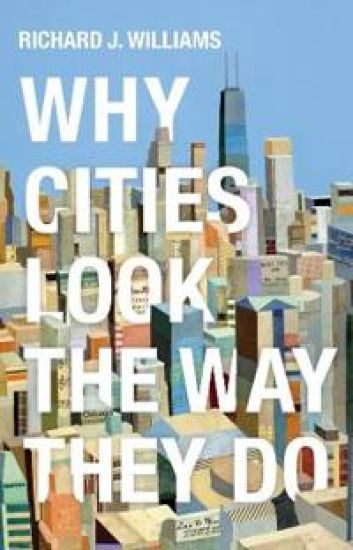
We tend to think cities look the way they do because of the conscious work of architects, planners and builders. But what if the look of cities had less to do with design, and more to do with social, cultural, financial and political processes, and the way ordinary citizens interact with them? What if the city is a process as much as a design? Richard J. Williams takes the moment construction is finished as a beginning, tracing the myriad processes that produce the look of the contemporary global city. This book is the story of dramatic but unforeseen urban sights: how financial capital spawns empty towering skyscrapers and hollowed-out ghettoes; how the zoning of once-illicit sexual practices in marginal areas of the city results in the reinvention of culturally vibrant gay villages; how abandoned factories have been repurposed as creative hubs in a precarious postindustrial economy. It is also the story of how popular urban clichés and the fictional portrayal of cities powerfully shape the way we read and see the bricks, concrete and glass that surround us. Thought-provoking and original, Why Cities Look the Way They Do will appeal to anyone who wants to understand the contemporary city, shedding new light on humanity’s greatest collective invention.
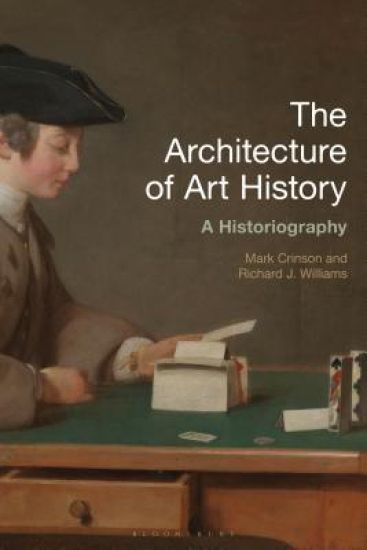
The Architecture of Art History
Mark Crinson; Richard J. Williams
Bloomsbury Visual Arts
2018
sidottu
What is the place of architecture in the history of art? Why has it been at times central to the discipline, and at other times seemingly so marginal? What is its place now? Many disciplines have a stake in the history of architecture – sociology, anthropology, human geography, to name a few. This book deals with perhaps the most influential tradition of all – art history – examining how the relation between the disciplines of art history and architectural history has waxed and waned over the last one hundred and fifty years. In this highly original study, Mark Crinson and Richard J. Williams point to a decline in the importance attributed to the role of architecture in art history over the last century – which has happened without crisis or self-reflection. The book explores the problem in relation to key art historical approaches, from formalism, to feminism, to the social history of art, and in key institutions from the Museum of Modern Art, to the journal October. Among the key thinkers explored are Banham, Baxandall, Giedion, Panofsky, Pevsner, Pollock, Riegl, Rowe, Steinberg, Wittkower and Wölfflin. The book will provoke debate on the historiography and present state of the discipline of art history, and it makes a powerful case for the reconsideration of architecture.
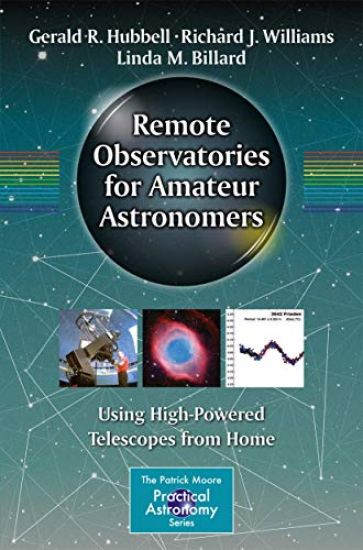
Remote Observatories for Amateur Astronomers
Gerald R. Hubbell; Richard J. Williams; Linda M. Billard
Springer International Publishing AG
2015
nidottu
Amateur astronomers who want to enhance their capabilities to contribute to science need look no farther than this guide to using remote observatories. The contributors cover how to build your own remote observatory as well as the existing infrastructure of commercial networks of remote observatories that are available to the amateur. They provide specific advice on which programs to use based on your project objectives and offer practical project suggestions. Remotely controlled observatories have many advantages—the most obvious that the observer does not have to be physically present to carry out observations. Such an observatory can also be used more fully because its time can be scheduled and usefully shared among several astronomers working on different observing projects. More and more professional-level observatories are open to use by amateurs in this way via the Internet, and more advanced amateur astronomers can even build their own remote observatories for sharing among members of a society or interest group. Endorsements: “Remote Observatories for Amateur Astronomers Using High-Powered Telescopes from Home, by Jerry Hubbell, Rich Williams, and Linda Billard, is a unique contribution centering on computer-controlled private observatories owned by amateur astronomers and commercialized professional–amateur observatories where observing time to collect data can be purchased. Before this book, trying to piece together all of the necessary elements and processes that make up a remotely operated observatory was daunting. The authors and contributors have provided, in this single publication, a wealth of information gained from years of experience that will save you considerable money and countless hours in trying to develop such an observatory. If you follow the methods and processes laid out in this book and choose to build your own remotely operated observatory or decide to become a regular user of one of the commercial networks, you will not only join an elite group of advanced astronomers who make regular submissions to science, but you will become a member of an ancient fraternity. Your high-technology observatory will contain a “high-powered telescope” no matter how large it is, and from the comfort of home, you can actively contribute to the work that started in pre-history to help uncover the secrets of the cosmos.” Scott Roberts Founder and President, Explore Scientific, LLC. “In the past three and a half decades, since I first became involved with remote observatories, the use of remote, unmanned telescopes at fully automated observatories has advanced from a very rare approach for making astronomical observations to an increasingly dominant mode for observation among both professional and amateur astronomers. I am very pleased to see this timely book being published on the topic. I highly recommend this book to readers because it not only covers the knowledge needed to becomean informed user of existing remote observatories, but also describes what you need to know to develop your own remote observatory. It draws on more than two decades of remote observatory operation and networking by coauthor Rich Williams as he developed the Sierra Stars Observatory Network (SSON) into the world-class network it is today. This book is the ideal follow-on to coauthor Jerry Hubbell’s book Scientific Astrophotography (Springer 2012). Remote observatories have a bright future, opening up astronomy to a new and much larger generation of professional, amateur, and student observers. Machines and humans can and do work well together. I hope you enjoy reading this book as much as I have and will take advantage of the developments over the past several decades by the many pioneers of remote observatories.” Russ Genet, PhD. California Polytechnic State University Observing Saturn for the first time is a memory that stays with us for the rest of our lives, and for many it is the start of an odyssey--an odyssey into observational astronomy. Remote Observatories for Amateur Astronomers is a book written for observers, beginners, and old hands alike, providing detailed advice to those wishing to improve their observing skills. Many will want to build and operate a remotely controlled observatory, and for those, Part I of this book is an invaluable source of information. If, like me, you choose to avoid the capital outlay of owning your own facility, Part II describes how you can use one of the many professionally run large scopes where, for a few dollars, you can capture spectacular color images of nebulae, galaxies, and comets. My own scientific interest in short period eclipsing binaries has been made possible through the availability of remote telescopes such as those operated by the Sierra Stars Observatory Network (SSON). Whichever route you take, this book is essential reading for all who aspire to serious observing. David Pulley The Local Group (UK)
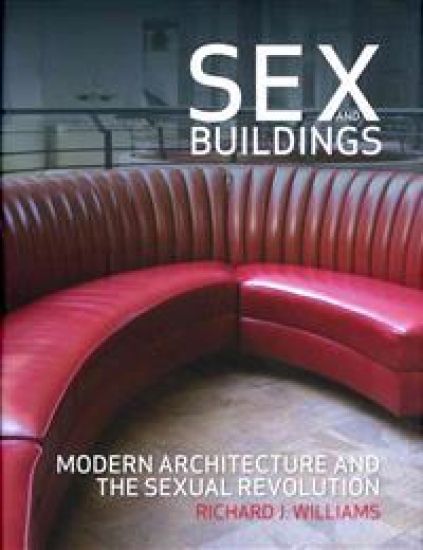
Massive modern skyscrapers, obelisks, towers - all are structures that, thanks to their phallic shape, are often associated with sex. But other buildings are more subtly connected, as they provide the frameworks for our sexual lives and act as reminders of our sexual memories and fantasies. This relationship between sex and buildings mattered more than ever in the United States and Europe during the turbulent twentieth century, when a culture of unprecedented sexual frankness and tolerance emerged and came to dominate many aspects of public life. Part architectural history, part cultural history, and part travelogue, Sex and Buildings explores how progressive sexual attitudes manifest themselves in architecture, asking what progressive sexuality might look like architecturally and the successes and failures of buildings to reflect it. In search of structures that reflect the sexual mores of their inhabitants, Richard J. Williams visits modernist buildings in Southern California, the Playboy Mansion, the Westin Bonaventure Hotel, communes from the 1960s, and more. A thought-provoking and often entertaining look at a period of extraordinary social change coupled with aesthetic invention, Sex and Buildings will change the way we view the buildings around us.


Set against a backdrop of breathtaking natural beauty, Brazil's striking Modernist architecture has long garnered international acclaim. But these well-known works are not fully reflective of the built environment of Brazil, and in this volume, Richard Williams unearths the surprisingly rich and influential architectural heritage of Brazil. Spanning the period from the 1930s to the present, Williams focuses on key issues such as the use of historic architecture, the importance of leisure and luxury, the role of the favela as a backdrop and inspiration for development, the growth of cities, and the legacy of Brazil's Modernist architecture. He examines the variety of Modernist works in Brazil, including those by renowned architects such as Niemeyer and Costa and many others, including Roberto Burle Marx, Vilanova Artigas, Lina Bo Bardi, the Arquitectura Nova group and Paolo Mendes da Rocha. Williams also focuses on more recent buildings by architects including Jaime Lerner, Joao Filgueiras Lima and Ruy Ohtake and considers the future of Modernist architecture in Brazil. From the designated world heritage site of Brasilia, a capital city that was planned from the ground up, to the installation work of artists such as Helio Oiticica, "Brazil" explores in depth the origins and complex meaning of Brazil's architectural Modernism. At a moment when the role of Latin America in global business and culture is growing in importance and attention, "Brazil" is an essential read for all scholars of architecture and Latin American history.
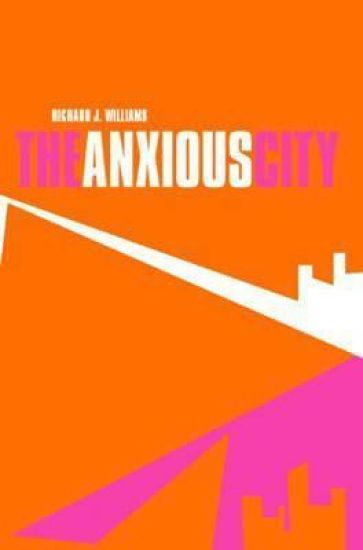
In the Western world, cities have arguably never been more anxious: practical anxieties about personal safety and metaphysical anxieties about the uncertain place of the city in culture are the small change of journalism and political debate. Cities have long been regarded as problems, in need of drastic solutions. In this context, the contemporary revival of city centres is remarkable. But in a culture that largely fears the urban, how can the contemporary city be imagined? How is it supposed to be used or inhabited? What does it mean? Taking England since WWII as its principal focus, this provocative and original book considers the Western city at a critical moment in its history.
In the Western world, cities have arguably never been more anxious: practical anxieties about personal safety and metaphysical anxieties about the uncertain place of the city in culture are the small change of journalism and political debate. Cities have long been regarded as problems, in need of drastic solutions. In this context, the contemporary revival of city centres is remarkable. But in a culture that largely fears the urban, how can the contemporary city be imagined? How is it supposed to be used or inhabited? What does it mean? Taking England since WWII as its principal focus, this provocative and original book considers the Western city at a critical moment in its history.
Noise and Hearing
Ron Hinchcliffe; Linda M. Luxon; Richard J. Williams
Whurr Publishers Ltd
2001
nidottu
Noise damage to hearing health is a health risk which is associated with both civilian and military occupations as well as certain leisure activities. Occupational noise damage to hearing must date from the bronze age, when man first began to fashion metals some five thousand years ago. The rapid growth of industrialisation over the past two centuries has produced what might be termed as the current civilian epidemic of occupational noise induced hearing loss. This series seeks to address points relevant to current knowledge of the subject. The volume should prove useful to members of the many disciplines that have an interest in this subject.