Kirjojen hintavertailu. Mukana 12 595 353 kirjaa ja 12 kauppaa.
Kirjailija
Richard Jochelson
Kirjat ja teokset yhdessä paikassa: 8 kirjaa, julkaisuja vuosilta 2012-2025, suosituimpien joukossa The Disappearance of Criminal Law. Vertaile teosten hintoja ja tarkista saatavuus suomalaisista kirjakaupoista.
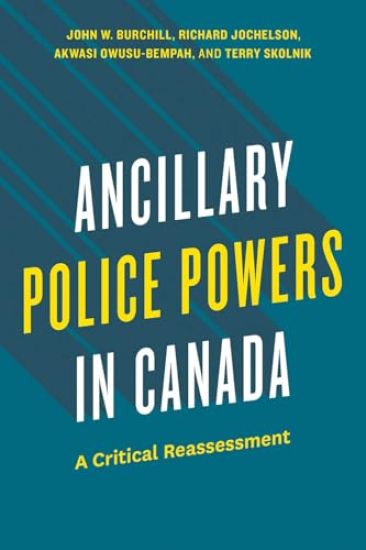
Police enforce the law, but they must also obey it. Statutes circumscribe how law enforcement officers conduct their work. At the same time, Canadian courts have handed police many powers to stop, search, and otherwise investigate people in the pursuit of public safety and crime prevention. Ancillary Police Powers in Canada explains what these common-law police powers are; how they came to be; and, crucially, what the potential dangers are in their expanding scope. What is the difference between police duty and lawful authority? Should the Supreme Court rescind powers when the police tactics they enable become controversial? This nuanced book surveys the evolution, application, and future of judge-made police powers. The authors bring historical perspective, critical legal theory, and empirical analysis to an issue that is fundamental to constitutional protection from state interference with individual liberty.
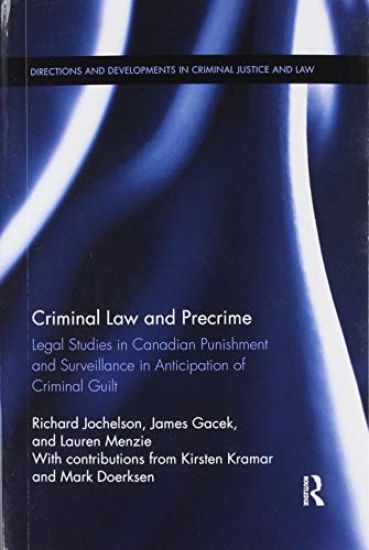
In Philip K. Dick’s short story Minority Report, the institution of Precrime punishes people with imprisonment for crimes they would have committed had they not been prevented. With Dick’s allegorical inspiration, the authors of Criminal Law and Precrime: Legal Studies in Canadian Punishment and Surveillance in Anticipation of Criminal Guilt posit that recent developments in Canadian law indicate a trend toward imposing punitive measures at increasingly earlier stages of the prosecutorial process. The result is a potentially new field of criminal management that could be characterized as "precrime"—particularly the use of the law as a technology of surveillance and prevention since "terror" became a justification for intervention. The authors note that as risk management logics (based in actuarial sciences) have shifted to precautionary ones (based in administrative sciences), the law has responded by developing techniques in the arena of criminal regulation in light of the "war on terror": the need to ensure security, the proliferation of digital data, and the development of drones, social networking, and cloud storage to gather personal data. The authors view shifts in criminal investigation; the substantive criminal law of sexual expression, conduct, and work; and civil forfeiture as emblematic of precrime populism. The unifying theme of these techniques is that they occur prior to state-identified crime, arise out of a precautionary philosophy, and seek to presume (or circumvent) criminality.The book is a provocative read for scholars and students in criminal law, policing, and surveillance, as well as for those interested in how areas of law, such as immigration, health, and anti-terrorism, are mobilizing the logics of risk and surveillance in new ways that emphasize precaution. The authors invite legal scholars to place the analytical lens of precrime on criminal and regulatory practices in Canada as well as other Western nations across the globe.
In 1984, the Supreme Court of Canada, in Hunter v Southam, declared warrantless searches unreasonable under section 8 of the Charter of Rights and Freedoms. Police would henceforth require authorization based on "reasonable and probable grounds." The decision promised to protect individuals from state power, but as Richard Jochelson and David Ireland argue, post-Hunter search and seizure law took a turn away from the landmark decision. An examination of dozens of subsequent cases reveals that section 8 protections have become more difficult to obtain in the post-9/11 era. Rather than developing rigorous standards for new search and surveillance techniques and technologies, the courts have used the Charter to sanction broader police powers. Yet, even as it demonstrates that the core principles of Justice Dickson's vision for section 8 rights have been diminished, Privacy in Peril suggests that increasing citation of Hunter in the halls of justice offers hope that some protection of civil liberties will endure in the twenty-first century.
In Philip K. Dick’s short story Minority Report, the institution of Precrime punishes people with imprisonment for crimes they would have committed had they not been prevented. With Dick’s allegorical inspiration, the authors of Criminal Law and Precrime: Legal Studies in Canadian Punishment and Surveillance in Anticipation of Criminal Guilt posit that recent developments in Canadian law indicate a trend toward imposing punitive measures at increasingly earlier stages of the prosecutorial process. The result is a potentially new field of criminal management that could be characterized as "precrime"—particularly the use of the law as a technology of surveillance and prevention since "terror" became a justification for intervention. The authors note that as risk management logics (based in actuarial sciences) have shifted to precautionary ones (based in administrative sciences), the law has responded by developing techniques in the arena of criminal regulation in light of the "war on terror": the need to ensure security, the proliferation of digital data, and the development of drones, social networking, and cloud storage to gather personal data. The authors view shifts in criminal investigation; the substantive criminal law of sexual expression, conduct, and work; and civil forfeiture as emblematic of precrime populism. The unifying theme of these techniques is that they occur prior to state-identified crime, arise out of a precautionary philosophy, and seek to presume (or circumvent) criminality.The book is a provocative read for scholars and students in criminal law, policing, and surveillance, as well as for those interested in how areas of law, such as immigration, health, and anti-terrorism, are mobilizing the logics of risk and surveillance in new ways that emphasize precaution. The authors invite legal scholars to place the analytical lens of precrime on criminal and regulatory practices in Canada as well as other Western nations across the globe.
In The Disappearance of Criminal Law, Richard Jochelson and Kirsten Kramar examine the rationales underpinning Supreme Court of Canada cases that address the power of the police. These cases involve police power in relation to search, seizure and detention; an individual's right to silence, counsel and privacy; and the exclusion of evidence. Together these decisions can be understood as the rules by which good governments should act, and they serve to legitimate the actions of the police. Because there is no singular definition of "police powers," some argue that they do not exist, nor is there a specific theory about such powers, even though the term appears thousands of times in legal databases. Jochelson and Kramar illustrate the ways in which the Supreme Court, by allowing for increased surveillance and control by the state, is using the Charter to impose limitations on the rights of Canadians.
Recalling the Canadian laws pertaining to pornography and bawdy houses that were first developed during the Victorian era, this study recollects how the period perceived "non-normative" sexualities as a corruption of conservative morals, portraying them as harmful to society as a whole. The volume traces the sociolegal history of contemporary obscenity and indecency laws, contending that these policies continue to claim to protect society from harm. The analysis acknowledges how the court presently sees "non-normative" sexualities as a potential threat to liberal political values rather than conservative ones. Recognizing that reforms have been made--especially in light of feminist and queer challenges--this reference utilizes Foucault's governmentality framework, demonstrating that the liberal harm strategy for governing obscenity and indecency continues to disguise power.