Kirjojen hintavertailu. Mukana 12 510 999 kirjaa ja 12 kauppaa.

Kirjailija

Richard Jolly

Kirjat ja teokset yhdessä paikassa: 8 kirjaa, julkaisuja vuosilta 2003-2023, suosituimpien joukossa UN Contributions to Development Thinking and Practice. Vertaile teosten hintoja ja tarkista saatavuus suomalaisista kirjakaupoista.

8 kirjaa

Kirjojen julkaisuhaarukka 2003-2023.

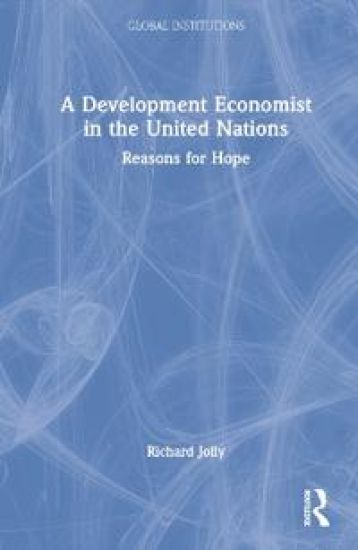
A Development Economist in the United Nations

A Development Economist in the United Nations

Richard Jolly

TAYLOR FRANCIS LTD
2023
sidottu
This book explores the joys and occasional frustrations of a development economist working for the United Nations.From 1982 to 2000 Richard Jolly worked in senior positions in UNICEF and UNDP on assignments that were innovative, for the UN, the countries concerned and for development. The book analyses his experiences as Deputy Director of UNICEF, Principal Coordinator and co-author of UNDP’s widely acclaimed Human Development Report and a community development officer in Kenya, as well as his involvement in the UN and country mission to Zambia and ILO employment missions to Colombia, Sri Lanka and Kenya. It shows what the UN can achieve when there is strong leadership at central and field levels, together with decentralized approaches. Jolly’s experiences lead him to conclude there are in fact three UNs: the formal UN of governments; the second UN comprising UN staff members, often the source of initiatives and action; and the third UN of NGOs, experts, consultants and others closely following the UN or working with it, and also often bringing new thinking and innovation.Reflecting on the need for international action to be more effective and the UN to be more strongly supported, this volume is a fascinating guide to students and scholars of global governance, development and international organizations and those working for them.
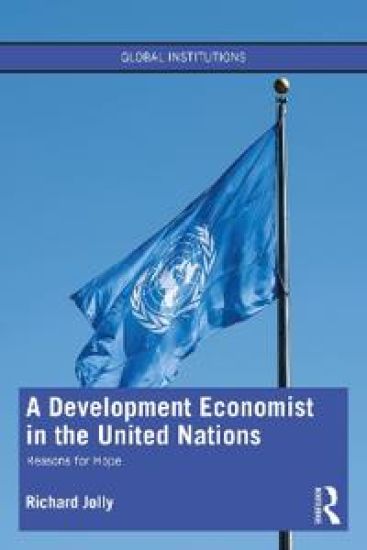
A Development Economist in the United Nations

A Development Economist in the United Nations

Richard Jolly

TAYLOR FRANCIS LTD
2022
nidottu
This book explores the joys and occasional frustrations of a development economist working for the United Nations.From 1982 to 2000 Richard Jolly worked in senior positions in UNICEF and UNDP on assignments that were innovative, for the UN, the countries concerned and for development. The book analyses his experiences as Deputy Director of UNICEF, Principal Coordinator and co-author of UNDP’s widely acclaimed Human Development Report and a community development officer in Kenya, as well as his involvement in the UN and country mission to Zambia and ILO employment missions to Colombia, Sri Lanka and Kenya. It shows what the UN can achieve when there is strong leadership at central and field levels, together with decentralized approaches. Jolly’s experiences lead him to conclude there are in fact three UNs: the formal UN of governments; the second UN comprising UN staff members, often the source of initiatives and action; and the third UN of NGOs, experts, consultants and others closely following the UN or working with it, and also often bringing new thinking and innovation.Reflecting on the need for international action to be more effective and the UN to be more strongly supported, this volume is a fascinating guide to students and scholars of global governance, development and international organizations and those working for them.
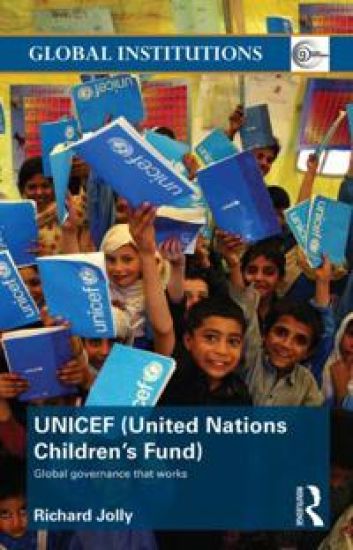
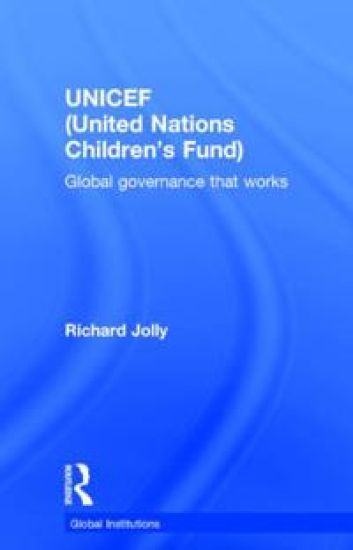
UNICEF (United Nations Children's Fund)
This book provides an in-depth analysis of UNICEF’s development and operations, whilst exploring the significance of UNICEF’s achievements and the reasons behind them. UNICEF is one of the best known organizations of the United Nations system and the oldest of the UN’s development funds. It is also the part of the UN which consistently receives support from all countries round the world, including the United States. This book brings out the wider reasons for UNICEF’s success and popularity, setting them in the context of UNICEF’s evolution since 1946 and drawing lessons for other international organizations. The book argues that, despite its problems, international action for children, built substantially on non-economic foundations, is not only possible, but can be highly successful in mobilizing support, producing results and making a difference to the lives of millions of children. This will be of great interest to all scholars of international organisations, development, human rights and the United Nations system.
UNICEF (United Nations Children's Fund)
This book provides an in-depth analysis of UNICEF’s development and operations, whilst exploring the significance of UNICEF’s achievements and the reasons behind them. UNICEF is one of the best known organizations of the United Nations system and the oldest of the UN’s development funds. It is also the part of the UN which consistently receives support from all countries round the world, including the United States. This book brings out the wider reasons for UNICEF’s success and popularity, setting them in the context of UNICEF’s evolution since 1946 and drawing lessons for other international organizations. The book argues that, despite its problems, international action for children, built substantially on non-economic foundations, is not only possible, but can be highly successful in mobilizing support, producing results and making a difference to the lives of millions of children. This will be of great interest to all scholars of international organisations, development, human rights and the United Nations system.
UN Ideas That Changed the World

UN Ideas That Changed the World

Richard Jolly; Louis Emmerij; Thomas G. Weiss; Kofi A. Annan

Indiana University Press
2009
pokkari
Ideas and concepts have been a driving force in human progress, and they may be the most important legacy of the United Nations. UN ideas have set past, present, and future international agendas in many global economic and social arenas and have also led to initiatives and actions that have improved the quality of human life. This capstone volume draws upon findings of the other 14 books in the acclaimed United Nations Intellectual History Project Series. The authors not only assess the development and implementation of UN ideas regarding sustainable economic development and human security, but also apply lessons learned to suggest ways in which the United Nations can play a fuller role in confronting the challenges of human survival with dignity in the 21st century.
UN Voices

UN Voices

Thomas G. Weiss; Tatiana Carayannis; Louis Emmerij; Richard Jolly

Indiana University Press
2005
pokkari
"The authors have cajoled, intrigued, or reassured their 73 'voices' into telling a fascinating story of the UN and its institutions, which is also a story of 73 individual lives, of women and men . . . with their own complicated histories of emigration and education, family relationships and professional choices, hopes and successes." —from the Foreword by Emma Rothschild "Far from being a distant bureaucracy, the UN is composed of individuals who are reshaped by vital experiences. UN Voices gives international civil servants human faces and shows how ideas drive the grand experiment. It is a fascinating book." —Arthur Schlesinger, Jr. UN Voices presents the human and moving stories of an extraordinary group of individuals who contributed to the economic and social record of the UN's life and activities. Drawing from extensive interviews, the book presents in their own words the experiences of 73 individuals from around the globe who have spent much of their professional lives engaged in United Nations affairs. We hear from secretaries-general and presidents, ministers and professors, social workers and field workers, as well as diplomats and executive heads of UN agencies. Among those interviewed are noted figures such as Kofi Annan, Boutros Boutros-Ghali, Alister McIntyre, Conor Cruise O'Brien, Javier Pérez de Cuéllar, and Kurt Waldheim, as well as many less well known UN professional men and women who have made significant contributions to the international struggle for a better world. Their personal accounts also engage their contributions in dealing with such events and issues as the UN's founding, decolonization, the rise and fall of the Berlin Wall, human rights, the environment, and September 11, 2001.
UN Contributions to Development Thinking and Practice

UN Contributions to Development Thinking and Practice

Richard Jolly; Louis Emmerij; Dharam Ghai; Frédéric Lapeyre

Indiana University Press
2004
pokkari
UN Contributions to Development Thinking and Practice is at once a history of the ideas and realities of international development, from the classical economists to the recent emphasis on human rights, and a history of the UN's role in shaping and implementing development paradigms over the last half century. The authors, all prominent in the field of development studies, argue that the UN's founding document, the UN Charter, is infused with the human values and human concerns that are at the center of the UN's thinking on economic and human development today. In the intervening period, the authors show how the UN's approach to development evolved from mainstream areas of economic development to include issues of employment, poverty reduction, fairer distribution of the benefits of growth, equality of men and women, child development, social justice, and environmental sustainability.
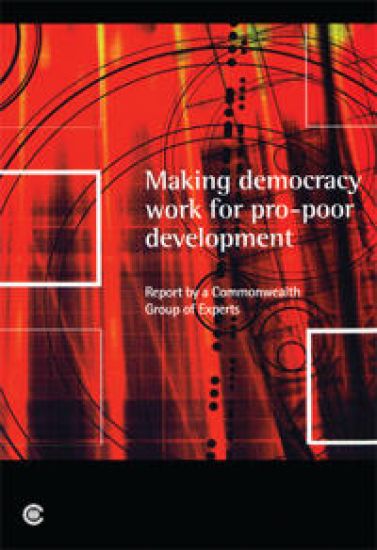
Making Democracy Work for Pro-poor Development

Making Democracy Work for Pro-poor Development

Manmohan Singh; Jocelyne Bourgon; Robert Champion De Crespigny; Richard Jolly; Martin Khor; Akinjide Osuntokun; Salim Ahmed Salim; Tuiloma Neroni Slade; Dwight Venner; Ngaire Woods

Commonwealth Secretariat
2003
nidottu
Starting from the premise that democracy is more than simply a matter of universal suffrage and the holding of regular multiparty elections, and that development is about much more than growth of GDP, this Report focuses on how to make democracy work for pro-poor development and on development policies that in themselves uphold and promote democratic values. It argues that development and democracy are not only goals in their own right but must also be mutually reinforcing. Pro-poor development recognises that people need the ‘capabilities' to do and be the things that they have reason to value, such as being adequately nourished, having equitable access to justice and participating in decisions that affect their lives. It also recognises that development policies aimed at the general populace may have a more limited positive impact on particularly disadvantaged groups. Such groups need to be identified (for example, in terms of gender, ethnicity, religion, age or occupation) and policies need to be specifically designed for improving the lives of the poor. The Report argues that governments, the private sector, civil society and the international community each have a vital role to play in delivering development and democracy, and calls for responsibility, partnership and concrete actions from all these actors. Without responsibility on all these levels, development and democracy will remain rhetoric rather than become reality. Prepared by the Commonwealth Expert Group on Development and Democracy at the request of Commonwealth Heads of Government, the Report contains a number of recommendations for action at the national and international levels. It will be of interest to policy-makers, multilateral and bilateral agencies, the private sector, civil society organisations and all those committed to development, democracy and the achievement of the Millennium Development Goals.