Kirjojen hintavertailu. Mukana 12 569 630 kirjaa ja 12 kauppaa.

Kirjailija

Richard Jurek

Kirjat ja teokset yhdessä paikassa: 4 kirjaa, julkaisuja vuosilta 2000-2021, suosituimpien joukossa The Ultimate Engineer. Vertaile teosten hintoja ja tarkista saatavuus suomalaisista kirjakaupoista.

4 kirjaa

Kirjojen julkaisuhaarukka 2000-2021.

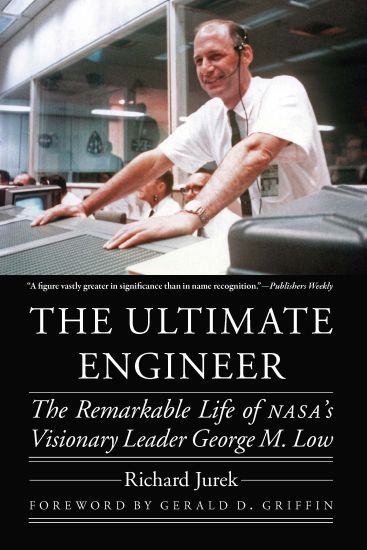
The Ultimate Engineer

The Ultimate Engineer

Richard Jurek; Gerald D. Griffin

University of Nebraska Press
2021
pokkari
This well-researched book is as much a history of NASA as a biography of George Low, and as such is an important contribution to the history of the agency. Jurek's detailed book will appeal to both fans and scholars of NASA and of the engineers like Low who make the agency's spaceflights work.-Sara R. Tompson, Library JournalFrom the late 1950s to 1976, the U.S. human spaceflight program advanced as it did largely due to the extraordinary efforts of Austrian immigrant George M. Low. Described as the “ultimate engineer” during his career at NASA, Low was a visionary architect and leader from the agency’s inception in 1958 to his retirement in 1976. As chief of manned spaceflight at NASA, Low was instrumental in the Mercury, Gemini, and Apollo programs. At the end of his NASA career, Low was one of the leading figures in the development of the Space Shuttle in the early 1970s, and he was instrumental in NASA’s transition into a post-Apollo world. Chronicling Low’s escape from Nazi-occupied Austria to his helping land a man on the moon, The Ultimate Engineer sheds new light on one of the most fascinating and complex personalities of the golden age of U.S. human space travel.
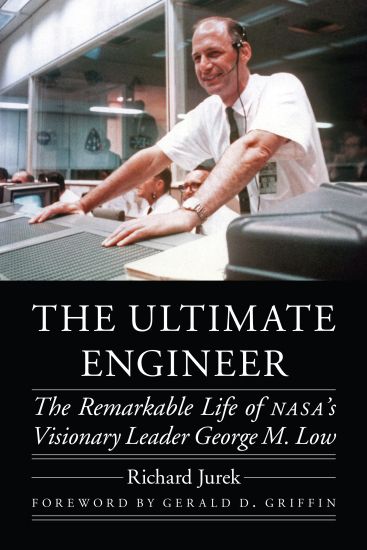
The Ultimate Engineer

The Ultimate Engineer

Richard Jurek; Gerald D. Griffin

University of Nebraska Press
2019
sidottu
This well-researched book is as much a history of NASA as a biography of George Low, and as such is an important contribution to the history of the agency. Jurek's detailed book will appeal to both fans and scholars of NASA and of the engineers like Low who make the agency's spaceflights work.-Sara R. Tompson, Library JournalFrom the late 1950s to 1976, the U.S. human spaceflight program advanced as it did largely due to the extraordinary efforts of Austrian immigrant George M. Low. Described as the “ultimate engineer” during his career at NASA, Low was a visionary architect and leader from the agency’s inception in 1958 to his retirement in 1976. As chief of manned spaceflight at NASA, Low was instrumental in the Mercury, Gemini, and Apollo programs. At the end of his NASA career, Low was one of the leading figures in the development of the Space Shuttle in the early 1970s, and he was instrumental in NASA’s transition into a post-Apollo world. Chronicling Low’s escape from Nazi-occupied Austria to his helping land a man on the moon, The Ultimate Engineer sheds new light on one of the most fascinating and complex personalities of the golden age of U.S. human space travel.
Marketing the Moon

Marketing the Moon

David Meerman Scott; Richard Jurek; Eugene A Cernan

MIT Press
2014
sidottu
One of the most successful public relations campaigns in history, featuring heroic astronauts, press-savvy rocket scientists, enthusiastic reporters, deep-pocketed defense contractors, and Tang.In July 1969, ninety-four percent of American televisions were tuned to coverage of Apollo 11's mission to the moon. How did space exploration, once the purview of rocket scientists, reach a larger audience than My Three Sons? Why did a government program whose standard operating procedure had been secrecy turn its greatest achievement into a communal experience? In Marketing the Moon, David Meerman Scott and Richard Jurek tell the story of one of the most successful marketing and public relations campaigns in history: the selling of the Apollo program. Primed by science fiction, magazine articles, and appearances by Wernher von Braun on the "Tomorrowland" segments of the Disneyland prime time television show, Americans were a receptive audience for NASA's pioneering "brand journalism." Scott and Jurek describe sophisticated efforts by NASA and its many contractors to market the facts about space travel-through press releases, bylined articles, lavishly detailed background materials, and fully produced radio and television features-rather than push an agenda. American astronauts, who signed exclusive agreements with Life magazine, became the heroic and patriotic faces of the program. And there was some judicious product placement: Hasselblad was the "first camera on the moon"; Sony cassette recorders and supplies of Tang were on board the capsule; and astronauts were equipped with the Exer-Genie personal exerciser. Everyone wanted a place on the bandwagon.Generously illustrated with vintage photographs, artwork, and advertisements, many never published before, Marketing the Moon shows that when Neil Armstrong took that giant leap for mankind, it was a triumph not just for American engineering and rocketry but for American marketing and public relations.