

Kirjailija
Richard Klein
Kirjat ja teokset yhdessä paikassa: 12 kirjaa, julkaisuja vuosilta 1995-2026, suosituimpien joukossa Written in prayer. Vertaile teosten hintoja ja tarkista saatavuus suomalaisista kirjakaupoista.
12 kirjaa
Kirjojen julkaisuhaarukka 1995-2026.
Founded 2,600 years ago on a massive limestone eminence, the city of Arles has been the home of Roman emperors and captured slaves, pagan temples and Christian spires, bloody revolutionaries and powerful papists. In The Rock of Arles Richard Klein relays the history of the city as told to him by the Rock, its genius loci, which infallibly remembers every moment of its existence, from the Roman conquest of Gaul to the fall of feudal aristocracy, from the domination of the Catholic Church to the present French representative democracy. The Rock’s contrarian and dissident history resurrects the memory of three of the city’s most radical yet largely forgotten revolutionary minds: Hellenistic philosopher Favorinus, medieval Hebrew poet Kalonymus ben Kalonymus, and subversive aristocrat Pierre-Antoine Antonelle. For the Rock, each figure represents a freethinking current running through Arlesian history which countered the reactionary, bigoted forces that governed the city for fifteen centuries. Erudite, witty, and opinionated, the Rock tells the story of Arles in order to sketch the broader canvas of European history while invoking the city’s possible future.
Founded 2,600 years ago on a massive limestone eminence, the city of Arles has been the home of Roman emperors and captured slaves, pagan temples and Christian spires, bloody revolutionaries and powerful papists. In The Rock of Arles Richard Klein relays the history of the city as told to him by the Rock, its genius loci, which infallibly remembers every moment of its existence, from the Roman conquest of Gaul to the fall of feudal aristocracy, from the domination of the Catholic Church to the present French representative democracy. The Rock’s contrarian and dissident history resurrects the memory of three of the city’s most radical yet largely forgotten revolutionary minds: Hellenistic philosopher Favorinus, medieval Hebrew poet Kalonymus ben Kalonymus, and subversive aristocrat Pierre-Antoine Antonelle. For the Rock, each figure represents a freethinking current running through Arlesian history which countered the reactionary, bigoted forces that governed the city for fifteen centuries. Erudite, witty, and opinionated, the Rock tells the story of Arles in order to sketch the broader canvas of European history while invoking the city’s possible future.

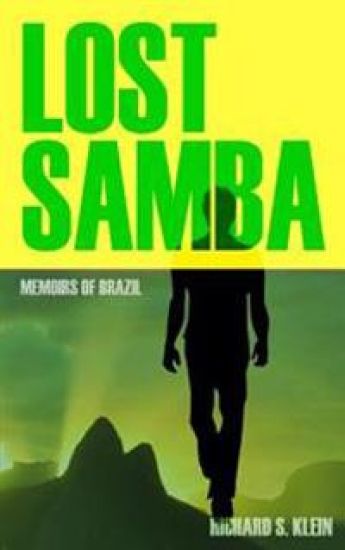
Lost Samba: Memoirs of Brazil
Richard Klein
Createspace Independent Publishing Platform
2014
nidottu
Richard Klein was born in Rio de Janeiro in 1962 - two years before the military coup but the same year that the Rolling Stones and the Beatles recorded their first singles and the same year that Brazil would win its second FIFA world cup. Richard's British-Jewish parents, who had moved to a booming Rio de Janeiro in the wake of World War II, and who were soon to prosper. They would never, however, fully adapt to their new land - and certainly not to either football or rock n' roll. Richard, nonetheless, would grow up to love both. In fact, this is the heart of the story: the author's journey of discovery of the land of his birth, as well as adventuring into the brave new world of rock culture in the 1960s, 70s and 80s, all under the sinister shadow of the military dictatorship that ruled Brazil at this time. Lost Samba is part memoir, part document of the birth of the new Brazil - a fascinating first-person account of a dark, but exciting, period for the country. Richard tells of the bitter-sweet path taken by his generation. He shows, first hand, the enjoyment by the urban lite of the privileges secured for them by the military rule, then the crawling from under the claws of that regime and, ultimately, the unfolding of one of the worst economic disasters in Brazilian history. This book peers through the many clich s about Brazil, and surprises the reader with anecdotes, adventures, reflections and facts, while managing to be a useful resource for those wishing to understand this huge country. This is the fully revised, second edition, of Lost Samba. The book has also been re-designed and now has illustrations while the e-book now contains a plethora of links to help give the reader a comprehensive experience.
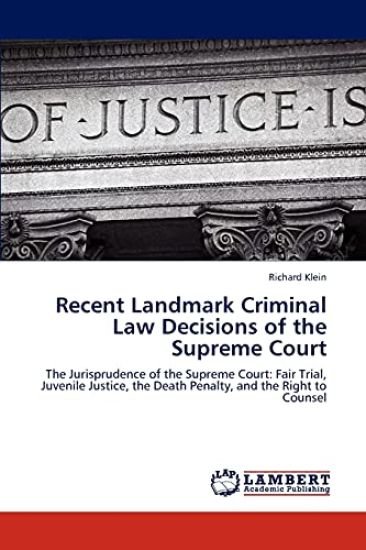
Recent Landmark Criminal Law Decisions of the Supreme Court
Richard Klein
LAP Lambert Academic Publishing
2012
pokkari

Als das Christentum eine religio licita geworden war und begann, die alte Religion zu verdrängen, übernahm die ehemals verfolgte Kirche im römischen Staat nach und nach verschiedene Aufgaben und profitierte, z.B. durch Erbschaften, davon. Welche Aufgaben sie nun in Politik, Wirtschaft und im sozialen Bereich übernahm, versucht Richard Klein anhand von vier Fallstudien darzustellen. In der ersten zeichnet er die Entwicklung des Bischofsamtes in seiner Bedeutung für die Gesellschaft nach. Die Bischöfe übernahmen dabei eine Vielzahl staatlicher Aufgaben und konnten im Gegenzug staatliche Dienstleistungen wie die Reise mit der Staatspost in Anspruch nehmen. In der zweiten Studie wird die Frage gestellt, ob die Sorge für die Bevölkerung durch pagane Freigebigkeit (man denke nur an "Brot und Spiele") oder durch christliche Nächstenliebe motiviert war. Das Augenmerk liegt dabei auf der Person und Regierungszeit von Kaiser Konstantin. Wie vielgestaltig und unterschiedlich das soziale Wirken der Kirche in der Spätantike war, behandelt Richard Klein in der dritten Studie. Es beschränkte sich nicht auf die Versorgung der Armen, sondern reichte bis zur rechtsgültigen Freilassung von Sklaven innerhalb der Kirche. Den Abschluss bildet eine Fallstudie über Ennodius, den Bischof von Pavia. An seinem Werk wird deutlich, wie sich das Bild der Sklaverei und der Umgang mit Sklaven wandelten. Obwohl diese Instititution in der christlichen Spätantike und darüber hinaus existierte, ist der Stand der Sklaven doch deutlich aufgewertet worden. Ein Namen- und Sachregister sowie ein Stellenverzeichnis ergänzen die Monographie.

Historic Preservation for Professionals
Virginia Benson; Richard Klein
Kent State University Press
2008
nidottu
A broad-based approach to preservation After completing an extensive survey of preservation programs throughout the United States, authors Virginia O. Benson and Richard Klein saw the need for this comprehensive approach to historic preservation, examining where it has been and where it is going, anticipating that historic preservation must encourage collaborative projects among planning, design, and development professionals.This text focuses on complex economic, political, and social realities facing the profession today. Specifically, Historic Preservation for Professionals provides an in-depth historic analysis of the profession, a summary of legal issues, an architectural synopsis, a discussion of career opportunities in the public and private sectors, and examples of innovative nonprofit leadership and preservation trends.Design professionals—architecture, interior, and landscape—and those interested in urban design and urban studies, real estate development, and nonprofit management will find Historic Preservation for Professionals a valuable addition to the fields of architecture, urban design, and preservation.

Identity and Difference
Jonathan Cross; Jonathan Harvey; Helmut Lachenmann; Albrecht Wellmer; Richard Klein
Leuven University Press
2004
nidottu
This volume is a collection of essays based on lectures given at the Orpheus Institute in Ghent at various occasions over the last four years. Two of our five distinguished authors are British, three are Germans. Two are prominent composers and both keen and provocative writers about music; one is a musicologist and daring critic who specializes in contemporary music. There are also two philosophers and Adorno specialists that deal with such fundamental and highly complex matters as music and language, and music and time. All authors subscribe to the same seriousness of purpose, so that you may find reminiscences of one text in the others, which will make for a fascinating read. Moreover, this book is all about the current state of music, about thinking, speaking, and writing about music in the immediate aftermath of that stirring and fascinating twentieth century.

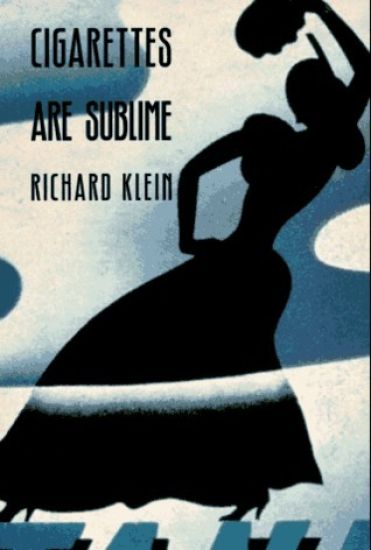
Cigarettes are bad for you; that is why they are so good. With its origins in the author’s urgent desire to stop smoking, Cigarettes Are Sublime offers a provocative look at the literary, philosophical, and cultural history of smoking. Richard Klein focuses on the dark beauty, negative pleasures, and exacting benefits attached to tobacco use and to cigarettes in particular. His appreciation of paradox and playful use of hyperbole lead the way on this aptly ambivalent romp through the cigarette in war, movies (the "Humphrey Bogart cigarette"), literature, poetry, and the reflections of Sartre to show that cigarettes are a mixed blessing, precisely sublime.