Kirjailija
Richard Kostelanetz
Kirjat ja teokset yhdessä paikassa: 28 kirjaa, julkaisuja vuosilta 1988-2023, suosituimpien joukossa Deeper, Further & Beyond: More Critical Critical Essays. Vertaile teosten hintoja ja tarkista saatavuus suomalaisista kirjakaupoista.
28 kirjaa
Kirjojen julkaisuhaarukka 1988-2023.
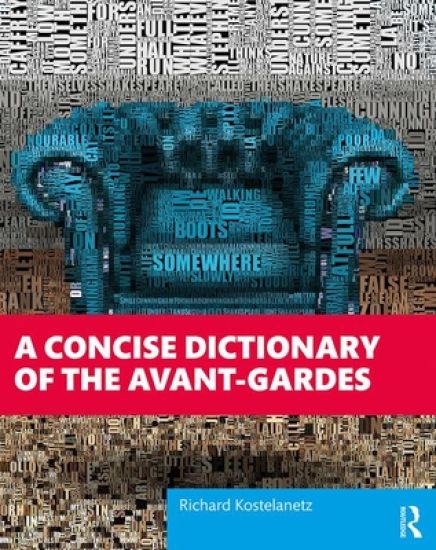
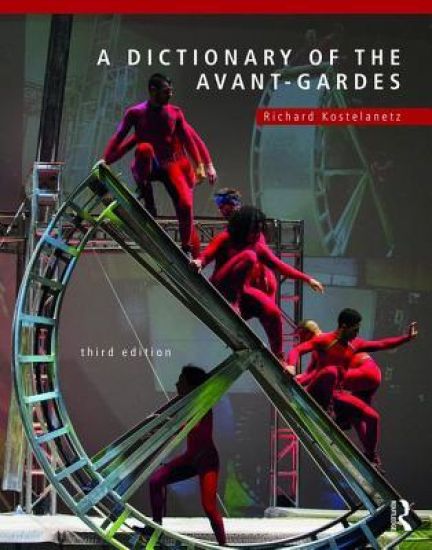
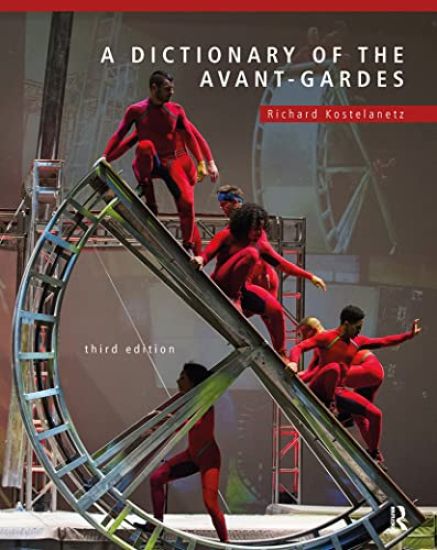
Twenty-five years after the publication of A Dictionary of the Avant-Gardes, the distinguished critic and arts historian Richard Kostelanetz returns to his favorite subject for a third edition. Rewriting earlier entries, adding hundreds of new ones, Kostelanetz provides intelligence and information unavailable anywhere else, no less in print than online, about a wealth of subjects and individuals. Focused upon what is truly innovative and excellent, he ranges widely with insight and surprise, including appreciations of artistic athletes such as Muhammad Ali, Johan Cruyff, and the Harlem Globetrotters and such collective creations as Las Vegas and his native New York City. Continuing the traditions of cheeky high-style Dictionarysts, honoring Samuel Johnson and Nicolas Slonimsky (both with individual entries), Kostelanetz offers a "reference book" to be enjoyed not only in bits and chunks, but continuously as one of the dozen books someone would take if they planned to be stranded on a desert isle.
For a concise edition of his legendary arts dictionary of information and opinion, the distinguished critic and arts historian Richard Kostelanetz selects entries from the 2018 third edition. Typically he provides intelligence unavailable anywhere else, no less in print than online, about a wealth of subjects and individuals. Focused upon what is truly innovative and excellent, Kostelanetz also ranges widely with insight and surprise, including appreciations of artistic athletes such as Muhammad Ali and the Harlem Globetrotters and such collective creations as Las Vegas and his native New York City. Continuing the traditions of cheeky high-style Dictionarysts, honoring Ambrose Bierce and Samuel Johnson (both with individual entries), Kostelanetz offers a "reference book" to be enjoyed, not only in bits and chunks but continuously as one of the ten books someone would take if he or she planned to be stranded on a desert isle.
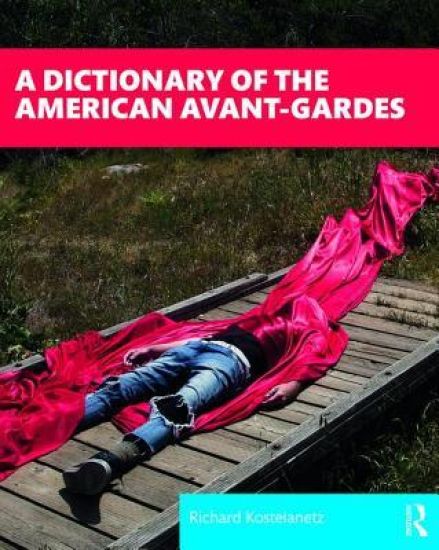
For this American edition of his legendary arts dictionary of information and opinion, the distinguished critic and arts historian Richard Kostelanetz has selected from the fuller third edition his entries on North Americans, including Canadians, Mexicans, and resident immigrants. Typically, he provides intelligence unavailable anywhere else, no less in print than online, about a wealth of subjects and individuals. Focused upon what is truly innovative and excellent, Kostelanetz also ranges widely with insight and surprise, including appreciations of artistic athletes such as Muhammad Ali and the Harlem Globetrotters, and such collective creations as Las Vegas and his native New York City. Continuing the traditions of cheeky high-style Dictionarysts, honoring Ambrose Bierce and Nicolas Slonimsky (both with individual entries), Kostelanetz offers a "reference book" to be treasured not only in bits and chunks, but continuously as one of the ten books someone would take if they planned to be stranded on a desert isle.
Twenty-five years after the publication of A Dictionary of the Avant-Gardes, the distinguished critic and arts historian Richard Kostelanetz returns to his favorite subject for a third edition. Rewriting earlier entries, adding hundreds of new ones, Kostelanetz provides intelligence and information unavailable anywhere else, no less in print than online, about a wealth of subjects and individuals. Focused upon what is truly innovative and excellent, he ranges widely with insight and surprise, including appreciations of artistic athletes such as Muhammad Ali, Johan Cruyff, and the Harlem Globetrotters and such collective creations as Las Vegas and his native New York City. Continuing the traditions of cheeky high-style Dictionarysts, honoring Samuel Johnson and Nicolas Slonimsky (both with individual entries), Kostelanetz offers a "reference book" to be enjoyed not only in bits and chunks, but continuously as one of the dozen books someone would take if they planned to be stranded on a desert isle.
Deeper, Further & Beyond: More Critical Critical Essays
Richard Kostelanetz
AUTONOMEDIA
2017
nidottu
As a rich successor to his Crimes of Culture (Autonomedia, 1996), Political Essays (Autonomedia, 2006), Toward Secession (Autonomedia, 2008), Skeptical Essays (Autonomedia, 2010), and A Person of Letters (Autonomedia, 2014), this book contains critical essays unavailable elsewhere, not even on the internet, some from fugitive periodicals, others previously unpublished, with indispensable critical intelligence about various subjects that have engaged Richard Kostelanetz, the provocative American critic of art, literature, music, politics, culture, and more. Among the interests he examines with dead-on accuracy and quotable wit are Barack Obama, the Osama bin Laden hoax, Mayor Bloomberg, "Affirmative Action," the FBI and the CIA, Islam in America, Joe Paterno, J.C. Oates, John Updike, Virgil Thomson, John Cage, the higher anti-Semitism, the Boston bombers, the Dannemora prison breakout, "Conceptual Literature," the renegade publisher Samuel Roth, "commie schools," and the sexual proclivities of Bill Clinton and Donald Trump, among other subjects rarely considered so critically. His most controversial essays radically reexamine the liberal myth on personal self-defense weapons.
Poetry. The critical measure for visual poetry is, simply, the visual enhancement of language. With his latest book ROUNDELAYS, Richard Kostelanetz takes single English words and then animates them on each page for over 100 pages ideally realizing visual- verbal after-images that excite creativity and stick in readers' minds."
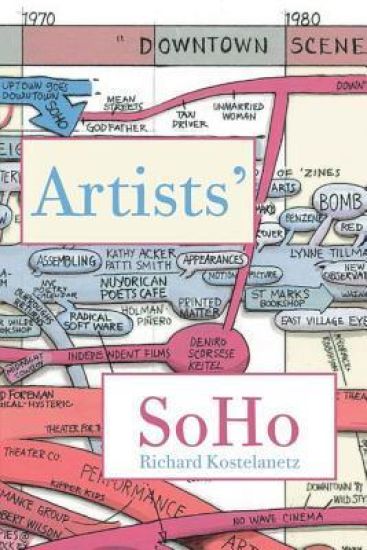
During the 1960s and 1970s in New York City, young artists exploited an industrial wasteland to create spacious studios where they lived and worked, redefining the Manhattan area just south of Houston Street. Its use fueled not by city planning schemes but by word-of-mouth recommendations, the area soon grew to become a world-class center for artistic creation—indeed, the largest urban artists' colony ever in America, let alone the world. Richard Kostelanetz's Artists' SoHo not only examines why the artists came and how they accomplished what they did but also delves into the lives and works of some of the most creative personalities who lived there during that period, including Nam June Paik, Robert Wilson, Meredith Monk, Richard Foreman, Hannah Wilke, George Macuinas, and Alan Suicide. Gallerists followed the artists in fashioning themselves, their homes, their buildings, and even their streets into transiently prominent exhibition and performance spaces. SoHo pioneer Richard Kostelanetz's extensively researched intimate history is framed within a personal memoir that unearths myriad perspectives: social and cultural history, the changing rules for residency and ownership, the ethos of the community, the physical layouts of the lofts, the types of art produced, venues that opened and closed, the daily rhythm, and the gradual invasion of "new people." Artists' SoHo also explores how and why this fertile bohemia couldn't last forever. As wealthier people paid higher prices, galleries left, younger artists settled elsewhere, and the neighborhood became a "SoHo Mall" of trendy stores and restaurants. Compelling and often humorous, Artists' SoHo provides an analysis of a remarkable neighborhood that transformed the art and culture of New York City over the past five decades.
Says the author: "I have been writing literary essays for nearly fifty years now. Since most of them appeared in modestly circulated periodicals, it becomes necessary for me to collect the most valuable of them into books. Earlier collections have been devoted to essays on poetry, fiction, visual art, music, culture, performance, and politics. Composed mostly of previously uncollected literary essays, written over the past quarter century, A Person of Letters in the Contemporary World becomes the first to emphasize literature and literary life in general. Since I am a contemporary writer, expanding my practice into the twenty-first century, it is scarcely surprising that my sense of literature, as both a creator and a critic, includes criticism of writing in new media, such as audio and video. Most of the essays reflect the theme announced in the title, dealing as they do in various ways with the experience of being independent in the age of affiliation, a writer in more than one genre in an age of specialists, a radical among conservatives who has been consciously avant-garde at a time when innovation was proclaimed impossible, and a literary artist attuned to possibilities offered by new technologies. Since my activity reportedly reflects integrity at various levels, other recurring themes will no doubt become apparent. In my essays, as in my career, I've tried to go beyond-above and sometimes below--what others have done, especially in appreciating what others miss, dismissing what is commonly praised, and in telling truths about literary politics. Lacking power or a secure position, I wouldn't have survived had I attempted anything less. I've also learned that I've written not a single work commonly praised above all others but many texts that one or another reader finds especially valuable. "
First Person Intense: A Prose Anthology
Richard Grayson; Fielding Dawson; Richard Kostelanetz
Mudborn Press
2012
nidottu
Skeptical Essays in the 21st Century: Individuals, Institutions, Errors, Issues
Richard Kostelanetz
AUTONOMEDIA
2010
nidottu
Literary Nonfiction. Cultural Studies. A heavyweight confronting sanctified elephants, the impossibly prolific anarchist and libertarian cultural critic targets, with dead-on accuracy and quotable wit, Andy Warhol, Harold Bloom, The New Yorker, Barack Obama, Dubya and his sidekicks, Susan Sontag, The New York Times Book Review, Marjorie Perloff, Charles Bernstein, the American Academy of Arts and Letters, Victims of Literary Bullying, Pushcart Prize anthologies, The Readers' Catalog, the New York Yankees, Idiot-Identifiers, Manuscript Filchers, Literary Correspondence, Paul Muldoon, scores more, often slash and burn.
Conversing with Cage draws on over 150 interviews with John Cage conducted over four decades to draw a full picture of his life and art. Filled with the witty aphorisms that have made Cage as famous as an esthetic philosopher as a composer, the book offers both an introduction to Cage's way of thinking and a rich gathering of his many thoughts on art, life, and music. John Cage is perhaps this century's most radical classical composer. From his famous silent piece (4'33) to his proclamation that all sound is music, Cage stretched the aesthetic boundaries of what could be performed in the modern concert hall. But, more than that, Cage was a provocative cultural figure, who played a key role in inspiring scores of other artists-and social philosophers-in the second half of the 20th century. Through his life and work, he created revolutions in thinking about art, and its relationship to the world around us. Conversing with Cage is the ideal introduction to this world, offering in the artist's own words his ideas about life and art. It will appeal to all fans of this mythic figure on the American scene, as well as anyone interested in better understanding 20th century modernism.
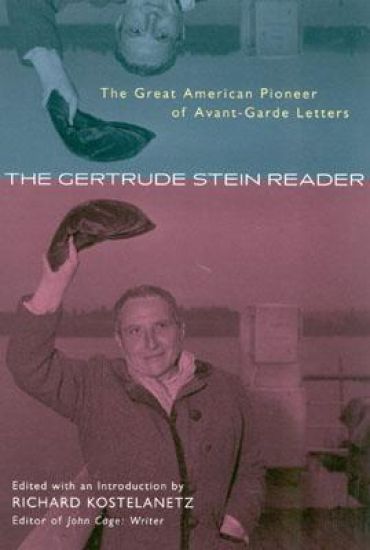
The literary legacy of Gertrude Stein (1874-1946) consists of numerous works in which the traditional restraints of language are abandoned for spontaneous and surprising expression. Her writings challenge the reader, yet also offer an inviting liberation, and because of this they have not only endured but proven highly influential. The Gertrude Stein Reader collects fifty one of Stein's poems, stories, portraits, and plays, along with excerpts from Matisse, Picasso, and Gertrude Stein with Two Shorter Stories; A Book Concluding with As a Wife Has a Cow, A Love Story; Geography and Plays; An Acquaintance with a Description; and Useful Knowledge. The extensive introduction provides a brief biography and explains the impact her work had on subsequent writers and artists.