Kirjojen hintavertailu. Mukana 12 390 323 kirjaa ja 12 kauppaa.

Kirjailija

Richard Koszarski

Kirjat ja teokset yhdessä paikassa: 6 kirjaa, julkaisuja vuosilta 1994-2021, suosituimpien joukossa Von. Vertaile teosten hintoja ja tarkista saatavuus suomalaisista kirjakaupoista.

6 kirjaa

Kirjojen julkaisuhaarukka 1994-2021.

“Keep ’Em in the East”

“Keep ’Em in the East”

Richard Koszarski

Columbia University Press
2021
sidottu
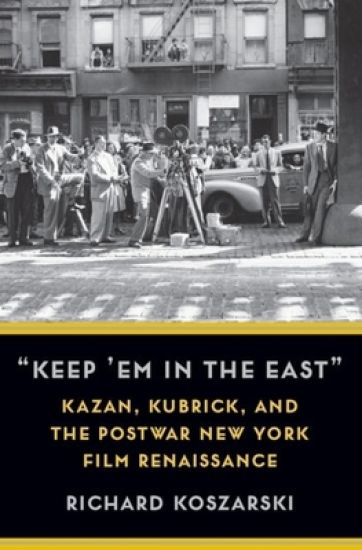
The year 1955 was a watershed one for New York’s film industry: Elia Kazan’s On the Waterfront took home eight Oscars, and, more quietly, Stanley Kubrick released the low-budget classic Killer’s Kiss. A wave of films that changed how American movies were made soon followed, led by directors such as Sidney Lumet, William Friedkin, Francis Ford Coppola, and Martin Scorsese. Yet this resurgence could not have occurred without a deeply rooted tradition of local film production.Richard Koszarski chronicles the compelling and often surprising origins of New York’s postwar film renaissance, looking beyond such classics as Naked City, Kiss of Death, and Portrait of Jennie. He examines the social, cultural, and economic forces that shaped New York filmmaking, from city politics to union regulations, and shows how decades of low-budget independent production taught local filmmakers how to capture the city’s grit, liveliness, and allure. He reveals the importance of “race films”—all-Black productions intended for segregated African American audiences—that not only helped keep the film business afloat but also nurtured a core group of writers, directors, designers, and technicians. Detailed production histories of On the Waterfront and Killer’s Kiss—films that appear here in a completely new light—illustrate the distinctive characteristics of New York cinema.Drawing on a vast array of research—including studio libraries, censorship records, union archives, and interviews with participants—“Keep ’Em in the East” rewrites a crucial chapter in the history of American cinema.
“Keep ’Em in the East”

“Keep ’Em in the East”

Richard Koszarski

Columbia University Press
2021
pokkari
The year 1955 was a watershed one for New York’s film industry: Elia Kazan’s On the Waterfront took home eight Oscars, and, more quietly, Stanley Kubrick released the low-budget classic Killer’s Kiss. A wave of films that changed how American movies were made soon followed, led by directors such as Sidney Lumet, William Friedkin, Francis Ford Coppola, and Martin Scorsese. Yet this resurgence could not have occurred without a deeply rooted tradition of local film production.Richard Koszarski chronicles the compelling and often surprising origins of New York’s postwar film renaissance, looking beyond such classics as Naked City, Kiss of Death, and Portrait of Jennie. He examines the social, cultural, and economic forces that shaped New York filmmaking, from city politics to union regulations, and shows how decades of low-budget independent production taught local filmmakers how to capture the city’s grit, liveliness, and allure. He reveals the importance of “race films”—all-Black productions intended for segregated African American audiences—that not only helped keep the film business afloat but also nurtured a core group of writers, directors, designers, and technicians. Detailed production histories of On the Waterfront and Killer’s Kiss—films that appear here in a completely new light—illustrate the distinctive characteristics of New York cinema.Drawing on a vast array of research—including studio libraries, censorship records, union archives, and interviews with participants—“Keep ’Em in the East” rewrites a crucial chapter in the history of American cinema.
Hollywood on the Hudson

Hollywood on the Hudson

Richard Koszarski

Rutgers University Press
2010
nidottu
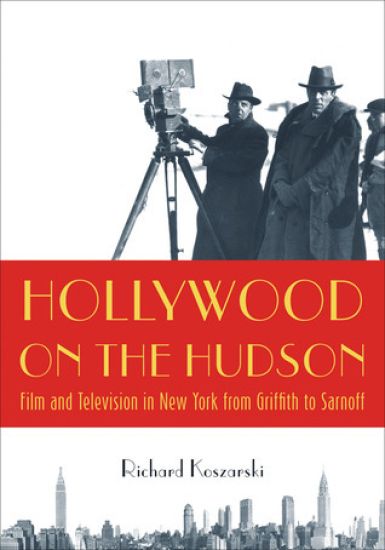
In Hollywood on the Hudson, Richard Koszarski rewrites an important part of the history of American cinema. During the 1920s and 1930s, film industry executives had centralized the mass production of feature pictures in a series of gigantic film factories scattered across Southern California, while maintaining New York as the economic and administrative center. But as Koszarski reveals, many writers, producers, and directors also continued to work here, especially if their independent vision was too big for the Hollywood production line.
Fort Lee

Fort Lee

Richard Koszarski

John Libbey Co Ltd
2005
pokkari
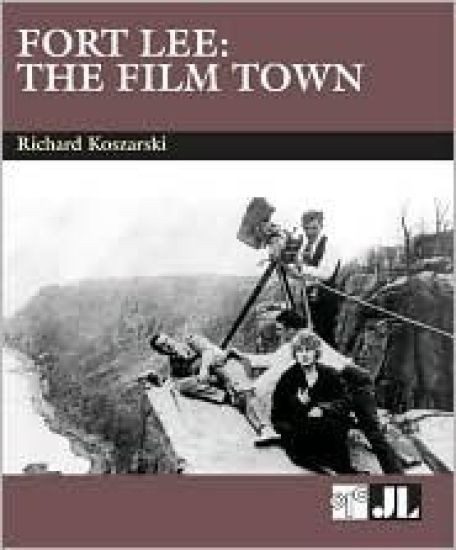
During the 1910s, motion pictures came to dominate every aspect of life in the suburban New Jersey community of Fort Lee. During the nickelodeon era, D.W. Griffith, Mary Pickford, and Mack Sennett would ferry entire acting companies across the Hudson to pose against the Palisades. Theda Bara, "Fatty" Arbuckle, and Douglas Fairbanks worked in the rows of great greenhouse studios that sprang up in Fort Lee and the neighboring communities. Tax revenues from studios and laboratories swelled municipal coffers. Then, suddenly, everything changed. Fort Lee, the film town once hailed as the birthplace of the American motion picture industry, was now the industry's official ghost town. Stages once filled to capacity by Paramount and Universal were leased by independent producers or used as paint shops by scenic artists from Broadway. Most of Fort Lee's film history eventually burned away, one studio at a time. Richard Koszarski re-creates the rise and fall of Fort Lee filmmaking in a remarkable collage of period news accounts, memoirs, municipal records, previously unpublished memos and correspondence, and dozens of rare posters and photographs—not just film history, but a unique account of what happened to one New Jersey town hopelessly enthralled by the movies. Distributed for John Libbey Publishing
Von

Von

Richard Koszarski

Limelight Editions
2004
pokkari
In this revised and expanded edition of Richard Koszarski's The Man You Loved to Hate, about a third of the material is completely new or significantly rewritten. It includes information recently unearthed in France and Austria and makes use of documents, scrapbooks, photographs and correspondence belonging to the Stroheim family. Reshaped and enriched, Von becomes once again what Sight and Sound called ..."the best biographical treatment of Stroheim that we are likely to get - intelligent, judicious and a pleasure to read."
An Evening's Entertainment

An Evening's Entertainment

Richard Koszarski

University of California Press
1994
pokkari
The silent cinema was America's first modern entertainment industry, a complex social, cultural, and technological phenomenon that swept the country in the early years of the twentieth century. Richard Koszarski examines the underlying structures that made the silent-movie era work, from the operations of eastern bankers to the problems of neighborhood theater musicians. He offers a new perspective on the development of this major new industry and art form and the public's response to it.