Kirjojen hintavertailu. Mukana 12 390 323 kirjaa ja 12 kauppaa.

Kirjailija

Richard L. Abel

Kirjat ja teokset yhdessä paikassa: 24 kirjaa, julkaisuja vuosilta 1992-2025, suosituimpien joukossa Lawyers in the Dock. Vertaile teosten hintoja ja tarkista saatavuus suomalaisista kirjakaupoista.

Mukana myös kirjoitusasut: Richard L Abel

24 kirjaa

Kirjojen julkaisuhaarukka 1992-2025.

How Autocrats Are Held Accountable

How Autocrats Are Held Accountable

Richard L. Abel

TAYLOR FRANCIS LTD
2025
nidottu
Chronicling and analyzing resistance to the threat that autocracy poses to American liberal democracy, this book provides the definitive account of the roles that courts and elections played in holding Trump accountable for his actions.This book describes the many lawsuits brought against Trump and his supporters for their autocratic actions. Trump was found liable in two civil lawsuits: for nearly $100 million for sexually abusing and defaming E. Jean Carroll and for nearly $500 million for fraudulently valuing his real estate properties. Trump supporters and associates suffered even greater liabilities for defamation. And many of his lawyers were disciplined by professional associations. New York successfully prosecuted Trump for falsifying business records in connection with hush money payments to Stormy Daniels. Georgia obtained guilty pleas from four Trump associates implicated in efforts to change that state’s electoral votes, although the case against Trump was derailed by prosecutorial misconduct. Special Counsel Jack Smith initiated two prosecutions against Trump: for concealing classified papers and for seeking to overturn the 2020 election. But the Supreme Court created a novel doctrine of presidential immunity; and those cases were dismissed before Trump’s second inauguration. The book also analyzes the 2024 election, which Trump won with a bare 1.5 percent majority. It exposes his intensifying vilification of immigrants and transgender people and the numerous falsehoods he and his supporters disseminated. The book concludes by evaluating all the varied forms of resistance to autocracy described in the five volumes of the Defending American Democracy mini-series.This definitive account and analysis of Trumpism and the resistance to it will appeal to scholars, students, and others with interests in politics, populism, and the rule of law and, more specifically, to those concerned with resisting the threat that autocracy poses to liberal democracy.
How Autocrats Are Held Accountable

How Autocrats Are Held Accountable

Richard L. Abel

TAYLOR FRANCIS LTD
2025
sidottu
Chronicling and analyzing resistance to the threat that autocracy poses to American liberal democracy, this book provides the definitive account of the roles that courts and elections played in holding Trump accountable for his actions.This book describes the many lawsuits brought against Trump and his supporters for their autocratic actions. Trump was found liable in two civil lawsuits: for nearly $100 million for sexually abusing and defaming E. Jean Carroll and for nearly $500 million for fraudulently valuing his real estate properties. Trump supporters and associates suffered even greater liabilities for defamation. And many of his lawyers were disciplined by professional associations. New York successfully prosecuted Trump for falsifying business records in connection with hush money payments to Stormy Daniels. Georgia obtained guilty pleas from four Trump associates implicated in efforts to change that state’s electoral votes, although the case against Trump was derailed by prosecutorial misconduct. Special Counsel Jack Smith initiated two prosecutions against Trump: for concealing classified papers and for seeking to overturn the 2020 election. But the Supreme Court created a novel doctrine of presidential immunity; and those cases were dismissed before Trump’s second inauguration. The book also analyzes the 2024 election, which Trump won with a bare 1.5 percent majority. It exposes his intensifying vilification of immigrants and transgender people and the numerous falsehoods he and his supporters disseminated. The book concludes by evaluating all the varied forms of resistance to autocracy described in the five volumes of the Defending American Democracy mini-series.This definitive account and analysis of Trumpism and the resistance to it will appeal to scholars, students, and others with interests in politics, populism, and the rule of law and, more specifically, to those concerned with resisting the threat that autocracy poses to liberal democracy.
How Autocrats Subvert Elections

How Autocrats Subvert Elections

Richard L. Abel

TAYLOR FRANCIS LTD
2025
nidottu
Chronicling and analyzing resistance to the threat that autocracy poses to American liberal democracy, this book provides the definitive account of the response to the January 6, 2021, assault on the Capitol and Republican efforts to overturn the 2020 election and bias future elections in their favor.In December 2020, Donald Trump invited supporters to DC for what he promised would be a “wild” demonstration against Biden’s victory. On January 6, 2021, he directed the mob he had summoned to march on the Capitol, where it ransacked the building, caused five deaths and hundreds of injuries, and delayed but failed to prevent certification of the election. Although some Congressional Republicans briefly distanced themselves from Trump, the party quickly closed ranks around him. The business community, similarly, initially expressed criticism but soon resumed campaign contributions to Republicans. Democrats sought to impeach Trump (for the second time), but Republicans blocked conviction. Democrats created a House Select Committee, which exposed Trump’s complicity through dramatic televised hearings and a comprehensive report. Republicans responded by denying there had been a riot—one calling it a mere tourist visit—and sanctifying those arrested. Nevertheless, all but two of the nearly 1,400 charged were convicted. Judges appointed by both Democratic and Republican presidents harshly condemned the insurrectionists, imposing sentences that did not vary by the judge’s party preference. This book contextualizes these continuing threats to American democracy through an opening chapter exposing distressing parallels with the rise of Nazism in 1930s Germany. The penultimate chapter examines the ways in which Republicans persisted in seeking to overturn the 2020 election and distort subsequent elections by gerrymandering and creating obstructions to potential Democratic voters. All the chapters focus on the multiple forms of resistance—politics, social action, economic pressure, media exposure, and criminal prosecution—evaluating their relative efficacy and comparing them with modes of resistance analyzed in the author’s related volumes.This definitive account and analysis of Trump’s and his supporters’ attempts to subvert the 2020 election will appeal to scholars, students, and others with interests in politics, populism, and the rule of law, and more specifically, to those concerned with resisting the threat that autocracy poses to liberal democracy.
How Autocrats Subvert Elections

How Autocrats Subvert Elections

Richard L. Abel

TAYLOR FRANCIS LTD
2025
sidottu
Chronicling and analyzing resistance to the threat that autocracy poses to American liberal democracy, this book provides the definitive account of the response to the January 6, 2021, assault on the Capitol and Republican efforts to overturn the 2020 election and bias future elections in their favor.In December 2020, Donald Trump invited supporters to DC for what he promised would be a “wild” demonstration against Biden’s victory. On January 6, 2021, he directed the mob he had summoned to march on the Capitol, where it ransacked the building, caused five deaths and hundreds of injuries, and delayed but failed to prevent certification of the election. Although some Congressional Republicans briefly distanced themselves from Trump, the party quickly closed ranks around him. The business community, similarly, initially expressed criticism but soon resumed campaign contributions to Republicans. Democrats sought to impeach Trump (for the second time), but Republicans blocked conviction. Democrats created a House Select Committee, which exposed Trump’s complicity through dramatic televised hearings and a comprehensive report. Republicans responded by denying there had been a riot—one calling it a mere tourist visit—and sanctifying those arrested. Nevertheless, all but two of the nearly 1,400 charged were convicted. Judges appointed by both Democratic and Republican presidents harshly condemned the insurrectionists, imposing sentences that did not vary by the judge’s party preference. This book contextualizes these continuing threats to American democracy through an opening chapter exposing distressing parallels with the rise of Nazism in 1930s Germany. The penultimate chapter examines the ways in which Republicans persisted in seeking to overturn the 2020 election and distort subsequent elections by gerrymandering and creating obstructions to potential Democratic voters. All the chapters focus on the multiple forms of resistance—politics, social action, economic pressure, media exposure, and criminal prosecution—evaluating their relative efficacy and comparing them with modes of resistance analyzed in the author’s related volumes.This definitive account and analysis of Trump’s and his supporters’ attempts to subvert the 2020 election will appeal to scholars, students, and others with interests in politics, populism, and the rule of law, and more specifically, to those concerned with resisting the threat that autocracy poses to liberal democracy.
How Autocrats Seek Power

How Autocrats Seek Power

Richard L. Abel

TAYLOR FRANCIS LTD
2024
sidottu
Chronicling and analyzing resistance to the threat that autocracy poses to American liberal democracy, this book provides the definitive account of the rise of Trump’s populist support in 2016, and his failed efforts to nullify the result of the 2020 election.This book is about the threat of autocracy, which antedated Donald Trump and will persist after he leaves the stage. Autocracy negates both liberalism—which includes the protection of fundamental rights, the rule of law, separation of powers, and respect for specialist expertise—and democracy—which requires that the state be responsible to an electorate composed of all eligible voters—by concentrating unconstrained power in a single individual. Anticipating defeat in the 2016 election, Trump attacked suggestions that he had sought, or even benefited from, Russian assistance despite the evidence, and he made repeated claims of election fraud. In 2020, fearful that his mishandling of the pandemic had alienated voters, he intensified the allegations of fraud, demanding recounts, pressuring state legislatures and state election officials, advancing bizarre conspiracy theories, and finally, calling for a massive demonstration, urging protesters to march to the Capitol to pressure Congress, promising to accompany them. But as this book documents, Trump’s efforts to nullify the result of the 2020 election failed. As the courts rejected his numerous challenges, state election officials loyally performed their statutory duties, the Justice Department found no evidence of fraud, and politicians from all sides certified Biden’s victory, this book traces the many, and varied, forms of the defense of liberal democracy located within both the state and civil society, including law (judges, government lawyers, and private practitioners), the media, NGOs, science (and other forms of expertise), and civil servants (in federal, state, and local government). Evaluating their efficacy, the book maintains, is vital if—as history has repeatedly taught us—the price of liberal democracy, like that of liberty itself, is eternal vigilance.This definitive account and analysis of Trumpism and the resistance to it will appeal to scholars, students, and others with interests in politics, populism, and the rule of law and, more specifically, to those concerned with resisting the threat that autocracy poses to liberal democracy.
How Autocrats Seek Power

How Autocrats Seek Power

Richard L. Abel

TAYLOR FRANCIS LTD
2024
nidottu
Chronicling and analyzing resistance to the threat that autocracy poses to American liberal democracy, this book provides the definitive account of the rise of Trump’s populist support in 2016, and his failed efforts to nullify the result of the 2020 election.This book is about the threat of autocracy, which antedated Donald Trump and will persist after he leaves the stage. Autocracy negates both liberalism—which includes the protection of fundamental rights, the rule of law, separation of powers, and respect for specialist expertise—and democracy—which requires that the state be responsible to an electorate composed of all eligible voters—by concentrating unconstrained power in a single individual. Anticipating defeat in the 2016 election, Trump attacked suggestions that he had sought, or even benefited from, Russian assistance despite the evidence, and he made repeated claims of election fraud. In 2020, fearful that his mishandling of the pandemic had alienated voters, he intensified the allegations of fraud, demanding recounts, pressuring state legislatures and state election officials, advancing bizarre conspiracy theories, and finally, calling for a massive demonstration, urging protesters to march to the Capitol to pressure Congress, promising to accompany them. But as this book documents, Trump’s efforts to nullify the result of the 2020 election failed. As the courts rejected his numerous challenges, state election officials loyally performed their statutory duties, the Justice Department found no evidence of fraud, and politicians from all sides certified Biden’s victory, this book traces the many, and varied, forms of the defense of liberal democracy located within both the state and civil society, including law (judges, government lawyers, and private practitioners), the media, NGOs, science (and other forms of expertise), and civil servants (in federal, state, and local government). Evaluating their efficacy, the book maintains, is vital if—as history has repeatedly taught us—the price of liberal democracy, like that of liberty itself, is eternal vigilance.This definitive account and analysis of Trumpism and the resistance to it will appeal to scholars, students, and others with interests in politics, populism, and the rule of law and, more specifically, to those concerned with resisting the threat that autocracy poses to liberal democracy.
How Autocrats Attack Expertise

How Autocrats Attack Expertise

Richard L. Abel

TAYLOR FRANCIS LTD
2023
nidottu
Chronicling and analyzing resistance to the threat that autocracy poses to American liberal democracy, this book provides the definitive account of Trump’s assault on truth and his populist attacks on expertise, as well as scientific and legal opposition to them.This book is about the threat of autocracy, which antedated Donald Trump and will persist after he leaves the stage. Pandering to populists, autocrats attack professional expertise in an Orwellian world, where “ignorance is strength” and where, as Hannah Arendt wrote, people “believe everything and nothing.” Trump sought to inflame xenophobia by blaming China for the pandemic and closing U.S. borders, then declaring victory and, when that proved premature, wrongly blaming the number of tests for escalating cases. He sought to muzzle government scientists and denounced those who defied or evaded his directives as members of the “deep state,” preferring to rely on inexpert buddies. He elevated obscure scientists who promoted quack cures and opposed effective preventive measures while sidelining the few reputable experts, who nevertheless courageously resisted political interference. In addition to these, as this book documents, independent scientists, scientific journals and professional associations also outspoken, often more so. Even the pharmaceutical industry sought to preserve the integrity of a federal bureaucracy that assured the public the drugs they consumed were safe and efficacious. Following Trump’s numerous efforts to distort and undermine expertise, this book describes and evaluates the resilience of scientific and legal defenses of truth.This definitive account and analysis of Trump’s populist rejection of truth and expertise will appeal to scholars, students and others with interests in politics, populism and the rule of law and, more specifically, to those concerned with resisting the threat that autocracy poses to liberal democracy.
How Autocrats Attack Expertise

How Autocrats Attack Expertise

Richard L. Abel

TAYLOR FRANCIS LTD
2023
sidottu
Chronicling and analyzing resistance to the threat that autocracy poses to American liberal democracy, this book provides the definitive account of Trump’s assault on truth and his populist attacks on expertise, as well as scientific and legal opposition to them.This book is about the threat of autocracy, which antedated Donald Trump and will persist after he leaves the stage. Pandering to populists, autocrats attack professional expertise in an Orwellian world, where “ignorance is strength” and where, as Hannah Arendt wrote, people “believe everything and nothing.” Trump sought to inflame xenophobia by blaming China for the pandemic and closing U.S. borders, then declaring victory and, when that proved premature, wrongly blaming the number of tests for escalating cases. He sought to muzzle government scientists and denounced those who defied or evaded his directives as members of the “deep state,” preferring to rely on inexpert buddies. He elevated obscure scientists who promoted quack cures and opposed effective preventive measures while sidelining the few reputable experts, who nevertheless courageously resisted political interference. In addition to these, as this book documents, independent scientists, scientific journals and professional associations also outspoken, often more so. Even the pharmaceutical industry sought to preserve the integrity of a federal bureaucracy that assured the public the drugs they consumed were safe and efficacious. Following Trump’s numerous efforts to distort and undermine expertise, this book describes and evaluates the resilience of scientific and legal defenses of truth.This definitive account and analysis of Trump’s populist rejection of truth and expertise will appeal to scholars, students and others with interests in politics, populism and the rule of law and, more specifically, to those concerned with resisting the threat that autocracy poses to liberal democracy.
How Autocrats Abuse Power

How Autocrats Abuse Power

Richard L. Abel

TAYLOR FRANCIS LTD
2023
nidottu
Chronicling and analyzing resistance to the threat that autocracy poses to American liberal democracy, this book provides the definitive account of both Trump’s efforts to erode democracy’s essential elements and opposition to those efforts.This book is about the threat of autocracy, which antedated Donald Trump and will persist after he leaves the stage. Autocrats blur or breach the separation of powers, use executive orders to bypass the legislature, pack the courts, replace career prosecutors with political appointees, abuse the pardon power, and claim immunity from the law. They seek to hobble opposition from civil society by curtailing speech and assembly, tolerating and even encouraging vigilante violence, and attacking the media. As this book demonstrates, Trump followed the autocrat’s playbook in many ways. He was a huckster of hate, aiming his vitriol at women and racial minorities and making attacks on immigrants the focus of his 2016 campaign, as well as his first years in office. Nevertheless, his rhetoric and policies encountered widespread opposition—from religious leaders, business executives, lawyers and bar associations, and civil servants. His executive orders (on which he relied) were almost all struck down by courts: including the first two “Muslim bans,” the detention of children and their separation from parents, the diversion of military funds to build the border wall, the insertion of a citizenship question in the census, and the limits on asylum. Just as Trump sought to weaponize the criminal justice system against his political opponents, so he manipulated it to defend his cronies, derailing some of their prosecutions. Trump also intervened in courts martial and criminal prosecutions of those convicted of war crimes in Afghanistan and Iraq and those accused of desertion and terrorism. Again, however, there was resistance, as some career prosecutors withdrew from cases or resigned when subjected to political pressure and federal courts convicted all of Trump’s allies—even though the president went on to use his unreviewable pardon power. This book, then, documents the abuses that are characteristic of autocracy and assesses the various forms of resistance to them.This definitive account and analysis of Trumpism in action, as well as the resistance to it, will appeal to scholars, students, and others with interests in politics, populism, and the rule of law and, more specifically, to those concerned with resisting the threat that autocracy poses to liberal democracy.
How Autocrats Abuse Power

How Autocrats Abuse Power

Richard L. Abel

TAYLOR FRANCIS LTD
2023
sidottu
Chronicling and analyzing resistance to the threat that autocracy poses to American liberal democracy, this book provides the definitive account of both Trump’s efforts to erode democracy’s essential elements and opposition to those efforts.This book is about the threat of autocracy, which antedated Donald Trump and will persist after he leaves the stage. Autocrats blur or breach the separation of powers, use executive orders to bypass the legislature, pack the courts, replace career prosecutors with political appointees, abuse the pardon power, and claim immunity from the law. They seek to hobble opposition from civil society by curtailing speech and assembly, tolerating and even encouraging vigilante violence, and attacking the media. As this book demonstrates, Trump followed the autocrat’s playbook in many ways. He was a huckster of hate, aiming his vitriol at women and racial minorities and making attacks on immigrants the focus of his 2016 campaign, as well as his first years in office. Nevertheless, his rhetoric and policies encountered widespread opposition—from religious leaders, business executives, lawyers and bar associations, and civil servants. His executive orders (on which he relied) were almost all struck down by courts: including the first two “Muslim bans,” the detention of children and their separation from parents, the diversion of military funds to build the border wall, the insertion of a citizenship question in the census, and the limits on asylum. Just as Trump sought to weaponize the criminal justice system against his political opponents, so he manipulated it to defend his cronies, derailing some of their prosecutions. Trump also intervened in courts martial and criminal prosecutions of those convicted of war crimes in Afghanistan and Iraq and those accused of desertion and terrorism. Again, however, there was resistance, as some career prosecutors withdrew from cases or resigned when subjected to political pressure and federal courts convicted all of Trump’s allies—even though the president went on to use his unreviewable pardon power. This book, then, documents the abuses that are characteristic of autocracy and assesses the various forms of resistance to them.This definitive account and analysis of Trumpism in action, as well as the resistance to it, will appeal to scholars, students, and others with interests in politics, populism, and the rule of law and, more specifically, to those concerned with resisting the threat that autocracy poses to liberal democracy.
Law's Wars

Law's Wars

Richard L. Abel

Cambridge University Press
2019
pokkari
The US 'war on terror', which Bush declared and Obama continued, repeatedly violated fundamental rule of law values. Law's Wars: The Fate of the Rule of Law in the US 'War on Terror' is the first comprehensive account of efforts to resist and correct those violations. It focuses on responses to abuses in Abu Ghraib, efforts by Guantánamo Bay detainees to improve conditions of confinement in and win release, exposés of and efforts to end torture and electronic surveillance, and civilian casualties on the battlefield, including targeted killings. Abel deploys a law and society perspective to construct and analyze detailed narratives of the roles of victims, whistle-blowers, the media, NGOs, lawyers, doctors, politicians, military personnel, foreign governments and international organizations in defending the rule of law. Only by understanding past errors can we hope to prevent their repetition in what promises to be an endless 'war on terror'.
Law's Trials

Law's Trials

Richard L. Abel

Cambridge University Press
2019
pokkari
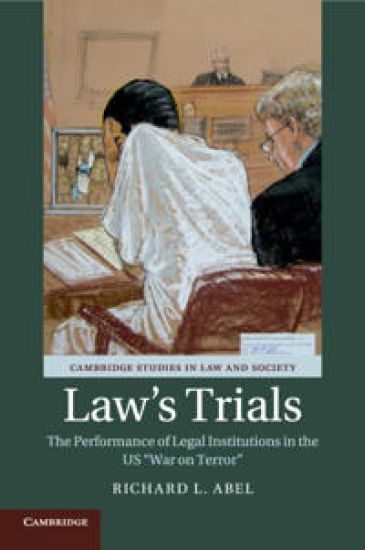
The US 'war on terror' has repeatedly violated fundamental rule of law values. When executive and legislature commit such egregious wrongs, courts represent the ultimate defense. Law's Trials: The Performance of Legal Institutions in the US 'War on Terror' offers the first comprehensive account of judicial performance during the sixteen years of the Bush and Obama administrations. Abel examines criminal prosecutions of alleged terrorists, courts martial of military personnel accused of law of war violations, military commission trials of 'high value detainees', habeas corpus petitions by Guantánamo detainees, civil damage actions by victims of both the 'war on terror' and terrorism, and civil liberties violations by government officials and Islamophobic campaigners. Law's Trials identifies successful defenses of the rule of law through qualitative and quantitative analyses, comparing the behavior of judges within and between each category of cases and locating those actions in a comparative history of efforts to redress fundamental injustices.
Law's Wars

Law's Wars

Richard L. Abel

Cambridge University Press
2018
sidottu
The US 'war on terror', which Bush declared and Obama continued, repeatedly violated fundamental rule of law values. Law's Wars: The Fate of the Rule of Law in the US 'War on Terror' is the first comprehensive account of efforts to resist and correct those violations. It focuses on responses to abuses in Abu Ghraib, efforts by Guantánamo Bay detainees to improve conditions of confinement in and win release, exposés of and efforts to end torture and electronic surveillance, and civilian casualties on the battlefield, including targeted killings. Abel deploys a law and society perspective to construct and analyze detailed narratives of the roles of victims, whistle-blowers, the media, NGOs, lawyers, doctors, politicians, military personnel, foreign governments and international organizations in defending the rule of law. Only by understanding past errors can we hope to prevent their repetition in what promises to be an endless 'war on terror'.
Law's Trials

Law's Trials

Richard L. Abel

Cambridge University Press
2018
sidottu
The US 'war on terror' has repeatedly violated fundamental rule of law values. When executive and legislature commit such egregious wrongs, courts represent the ultimate defense. Law's Trials: The Performance of Legal Institutions in the US 'War on Terror' offers the first comprehensive account of judicial performance during the sixteen years of the Bush and Obama administrations. Abel examines criminal prosecutions of alleged terrorists, courts martial of military personnel accused of law of war violations, military commission trials of 'high value detainees', habeas corpus petitions by Guantánamo detainees, civil damage actions by victims of both the 'war on terror' and terrorism, and civil liberties violations by government officials and Islamophobic campaigners. Law's Trials identifies successful defenses of the rule of law through qualitative and quantitative analyses, comparing the behavior of judges within and between each category of cases and locating those actions in a comparative history of efforts to redress fundamental injustices.
Lawyers in the Dock

Lawyers in the Dock

Richard L. Abel

Oxford University Press Inc
2011
nidottu
For more than a decade, American lawyers have bewailed the ethical crisis in their profession, wringing their hands about its bad image. But their response has been limited to spending money on public relations, mandating education, and endlessly revising ethical rules. In Lawyers in the Dock, Richard L. Abel argues that these measures will do little or nothing to solve the problems illustrated by the six disciplinary case studies featured in this book unless the legal monopoly enjoyed by attorneys in the U.S. is drastically contracted. Richard Abel examines some of the most common ethical complaints made about lawyers in Lawyers in the Dock. Using detailed records of disciplinary proceedings, he describes the actions surrounding certain cases based on three of the most common complaints: neglecting the client by failing to pursue cases diligently; overcharging of clients by mystifying billing practices; and betraying adversaries and courts out of excessive loyalty to clients or causes. Richard Abel argues that these measures will do little or nothing to solve the problems exposed by his six disciplinary case studies unless structural changes are made to the legal monopoly in order to restore the public trust in lawyers. Lawyers in the Dock is essential reading for lawyers, law students, and potential clients who wish to restore trust and professional responsibility in the legal profession.
Lawyers on Trial

Lawyers on Trial

Richard L. Abel

Oxford University Press Inc
2011
sidottu
Lawyer misconduct affects many people: clients, adversaries, opposing counsel, judges, the legal profession, and society at large. The records of disciplinary proceedings offer a penetrating, and largely ignored, perspective on how lawyers misbehave. Because the lawyers' professional lives are at stake, the factual records are extraordinarily detailed and the lawyers surprisingly open about their motivations and justifications. In Lawyers on Trial, Richard L. Abel presents the stories of ten California lawyers who broke the rules: hiring an ex-cop to chase ambulances, flouting fee limitations in medical malpractice cases, creating a fictitious company and impersonating non-existent people in order to appropriate Sega's computer games, a former California Real Estate Commissioner defrauding developers and financiers, helping a represented co-defendant negotiate a plea without his lawyer's participation or knowledge, and defying a judge's sealing order and his own client's wishes for closure in order to champion the "defenseless " and "oppressed " and protect "widows and children. " The book begins by showing how nearly a century of political struggle over self-regulation shapes the way the disciplinary system selects and processes cases and concludes by canvassing reforms that could improve the performance of the legal profession. Lawyers on Trial will be invaluable for those contemplating law school, law students and teachers of professional responsibility, continuing legal education classes, lawyers encountering ethical dilemmas in their practice or trying to understand misbehaving colleagues, members of the public thinking of retaining a lawyer, and clients dealing with their own lawyers.
Lawyers in the Dock

Lawyers in the Dock

Richard L Abel

Oxford University Press Inc
2008
sidottu
For more than a decade, American lawyers have bewailed the ethical crisis in their profession, wringing their hands about its bad image. But their response has been limited to spending money on public relations, mandating education, and endlessly revising ethical rules. In this book, Richard Abel will argue that these measures will do little or nothing to solve the problems illustrated by the six disciplinary case studies featured in this book unless the legal monopoly enjoyed by attorneys in the U.S. is drastically contracted. Richard Abel examines some of the most common ethical complaints made about lawyers in Lawyers in the Dock. Using detailed records of disciplinary proceedings, he describes the actions surrounding certain cases based on three of the most common complaints: neglecting the client by failing to pursue cases diligently; overcharging of clients by mystifying billing practices; and betraying adversaries and courts out of excessive loyalty to clients or causes. In this book, Richard Abel will argue that these measures will do little or nothing to solve the problems exposed by his six disciplinary case studies unless structural changes are made to the legal monopoly in order to restore the public trust in lawyers. Lawyers in the Dock is essential reading for lawyers, law students, and potential clients who wish to restore trust and professional responsibility in the legal profession.
English Lawyers between Market and State

English Lawyers between Market and State

Richard L Abel

Oxford University Press
2004
nidottu
Toward the end of the twentieth century, English lawyers enjoyed widespread respect and prosperity. They had survived criticism by practitioners and academics and a Royal Commission enquiry, but the final decade witnessed profound changes. First the Conservatives sought to apply laissez-faire principles to the profession. Then Labour transformed the legal aid scheme it had created half a century earlier. At the same time, the profession confronted cumulative changes in higher education and women's aspirations, internal and external competition, and dramatic fluctuations in demand. This book analyses the politics of professionalism during that tumultuous decade, the struggles among individual producers (barristers, solicitors, foreign lawyers, accountants) their associations, consumers (individual and corporate, public and private) and the state to shape the market for legal services by deploying economic, political and rhetorical resources (including changing conceptions of professionalism). The profession had to respond to a greatly increased production of law graduates and the desire of lawyer mothers (and also fathers) to raise their families. It had to replace exclusivity with efforts to reflect the larger society (class, race, gender). The Bar needed to address challenges to its exclusive rights of audience from both solicitors and employed barristers and decide whether to retaliate by permitting direct access, thereby compromising its claim to be a consulting profession. Solicitors had to reconcile their invocation of market principles against the Bar with their resistance to corporate conveyancing and multidisciplinary practices. Government had to restrain a demand-led legal aid scheme; practitioners and their associations sought to pressure the government to expand eligibility and raise remuneration rates. Divisions within both branches so compromised self-regulation and governance that the government even threatened to deprive lawyers of those essential elements of professionalism. These challenges have begun a transformation of the legal profession that will shape its evolution throughout the twenty-first century.
English Lawyers between Market and State

English Lawyers between Market and State

Richard L Abel

Oxford University Press
2003
sidottu
Toward the end of the twentieth century, English lawyers enjoyed widespread respect and prosperity. They had survived criticism by practitioners and academics and a Royal Commission enquiry, but the final decade witnessed profound changes. First the Conservatives sought to apply laissez-faire principles to the profession. Then Labour transformed the legal aid scheme it had created half a century earlier. At the same time, the profession confronted cumulative changes in higher education and women's aspirations, internal and external competition, and dramatic fluctuations in demand. This book analyses the politics of professionalism during that tumultuous decade, the struggles among individual producers (barristers, solicitors, foreign lawyers, accountants) their associations, consumers (individual and corporate, public and private) and the state to shape the market for legal services by deploying economic, political and rhetorical resources (including changing conceptions of professionalism). The profession had to respond to a greatly increased production of law graduates and the desire of lawyer mothers (and also fathers) to raise their families. It had to replace exclusivity with efforts to reflect the larger society (class, race, gender). The Bar needed to address challenges to its exclusive rights of audience from both solicitors and employed barristers and decide whether to retaliate by permitting direct access, thereby compromising its claim to be a consulting profession. Solicitors had to reconcile their invocation of market principles against the Bar with their resistance to corporate conveyancing and multidisciplinary practices. Government had to restrain a demand-led legal aid scheme; practitioners and their associations sought to pressure the government to expand eligibility and raise remuneration rates. Divisions within both branches so compromised self-regulation and governance that the government even threatened to deprive lawyers of those essential elements of professionalism. These challenges have begun a transformation of the legal profession that will shape its evolution throughout the twenty-first century.
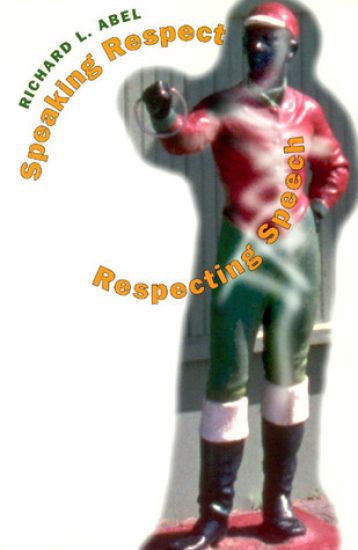
Speaking Respect, Respecting Speech

Speaking Respect, Respecting Speech

Richard L. Abel

University of Chicago Press
1999
nidottu
The feminist campaign against pornography, the furore over a racial epithet in the O.J. Simpson trial, and Iran's continuing threat to kill Salman Rushdie exemplify the intense passions aroused by hurtful speech. In this study Richard Abel offers an original framework for understanding and attempting to resolve these pervasive and intractable conflicts. Drawing on sociological theories of symbollic politics, he views such confrontations as struggles for respect among status categories defined by nationality, religion, race gender, sexual orientation and physical difference. The text seeks to expose the inadequacies of the conventional responses to speech: absolutist civil libertarianism and enthusiastic state regulation. Instead the author argues that only apologies exchanged within the communities that construct collective identities can readjust social standing damaged by hurtful words and images. Abel recasts the problem in terms of equalizing cultural capital and aims to open a new pathway through the wrongs and rights of speech.