Kirjojen hintavertailu. Mukana 12 595 353 kirjaa ja 12 kauppaa.

Kirjailija

Richard L. Alfred

Kirjat ja teokset yhdessä paikassa: 6 kirjaa, julkaisuja vuosilta 2009-2017, suosituimpien joukossa Performance. Vertaile teosten hintoja ja tarkista saatavuus suomalaisista kirjakaupoista.

6 kirjaa

Kirjojen julkaisuhaarukka 2009-2017.

Performance

Performance

Richard L. Alfred; Nathan Harris; Kathryn Thirolf; James Webb

Rowman Littlefield
2012
sidottu
Understanding performance requires asking fundamental questions about the nature and purpose of an organization: What is its business? Whom does it serve? What do stakeholders want and expect? What do they get? How does the organization conceive of and measure results? How do stakeholders feel about results the organization is generating? Answers to these questions require a framework for analysis comprised of three essential ingredients: stakeholders, results and improvement strategies. Organizational performance is given segmental treatment in literature and research. Numerous articles and books have been written on related topics such as outcomes assessment, organizational effectiveness, and cost-benefit analysis, but each approaches the subject from a singular perspective. In this book, organizational performance is viewed through multiple lenses so that its different dimensions can be understood and appreciated. The view is broad and far-reaching in the beginning and specific toward the end, where actions organizations can take to improve performance are described. Recognizing that performance is context specific, colleges and universities are used in this book as the medium for examining performance. This book is written for current and future leaders in profit and non-profit organizations who find scholarly books unimaginative, protracted, and detached from practice. Senior executives, while familiar with many of the basic concepts, will find exceptions to current conceptions of organizational performance and practices used to measure and report performance. Performance: The Dynamic of Results in Postsecondary Organizations will be particularly useful to: college and university administrators; corporate executives and managers; managers in non-profit, policy making and advocacy organizations; graduate program faculty and students; and management consulting organizations.
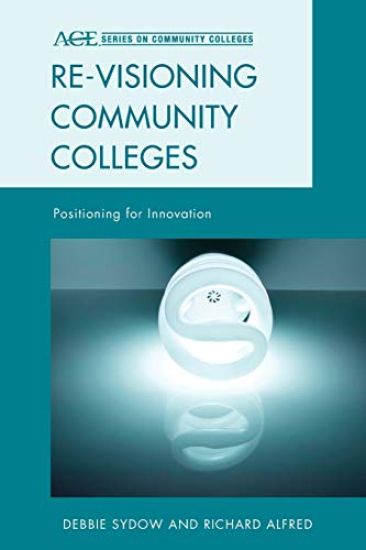
Re-visioning Community Colleges

Re-visioning Community Colleges

Richard L. Alfred; Debbie Sydow

Rowman Littlefield
2017
nidottu
Re-visioning Community Colleges traces the development and generational evolution of community colleges, explores the past success and future capacity of community colleges as disruptive innovators, and analyzes this sector’s unique advantages and vulnerabilities. Ultimately, Sydow and Aflred presents alternative futures for community colleges as they—like all sectors of higher education—face rapidly changing environmental forces and conditions. Re-visioning, the primary thrust of the book, is the process of foresight into the shape that community colleges will likely take in the future, on the basis of their growth and innovation trajectory and in response to the dramatic industry shift that is currently underway in the higher education enterprise.
Developing Tomorrow's Leaders

Developing Tomorrow's Leaders

Pamela L. Eddy; Debbie L. Sydow; Richard L. Alfred; Regina L. Garza-Mitchell

Rowman Littlefield
2015
nidottu
The contributions of community colleges to society are well-documented. Yet, today’s community colleges are at a cross road. Decreases in funding support, a push for college completion, attention on developmental course work, and a host of other demands create a dynamic context for community college operations. Who leads these colleges matters as they face these demands and how they lead influences outcomes. Pending leadership retirements provide a prime opportunity for thinking about community college leadership in new ways. Entering this environment are prospective and aspiring leaders who are often not adequately prepared for the complexities of managing in a paradoxical organization. The era of accountability puts a fine point on the need for leaders to pay heed to the policy making process and to requirements dictated by state legislative bodies and accreditation bodies. Foundations and grant funders serve as instigators for changes in community colleges, as well and also support research into ways to link employer needs to college curricular changes. This book argues that neo-leaders are required to lead transformational change for today and tomorrow’s community colleges. No longer can we rely on single leaders atop a hierarchy. Talent throughout the institution must be tapped. The authors argue that networked leadership is needed. For networked leadership, we begin to advance thinking about the role of networks and connections among leaders throughout the college and beyond the college’s walls. This volume outlines underlying values critical for neo-leaders and offers questions leaders at various levels can use to jumpstart the type of courageous conversations needed on campus. The tools presented in this book provide current and aspiring leaders with resources to prepare for successfully leading the way and developing new leaders to shape the future. Our community colleges and their students require nothing less.
Developing Tomorrow's Leaders

Developing Tomorrow's Leaders

Pamela L. Eddy; Debbie L. Sydow; Richard L. Alfred; Regina L. Garza-Mitchell

Rowman Littlefield
2015
sidottu
The contributions of community colleges to society are well-documented. Yet, today’s community colleges are at a cross road. Decreases in funding support, a push for college completion, attention on developmental course work, and a host of other demands create a dynamic context for community college operations. Who leads these colleges matters as they face these demands and how they lead influences outcomes. Pending leadership retirements provide a prime opportunity for thinking about community college leadership in new ways. Entering this environment are prospective and aspiring leaders who are often not adequately prepared for the complexities of managing in a paradoxical organization. The era of accountability puts a fine point on the need for leaders to pay heed to the policy making process and to requirements dictated by state legislative bodies and accreditation bodies. Foundations and grant funders serve as instigators for changes in community colleges, as well and also support research into ways to link employer needs to college curricular changes. This book argues that neo-leaders are required to lead transformational change for today and tomorrow’s community colleges. No longer can we rely on single leaders atop a hierarchy. Talent throughout the institution must be tapped. The authors argue that networked leadership is needed. For networked leadership, we begin to advance thinking about the role of networks and connections among leaders throughout the college and beyond the college’s walls. This volume outlines underlying values critical for neo-leaders and offers questions leaders at various levels can use to jumpstart the type of courageous conversations needed on campus. The tools presented in this book provide current and aspiring leaders with resources to prepare for successfully leading the way and developing new leaders to shape the future. Our community colleges and their students require nothing less.
Re-visioning Community Colleges

Re-visioning Community Colleges

Debbie Sydow; Richard L. Alfred

Rowman Littlefield
2012
sidottu
Re-visioning Community Colleges traces the development and generational evolution of community colleges, explores the past success and future capacity of community colleges as disruptive innovators, and analyzes this sector’s unique advantages and vulnerabilities. Ultimately, Sydow and Aflred presents alternative futures for community colleges as they—like all sectors of higher education—face rapidly changing environmental forces and conditions. Re-visioning, the primary thrust of the book, is the process of foresight into the shape that community colleges will likely take in the future, on the basis of their growth and innovation trajectory and in response to the dramatic industry shift that is currently underway in the higher education enterprise.
Community Colleges on the Horizon

Community Colleges on the Horizon

Richard L. Alfred; Christopher Shults; Ozan Jaquette; Shelley Strickland

Rowman Littlefield
2009
sidottu
The gap between institutional ambition, resources, and performance is what prompted Richard Alfred and his authors to develop this book. It is written at a time when community colleges are facing problems with increasing demand and limited resources that have forced them to search for efficiency and new ways of supporting growth. The purpose of Community Colleges on the Horizon is to open up a new way of thinking about institutional growth and development and leadership and management based on the concept of abundance-elevating dynamics in institutions that lead to extraordinary performance and outcomes that surpass expectations. The authors describe different circumstances colleges will find themselves in as a function of their leadership, their resources (both tangible and intangible), and the capabilities of their staff. This book is not for the complacent; it is not for those who are unwilling to look openly at their institutions. It will be most useful for those who believe their institution can and should do better, for those who prefer action to words, for those who are unafraid to challenge convention, for those who are ready to pursue opportunity and change, and, ultimately, for those who believe that their institution has unexploited potential.