Kirjojen hintavertailu. Mukana 12 657 676 kirjaa ja 12 kauppaa.

Kirjailija

Richard L Sandor

Kirjat ja teokset yhdessä paikassa: 6 kirjaa, julkaisuja vuosilta 2012-2025, suosituimpien joukossa Carbon Hunters: Reflections And Forecasts Of Climate Markets In The 21st Century. Vertaile teosten hintoja ja tarkista saatavuus suomalaisista kirjakaupoista.

6 kirjaa

Kirjojen julkaisuhaarukka 2012-2025.

Carbon Hunters: Reflections And Forecasts Of Climate Markets In The 21st Century

Carbon Hunters: Reflections And Forecasts Of Climate Markets In The 21st Century

Richard L Sandor; Paula Diperna

WORLD SCIENTIFIC PUBLISHING CO PTE LTD
2025
nidottu
The book is a unique overview of the launching of carbon markets worldwide, and the evolution of those markets as critical tools to manage climate change and other environmental problems. The book also presents uniquely personal narratives of the authors, who have each led unconventional and exciting professional lives, meeting by coincidence, and then working together on the largest environmental and economic problems of our times — addressing climate change with flexibility and maximum potential. Given the unique backgrounds of the authors as pioneers in their respective domains, the book is likely to have no comparable or 'competitive' books. Carbon Hunters also situates the evolution of carbon markets as a journey of invention, imagination and creativity, bringing to life in real-world terms the academic and intellectual underpinnings of an exceptional and rewarding journey — inventing and activating new markets to save our planetary home. Finally, the book offers catalytic 'Food for Thought' and Forecasts on how carbon markets can shape the future of environmental stewardship.
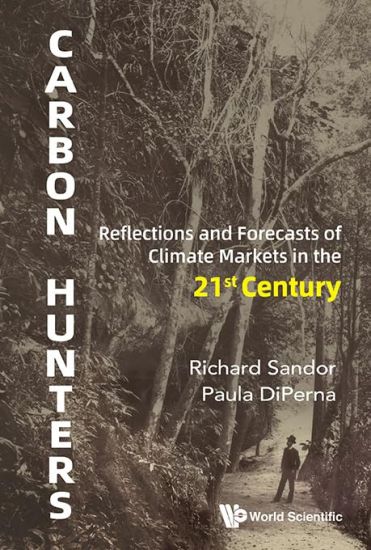
Carbon Hunters: Reflections And Forecasts Of Climate Markets In The 21st Century

Carbon Hunters: Reflections And Forecasts Of Climate Markets In The 21st Century

Richard L Sandor; Paula Diperna

WORLD SCIENTIFIC PUBLISHING CO PTE LTD
2025
sidottu
The book is a unique overview of the launching of carbon markets worldwide, and the evolution of those markets as critical tools to manage climate change and other environmental problems. The book also presents uniquely personal narratives of the authors, who have each led unconventional and exciting professional lives, meeting by coincidence, and then working together on the largest environmental and economic problems of our times — addressing climate change with flexibility and maximum potential. Given the unique backgrounds of the authors as pioneers in their respective domains, the book is likely to have no comparable or 'competitive' books. Carbon Hunters also situates the evolution of carbon markets as a journey of invention, imagination and creativity, bringing to life in real-world terms the academic and intellectual underpinnings of an exceptional and rewarding journey — inventing and activating new markets to save our planetary home. Finally, the book offers catalytic 'Food for Thought' and Forecasts on how carbon markets can shape the future of environmental stewardship.
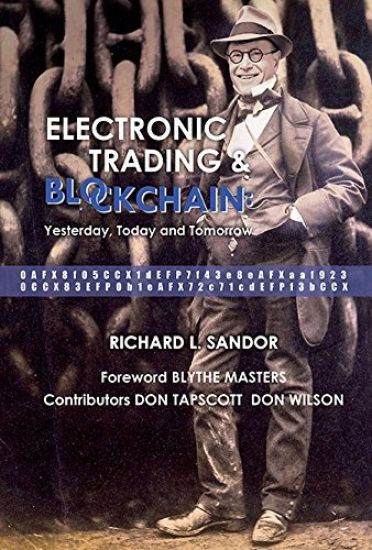
Electronic Trading And Blockchain: Yesterday, Today And Tomorrow

Electronic Trading And Blockchain: Yesterday, Today And Tomorrow

Richard L Sandor

World Scientific Publishing Co Pte Ltd
2018
sidottu
Trading floors in the 60s and 70s involved hundreds of people shouting bids and offers in multi-coloured jackets standing next to each other in different pits, gesticulating with their hands. The decibel levels were extremely high, so high that traders who traded every day had hearing problems later in life. In 1980, the first widely used electronic trading exchange was established.On September 1, 1969, the California Commodity Advisory Research Project (CCARP) was formed and housed at UC Berkeley. The project's first aim was to examine the feasibility of an electronic, for-profit exchange. At the time, there were only 12 exchanges worldwide, and none were for-profit — or electronic. Read first-hand from Richard Sandor, the project director and how CCARP was 20 years too early for the financial world.
Sustainable Investing And Environmental Markets: Opportunities In A New Asset Class

Sustainable Investing And Environmental Markets: Opportunities In A New Asset Class

Richard L Sandor; Nathan Clark; Murali Kanakasabai; Rafael L Marques

World Scientific Publishing Co Pte Ltd
2014
sidottu
Environmental asset classes are not a hope for tomorrow but a reality today. This new asset category promises to grow dramatically in the 21st Century as financial analysts, investors, and corporations around the world try to find ways to profit or reduce costs while promoting environmental social benefits. Sustainable Investing and Environmental Markets: Opportunities in a New Asset Class presents a groundbreaking new way to “do well and to do good”. With a combination of over 50 years of practical experience in the field of environmental finance, Richard Sandor, Nathan Clark, Murali Kanakasabai and Rafael Marques provide a solid preliminary understanding of the promising and transformational new investment category of environmental assets. Three broad asset classes — air and water; catastrophic and weather risk; and sustainability — are covered across 12 chapters which analyze how these environmental asset classes are currently being incorporated into commodities, fixed income, and equity instruments and what the future holds for the field.
Sustainable Investing And Environmental Markets: Opportunities In A New Asset Class

Sustainable Investing And Environmental Markets: Opportunities In A New Asset Class

Richard L Sandor; Nathan Clark; Murali Kanakasabai; Rafael L Marques

World Scientific Publishing Co Pte Ltd
2014
nidottu
Environmental asset classes are not a hope for tomorrow but a reality today. This new asset category promises to grow dramatically in the 21st Century as financial analysts, investors, and corporations around the world try to find ways to profit or reduce costs while promoting environmental social benefits. Sustainable Investing and Environmental Markets: Opportunities in a New Asset Class presents a groundbreaking new way to “do well and to do good”. With a combination of over 50 years of practical experience in the field of environmental finance, Richard Sandor, Nathan Clark, Murali Kanakasabai and Rafael Marques provide a solid preliminary understanding of the promising and transformational new investment category of environmental assets. Three broad asset classes — air and water; catastrophic and weather risk; and sustainability — are covered across 12 chapters which analyze how these environmental asset classes are currently being incorporated into commodities, fixed income, and equity instruments and what the future holds for the field.
Good Derivatives

Good Derivatives

Richard L Sandor; Ronald Coase

John Wiley Sons Inc
2012
sidottu
Through the eyes of an inventor of new markets, Good Derivatives: A Story of Financial and Environmental Innovation tells the story of how financial innovation – a concept that is misunderstood and under attack - has been a positive force in the last four decades. If properly designed and regulated, these “good derivatives” can open vast possibilities to address a variety of global problems. Filled with provocative ideas, fascinating stories, and valuable lessons, it will provide both an insightful interpretation of the last forty years in capital and environmental markets and a vision of world finance for the next forty years. As a young economist at the Chicago Board of Trade, Richard Sandor helped create interest rate futures, a development that revolutionized worldwide finance. Later, he pioneered the use of emissions trading to reduce acid rain, one of the most successful environmental programs ever. He will provide unique insights into the process of creating these new financial products. Covering successes and failures, the story describes the tireless process of inventing, educating and creating support for these new inventions in places like Chicago, New York, London, Paris and how it is unfolding today in Mumbai, Shanghai and Beijing. The book will tell the story of the creation of the Chicago Climate Exchange and its affiliated exchanges (European Climate Exchange, Chicago Climate Futures Exchange and Tianjin Climate Exchange, located in China). The lessons learned in these markets can play a critical role in effectively addressing global climate change and other pressing environmental issues. The author argues that market-based trading systems are a far more effective means of reducing pollutants than “command-and-control”. Environmental markets may ultimately help to find solutions to issues such as rainforest destruction, water problems and biodiversity threats. Written in an engaging, narrative style, Good Derivatives will be of interest to both practitioners and general readers who want to better understand the creative process of financial innovation. In the middle of so much distrust of markets, it is also a recipe of how transparent, well-regulated markets can be a force for good in the environmental, health, and social areas.