Kirjojen hintavertailu. Mukana 12 104 407 kirjaa ja 12 kauppaa.
Kirjailija
Richard Levins
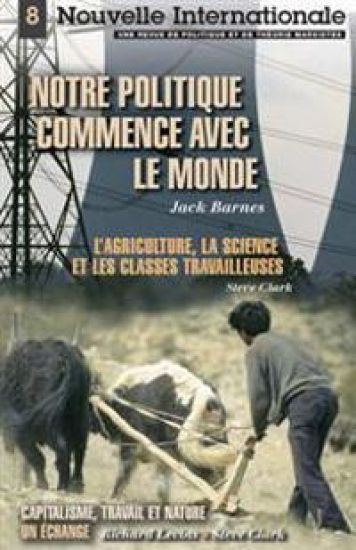
Kirjat ja teokset yhdessä paikassa: 8 kirjaa, julkaisuja vuosilta 1968-2020, suosituimpien joukossa Nouvelle Internationale 7: Notre Politique Commence Avec Le Monde. Vertaile teosten hintoja ja tarkista saatavuus suomalaisista kirjakaupoista.
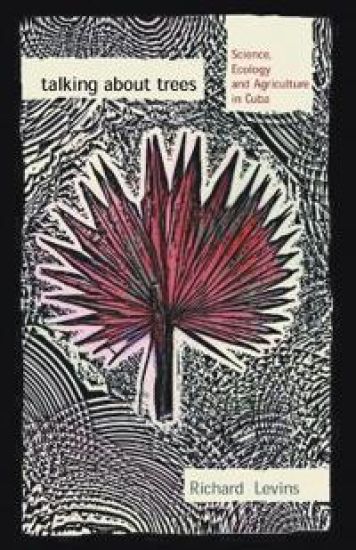
Talking About Trees ranges widely, from personal narratives to theoretical discussions on the need for the precautionary principle in science. Levins offers a strong critique of the industrial-commercial pathway to development; in its place he promotes an alternative development pathway that emphasizes economic viability with equity, ecological and social sustainability and empowerment of the dispossessed.
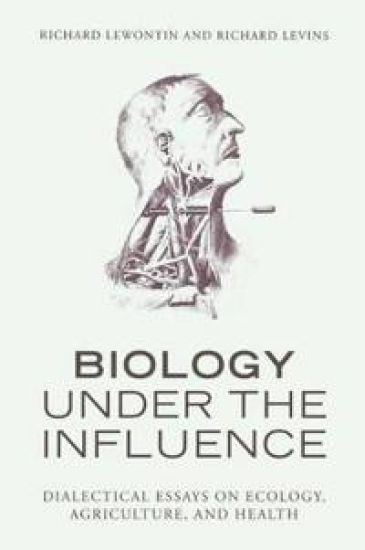
How do we understand the world? While some look to the heavens for intelligent design, others argue that it is determined by information encoded in DNA. Science serves as an important activity for uncovering the processes and operations of nature, but it is also immersed in a social context where ideology influences the questions we ask and how we approach the material world. "Biology Under the Influence: Dialectical Essays on the Coevolution of Nature and Society" breaks from the confines of determinism, offering a dialectical analysis for comprehending a dynamic social and natural world. In "Biology Under the Influence", Richard Lewontin and Richard Levins provide a devastating critique of genetic determinism and reductionism within science while exploring a broad range of issues including the nature of science, biology, evolution, the environment, public health, and dialectics. They dismantle the ideology that attempts to naturalize social inequalities, unveil the alienation of science and nature, and illustrate how a dialectical position serves as a basis for grappling with historical developments and a world characterized by change. "Biology Under the Influence" brings together the illuminating essays of two prominent scientists who work to demystify and empower the public's understanding of science and nature.
How do we understand the world? While some look to the heavens for intelligent design, others argue that it is determined by information encoded in DNA. Science serves as an important activity for uncovering the processes and operations of nature, but it is also immersed in a social context where ideology influences the questions we ask and how we approach the material world. Biology Under the Influence breaks from the confines of determinism, offering a dialectical analysis for comprehending a dynamic social and natural world. In Biology Under the Influence, Richard Lewontin and Richard Levins provide a devastating critique of genetic determinism and reductionism within science while exploring a broad range of issues including the nature of science, biology, evolution, the environment, public health, and dialectics. They dismantle the ideology that attempts to naturalize social inequalities, unveil the alienation of science and nature, and illustrate how a dialectical position serves as a basis for grappling with historical developments and a world characterized by change. Biology Under the Influence brings together the illuminating essays of two prominent scientists who work to demystify and empower the public's understanding of science and nature.
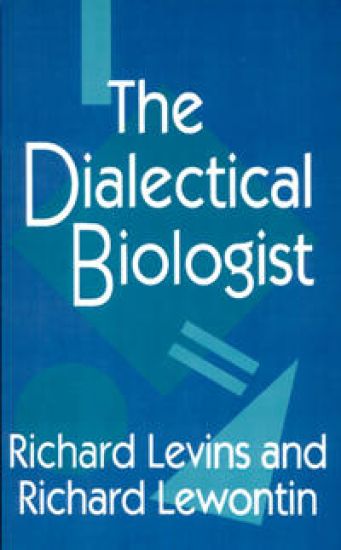
Scientists act within a social context and from a philosophical perspective that is inherently political. Whether they realize it or not, scientists always choose sides. The Dialectical Biologist explores this political nature of scientific inquiry, advancing its argument within the framework of Marxist dialectic. These essays stress the concepts of continual change and codetermination between organism and environment, part and whole, structure and process, science and politics. Throughout, this book questions our accepted definitions and biases, showing the self-reflective nature of scientific activity within society.
In this modern era of mathematical modeling, applications have become increasingly complicated. As the complexity grows, it becomes more and more difficult to draw meaningful conclusions about the behavior of theoretical models and their relations to reality. Alongside methods that emphasize quantitative properties and the testing of scientific details, there is a need for approaches that are more qualitative. These techniques attempt to cover whole families of models in one bold stroke, in a manner that allows robust conclusions to be drawn about them. Loop analysis and time averaging provide a means of interpreting the properties of systems from the network of interactions within the system. The authors' methodology concentrates on graphical representation to guide experimental design, to identify sources of external variability from the statistical pattern of variables, and to make management decisions. Although most of the examples are drawn from ecology, the methods are relevant to all of the pure and applied sciences. This relevance is enhanced by case studies from such diverse areas as physiology, resource management, the behavioral sciences, and social epidemiology. The book will be useful to a broad readership from the biological and social sciences as well as the physical sciences and technology. It will interest undergraduate and graduate students along with researchers active in these disciplines. Here the reader will find a strong rationale for maintaining a holistic approach, revealing what insights and advantages are retained by the broader perspective and, more explicitly, by the synergistic effects that cannot be discerned by reducing systems to their smallest parts.
Professor Levins, one of the leading explorers in the field of integrated population biology, considers the mutual interpenetration and joint evolution of organism and environment, occurring on several levels at once. Physiological and behavioral adaptations to short-term fluctuations of the environment condition the responses of populations to long-term changes and geographic gradients. These in turn affect the way species divide the environments among themselves in communities, and, therefore, the numbers of species which can coexist. Environment is treated here abstractly as pattern: patchiness, variability, range, etc. Populations are studied in their patterns: local heterogeneity, geographic variability, faunistic diversity, etc.