Kirjojen hintavertailu. Mukana 12 390 323 kirjaa ja 12 kauppaa.

Kirjailija

Richard M. Ryan

Kirjat ja teokset yhdessä paikassa: 9 kirjaa, julkaisuja vuosilta 1985-2023, suosituimpien joukossa Supporting Students' Motivation. Vertaile teosten hintoja ja tarkista saatavuus suomalaisista kirjakaupoista.

9 kirjaa

Kirjojen julkaisuhaarukka 1985-2023.

The Oxford Handbook of Self-Determination Theory

The Oxford Handbook of Self-Determination Theory

Richard M. Ryan

OXFORD UNIVERSITY PRESS INC
2023
sidottu
Self-Determination Theory (SDT) is a broad theory of psychological growth and wellness that has revolutionized how we think about human motivation. SDT has been the basis for new and more effective practices in parenting, education, business, sport, healthcare, and other areas of life fostering higher-quality motivation, engagement, connection, and wellness. Drawing on over four decades of evidence-based research and application, this handbook delivers a truly integrative volume with 57 chapters by the top researchers and experts within the field of SDT. Edited by an SDT cofounder, this handbook traces the theory's historical and scientific foundations and synthesizes the latest research and insights on human motivation, covering topics from the social and biological underpinnings of motivation and wellness to practical applications in all aspects of life. The Oxford Handbook of Self-Determination Theory is an invaluable resource for researchers, practitioners, and students interested in practical research and guidance on the study of human nature.

Supporting Students' Motivation

Supporting Students' Motivation

Johnmarshall Reeve; Richard M. Ryan; Sung Hyeon Cheon; Lennia Matos; Haya Kaplan

TAYLOR FRANCIS LTD
2022
nidottu
This is a book about teachers’ classroom motivating styles. Motivating style is the interpersonal tone and face-to-face behavior the teacher relies on when trying to motivate students to engage in classroom activities and procedures. The over-arching goal of the book is to help teachers work through the professional developmental process to learn how to provide instruction in ways that students will find to be motivationally-enriching, satisfying, and engagement-generating.To realize this goal, the book features six parts: Part 1: Introduction, introduces what teachers are to support—namely, student motivation; Part 2: Motivating Style, explains what a supportive motivating style is; Part 3: “How to,” overviews the recommended motivationally-supportive instructional strategies one-by-one and step-by-step; Part 4: Workshop, walks the reader through the skill-building workshop experience; Part 5: Benefits, details all the student, teacher, and classroom benefits that come from an improved motivating style; and Part 6: Getting Started, discussesways to begin using these skills in the classroom.Based on a successful workshop program run by the authors, teachers successfully improve their classroom motivating style. In doing so, they experience gains in their teaching skill and efficacy, job satisfaction, a renewed passion for teaching, and a more satisfying relationship with their students. This multiauthored book provides teachers with the practical, concrete, step-by-step, skill-based "how to" they need to develop a highly supportive motivating style.
Supporting Students' Motivation

Supporting Students' Motivation

Johnmarshall Reeve; Richard M. Ryan; Sung Hyeon Cheon; Lennia Matos; Haya Kaplan

TAYLOR FRANCIS LTD
2022
sidottu
This is a book about teachers’ classroom motivating styles. Motivating style is the interpersonal tone and face-to-face behavior the teacher relies on when trying to motivate students to engage in classroom activities and procedures. The over-arching goal of the book is to help teachers work through the professional developmental process to learn how to provide instruction in ways that students will find to be motivationally-enriching, satisfying, and engagement-generating.To realize this goal, the book features six parts: Part 1: Introduction, introduces what teachers are to support—namely, student motivation; Part 2: Motivating Style, explains what a supportive motivating style is; Part 3: “How to,” overviews the recommended motivationally-supportive instructional strategies one-by-one and step-by-step; Part 4: Workshop, walks the reader through the skill-building workshop experience; Part 5: Benefits, details all the student, teacher, and classroom benefits that come from an improved motivating style; and Part 6: Getting Started, discussesways to begin using these skills in the classroom.Based on a successful workshop program run by the authors, teachers successfully improve their classroom motivating style. In doing so, they experience gains in their teaching skill and efficacy, job satisfaction, a renewed passion for teaching, and a more satisfying relationship with their students. This multiauthored book provides teachers with the practical, concrete, step-by-step, skill-based "how to" they need to develop a highly supportive motivating style.
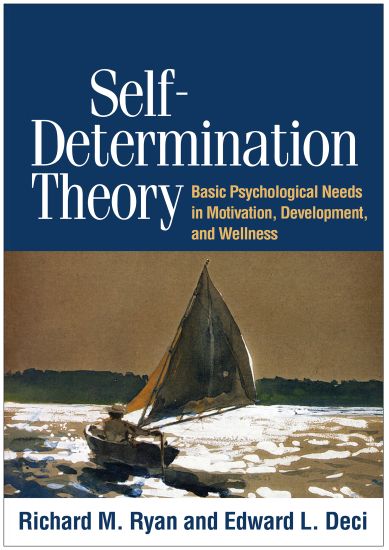
Self-Determination Theory

Self-Determination Theory

Richard M. Ryan; Edward L. Deci

Guilford Press
2018
nidottu
Self-determination theory (SDT) provides a framework for understanding the factors that promote motivation and healthy psychological and behavioral functioning. In this authoritative work, the codevelopers of the theory comprehensively examine SDT's conceptual underpinnings (including its six mini-theories), empirical evidence base, and practical applications across the lifespan. The volume synthesizes a vast body of research on how supporting--or thwarting--people's basic needs for competence, relatedness, and autonomy affects their development and well-being. Chapters cover implications for practice and policy in education, health care, psychotherapy, sport, and the workplace.
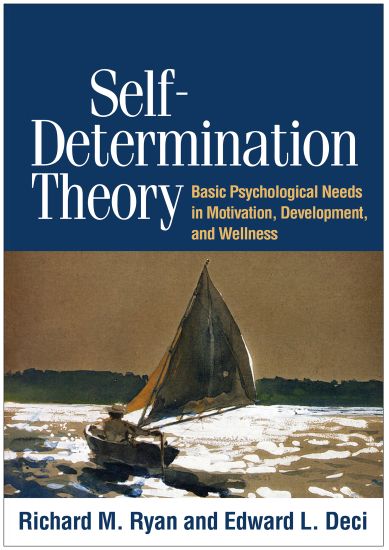
Self-Determination Theory

Self-Determination Theory

Richard M. Ryan; Edward L. Deci

Guilford Press
2017
sidottu
Self-determination theory (SDT) provides a framework for understanding the factors that promote motivation and healthy psychological and behavioral functioning. In this authoritative work, the codevelopers of the theory comprehensively examine SDT's conceptual underpinnings (including its six mini-theories), empirical evidence base, and practical applications across the lifespan. The volume synthesizes a vast body of research on how supporting--or thwarting--people's basic needs for competence, relatedness, and autonomy affects their development and well-being. Chapters cover implications for practice and policy in education, health care, psychotherapy, sport, and the workplace.
Goal Setting and Motivation in Therapy

Goal Setting and Motivation in Therapy

Richard Ryan; Richard M. Ryan

Jessica Kingsley Publishers
2015
pokkari
Drawing together motivational theory, research-based evidence and guidance for best practice, this book presents innovative models for goal-setting and goal pursuit in therapy with children. Setting goals not only allows children, and their families, to engage with the overall therapeutic process, but it also provides an essential motivational element throughout the entire therapeutic process. The editors and contributors give practical advice on empathically collaborating with the child and his or her family, to clearly identify achievable goals that can be wholeheartedly pursued. Key information on Self-Determination Theory (SDT) is accessibly explained, which will aid professional understanding of the relationship between motivation, goal-setting, and strong therapeutic practice. The approaches in this book can be used by a wide range of professionals, including those who specialise in working with children with physical disabilities, learning disabilities, and emotional and behavioural difficulties. The combination of theory, research and practical advice makes this book an essential resource for professionals working therapeutically with children, including occupational therapists, speech and language therapists, physiotherapists, counsellors, psychologists, social workers, arts therapists and psychotherapists.
Intrinsic Motivation and Self-Determination in Human Behavior

Intrinsic Motivation and Self-Determination in Human Behavior

Edward L. Deci; Richard M. Ryan

Springer-Verlag New York Inc.
2013
nidottu
Early in this century, most empirically oriented psychologists believed that all motivation was based in the physiology of a set of non-nervous­ system tissue needs. The theories of that era reflected this belief and used it in an attempt to explain an increasing number of phenomena. It was not until the 1950s that it became irrefutably clear that much of human motivation is based not in these drives, but rather in a set of innate psychological needs. Their physiological basis is less understood; and as concepts, these needs lend themselves more easily to psycho­ logical than to physiological theorizing. The convergence of evidence from a variety of scholarly efforts suggests that there are three such needs: self-determination, competence, and interpersonal relatedness. This book is primarily about self-determination and competence (with particular emphasis on the former), and about the processes and structures that relate to these needs. The need for interpersonal relat­ edness, while no less important, remains to be explored, and the findings from those explorations will need to be integrated with the present theory to develop a broad, organismic theory of human motivation. Thus far, we have articulated self-determination theory, which is offered as a working theory-a theory in the making. To stimulate the research that will allow it to evolve further, we have stated self-determination theory in the form of minitheories that relate to more circumscribed domains, and we have developed paradigms for testing predictions from the various minitheories.
Glued to Games

Glued to Games

Scott Rigby; Richard M. Ryan

Praeger Publishers Inc
2011
sidottu
This book offers a practical yet powerful way to understand the psychological appeal and strong motivation to play video games.With video game sales in the billions and anxious concerns about their long-term effects growing louder, Glued to Games: How Video Games Draw Us In and Hold Us Spellbound brings something new to the discussion. It is the first truly balanced research-based analysis on the games and gamers, addressing both the positive and negative aspects of habitual playing by drawing on significant recent studies and established motivational theory.Filled with examples from popular games and the real experiences of gamers themselves, Glued to Games gets to the heart of gaming's powerful psychological and emotional allure—the benefits as well as the dangers. It gives everyone from researchers to parents to gamers themselves a clearer understanding the psychology of gaming, while offering prescriptions for healthier, more enjoyable games and gaming experiences.
Intrinsic Motivation and Self-Determination in Human Behavior

Intrinsic Motivation and Self-Determination in Human Behavior

Edward L. Deci; Richard M. Ryan

Kluwer Academic/Plenum Publishers
1985
sidottu
Early in this century, most empirically oriented psychologists believed that all motivation was based in the physiology of a set of non-nervous­ system tissue needs. The theories of that era reflected this belief and used it in an attempt to explain an increasing number of phenomena. It was not until the 1950s that it became irrefutably clear that much of human motivation is based not in these drives, but rather in a set of innate psychological needs. Their physiological basis is less understood; and as concepts, these needs lend themselves more easily to psycho­ logical than to physiological theorizing. The convergence of evidence from a variety of scholarly efforts suggests that there are three such needs: self-determination, competence, and interpersonal relatedness. This book is primarily about self-determination and competence (with particular emphasis on the former), and about the processes and structures that relate to these needs. The need for interpersonal relat­ edness, while no less important, remains to be explored, and the findings from those explorations will need to be integrated with the present theory to develop a broad, organismic theory of human motivation. Thus far, we have articulated self-determination theory, which is offered as a working theory-a theory in the making. To stimulate the research that will allow it to evolve further, we have stated self-determination theory in the form of minitheories that relate to more circumscribed domains, and we have developed paradigms for testing predictions from the various minitheories.