Kirjojen hintavertailu. Mukana 12 657 676 kirjaa ja 12 kauppaa.

Kirjailija

Richard M. Scheffler

Kirjat ja teokset yhdessä paikassa: 2 kirjaa, julkaisuja vuosilta 2008-2014, suosituimpien joukossa The ADHD Explosion. Vertaile teosten hintoja ja tarkista saatavuus suomalaisista kirjakaupoista.

2 kirjaa

Kirjojen julkaisuhaarukka 2008-2014.

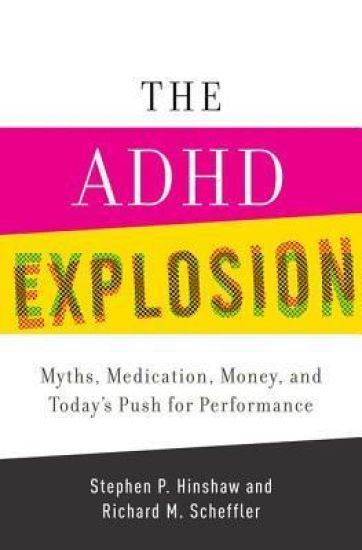
The ADHD Explosion

The ADHD Explosion

Stephen P. Hinshaw; Richard M. Scheffler

Oxford University Press Inc
2014
sidottu
Attention-deficit/hyperactivity disorder (ADHD) is one of the most controversial and misunderstood medical conditions today. With skyrocketing rates of diagnosis and medication treatment, it has generated a firestorm of controversy. Alarming questions have been raised about ADHD in recent years: *Why are over 10% of children and adolescents in the U.S. now diagnosed with ADHD, with projected rates quickly rising? *Why do over two-thirds of those diagnosed with ADHD receive medication? *In some southern states, why are boys diagnosed at rates of almost one in three? *What is causing the fast-rising diagnosis and medication of adults? Why are over a quarter of all college students using stimulants for academic performance? *What drives the current ADHD "tsunami"-- is it parents, clinicians, schools, culture, the healthcare system, or Big Pharma? When will it end? *Can we trust the stories we read and hear about ADHD, even in major media outlets? The ADHD Explosion and Today's Push for Performance uniquely blends clinical wisdom, current science, new information on medical and school policy, and global trends to debunk myths and set the record straight. Hinshaw and Scheffler describe the origins of ADHD and its huge costs to society; the science regarding causes as well as medication and behavioral treatment; and the major variation in diagnosis and treatment across the U.S., highlighting the key roles of educational policy and high-stakes testing. Dealing directly with stimulants as "smart pills," they describe the epidemic of medicalization, arguing that accurate diagnosis and well-monitored care could ease the staggering economic burden linked to ADHD. In novel ways, they unravel the many poignant issues facing children, teachers, clinicians, and family members who contend with ADHD each day. The recommendations in this book can improve the quality of life for those touched by ADHD and potentially improve the productivity and safety of all society.

Is There a Doctor in the House?

Is There a Doctor in the House?

Richard M. Scheffler

Stanford University Press
2008
sidottu
"Will there be a doctor—a good doctor—when I need one?" This is the bedrock health care concern for Americans, encompassing as it does additional concerns about affordability, accessibility, efficiency, and specialty expertise. Richard M. Scheffler brings an economist's insight to the question, showing how shifts in market power underlie the changes we have seen in the health workforce and how they will affect the future availability of doctors. Predicting the "right" ratio of doctors to population in the future is only a small piece of the puzzle, and one that has been the subject of much forecasting, and little agreement, over the past several decades. In this concise and readable analysis, Scheffler goes beyond the guessing game to demonstrate that today's health care system is the product of financial influences in both the policy realm and on the ground in the offices of medical centers, HMOs, insurers, and physicians throughout America. He shows how factors such as physician income, medical training costs, and new technologies affect the specialties and geographic distribution of doctors. Scheffler then brings these findings to bear on a set of predictions for the U.S. and international physician workforce that extend five and ten years into the future. As part of his vision of tomorrow's ideal workforce, he offers a template for enhancing the efficiency and cost-effectiveness of the health care system overall. In the groundbreaking second half of the book, the author, a health policy expert himself, tests his ideas in conversations with leading figures in health policy, medical education, health economics, and physician practice. Their unguarded give-and-take offers a window on the best thinking currently available anywhere. Finally, Scheffler combines their insights with his own to offer observations that will change the way health care's stakeholders should think about the future.