

Kirjailija
Richard Moore
Kirjat ja teokset yhdessä paikassa: 38 kirjaa, julkaisuja vuosilta 1993-2026, suosituimpien joukossa Es Hora de Hacer Un Pícnic / It's Time for a Picnic. Vertaile teosten hintoja ja tarkista saatavuus suomalaisista kirjakaupoista.
38 kirjaa
Kirjojen julkaisuhaarukka 1993-2026.
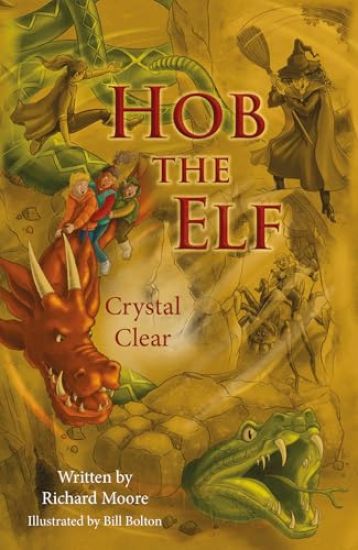
An original fantasy story set in an ancient woodland of goblins and stone giants, but also set in our everyday world of the present, with its own environmental problems, and where the two worlds are directly linked. The third in a trilogy of titles
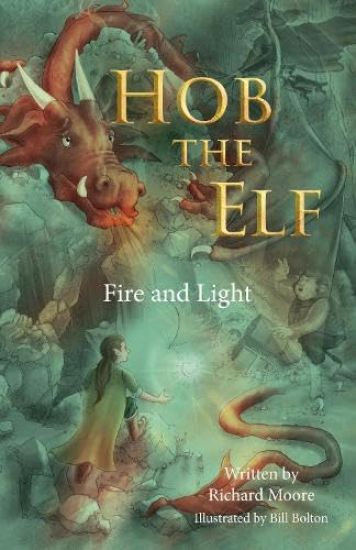
“… it’s a matter of knowing the right questions to ask,” snapped Sergeant Batt. “We don’t want to discover something that we can’t explain. It makes life complicated.” Knowing what happens when elf light is thrown into goblin fire is useful, but it doesn’t solve all Hob’s problems. Help comes when Seren, Queen of the Elves, rewards him with a powerful crystal. But the dragon is looking for such treasure and he’ll soon be coming after the interfering elf. Complications do arise when some of Hob’s friends become involved in the effort to save Thurmond Forest. The strange goings on attract international media interest. Alvina and Jimmy are thrust into the limelight and find it hard to keep their secrets. For those who are, or ever have been eight and a half years old.
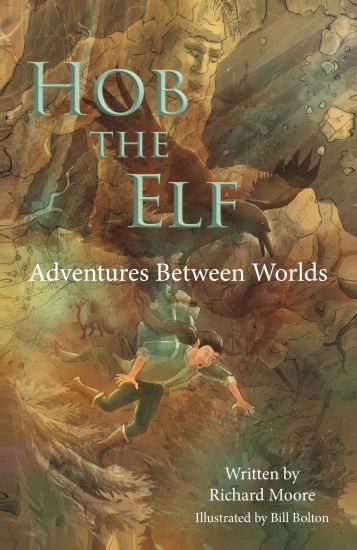
“Who amongst the most learned men and women in the world understands elf magic, or even knows that it exists?” Hob doesn’t know what will happen when an elf light is thrown into goblin fire, but he must risk it if he’s to have any chance of helping his friends. Hob’s quest brings him into collision with forces of opposition. It will be a life changing adventure, but he can reach his goal only by staying true to himself. This is a story of loyalty, courage, and kindness, which also shows the importance of caring for the environment and staying focused even when circumstances are difficult. For those who are, or ever have been, eight years old.
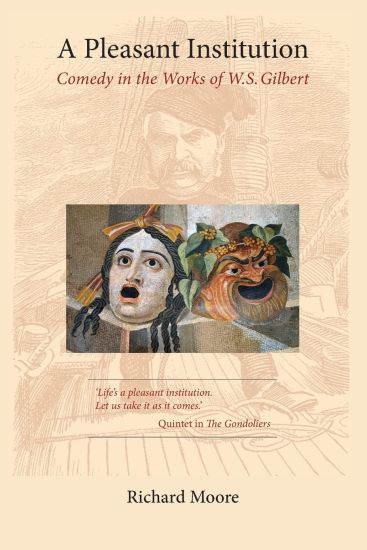
This book - one of four written by the author about the development of Western comedy and Victorian music theatre - is a wide-ranging and authoritative examination of the key comic works of the famous dramatist W.S. Gilbert. Remembered today primarily for his partnership with Sir Arthur Sullivan and the creation of the brilliant and enduringly popular 'Savoy' operas, Gilbert was in fact a prolific author of literary works of all genres: plays, libretti, short stories, poetry (including nonsense verse) and ballads. Indeed, his short stories and stand-alone comedy lyrics are often more anarchically sharp than most of the libretti derived from, or linked with, them.The book begins with a general survey of background, methodology and techniques, followed by detailed analysis of some of the works according to category: his 'non-Sullivan' plays; five of the Savoy Operas (H.M.S. Pinafore, Patience, Iolanthe, Princess Ida and The Grand Duke); nonsense verse; short stories; and finally the Bab Ballads.The author's aim is to explore what, in comedy terms, is meant by the category 'Gilbertian', placing Gilbert's unique contribution to the history and development of comedic art.
To what extent is a great comic writer the product of his time? How far is he (or she) influenced by factors of personal psychology upbringing and environment? To what is the writing actually part of a long continuum in which there is continuity within change and change within continuity? The Progress of Fun considers principally the last of these areas, focussing on the case of W.S. Gilbert and challenging the frequently held view that he is pre-eminently a typical Victorian. This it does by tracing his roots back to Ancient Greek comedy and to the various comedic developments that have dominated Western Europe thereafter. Also included is a careful examination of the constraints and limitations that in various forms have long affected comedy-writing, and an evaluation of Gilbert’s particular skills and legacy within the on-going process. The whole is a suitable prelude to a second volume (Pipes and Tabors) which will consider Genre in W.S. Gilbert, again relating it to comedic precedents and the universally timeless within the particular.

In The Progress of Fun W.S. Gilbert was considered, not as a ‘classic Victorian’, but as part of an on-going comedic continuum stretching from Aristophanes to Joe Orton and beyond. Pipes and Tabors continues the story, covering the comedic experience differently by reference to genres. Here – treated in relation to a line of significant others – we discover how Gilbert responded to areas such as the Pastoral, the Irish drama, nautical scenarios, melodrama, sensation-theatre, the nonsensemode, pantomime spectaculars, fairy plays, and classical farce. Also included is a wider look at his relation to various European musical forms and (for instance) to the English line of wit and the Elizabethan pamphleteers.To consider a writer not so much by a study of individual works as by threads of linking generic modes tells us a great deal about cultural interconnections and the richly textured nature of theatrical experience. Pipes and Tabors offers a tapestry of overlapping genres and treatments, showing not just the design of the finished products but the shreds and patches which form the underside of the weave. According to Dorothy L. Sayers, life itself offers us the apparent loose ends of a design which will only be revealed from the front after death. In terms of Gilbertian comedy, we are privileged to be able to track both the effort of the weave and the skill of the finished product. On the way we will also discover some new links and sub-text implications about other 19th century denigrated groups which were buried from sight for too long.

Dark State: How Citizens Can Open the Doors to Wisconsin's Closed Government
Richard Moore
Highland House
2021
nidottu
In 2021, a coalition of bureaucrats, large corporations, and special interests is undertaking an unprecedented attack on government transparency and our civil liberties. They are limiting our freedoms and choices, robbing us of our prosperity, and more and more they are taking away our ability to protest their actions and petition our government with our grievances. As these special interests come to dominate so much of our lives, secretive government agencies and officials serve as their primary gatekeepers, guardians, and protectors.That is is true in the United States, in each of the 50 states, and it is especially true in the Badger State. In 2021, Wisconsin is a Dark State, its citizens intentionally kept in the dark about what their government is doing. And, with some notable exceptions, things are getting darker.Elected officials, state agency bureaucrats, judges-officials in every branch of government are increasingly extinguishing pathways to the information we need, and that we already pay for, to self-govern.Dark State shows just government officials are thwarting transparency and civil rights, but it also demonstrates just how some citizens are fighting back and winning, and how we can open the doors and enter into our own government again.Now is the time for action. Now is the time to focus our attention on openness as a foundational principle, a principle to be elevated and fought for in every political campaign and in every advocacy movement. For without it, no cause-liberal or conservative, libertarian or collectivist, statist or individualist-no cause at all can truly be authenticated and debated and decided in the public square, for the public square will not be in the arena of decision-making. Important decisions will be made in dark government back alleys, the reasons for which will be elusive, barricaded as they are from public view and inquiry.Censorship and secrecy are the foundations of this new coalition; open government and freedom of speech are its enemies.To beat back this assault, it will take a powerful force of a citizenry united in the critical cause of freedom. It will take Republicans and Democrats alike to fight together-and to fight together now-for the most important cause of transparency.
The Third Edition of Biology of Fishes is chiefly about fish as remarkably efficient machines for coping with the many problems that life in water entails, and looks at many such special cases. Fishes form the largest group of vertebrates, with around 20,000 known species, and they display a remarkable diversity of size, shape, internal structure and ecology to cope with environments ranging from transient puddles to the abyssal depths of the sea. Biology of Fishes does not try to cover all aspects of fish biology, but focuses on the ingenious ways in which fish have resolved the particular problems that come from living in water, especially body fluid regulation, locomotion, feeding mechanisms, and sensory systems. Enough detail is provided for the reader to be able to go on and use primary research papers. Each chapter has been thoroughly updated and a new chapter on the immune system has been added.This is an ideal textbook for students of fish biology and any of the branches of aquatic biology. Given its skilful combination of breadth and detail, the book also provides a manageable review of fish biology for experienced biologists.
Ireland is home to some of the world's oldest astronomically-aligned structures, giant stone monuments erected over 5,000 years ago. Despite their apparent simplicity, these megalithic edifices were crafted by a scientifically knowledgeable community of farmers who endeavoured to enshrine their beliefs in a stellar afterlife within the very fabric of their cleverly-designed stone temples. Finally back in print, this reissued edition presents evidence suggesting the builders of monuments such as Newgrange and its Boyne Valley counterparts were adept astronomers, cunning engineers and capable surveyors. Their huge monuments are memorials in stone and earth, commemorating their creators' perceived unity with the cosmos and enshrining a belief system which resulted from a crossover between science and spirituality. As investigation of this awe-inspiring civilisation of people continues on many levels, evidence is emerging that significant archaeological sites dating from deep in prehistory are linked - not just through mythology, archaeology and cosmology - but through an arrangement of complex, and in some cases astonishing, alignments. Some of these alignments of ancient sites stretch from one side of Ireland to another. While the accounts of the lives of some prominent Irish saints appear to be steeped in folklore and mystery, it seems from new interpretations of the literature that the cosmic world view which existed in Neolithic Ireland experienced a continuity right into the Early Christian period. Join us on this fascinating exploration of stones, stars and stories. "The sheer amount of information contained within the book is mind-boggling. It is well thought out and structured... The more you read the evidence the more convinced you become." - Astronomy& Space magazine "Refreshing and fascinating . . . a wonderful magical book, sumptuously illustrated and a must for anyone who loves to delve deep into our past." - Kenny's Irish Bookshop "A fascinating insight into Ireland's ancient burial sites" - Irish Independent "A monument" - Drogheda Independent "It is a beautiful book and very well written. The information that you collected is outstanding." - Barbara Carter, co-author, The Myth of the Year and The Goddess and the Bull "The authors... reach interesting and challenging conclusions about the significance of ancient astronomical knowledge. The book is jammed with colour illustrations, maps and photographs. A thoroughly interesting read!" - Archaeology Ireland "An essential book that demonstrates just how much the beliefs and practices of our ancestors were influenced by the movement of the stars, in particular those of the constellation Cygnus - the celestial swan and Northern Cross - once seen as a source of life and the destination of the soul in death. A must have tome for all those passionate about what remains of our fast disappearing ritual monuments of the prehistoric age." - Andrew Collins, author of The Cygnus Mystery
In The Progress of Fun W.S. Gilbert was considered, not as a ‘classic Victorian’, but as part of an on-going comedic continuum stretching from Aristophanes to Joe Orton and beyond. Pipes and Tabors continues the story, covering the comedic experience differently by reference to genres. Here – treated in relation to a line of significant others – we discover how Gilbert responded to areas such as the Pastoral, the Irish drama, nautical scenarios, melodrama, sensation-theatre, the nonsensemode, pantomime spectaculars, fairy plays, and classical farce. Also included is a wider look at his relation to various European musical forms and (for instance) to the English line of wit and the Elizabethan pamphleteers. To consider a writer not so much by a study of individual works as by threads of linking generic modes tells us a great deal about cultural interconnections and the richly textured nature of theatrical experience. Pipes and Tabors offers a tapestry of overlapping genres and treatments, showing not just the design of the finished products but the shreds and patches which form the underside of the weave. According to Dorothy L. Sayers, life itself offers us the apparent loose ends of a design which will only be revealed from the front after death. In terms of Gilbertian comedy, we are privileged to be able to track both the effort of the weave and the skill of the finished product. On the way we will also discover some new links and sub-text implications about other 19th century denigrated groups which were buried from sight for too long.

To what extent is a great comic writer the product of his time? How far is he (or she) influenced by factors of personal psychology upbringing and environment? To what is the writing actually part of a long continuum in which there is continuity within change and change within continuity? The Progress of Fun considers principally the last of these areas, focussing on the case of W.S. Gilbert and challenging the frequently held view that he is pre-eminently a typical Victorian. This it does by tracing his roots back to Ancient Greek comedy and to the various comedic developments that have dominated Western Europe thereafter. Also included is a careful examination of the constraints and limitations that in various forms have long affected comedy-writing, and an evaluation of Gilbert’s particular skills and legacy within the on-going process. The whole is a suitable prelude to a second volume (Pipes and Tabors) which will consider Genre in W.S. Gilbert, again relating it to comedic precedents and the universally timeless within the particular.

England's Marvelous Gothic Cathedrals and Churches
Richard Moore; Sawon Hong
Sawon Hong
2019
nidottu
This substantive, easy-to-use guide to selected English gothic cathedrals and churches provides profiles of thirteen important religious buildings, including eleven cathedrals, one abbey, and one chapel. The most well-known are Canterbury Cathedral, Kings College Chapel, Salisbury Cathedral, York Minster, and Westminster Abbey. They are located in different parts of England, are a mix of Romanesque and Gothic styles, and include both well-known and less well-known cathedrals and churches. This book is designed to help those who are curious about the story behind English Gothic churches, and would like to have some understanding of what they are seeing during their visits without getting bogged down with masses of personages and technical details. Part One provides background on what constitutes a Gothic church, their medieval setting, as well as information on the many architectural, artistic, and spiritual elements that comprise a Gothic church. Part Two consists of profiles of the selected churches. The guide is lavishly illustrated with color photos and a floor plan with suggested visit sequence for each church.

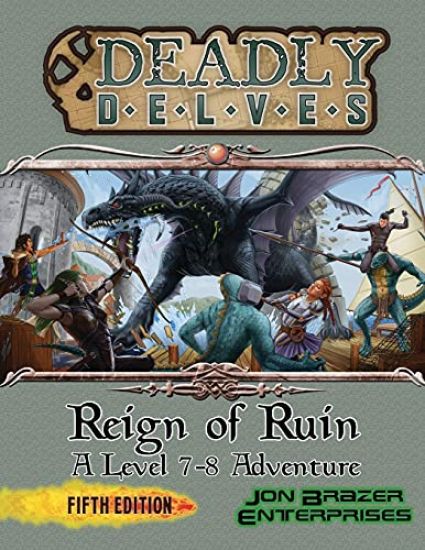
Beware The Blackener Of Bright Waters, For She Is Come AgainRumors of death move like a plague through the Crannogtowns of the Great Swamp-of ranger patrols mysteriously disappearing on routine scouting missions, of a winged shadow that blots out the midday sun, and of entire villages slaughtered, their homes left burning and the victims' flesh melted from their bones. All evidence gathered from the sites of these massacres points to the heart of the Great Swamp, where an ancient and primitive tribe of lizardmen have ruled from an abandoned human temple for centuries on end. The Crannogtowns' protectors, the Stormhammer Rangers, warn that horrid half-dragon monstrosities still stalk the bogs and travelers would do well to stay away from the inner swamp. Yet the killing and the carnage continue, and the people of the Crannogs plead for heroes to aid them now as they did in days long forgotten. Are you up to the challenge?Reign Of Ruin is the exciting new adventure module in Jon Brazer Enterprises' Deadly Delves product line, and is designed for the Fifth Edition of the World's Oldest Fantasy Roleplaying Game. This adventure is designed to heartily challenge a party of 7th- or 8th-level PCs and leave them with a memorable heroic tale. Inside this volume, you'll find: 18 New or Modified Monsters and NPCs for your campaign, including lizardfolk warpriests, swarms of undead, and a black dragon fighter9 New Traps to menace the PCs, including retractable stair spikes, acid bath chambers, and statues that spray corrosive fluid3 New Magic Items waiting to be discovered, including the glorious rainbow sceptre.Full-color maps of a Crannogtown village, as well as five floors of a terrifying temple dungeonSpecialized advice on playing a cunning black dragon against a group of PCs in a dangerous game of cat and mouseEnough content for five 7th- or 8th-level PCs to gain nearly two levels, with ideas to extend the story even further once you're done exploring the templeDangers Unknown. Treasures Untold. Adventure Awaits.
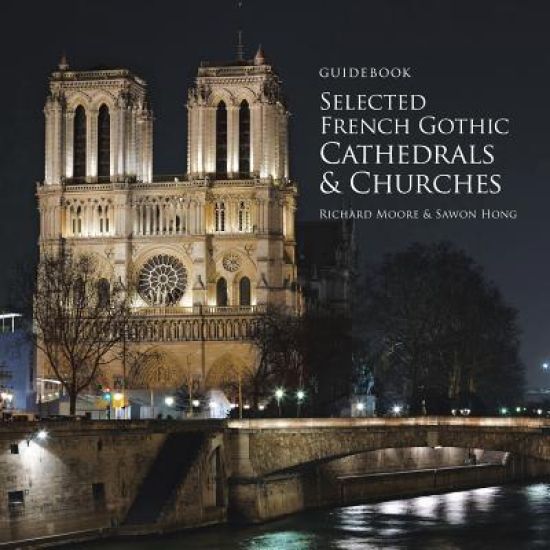
Guidebook Selected French Gothic Cathedrals and Churches
Richard Moore; Sawon Hong
Authorhouse
2016
pokkari

Beijing 2008, the 100 metres final: Usain Bolt slows down, beats his chest, metres clear of his nearest rival, his face filled with the euphoria of a young man utterly in thrall to his extraordinary physical talent.

This work examines British thinking about nuclear weapons in the period up to about 1970, looking at the subject through the eyes of the Royal Navy, in the belief that this can offer new insights in this field. The author argues that the Navy was always sceptical about nuclear weapons, both on practical grounds and because of wartime and pre-war experiences. He suggests that this scepticism can teach us a good deal about military technological innovation in general.

In ETAPE, critically acclaimed author Richard Moore will take readers on a virtual Tour de France, with each chapter focusing on a single rider in a single stage that came to define the Tourâ??s history.

Tribes of the Nahrain: The Present
Richard Moore
Createspace Independent Publishing Platform
2015
nidottu