
Kirjojen hintavertailu. Mukana 12 474 549 kirjaa ja 12 kauppaa.

Kirjailija

Richard N. Zare

Kirjat ja teokset yhdessä paikassa: 3 kirjaa, julkaisuja vuosilta 1988-1998, suosituimpien joukossa Laser Experiments For Beginners. Vertaile teosten hintoja ja tarkista saatavuus suomalaisista kirjakaupoista.

3 kirjaa

Kirjojen julkaisuhaarukka 1988-1998.

A Companion to Angular Momentum

A Companion to Angular Momentum

Valeria D. Kleiman; Hongkun Park; Robert J. Gordon; Richard N. Zare

John Wiley Sons Inc
1998
nidottu
Angular momentum is a basic concept used in classical physics. Examples of phenomena that are related to angular momentum are: 1) Why a moving bicycle does not fall over and 2) why the currents in the ocean of the rotating earth tend to follow circular motions. Designed as a learning tool for those with limited background in quantum mechanics and to compliment Zare's Angular Momentum, this book provides examples, problems, & solutions in angular momentum in quantum mechanics and its applications to chemistry and physics.
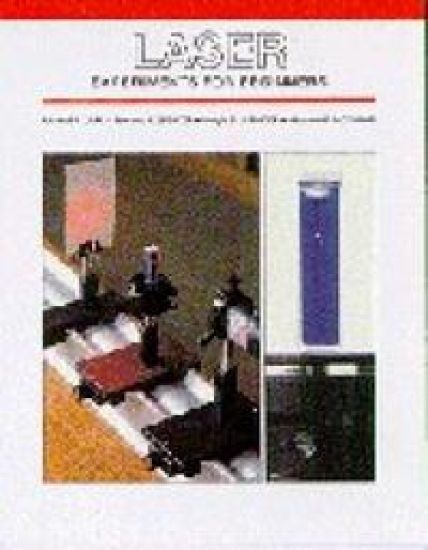
Laser Experiments For Beginners

Laser Experiments For Beginners

Richard N. Zare

University Science Books,U.S.
1995
nidottu
The perfect blueprint for science teachers who want to bringone of the most remarkable research tools of the 20th centuryinto their classrooms: the laser. Requiring only a low-cost,low-power laser (easily available for under $100) the bookpresents a series of experiments for in-class demonstrations orstudent activities. Quick-reference instructions identify neededequipment, recommend safety practices, and help select desiredexperiments. The book is designed to enhance existing courses inchemistry, physics, and biology.
Angular Momentum

Angular Momentum

Richard N. Zare

John Wiley Sons Inc
1988
sidottu
Designed as a learning tool for those with limited background in quantum mechanics, this book provides comprehensive coverage of angular momentum in quantum mechanics and its applications to chemistry and physics. Based on class-tested material, this presentation offers clear explanations of theory while giving equal attention to solving real problems. Theoretical considerations are made concrete and accessible through extensive examples and applications at the end of each chapter. Problem sets, designed as both individual and group exercises, are treated as an integral part of the text in order to stimulate student interest and clarify the abstract principles discussed. Examples are drawn primarily from atomic and molecular phenomena, and include many intermediate steps (often left out of other texts) to ensure complete mastery of the material, and to lay the groundwork for understanding photon and particle collision phenomena, and more advanced studies.