Kirjojen hintavertailu. Mukana 12 390 323 kirjaa ja 12 kauppaa.

Kirjailija

Richard North

Kirjat ja teokset yhdessä paikassa: 11 kirjaa, julkaisuja vuosilta 1997-2026, suosituimpien joukossa Beowulf and Grettis saga. Vertaile teosten hintoja ja tarkista saatavuus suomalaisista kirjakaupoista.

11 kirjaa

Kirjojen julkaisuhaarukka 1997-2026.

Beowulf and Grettis saga

Beowulf and Grettis saga

Richard North

BOYDELL BREWER LTD
2026
sidottu
Investigates the relationship between two texts separated by hundreds of years and nearly two thousand miles. In the saga, Grettir fights a giant who wields a hepti-sax; in the poem, Beowulf uses a hæft-mece on Grendel's mother. These two unique words for "hafted blade" appear to be related. Can the same be said for the works that surround them? This book says yes, arguing not that the weapons have a common origin, nor that their likeness is a coincidence, but that Grettis saga has borrowed from Beowulf. The case for a textual loan begins in the context of England's connection with Denmark in the reign of Cnut the Great (1016-35). This book argues that Cnut took an interest in Scyld and the Scyldings of Beowulf and that his skalds transformed these names into "Skjoldr" and the "Skjoldungar". The Beowulf manuscript is placed in Lichfield in 1017, with the suggestion that it was commissioned by Eadric Streona as a gift for Earl Thorkell of Skåne. It is proposed that in 1159 a copy of Beowulf was brought from Lincoln to Iceland to serve the interests of a family that claimed descent from Skjoldr, that in the 1180s the poem influenced Skjoldunga saga, and that in the 1190s Beowulf went north to Þingeyrar abbey, where Oddr the Monk, author of Grettis saga, used it to enhance Grettir's fights with Glámr and the trolls of Bárðardalr. This is a daring book that sheds new light on the circulation of Beowulf, on questions of dating and patronage, and on the authorship of Grettis saga.
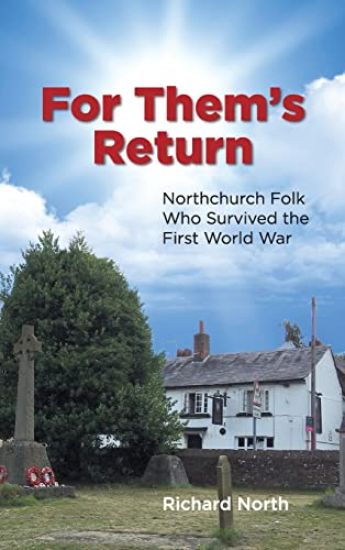
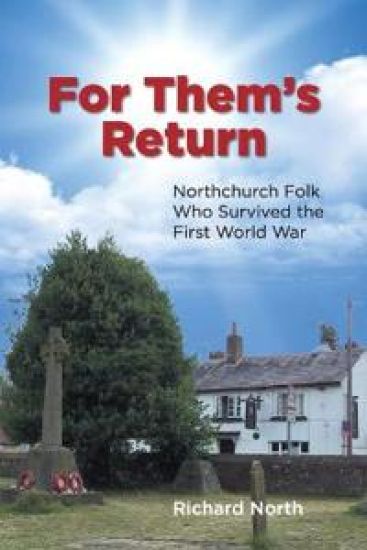
For Them's Return

For Them's Return

Richard North

New Generation Publishing
2021
sidottu
Though space may be dividing, And seas may roll between, Kind thoughts are still abiding, To keep fond memories green.So take this thought in greeting, With all its sweet goodwill, And may our next glad meeting, Find unchanged the old love still.This poem, titled To the Absent One, was written over a hundred years ago and reflects the thoughts of most servicemen's families who were separated during the First World War. Much has been written about the servicemen who did not return from the war and whose names are recalled each year on Remembrance Day. Far less is known about the lives of those who did return home having served their country.Following the publication of For Them's Sake in 2017, which told the stories of the servicemen named on the Northchurch War memorial in Hertfordshire, amateur historian Richard North now tells the stories of those who were sent off to war and returne
For Them's Return

For Them's Return

Richard North

New Generation Publishing
2021
pokkari
Though space may be dividing, And seas may roll between, Kind thoughts are still abiding, To keep fond memories green.So take this thought in greeting, With all its sweet goodwill, And may our next glad meeting, Find unchanged the old love still.This poem, titled To the Absent One, was written over a hundred years ago and reflects the thoughts of most servicemen's families who were separated during the First World War. Much has been written about the servicemen who did not return from the war and whose names are recalled each year on Remembrance Day. Far less is known about the lives of those who did return home having served their country.Following the publication of For Them's Sake in 2017, which told the stories of the servicemen named on the Northchurch War memorial in Hertfordshire, amateur historian Richard North now tells the stories of those who were sent off to war and returne
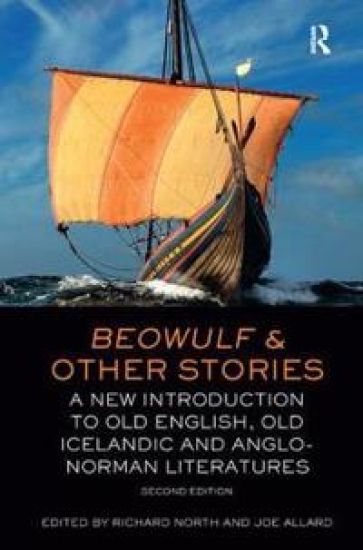
Beowulf and Other Stories

Beowulf and Other Stories

Joe Allard; Richard North

Routledge
2017
sidottu
Beowulf and Other Stories was first conceived in the belief that the study of Old English ? and its close cousins, Old Icelandic and Anglo-Norman ? can be a genuine delight, covering a period as replete with wonder, creativity and magic as any other in literature. Now in a fully revised second edition, the collection of essays written by leading academics in the field is set to build upon its established reputation as the standard introduction to the literatures of the time. Beowulf and Other Stories captures the fire and bloodlust of the great epic, Beowulf, and the sophistication and eroticism of the Exeter Riddles. Fresh interpretations give new life to the spiritual ecstasy of The Seafarer and to the imaginative dexterity of The Dream of the Rood, andprovide the student and general reader with all they might need to explore and enjoy this complex but rewarding field. The book sheds light, too, on the shadowy contexts of the period, with suggestive and highly readable essays on matters ranging from the dynamism of the Viking Age to Anglo-Saxon input into The Lord of the Rings, from the great religious prose works to the transition from Old to Middle English. It also branches out into related traditions, with expert introductions to the Icelandic Sagas, Viking Religion and Norse Mythology. Peter S. Baker provides an outstanding guide to taking your first steps in the Old English language, while David Crystal provides a crisp linguistic overview of the entire period. With a new chapter by Mike Bintley on Anglo-Saxon archaeology and a revised chapter by Stewart Brookes on the prose writers of the English Benedictine Reform, this updated second edition will be essential reading for students of the period.
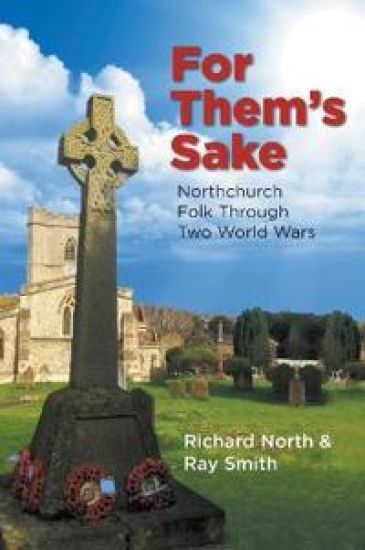
For Them's Sake

For Them's Sake

Richard North; Ray Smith

New Generation Publishing
2017
pokkari
They shall grow not old, as we that are left grow old:Age shall not weary them, nor the years condemn.At the going down of the sun and in the morningWe will remember them. Familiar words said in Northchurch, Hertfordshire and across the country, during the annual Remembrance Day services. It is now 100 years since the First World War, and nearly 80 years since the one that followed. To many, the names of the servicemen who died during these and other conflicts are just that, names. Who were they, what was their background, what were the circumstances leading to their deaths? For those remembered each year in Northchurch, this book aims to answer some of these questions.Amateur historians Richard North and Ray Smith have spent several years researching and writing this book. Richard is a retired IT compliance manager and Ray works for Independent Television News.
Beowulf and Other Stories

Beowulf and Other Stories

Allard Joe; Richard North

Routledge
2011
nidottu
Beowulf & Other Stories was first conceived in the belief that the study of Old English – and its close cousins, Old Icelandic and Anglo-Norman – can be a genuine delight, covering a period as replete with wonder, creativity and magic as any other in literature. Now in a fully revised second edition, the collection of essays written by leading academics in the field is set to build upon its established reputation as the standard introduction to the literatures of the time. Beowulf & Other Stories captures the fire and bloodlust of the great epic, Beowulf, and the sophistication and eroticism of the Exeter Riddles. Fresh interpretations give new life to the spiritual ecstasy of The Seafarer and to the imaginative dexterity of The Dream of the Rood, andprovide the student and general reader with all they might need to explore and enjoy this complex but rewarding field. The book sheds light, too, on the shadowy contexts of the period, with suggestive and highly readable essays on matters ranging from the dynamism of the Viking Age to Anglo-Saxon input into The Lord of the Rings, from the great religious prose works to the transition from Old to Middle English. It also branches out into related traditions, with expert introductions to the Icelandic Sagas, Viking Religion and Norse Mythology. Peter S. Baker provides an outstanding guide to taking your first steps in the Old English language, while David Crystal provides a crisp linguistic overview of the entire period. With a new chapter by Mike Bintley on Anglo-Saxon archaeology and a revised chapter by Stewart Brookes on the prose writers of the English Benedictine Reform, this updated second edition will be essential reading for students of the period.
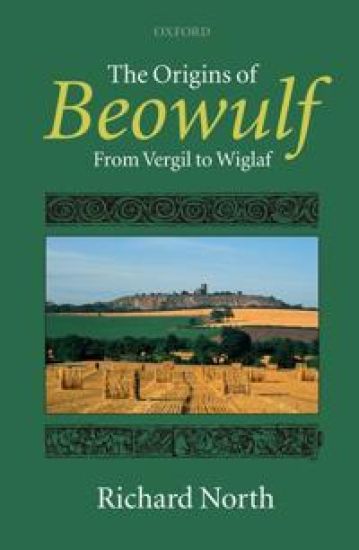
The Origins of Beowulf

The Origins of Beowulf

Richard North

Oxford University Press
2007
sidottu
This book suggests that the Old English epic Beowulf was composed in the winter of 826-7 as a requiem for King Beornwulf of Mercia on behalf of Wiglaf, the ealdorman who succeeded him. The place of composition is given as the minster of Breedon on the Hill in Leicestershire (now Derbyshire) and the poet is named as the abbot, Eanmund. As well as pinpointing the poem's place and date of composition, Richard North raises some old questions relating to the poet's influences from Vergil and from living Danes. Norse analogues are discussed in order to identify how the poet changed his heroic sources while four episodes from Beowulf are shown to be reworked from passages in Vergil's Aeneid. One chapter assesses how the poem's Latin sources might correspond with what is known of Breedon's now-lost library while another seeks to explain Danish mythology in Beowulf by arguing that Breedon hosted a meeting with Danish Vikings in 809. This fascinating and challenging new study combines careful detective work with meticulous literary analysis to form a case that no future investigation will be able to ignore.
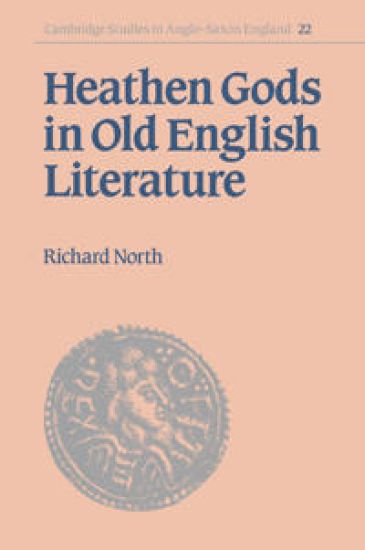
Heathen Gods in Old English Literature

Heathen Gods in Old English Literature

Richard North

Cambridge University Press
2006
pokkari
Heathen gods are hard to find in Old English literature. Most Anglo-Saxon writers had no interest in them, and scholars today prefer to concentrate on the Christian civilization for which the Anglo-Saxons were so famous. Richard North offers an interesting view of Anglo-Saxon and Scandinavian paganism and mythology in the pre-Viking and Viking age. He discusses the pre-Christian gods of Bede's history of the Anglo-Saxon conversion with reference to an orgiastic figure known as Ingui, whom Bede called 'god of this age'. Using expert knowledge of comparative literary material from Old Norse-Icelandic and other Old Germanic languages, North reconstructs the slender Old English evidence in a highly imaginative treatment of poems such as Deor and The Dream of the Rood. Other gods such as Woden are considered with reference to Odin and his family in Old Norse-Icelandic mythology. In conclusion, it is argued that the cult of Ingui was defeated only when the ideology of the god Woden was sponsored by the Anglo-Saxon church. The book will interest students interested in Old English, Old Norse-Icelandic and Germanic literatures, Anglo-Saxon history and archaeology.
Heathen Gods in Old English Literature

Heathen Gods in Old English Literature

Richard North

Cambridge University Press
1997
sidottu
Heathen Gods are hard to find in Old English literature. Most Anglo-Saxon writers had no interest in them, and scholars today prefer to concentrate on the Christian civilisation for which the Anglo-Saxons were so famous. Richard North offers a complete revision of our view of Anglo-Saxon and Scandinavian paganism and mythology in the pre-Viking and Viking age. He discusses the pre-Christian gods of Bede’s history of the Anglo-Saxon conversion with reference to an orgiastic figure known as Ingui, whom Bede called ‘god of this age’. Using expert knowledge of comparative literary material from Old Norse-Icelandic and other Old Germanic languages, Richard North reconstructs the slender Old English evidence in a highly imaginative and wholly original treatment of poems such as Deor and The Dream of the Rood. Other gods such as Woden are considered with reference to Odin and his family in Old Norse-Icelandic mythology, with the aid of the latest historical and archaeological research. In conclusion, it is argued that the cult of Ingui was defeated only when the ideology of the god Woden was sponsored by the Anglo-Saxon church. The book will interest a range of scholars in departments of Old English, Old Norse-Icelandic and Germanic literatures, Anglo-Saxon history and archaeology.