Kirjojen hintavertailu. Mukana 12 657 676 kirjaa ja 12 kauppaa.

Kirjailija

Richard Overy

Kirjat ja teokset yhdessä paikassa: 52 kirjaa, julkaisuja vuosilta 1997-2026, suosituimpien joukossa Geopolitikens återkomst : striden om framtidens historia. Vertaile teosten hintoja ja tarkista saatavuus suomalaisista kirjakaupoista.

52 kirjaa

Kirjojen julkaisuhaarukka 1997-2026.

Geopolitikens återkomst : striden om framtidens historia

Geopolitikens återkomst : striden om framtidens historia

Jeremy Black; Philip Bobbitt; Michael Broers; Roger Crowley; Gregory Feifer; Noah Feldman; Jonathan Fenby; David Frum; Gabriel Gorodetsky; Peter Heather; Josef Joffe; Anna-Lena Laurén; John H. Maurer; Sean McMeekin; Walter Russell Mead; Richard Miles; Fraser Nelson; Richard Overy; Lincoln Paine; Andrew Preston; Morris Rossabi; Charly Salonius-Pasternak; Norman Stone; Barry Strauss; Mikael Wigell

Bokförlaget Stolpe
2021
sidottu
Det var inte länge sedan idén om att vi nått historiens slut vann kraft och spridning: tanken att människans sociokulturella evolution nått fram till en punkt där den knappast kunde nå längre. Ett kvartssekel senare verkar denna optimism ha försvunnit. I stället bevittnar vi nu geopolitikens återkomst. Ett tjugotal experter utforskar i denna antologi hur vi hamnade där vi är idag men också vart vi kan tänkas vara på väg. Huvudredaktörer är Kurt Almqvist och Alexander Linklater.
Why the Allies Won

Why the Allies Won

Richard Overy

W. W. Norton Company
2026
nidottu
The Allied victory in 1945 has since come to seem inevitable, but it was not. In 1942, Germany controlled almost the entire resources of continental Europe, Japan had wiped out the Western colonial presence in East Asia, the Soviet Union had lost its industrial heart, and the United States was not yet armed. In Why the Allies Won, Richard Overy gives us a powerful account of how the Allies established military superiority and what enabled them to do so. He brilliantly analyzes the decisive campaigns--Stalingrad and Kursk, the invasion of France, the air war over Europe--as well as underlying factors such as industrial strength, fighting ability, and leadership.
Rain of Ruin: Tokyo, Hiroshima, and the Surrender of Japan
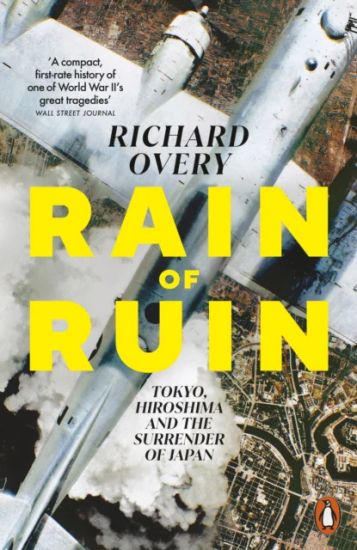
With the development of the B-29 "Superfortress" in summer 1944, strategic bombing, a central component of the Allied war effort against Germany, arrived in the Pacific theater. In 1945 Japan experienced the three most deadly bombing attacks of the war. The firebombing of Tokyo in March burned the city's most densely populated sector, killed some 85,000 residents, and left more than one million homeless. The attack was part of a months-long campaign of incendiary bombing that destroyed almost two-thirds of Japan's cities. The two atomic blasts in August killed hundreds of thousands in Hiroshima and Nagasaki, most of them civilians. The bombing brought a destabilizing devastation that, combined with a declaration of war by the Soviet Union, induced Japan, as they put it, to terminate the war. Many at the time and since have credited American air power, and especially the two atomic bombs, with Japan's surrender. But Richard Overy tells a different, more dimensional story. Drawing on his expertise on the war and its bombing campaigns, he delivers a precise recounting of these aerial attacks, and a balanced, informed assessment of how and why they occurred. Overy is astute on the Allied decision-making, and, notably, integrates the Japanese leadership as well. He ably navigates the dramatic endgame of the war, which featured factional infighting within the Japanese cabinet, a scramble by American officials to formulate an acceptable version of "unconditional surrender," and the crucial role played by the emperor, Hirohito. The atomic bombing emerges as impactful but not decisive in this rich, multilayered history
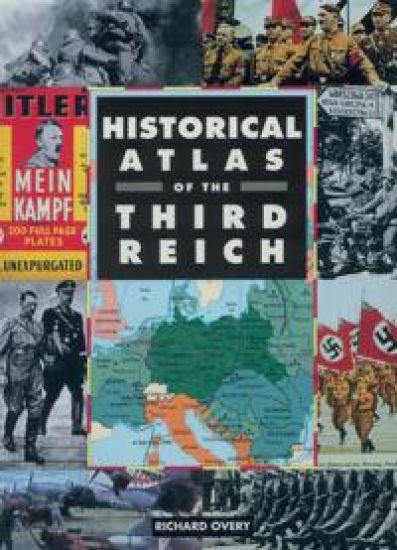
Historical Atlas of the Third Reich

Historical Atlas of the Third Reich

Richard Overy

Skyhorse Publishing
2025
pokkari
Formally inaugurated in Potsdam in 1933, the Third Reich was regarded by Hitler as the greatest in a line of might German empires. His mystical belief that this empire would last a thousand years proved unfounded, but not before a world war which resulted in the loss of at least 70 million lives. This atlas charts the rise and fall of Hitler's Nazi state, from the first mass meeting of the NSDAP in Munich in 1920, through the relentless territorial aggression and anti0Jewish atrocities of World War II, to the execution of war criminals in Nuremburg in 1946.The Historical Atlas of the Third Reich offers penetrating insights into the seemingly inexorable rise of National Socialism and examines the nature of Hitler's power structures both within his party and within Germany as a whole.
Why War?

Why War?

Richard Overy

W. W. Norton Company
2025
nidottu
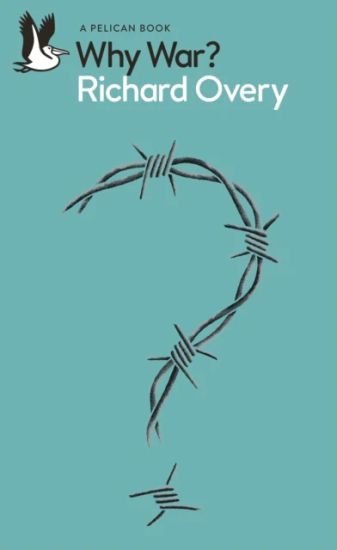
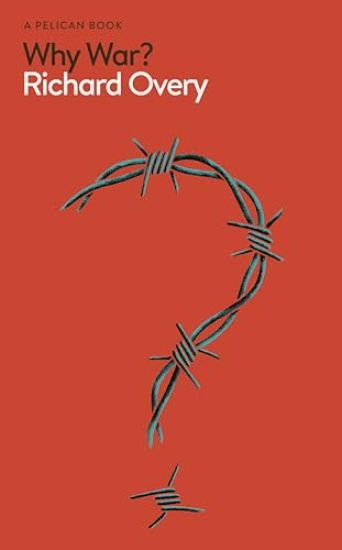
Richard Overy is not the first scholar to take up the title question. In 1931, at the request of the League of Nations, Albert Einstein asked Sigmund Freud to collaborate on a short work examining whether there was "a way of delivering mankind from the menace of war." Published the next year as a pamphlet entitled Why War?, it conveyed Freud's conclusion that the "death drive" made any deliverance impossible--the psychological impulse to destruction was universal in the animal kingdom. The global wars of the later 1930s and 1940s seemed ample evidence of the dismal conclusion.A preeminent historian of those wars, Overy brings vast knowledge to the title question and years of experience unraveling the knotted motivations of war. His approach is to separate the major drivers and motivations, and consider the ways each has contributed to organized conflict. They range from the impulses embedded in human biology and psychology, to the incentives to conflict developed through cultural evolution, to competition for resources--conflicts stirred by the passions of belief, the effects of ecological stresses, the drive for power in leaders and nations, and the search for security. The discussions show remarkable range, delving deep into the Neolithic past, through the twentieth-century world wars, and up to the current conflict in Ukraine. The examples are absorbing, from the Roman Empire's voracious appetite for resources to the impulse to power evident in Alexander the Great, Napoleon, and Hitler. The conclusion is not hopeful, but Overy's book is a gift to readers: a compact, judicious, engrossing examination of a fundamental question.
Why War?

Why War?

Richard Overy

PENGUIN BOOKS LTD
2025
nidottu
A richly absorbing book... Overy is unquestionably one of our finest living historians - The Daily TelegraphWhy has warfare always been part of the human story?From biology to belief, what explains the persistence of violent conflict?What light can this shed on humanity’s past – and its future?There can be few more important but also more contentious issues than attempting to understand the human propensity for conflict. Our history is inextricably tangled in wave after wave of inter-human fighting from as far back as we have records.Repeatedly humans have foresworn war, have understood its appalling risks and have wished to create more pacific, productive societies. And yet almost inevitably circumstances emerge under which war once more seems inevitable or even desirableHow can we make sense of what Einstein called 'the dark places of human will and feeling'? Richard Overy draws on a lifetime's study of conflict to write this challenging account of how we can understand the causes of war. Looking at every facet of war from biology to belief, psychology to security, Overy allows readers to understand the many contradictory or self-reinforcing ways in which warfare can suddenly appear a legitimate option, and why it is likely to be part of our future as well as our past.
Rain of Ruin

Rain of Ruin

Richard Overy

PENGUIN BOOKS LTD
2025
sidottu
'A short but quietly devastating book, in which Overy adds new perspectives to a subject that has often been approached from a narrowly American angle... Overy's book is a sombre reminder that the border between civilisation and savagery is wafer-thin.' - Philip Snow, Literary Review A remarkable account of the terrible climax of the Second World War in Asia, published to coincide with the 80th anniversary of the Hiroshima bombing.In the closing months of the Second World War hundreds of thousands of Japanese, mostly civilians, died in a final outburst of violence from the air. American planes were beginning to run low on plausible targets when it was decided to use two atomic weapons in a final, terrible flourish to try to end the war. Richard Overy’s remarkable new book rethinks how we should regard this last stage of the war and the role of the bombing. This book explores the way in which the willingness to kill civilians and destroy cities became normalized in the course of a horrific war as moral concerns were blunted and scientists, airmen, and politicians followed a strategy of mass destruction they would never have endorsed before the war began. But it also engages with the new scholarship that shows how complex the effort to end the war was in Japan, where ‘surrender’ was entirely foreign to Japanese culture.
Rain of Ruin: Tokyo, Hiroshima, and the Surrender of Japan
With the development of the B-29 "Superfortress" in summer 1944, strategic bombing, a central component of the Allied war effort against Germany, arrived in the Pacific theater. In 1945 Japan experienced the three most deadly bombing attacks of the war. The firebombing of Tokyo in March burned the city's most densely populated sector, killed some 85,000 residents, and left more than one million homeless. The attack was part of a months-long campaign of incendiary bombing that destroyed almost two-thirds of Japan's cities. The two atomic blasts in August killed hundreds of thousands in Hiroshima and Nagasaki, most of them civilians. The bombing brought a destabilizing devastation that, combined with a declaration of war by the Soviet Union, induced Japan, as they put it, to terminate the war.Many at the time and since have credited American air power, and especially the two atomic bombs, with Japan's surrender. But Richard Overy tells a different, more dimensional story. Drawing on his expertise on the war and its bombing campaigns, he delivers a precise recounting of these aerial attacks, and a balanced, informed assessment of how and why they occurred. Overy is astute on the Allied decision-making, and, notably, integrates the Japanese leadership as well. He ably navigates the dramatic endgame of the war, which featured factional infighting within the Japanese cabinet, a scramble by American officials to formulate an acceptable version of "unconditional surrender," and the crucial role played by the emperor, Hirohito. The atomic bombing emerges as impactful but not decisive in this rich, multilayered history
Why War?

Why War?

Richard Overy

PENGUIN BOOKS LTD
2024
sidottu
A richly absorbing book... Overy is unquestionably one of our finest living historians - The Daily TelegraphWhy has warfare always been part of the human story?From biology to belief, what explains the persistence of violent conflict?What light can this shed on humanity’s past – and its future?There can be few more important but also more contentious issues than attempting to understand the human propensity for conflict. Our history is inextricably tangled in wave after wave of inter-human fighting from as far back as we have records.Repeatedly humans have foresworn war, have understood its appalling risks and have wished to create more pacific, productive societies. And yet almost inevitably circumstances emerge under which war once more seems inevitable or even desirableHow can we make sense of what Einstein called 'the dark places of human will and feeling'? Richard Overy draws on a lifetime's study of conflict to write this challenging account of how we can understand the causes of war. Looking at every facet of war from biology to belief, psychology to security, Overy allows readers to understand the many contradictory or self-reinforcing ways in which warfare can suddenly appear a legitimate option, and why it is likely to be part of our future as well as our past.
Why War?

Why War?

Richard Overy

W. W. Norton Company
2024
sidottu
Richard Overy is not the first scholar to take up the title question. In 1931, at the request of the League of Nations, Albert Einstein asked Sigmund Freud to collaborate on a short work examining whether there was "a way of delivering mankind from the menace of war." Published the next year as a pamphlet entitled Why War?, it conveyed Freud's conclusion that the "death drive" made any deliverance impossible--the psychological impulse to destruction was universal in the animal kingdom. The global wars of the later 1930s and 1940s seemed ample evidence of the dismal conclusion.A preeminent historian of those wars, Overy brings vast knowledge to the title question and years of experience unraveling the knotted motivations of war. His approach is to separate the major drivers and motivations, and consider the ways each has contributed to organized conflict. They range from the impulses embedded in human biology and psychology, to the incentives to conflict developed through cultural evolution, to competition for resources--conflicts stirred by the passions of belief, the effects of ecological stresses, the drive for power in leaders and nations, and the search for security. The discussions show remarkable range, delving deep into the Neolithic past, through the twentieth-century world wars, and up to the current conflict in Ukraine. The examples are absorbing, from the Roman Empire's voracious appetite for resources to the impulse to power evident in Alexander the Great, Napoleon, and Hitler. The conclusion is not hopeful, but Overy's book is a gift to readers: a compact, judicious, engrossing examination of a fundamental question.
Blood and Ruins: The Last Imperial War, 1931-1945
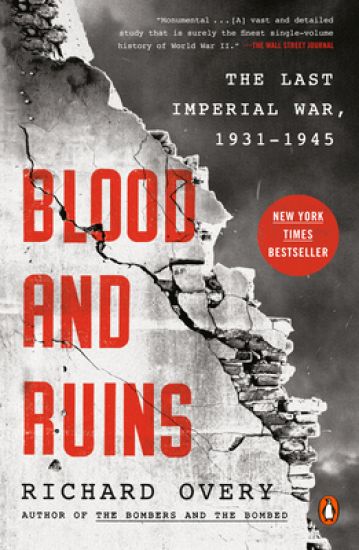
"Monumental... A] vast and detailed study that is surely the finest single-volume history of World War II. Richard Overy has given us a powerful reminder of the horror of war and the threat posed by dictators with dreams of empire." - The Wall Street Journal A thought-provoking and original reassessment of World War II, from Britain's leading military historian A New York Times bestseller Richard Overy sets out in Blood and Ruins to recast the way in which we view the Second World War and its origins and aftermath. As one of Britain's most decorated and respected World War II historians, he argues that this was the "last imperial war," with almost a century-long lead-up of global imperial expansion, which reached its peak in the territorial ambitions of Italy, Germany and Japan in the 1930s and early 1940s, before descending into the largest and costliest war in human history and the end, after 1945, of all territorial empires. Overy also argues for a more global perspective on the war, one that looks broader than the typical focus on military conflict between the Allied and Axis states. Above all, Overy explains the bitter cost for those involved in fighting, and the exceptional level of crime and atrocity that marked the war and its protracted aftermath--which extended far beyond 1945. Blood and Ruins is a masterpiece, a new and definitive look at the ultimate struggle over the future of the global order, which will compel us to view the war in novel and unfamiliar ways. Thought-provoking, original and challenging, Blood and Ruins sets out to understand the war anew.
Blood and Ruins

Blood and Ruins

Richard Overy

PENGUIN BOOKS LTD
2023
pokkari
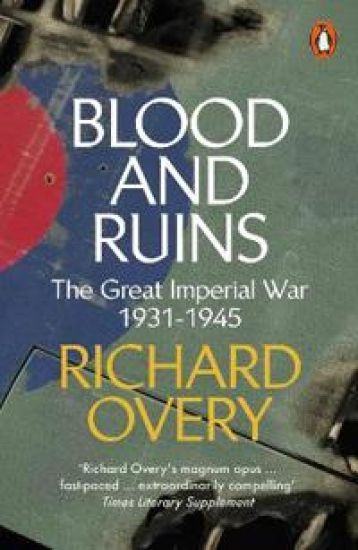
A NEW YORK TIMES BESTSELLERWINNER OF THE DUKE OF WELLINGTON MEDAL FOR MILITARY HISTORYSHORTLISTED FOR THE GILDER LEHRMAN PRIZE FOR MILITARY HISTORY'A masterpiece. It puts all previous single-volume works of the conflict in the shade' Saul David, The TimesA bold new approach to the Second World War from one of Britain's foremost military historiansRichard Overy sets out in Blood and Ruins to recast the way in which we view the Second World War and its origins and aftermath. He argues that this was the 'great imperial war', a violent end to almost a century of global imperial expansion which reached its peak in the ambitions of Italy, Germany and Japan in the 1930s and early 1940s, before descending into the largest and costliest war in human history and the end, after 1945, of all territorial empires.How war on a huge scale was fought, supplied, paid for, supported by mass mobilization and morally justified forms the heart of this new account. Above all, Overy explains the bitter cost for those involved in fighting, and the exceptional level of crime and atrocity that marked these imperial projects, the war and its aftermath. This war was as deadly for civilians as it was for the military, a war to the death over the future of the global order.Blood and Ruins is a masterpiece from of one of the most renowned historians of the Second World War, which will compel us to view the war in novel and unfamiliar ways. Thought-provoking, original and challenging, Blood and Ruins sets out to understand the war anew.
Jag flög för Hitler : en tysk jaktpilots memoarer
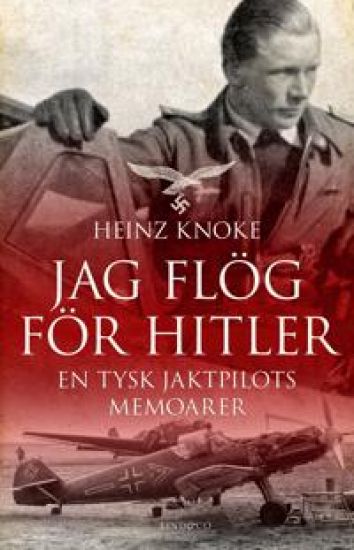
Vid andra världskrigets utbrott sökte sig Heinz Knoke till Luftwaffe. Han var ingen framstående flygelev, men lyckades klara av utbildningen. Så småningom utvecklades han till en av det tyska flygvapnets mest framstående jaktpiloter, och utsågs i slutet av kriget till divisionschef. Knoke blev nedskjuten flera gånger men räddade sig med fallskärm. Han fortsatte som jaktpilot till slutet av kriget då han skadades svårt vid ett sabotagedåd på marken. Förutom hisnande luftstrider och märkliga äventyr, då han räddat sig ur sitt störtande flygplan och vandrade över fientligt område eller låg i Nordsjöns isande vågor, skildrar Knoke sammanhållningen och kamratskapet inom flygförbanden, respekten för skickliga motståndare och sin egen kärlekshistoria under brinnande krig. Han loggade över 2 000 flyguppdrag och sköt ned 52 fiendeplan. Heinz Knokes levande förstahandsskildring är en klassiker i flyglitteraturen och ger fascinerande insikter i vardagslivet inom det tyska flygvapnet. För första gången på 40 år blir denna klassiker åter tillgänglig på svenska. Utgåvan har ett efterord av författaren och ett nytt förord av militärhistorikern Richard Overy. HEINZ KNOKE (1921 93) var ett av flygaressen inom Luftwaffe under andra världskriget. Han tilldelades Riddarkorset av järnkorset, en av Tredje rikets finaste militära utmärkelser, för sina insatser.
The Origins of the Second World War

The Origins of the Second World War

Richard Overy

TAYLOR FRANCIS LTD
2022
sidottu
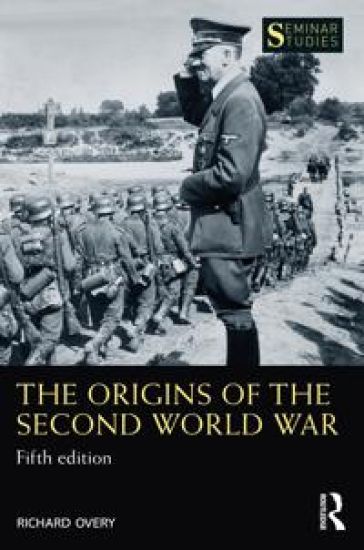
Now in its fifth edition, The Origins of the Second World War explores the reasons why the Second World War broke out in September 1939 and why a European conflict developed into a war that spanned the globe.This book argues that the global conflict was not just ‘Hitler’s War’ but one that had its roots and origins in the decline of the old empires of Britain and France and the rise of ambitious new powers in Germany, Italy and Japan who wanted large empires of their own. Richard Overy covers the origins of the war from its background in the First World War to its expansion to embrace the Soviet Union, Japan and the United States by the end of 1941. Creating a comprehensive and analytical narrative while remaining a succinct overview of the subject, this book takes a thematic approach to the complex range of events that culminated in global warfare, discussing factors such as economic rivalry, rearmament and domestic politics and emphasizing that any explanation of the outbreak of hostilities must be global in scope. This new edition includes more discussion of the role of empire and the imperial background to the war. Containing several new primary source documents alongside a glossary, a chronology of key events and a who’s who of important figures, this book is an invaluable introduction for any student of this fascinating period in history.
The Origins of the Second World War

The Origins of the Second World War

Richard Overy

TAYLOR FRANCIS LTD
2022
nidottu
Now in its fifth edition, The Origins of the Second World War explores the reasons why the Second World War broke out in September 1939 and why a European conflict developed into a war that spanned the globe.This book argues that the global conflict was not just ‘Hitler’s War’ but one that had its roots and origins in the decline of the old empires of Britain and France and the rise of ambitious new powers in Germany, Italy and Japan who wanted large empires of their own. Richard Overy covers the origins of the war from its background in the First World War to its expansion to embrace the Soviet Union, Japan and the United States by the end of 1941. Creating a comprehensive and analytical narrative while remaining a succinct overview of the subject, this book takes a thematic approach to the complex range of events that culminated in global warfare, discussing factors such as economic rivalry, rearmament and domestic politics and emphasizing that any explanation of the outbreak of hostilities must be global in scope. This new edition includes more discussion of the role of empire and the imperial background to the war. Containing several new primary source documents alongside a glossary, a chronology of key events and a who’s who of important figures, this book is an invaluable introduction for any student of this fascinating period in history.