Kirjailija
Richard Owen
Kirjat ja teokset yhdessä paikassa: 114 kirjaa, julkaisuja vuosilta 2003-2026, suosituimpien joukossa Researches on the Fossil Remains of the Extinct Mammals of Australia. With a Notice of the Extinct Marsupials of England. Vertaile teosten hintoja ja tarkista saatavuus suomalaisista kirjakaupoista.
114 kirjaa
Kirjojen julkaisuhaarukka 2003-2026.
Richard Owen F.R.S. (1804–92) was a controversial and influential palaeontologist and anatomist. Owen studied medicine at the University of Edinburgh and at London's St Bartholomew's Hospital. He grew interested in anatomical research, and after qualifying he became assistant conservator in the museum of the Royal College of Surgeons, and then superintendent of natural history in the British Museum. He quickly became an authority on comparative anatomy and palaeontology, coining the term 'dinosaur' and founding the Natural History Museum. He was also a fierce critic of Darwin's theory of evolution by natural selection, and engaged in a long and bitter argument with Darwin's 'Bulldog', Thomas Huxley. Published in 1866, this is the first book in a highly illustrated three-volume set that comprises a thorough overview of vertebrate anatomy. This volume focuses on the anatomy of fishes and reptiles, and includes a preface that outlines the author's views on anatomical methodology.
Richard Owen F.R.S. (1804–92) was a controversial and influential palaeontologist and anatomist. Owen studied medicine at the University of Edinburgh and at London's St Bartholomew's Hospital. He grew interested in anatomical research, and after qualifying he became assistant conservator in the museum of the Royal College of Surgeons, and then superintendent of natural history in the British Museum. He quickly became an authority on comparative anatomy and palaeontology, coining the term 'dinosaur' and founding the Natural History Museum. He was also a fierce critic of Darwin's theory of evolution by natural selection, and engaged in a long and bitter argument with Darwin's 'Bulldog', Thomas Huxley. Published in 1866, this is the second book in a highly illustrated three-volume set that comprises a thorough overview of vertebrate anatomy. This volume focuses on the anatomy of birds, and includes the first part of the analysis of mammalian anatomy.
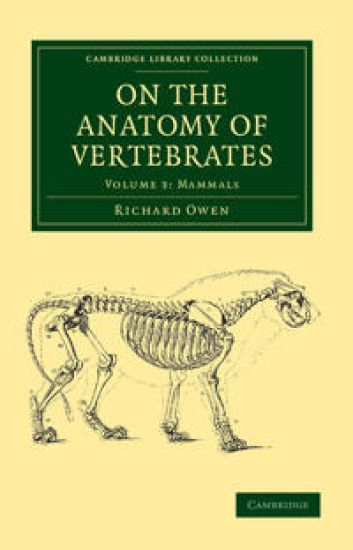
Richard Owen F.R.S. (1804–92) was a controversial and influential palaeontologist and anatomist. Owen studied medicine at the University of Edinburgh and at London's St Bartholomew's Hospital. He grew interested in anatomical research, and after qualifying he became assistant conservator in the museum of the Royal College of Surgeons, and then superintendent of natural history in the British Museum. He quickly became an authority on comparative anatomy and palaeontology, coining the term 'dinosaur' and founding the Natural History Museum. He was also a fierce critic of Darwin's theory of evolution by natural selection, and engaged in a long and bitter argument with Darwin's 'Bulldog', Thomas Huxley. Published in 1868, this is the third book in a highly illustrated three-volume set that comprises a thorough overview of vertebrate anatomy. This volume completes the analysis of mammalian anatomy and includes a chapter of general conclusions.
On the Extent and Aims of a National Museum of Natural History
Richard Owen
Cambridge University Press
2011
pokkari
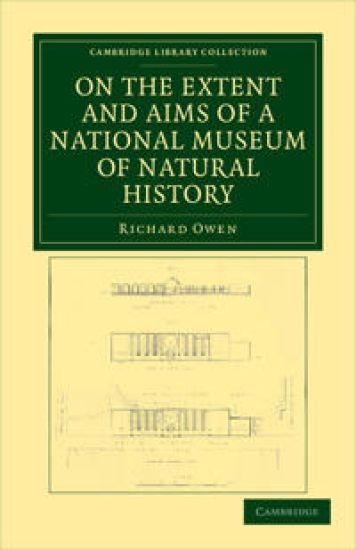
A significant limitation on the development of zoology, botany and palaeontology in the mid-nineteenth century was the absence of a centralised collection of specimens. Appointed superintendent of the British Museum's natural history departments in 1859, the distinguished biologist Richard Owen (1804–92) quickly realised the need to make various scattered samples more readily available for study, and began campaigning for a new, national museum with unprecedented space and resources. This book is the text of one of his speeches to the Royal Institution, given in 1861 and first published in 1862. He argues against the usual practice of exhibiting only one type form for each genus, provides possible floor plans, and presents case studies across the zoological field which show the limitations of the then current system. He also stresses a new idea, that such a museum should aim not only to help scientists, but to educate the general public.
Monograph on the Fossil Reptilia of the London Clay
Richard Owen; Thomas Bell
Cambridge University Press
2011
pokkari
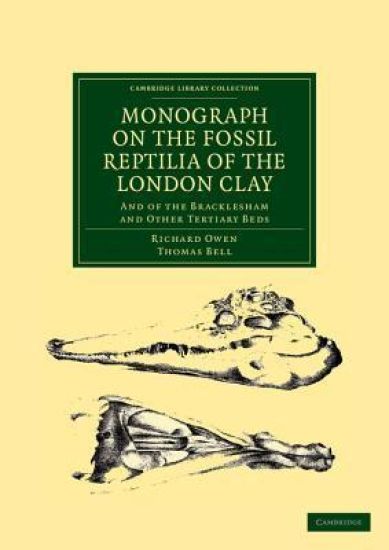
Covering a wide area of the London and Hampshire basins, the London Clay has been famous for over two hundred years as one of the richest Eocene strata in the country. In this work, first published between 1849 and 1858, Fellows of the Royal Society Richard Owen (1804–92) and Thomas Bell (1792–1880) describe their findings from among the reptilian fossils found there. The book is divided into four parts, covering chelonian, crocodilian, lacertilian and ophidian fossils, and includes an extensive section of detailed illustrations. Using his characteristic 'bone to bone' method and an emphasis on taxonomy, Owen draws some significant conclusions; he shows that some of Cuvier's classifications were wrongly extended to marine turtles, and adds to the evidence for an Eocene period much warmer than the present. The work is a fascinating example of pre-Darwinian palaeontology by two scientists later much involved in the evolutionary controversy.
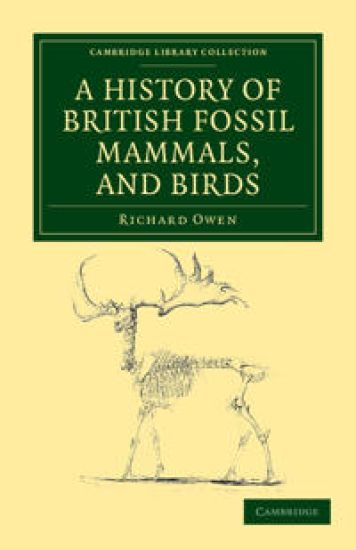
Richard Owen (1804–92) was a controversial and influential palaeontologist and anatomist. During his medical studies in Edinburgh and London, he grew interested in anatomical research and, after qualifying as a surgeon, became assistant conservator in the museum of the Royal College of Surgeons, and then superintendent of natural history in the British Museum. He became an authority on comparative anatomy and palaeontology, coining the term 'dinosaur' and founding the Natural History Museum. He was also a critic of Darwin's theory of evolution by natural selection, and engaged in a long and bitter argument with Thomas Huxley, known as 'Darwin's bulldog' for his belligerent support of the theory. Published in 1846, this is Owen's comparative anatomical analysis of the fossils of British birds and mammals. It compares living species with extinct ones, and explains the characteristics that help identification, using 237 woodcut illustrations to show the traits of different species.
Antiquity of Man as Deduced from the Discovery of a Human Skeleton During the Excavations of the East and West India Dock Extensions at Tilbury, North Bank of the Thames.
Richard Owen; Sir Richard Owen
British Library, Historical Print Editions
2011
pokkari
Key to the Geology of the Globe. an Essay, Designed to Show That the Present Geographical, Hydrographical, and Geological Structures Observed on the Earth's Crust, Were the Result of Forces Acting According to Fixed, Demonstrable Laws, Analogous to
Richard Owen
British Library, Historical Print Editions
2011
pokkari
Title: Key to the Geology of the Globe. An essay, designed to show that the present geographical, hydrographical, and geological structures observed on the Earth's crust, were the result of forces acting according to fixed, demonstrable laws, analogous to those governing the development of organic bodies ... Illustrated by maps and diagrams.Publisher: British Library, Historical Print EditionsThe British Library is the national library of the United Kingdom. It is one of the world's largest research libraries holding over 150 million items in all known languages and formats: books, journals, newspapers, sound recordings, patents, maps, stamps, prints and much more. Its collections include around 14 million books, along with substantial additional collections of manuscripts and historical items dating back as far as 300 BC.The GEOLOGY collection includes books from the British Library digitised by Microsoft. The works in this collection contain a number of maps, charts, and tables from the 16th to the 19th centuries documenting geological features of the natural world. Also contained are textbooks and early scientific studies that catalogue and chronicle the human stance toward water and land use. Readers will further enjoy early historical maps of rivers and shorelines demonstrating the artistry of journeymen, cartographers, and illustrators. ++++The below data was compiled from various identification fields in the bibliographic record of this title. This data is provided as an additional tool in helping to insure edition identification: ++++ British Library Owen, Richard; 1857. 256 p.; 8 . 7105.c.20.
Monograph Of The Fossil Mammalia Of The Mesozoic Formations (1871)
Richard Owen
KESSINGER PUBLISHING, LLC
2010
sidottu
Geology And Inhabitants Of The Ancient World (1854)
Richard Owen; Benjamin Waterhouse Hawkins
KESSINGER PUBLISHING, LLC
2010
sidottu
Aspects Of The Body In Vertebrates And Invertebrates (1883)
Richard Owen
KESSINGER PUBLISHING, LLC
2010
sidottu
On Parthenogenesis Or The Successive Production Of Procreating Individuals From A Single Ovum
Richard Owen
KESSINGER PUBLISHING, LLC
2010
sidottu
Geology And Inhabitants Of The Ancient World (1854)
Richard Owen; Benjamin Waterhouse Hawkins
KESSINGER PUBLISHING, LLC
2009
pokkari
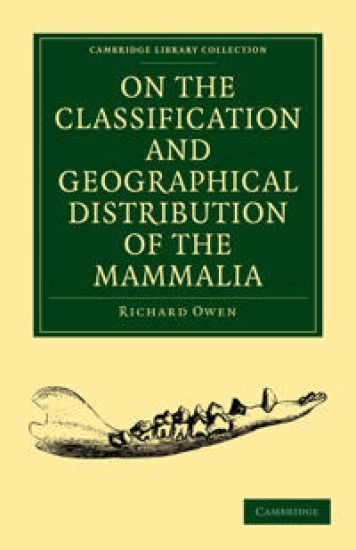
On the Classification and Geographical Distribution of the Mammalia
Richard Owen
Cambridge University Press
2009
pokkari
English anatomist and biologist Richard Owen (1804–92), who in 1842 coined the word 'dinosaur', published this book in 1859, the year of On the Origin of Species. He reviews ancient and recent studies of mammals in Western science before going on to present his own updated categorisation of the class. Owen's eye for detail and range of scholarship are evident in this work, which is an extensive catalogue of mammals based on biological, geographical and anatomical characteristics. It incorporates, among other things, detailed classifications and sub-classifications of genus based on dental structures, food habits and cerebra. Owen's prose is lucid and precise and his investigations scrupulous, demonstrating the commitment that led him to become one of the foremost anatomists of his time. An appendix reveals Owen's views on the hotly debated theories of transmutation and extinction proposed by scientists such as Lamarck, Lyell and Darwin.
Richard Owen (1804–1892) was a contemporary of Darwin, and like him, attended the University of Edinburgh medical school but left without completing his training. His career as an outstanding palaeontologist began when he was cataloguing the Hunterian Collection of human and animal anatomical specimens which had passed to the Royal College of Surgeons in London. His public lectures on anatomy were attended by Darwin, and he was entrusted with the classification and description of the fossil vertebrates sent back by Darwin from the Beagle voyage. He was responsible for coining many of the terms now used in anatomy and evolutionary biology, including the word 'dinosaur'. Palaeontology (published in 1860) defines, describes and classifies all the fossil animal forms then known, and discusses the origin of species, commenting on the theories of Buffon, Lamarck, the then anonymous author of Vestiges of Creation, Wallace and Darwin.
Fred Reichheld's 2006 book The Ultimate Question, that question being, "How likely is it that you would recommend this company to a friend or colleague?"-challenged the conventional wisdom of customer satisfaction programs. It coined the terms 'bad profits' and 'good profits' and pointed to a faster, much more accurate way of gauging customers' real loyalty to a company, introducing a quantitative measure (the Net Promoter Score) for establishing a baseline and effectively tracking changes going forward. Richard Owen and Laura Brooks are co-developers, along with Reichheld, of the methodology behind answering the question. In this book, Owen and Brooks tell how based on a variety of real case studies' to actually embed Net Promoter discipline in organizations of all types.