Kirjojen hintavertailu. Mukana 12 588 927 kirjaa ja 12 kauppaa.

Kirjailija

Richard P. Barth

Kirjat ja teokset yhdessä paikassa: 8 kirjaa, julkaisuja vuosilta 2000-2026, suosituimpien joukossa Understanding Child Welfare. Vertaile teosten hintoja ja tarkista saatavuus suomalaisista kirjakaupoista.

8 kirjaa

Kirjojen julkaisuhaarukka 2000-2026.

Understanding Child Welfare

Understanding Child Welfare

Richard P. Barth; Jill Duerr Berrick; Melissa Jonson-Reid; Antonio R. Garcia; Johanna K.P Greeson; John R. Gyourko; Brett Drake

EDWARD ELGAR PUBLISHING LTD
2026
sidottu
Co-authored by eminent scholars in the field, this book surveys the processes and outcomes of child welfare services in the US, drawing global parallels in order to capture the challenges, tensions, and opportunities facing child welfare services. Written in a clear and accessible manner, the book outlines which welfare system reforms are likely to have the greatest benefit for at-risk and maltreated children and families. Chapters cover crucial debates and initiatives mapping the evolution of child welfare services in the US and presenting comparisons with other approaches to child welfare services across the globe. The authors adopt a chronological approach, from initial contact to case closings, beginning with the prevention of child maltreatment and extending through out-of-home care, with a particular emphasis on services to older youth. The book also considers how to approach issues stemming from the importance of understanding and addressing diversity in race, ethnicity, and culture among child welfare involved families and offers opportunities for the evolution of child welfare services. Understanding Child Welfare is an illuminating read for students and scholars in social work, psychology, public health, and sociology. It is also a useful resource for practitioners, policymakers and other actors involved in child welfare services internationally.
The Child Welfare Challenge

The Child Welfare Challenge

Peter J. Pecora; James K. Whittaker; Richard P. Barth; Sharon Borja; William Vesneski

CRC Press Inc
2018
sidottu
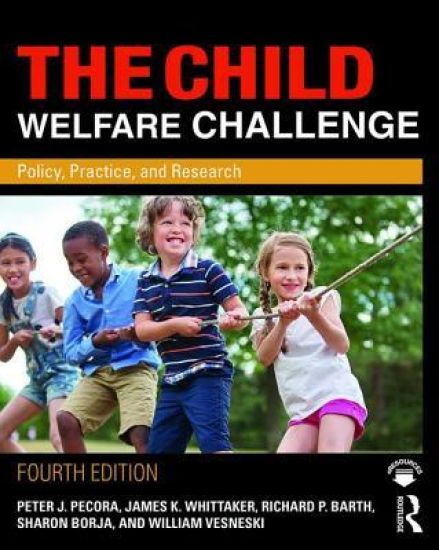
Using both historical and contemporary contexts, The Child Welfare Challenge examines major policy practice and research issues as they jointly shape child welfare practice and its future. This text focuses on families and children whose primary recourse to services has been through publicly funded child welfare agencies, and considers historical areas of service—foster care and adoptions, in-home family-centered services, child-protective services, and residential treatment services—where social work has an important role. This fourth edition features new content on child maltreatment and prevention that is informed by key conceptual frameworks informed by brain science, public health, and other research. This edition uses cross-sector data and more sophisticated predictive and other analytical processes to enhance planning and practice design. The authors have streamlined content on child protective services (CPS) to allow for new chapters on juvenile justice/cross-over youth, and international innovations, as well as more content on biology and brain science. The fourth edition includes a glossary of terms as well as instructor and student resource papers available online.
The Child Welfare Challenge

The Child Welfare Challenge

Peter J. Pecora; James K. Whittaker; Richard P. Barth; Sharon Borja; William Vesneski

CRC Press Inc
2018
nidottu
Using both historical and contemporary contexts, The Child Welfare Challenge examines major policy practice and research issues as they jointly shape child welfare practice and its future. This text focuses on families and children whose primary recourse to services has been through publicly funded child welfare agencies, and considers historical areas of service—foster care and adoptions, in-home family-centered services, child-protective services, and residential treatment services—where social work has an important role. This fourth edition features new content on child maltreatment and prevention that is informed by key conceptual frameworks informed by brain science, public health, and other research. This edition uses cross-sector data and more sophisticated predictive and other analytical processes to enhance planning and practice design. The authors have streamlined content on child protective services (CPS) to allow for new chapters on juvenile justice/cross-over youth, and international innovations, as well as more content on biology and brain science. The fourth edition includes a glossary of terms as well as instructor and student resource papers available online.
From Child Abuse to Foster Care

From Child Abuse to Foster Care

Richard P. Barth; Mark E. Courtney; Jill Duerr Berrick; Vicky N. Albert

Routledge
2017
sidottu
More than two million child abuse reports are filed annually on behalf of children in the United States. Each of the reported children becomes a concern, at least temporarily, of the professional who files the report, and each family is assessed by additional professionals. A substantial number of children in these families will subsequently enter foster care. Until now, the relationships between the performance of our child welfare system and the growth and outcomes of foster care have not been understood. In an effort to clarify them, Barth and his colleagues have synthesized the results of their longitudinal study in California of the paths taken by children after the initial abuse report: foster care, a return to their homes, or placement for adoption. Because of the outcomes of child welfare services in California have national significance, this is far more than a regional study. It provides a comprehensive picture of children's experiences in the child welfare system and a gauge of the effectiveness of that system. The policy implications of the California study have bearing on major federal and state initiatives to prevent child abuse and reduce unnecessary foster and group home care.
From Child Abuse to Foster Care

From Child Abuse to Foster Care

Richard P. Barth; Mark E. Courtney; Jill Duerr Berrick; Vicky N. Albert

AldineTransaction
2010
nidottu
More than two million child abuse reports are filed annually on behalf of children in the United States. Each of the reported children becomes a concern, at least temporarily, of the professional who files the report, and each family is assessed by additional professionals. A substantial number of children in these families will subsequently enter foster care. Until now, the relationships between the performance of our child welfare system and the growth and outcomes of foster care have not been understood. In an effort to clarify them, Barth and his colleagues have synthesized the results of their longitudinal study in California of the paths taken by children after the initial abuse report: foster care, a return to their homes, or placement for adoption. Because of the outcomes of child welfare services in California have national significance, this is far more than a regional study. It provides a comprehensive picture of children's experiences in the child welfare system and a gauge of the effectiveness of that system. The policy implications of the California study have bearing on major federal and state initiatives to prevent child abuse and reduce unnecessary foster and group home care.
Beyond Common Sense

Beyond Common Sense

Fred Wulczyn; Richard P. Barth; Ying-Ying T. Yuan; Brenda Jones Harden; John Landsverk

Routledge Member of the Taylor and Francis Group
2005
sidottu
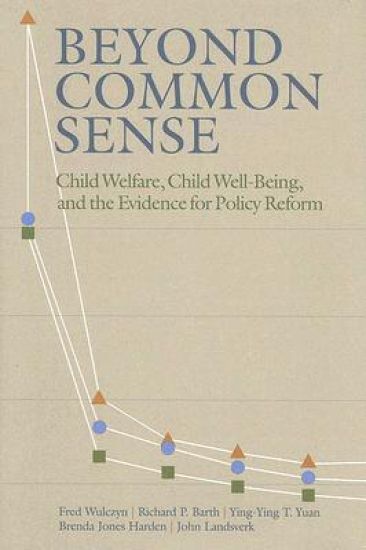
Helping vulnerable children develop their full potential is an attractive idea with broad common-sense appeal. However, child well-being is a broad concept, and the legislative mandate for addressing well-being in the context of the current child welfare system is not particularly clear. This volume asserts that finding a place for well-being on the list of outcomes established to manage the child welfare system is not as easy as it first appears. The overall thrust of this argument is that policy should be evidence-based, and the available evidence is a primary focus of the book. Because policymakers have to make decisions that allocate resources, a basic understanding of incidence in the public health tradition is important, as is evidence that speaks to the question of what works clinically. The rest of the book addresses the evidence. Chapter 2 integrates bio-ecological and public health perspectives to give the evidence base coherence. Chapters 3 and 4 combine evidence from the National Child Abuse and Neglect Data System, the Multistate Foster Care Data Archive, and the National Survey of Child and Adolescent Well-Being to offer an unprecedented profile of children as they enter the child welfare system. Chapters 5 and 6 address the broad question of what works. A concluding chapter focuses on policy and future directions, suggesting that children starting out, children starting school, and children starting adolescence are high-risk populations for which explicit strategies have to be formed. This timely volume offers useful insights into the child welfare system and will be of particular interest to policymakers, academics with an interest in Child Welfare Policy, Social Work educators, and Child Advocates.
Beyond Common Sense

Beyond Common Sense

Fred Wulczyn; Richard P. Barth; Ying-Ying T. Yuan; Brenda Jones Harden; John Landsverk

Routledge Member of the Taylor and Francis Group
2005
nidottu
Helping vulnerable children develop their full potential is an attractive idea with broad common-sense appeal. However, child well-being is a broad concept, and the legislative mandate for addressing well-being in the context of the current child welfare system is not particularly clear. This volume asserts that finding a place for well-being on the list of outcomes established to manage the child welfare system is not as easy as it first appears. The overall thrust of this argument is that policy should be evidence-based, and the available evidence is a primary focus of the book. Because policymakers have to make decisions that allocate resources, a basic understanding of incidence in the public health tradition is important, as is evidence that speaks to the question of what works clinically. The rest of the book addresses the evidence. Chapter 2 integrates bio-ecological and public health perspectives to give the evidence base coherence. Chapters 3 and 4 combine evidence from the National Child Abuse and Neglect Data System, the Multistate Foster Care Data Archive, and the National Survey of Child and Adolescent Well-Being to offer an unprecedented profile of children as they enter the child welfare system. Chapters 5 and 6 address the broad question of what works. A concluding chapter focuses on policy and future directions, suggesting that children starting out, children starting school, and children starting adolescence are high-risk populations for which explicit strategies have to be formed. This timely volume offers useful insights into the child welfare system and will be of particular interest to policymakers, academics with an interest in Child Welfare Policy, Social Work educators, and Child Advocates.
The Tender Years

The Tender Years

Jill Duerr Berrick; Barbara Needell; Richard P. Barth; Melissa Jonson-Reid

Oxford University Press Inc
2000
nidottu
The first few years of life are a time of unparalleled physical, intellectual, and emotional development. But they can also be a time of neglect and abuse: this is the period when children are most likely to suffer mistreatment by their parents, and most likely to be placed in foster care. Today most children entering the child welfare system are very young, and, in most large states, infants are the largest group of children entering foster care each year. Social service systems are typically not designed for very young children, however, and therefore fail to serve their special needs. This shortcoming is significant because protecting very young children from physical harm is not enough; they must also be protected from developmental harm. The Tender Years is the first textbook to address this critical situation. Beginning with an overview of child development theory, it examines child abuse reporting patterns and discusses placement in foster care, reunification, and adoption. It also looks at public child welfare practice, featuring vivid examples of the children and families served by this system. The authors analyse the differences between the foster care experiences of very young children and those of older children, with special emphasis on the way the child welfare system deals with infants. Based on a significant body of evidence regarding young childrens unique affective, physical, and cognitive development, this text illuminates the interrelationship of child welfare practice, child development outcomes, and public policy. The authors offer a fundamental framework for decision-making in child welfare when young children are involved, and recommend specific changes in policy and practice aimed at moving the system toward greater developmental sensitivity. Timely and provocative, The Tender Years is essential reading for courses in child welfare, social work with children, and social work with the family, as well as a valuable resource for child welfare administrators and policy makers.