Kirjojen hintavertailu. Mukana 12 417 813 kirjaa ja 12 kauppaa.
Kirjailija
Richard P. Feynman
Kirjat ja teokset yhdessä paikassa: 34 kirjaa, julkaisuja vuosilta 1972-2025, suosituimpien joukossa Surely You're Joking Mr Feynman. Vertaile teosten hintoja ja tarkista saatavuus suomalaisista kirjakaupoista.
Winner of the Nobel Prize for Physics in 1965, Richard Feynman was one of the world's greatest theoretical physicists, but he was also a man who fell, often jumped, into adventure.
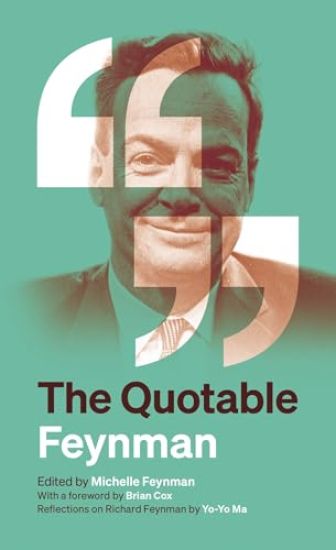
A treasure-trove of illuminating and entertaining quotations from beloved physicist Richard P. Feynman"Some people say, ‘How can you live without knowing?' I do not know what they mean. I always live without knowing. That is easy. How you get to know is what I want to know."—Richard P. FeynmanNobel Prize–winning physicist Richard P. Feynman (1918–88) was that rarest of creatures—a towering scientific genius who could make himself understood by anyone and who became as famous for the wit and wisdom of his popular lectures and writings as for his fundamental contributions to science. The Quotable Feynman is a treasure-trove of this revered and beloved scientist's most profound, provocative, humorous, and memorable quotations on a wide range of subjects.Carefully selected by Richard Feynman's daughter, Michelle Feynman, from his spoken and written legacy, including interviews, lectures, letters, articles, and books, the quotations are arranged under two dozen topics—from art, childhood, discovery, family, imagination, and humor to mathematics, politics, science, religion, and uncertainty. These brief passages—about 500 in all—vividly demonstrate Feynman's astonishing yet playful intelligence, and his almost constitutional inability to be anything other than unconventional, engaging, and inspiring. The result is a unique, illuminating, and enjoyable portrait of Feynman's life and thought that will be cherished by his fans at the same time that it provides an ideal introduction to Feynman for readers new to this intriguing and important thinker.The book features a foreword in which physicist Brian Cox pays tribute to Feynman and describes how his words reveal his particular genius, a piece in which cellist Yo-Yo Ma shares his memories of Feynman and reflects on his enduring appeal, and a personal preface by Michelle Feynman. It also includes some previously unpublished quotations, a chronology of Richard Feynman's life, some twenty photos of Feynman, and a section of memorable quotations about Feynman from other notable figures.Features:Approximately 500 quotations, some of them previously unpublished, arranged by topicA foreword by Brian Cox, reflections by Yo-Yo Ma, and a preface by Michelle FeynmanA chronology of Feynman's lifeSome twenty photos of FeynmanA section of quotations about Feynman from other notable figuresSome notable quotations of Richard P. Feynman:"The thing that doesn't fit is the most interesting.""Thinking is nothing but talking to yourself inside.""It is wonderful if you can find something you love to do in your youth which is big enough to sustain your interest through all your adult life. Because, whatever it is, if you do it well enough (and you will, if you truly love it), people will pay you to do what you want to do anyway.""I'd hate to die twice. It's so boring."
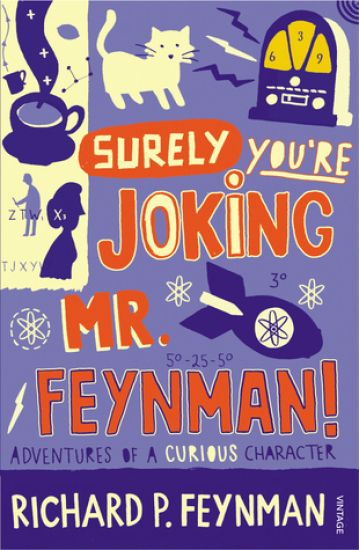
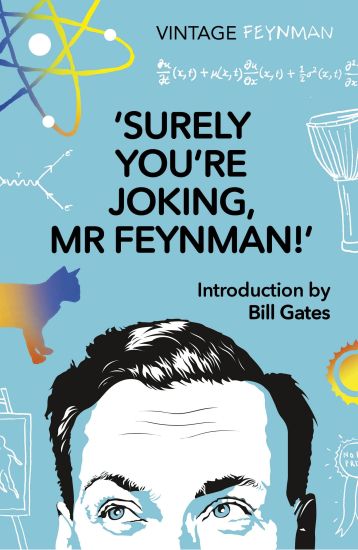
WITH A NEW INTRODUCTION BY BILL GATESIn this warm, insightful portrait of the Winner of the Nobel Prize for Physics in 1965, we see the wisdom, humour and curiosity of Richard Feynman through a series of conversations with his friend Ralph Leighton.Winner of the Nobel Prize for Physics in 1965, Richard Feynman was one of the world's greatest theoretical physicists, but he was also a man who fell, often jumped, into adventure. An artist, safecracker, practical joker and storyteller, Feynman's life was a series of combustible combinations made possible by his unique mixture of high intelligence, unquenchable curiosity and eternal scepticism.Over a period of years, Feynman's conversations with his friend Ralph Leighton were first taped and then set down as they appear here, little changed from their spoken form, giving a wise, funny, passionate and totally honest self-portrait of one of the greatest men of our age.
Physics, rather than mathematics, is the focus in this classic graduate lecture note volume on statistical mechanics and the physics of condensed matter. This book provides a concise introduction to basic concepts and a clear presentation of difficult topics, while challenging the student to reflect upon as yet unanswered questions.
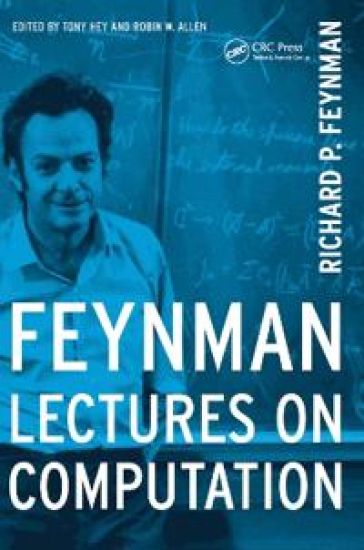
When, in 1984?86, Richard P. Feynman gave his famous course on computation at the California Institute of Technology, he asked Tony Hey to adapt his lecture notes into a book. Although led by Feynman, the course also featured, as occasional guest speakers, some of the most brilliant men in science at that time, including Marvin Minsky, Charles Bennett, and John Hopfield. Although the lectures are now thirteen years old, most of the material is timeless and presents a ?Feynmanesque? overview of many standard and some not-so-standard topics in computer science such as reversible logic gates and quantum computers.
In these classic lectures, Feynman analyses the theoretical questions related to electron and photon interactions at high energies. These lectures are based on a special topics course taught by Feynman at Caltech in 1971 and 1972. The material is dealt with on an advanced level and includes discussions of vector meson dominance and deep inelastic scattering. The possible consequences of the parton model are also analyzed.
This text material constitutes notes on the third of a three-semester course in quantum mechanics given at the California Institute of Technology in 1953, presenting the main results and calculational procedures of quantum electrodynamics.
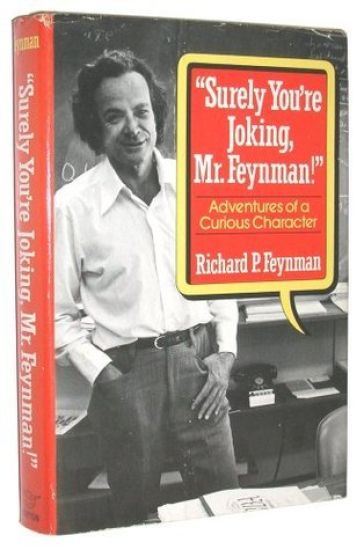
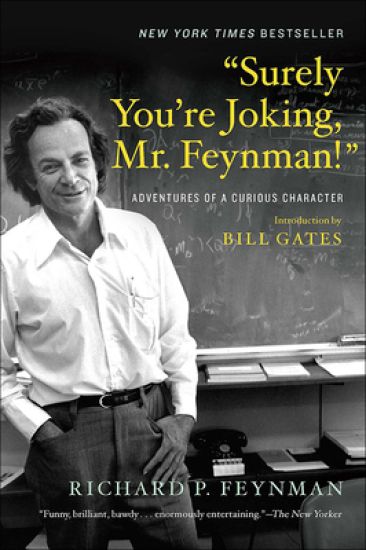
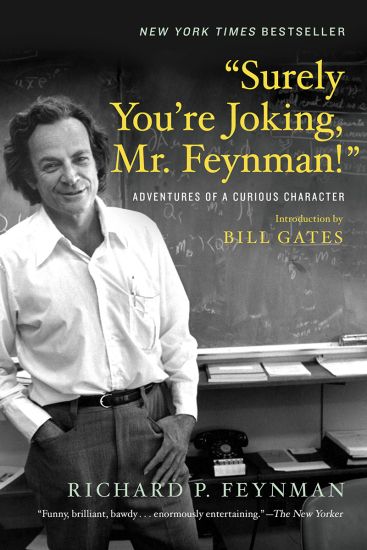
Richard P. Feynman, winner of the Nobel Prize in physics, thrived on outrageous adventures. In this lively work that "can shatter the stereotype of the stuffy scientist" (Detroit Free Press), Feynman recounts his experiences trading ideas on atomic physics with Einstein and cracking the uncrackable safes guarding the most deeply held nuclear secrets--and much more of an eyebrow-raising nature. In his stories, Feynman's life shines through in all its eccentric glory--a combustible mixture of high intelligence, unlimited curiosity, and raging chutzpah. Included for this edition is a new introduction by Bill Gates.
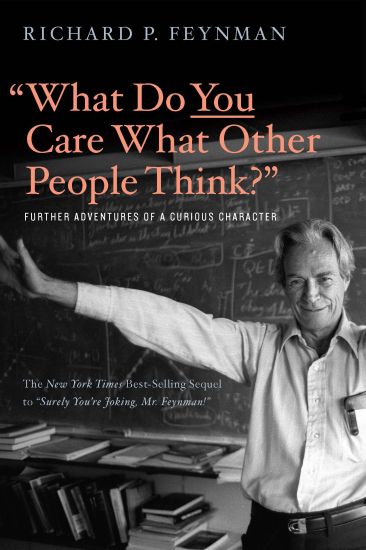
Like the "funny, brilliant, bawdy" (The New Yorker) "Surely You're Joking, Mr. Feynman!" this book's many stories--some funny, others intensely moving--display Richard P. Feynman's unquenchable thirst for adventure and unparalleled ability to recount important moments from his life.Here we meet Feynman's first wife, Arlene, who taught him of love's irreducible mystery as she lay dying in a hospital bed while he worked on the atomic bomb at nearby Los Alamos. We listen to the fascinating narrative of the investigation into the space shuttle Challenger's explosion in 1986 and relive the moment when Feynman revealed the disaster's cause through an elegant experiment: dropping a ring of rubber into a glass of cold water and pulling it out, misshapen. In "What Do You Care What Other People Think?" one of the greatest physicists of the twentieth century lets us see the man behind the genius.
Richard P. Feynman, winner of the Nobel Prize in physics, thrived on outrageous adventures. In this lively work that "can shatter the stereotype of the stuffy scientist" (Detroit Free Press), Feynman recounts his experiences trading ideas on atomic physics with Einstein and cracking the uncrackable safes guarding the most deeply held nuclear secrets--and much more of an eyebrow-raising nature. In his stories, Feynman's life shines through in all its eccentric glory--a combustible mixture of high intelligence, unlimited curiosity, and raging chutzpah.Included for this edition is a new introduction by Bill Gates.
"Some people say, 'How can you live without knowing?' I do not know what they mean. I always live without knowing. That is easy. How you get to know is what I want to know."--Richard P. Feynman Nobel Prize-winning physicist Richard P. Feynman (1918-88) was that rarest of creatures--a towering scientific genius who could make himself understood by anyone and who became as famous for the wit and wisdom of his popular lectures and writings as for his fundamental contributions to science. The Quotable Feynman is a treasure-trove of this revered and beloved scientist's most profound, provocative, humorous, and memorable quotations on a wide range of subjects. Carefully selected by Richard Feynman's daughter, Michelle Feynman, from his spoken and written legacy, including interviews, lectures, letters, articles, and books, the quotations are arranged under two dozen topics--from art, childhood, discovery, family, imagination, and humor to mathematics, politics, science, religion, and uncertainty. These brief passages--about 500 in all--vividly demonstrate Feynman's astonishing yet playful intelligence, and his almost constitutional inability to be anything other than unconventional, engaging, and inspiring. The result is a unique, illuminating, and enjoyable portrait of Feynman's life and thought that will be cherished by his fans at the same time that it provides an ideal introduction to Feynman for readers new to this intriguing and important thinker. The book features a foreword in which physicist Brian Cox pays tribute to Feynman and describes how his words reveal his particular genius, a piece in which cellist Yo-Yo Ma shares his memories of Feynman and reflects on his enduring appeal, and a personal preface by Michelle Feynman. It also includes some previously unpublished quotations, a chronology of Richard Feynman's life, some twenty photos of Feynman, and a section of memorable quotations about Feynman from other notable figures. Features: * Approximately 500 quotations, some of them previously unpublished, arranged by topic* A foreword by Brian Cox, reflections by Yo-Yo Ma, and a preface by Michelle Feynman* A chronology of Feynman's life* Some twenty photos of Feynman* A section of quotations about Feynman from other notable figures Some notable quotations of Richard P. Feynman: *"The thing that doesn't fit is the most interesting."*"Thinking is nothing but talking to yourself inside."*"It is wonderful if you can find something you love to do in your youth which is big enough to sustain your interest through all your adult life. Because, whatever it is, if you do it well enough (and you will, if you truly love it), people will pay you to do what you want to do anyway."*"I'd hate to die twice. It's so boring."
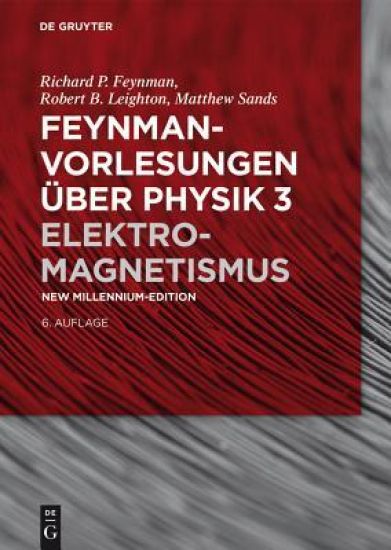
In seinen legend ren Vorlesungen aus dem Jahre 1965 ist es Richard P. Feynman gelungen, die Physik in einer leichtverst ndlichen Form darzustellen, ohne dabei auf Genauigkeit zu verzichten. Der didaktisch geschickte Aufbau h lt den Leser bis an den Schluss gefesselt. Feynman stellt die physikalischen Ideen in den Vordergrund, eine umfassende Kenntnis der exakten mathematischen Grundlagen ist zum Verst ndnis nicht n tig. Deshalb eignen sich seine B cher hervorragend sowohl zum Selbststudium als auch als Begleitung zur Vorlesung. Die Vorlesung ber Elektromagnetismus in der berarbeiteten New Millennium Edition richtet sich an Bachelor- und Masterstudierende nicht nur der Physik, sondern auch anderer naturwissenschaftlicher und technischer Richtungen.
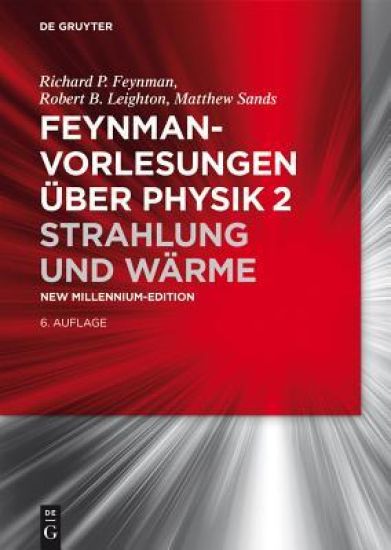
Richard P. Feynman, der 1965 den Physik Nobelpreis erhielt, ist der unumstrittene Meister, wenn es darum geht, die Physik aufregend und interessant darzustellen: Mit seinen legend ren Vorlesungen ist es Feynman gelungen, die Physik in einer leicht verst ndlichen Form zu zeigen, ohne dabei auf Genauigkeit zu verzichten. Der didaktisch geschickte Aufbau h lt den Leser bis zum Schluss gefesselt. Feynman stellt die physikalischen Ideen in den Vordergrund, eine umfassende Kenntnis der exakten mathematischen Grundlagen ist zum Verst ndnis nicht n tig. Deshalb eignen sich seine B cher hervorragend sowohl zum Selbststudium als auch als Begleitung zur Vorlesung. Band 2 der berarbeiteten New Millennium Edition stellt eine grundlegende Einf hrung dar, die einen Einblick in alle Bereiche der Physik und ihre Beziehungen zu anderen naturwissenschaftlichen Disziplinen gibt. Auf eine k nstliche Trennung zwischen klassischer und moderner Physik wird dabei verzichtet. Der besondere Schwerpunkt liegt auf der Thermodynamik und der Physik der Strahlung.
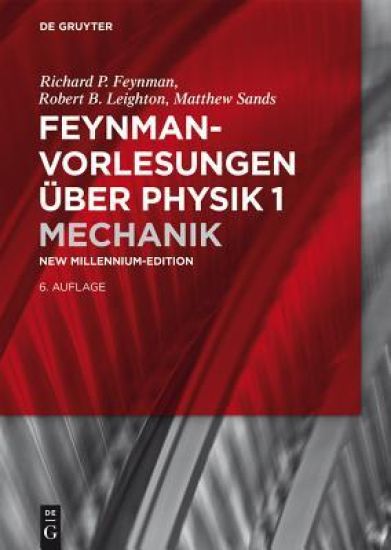
Richard P. Feynman, der 1965 den Physik Nobelpreis erhielt, ist der unumstrittene Meister, wenn es darum geht, die Physik aufregend und interessant darzustellen: Mit seinen legend ren Vorlesungen ist es Feynman gelungen, die Physik in einer leicht verst ndlichen Form zu zeigen, ohne dabei auf Genauigkeit zu verzichten. Der didaktisch geschickte Aufbau h lt den Leser bis zum Schluss gefesselt. Feynman stellt die physikalischen Ideen in den Vordergrund, eine umfassende Kenntnis der exakten mathematischen Grundlagen ist zum Verst ndnis nicht n tig. Deshalb eignen sich seine B cher hervorragend sowohl zum Selbststudium als auch als Begleitung zur Vorlesung. Band 1 der berarbeiteten New Millennium Edition stellt eine grundlegende Einf hrung dar, die einen Einblick in alle Bereiche der Physik und ihre Beziehungen zu anderen naturwissenschaftlichen Disziplinen gibt. Auf eine k nstliche Trennung zwischen klassischer und moderner Physik wird dabei verzichtet. Der besondere Schwerpunkt liegt auf der Mechanik.
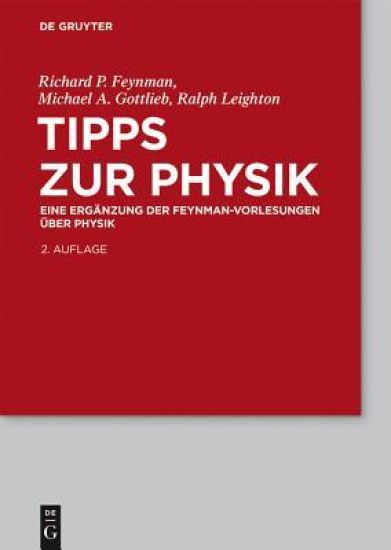
Dieser Erg nzungsband enth lt lange als verschollen gegoltene Vorlesungen, mit denen Richard P. Feynman seine Studierenden auf die Pr fung vorbereitete. Mit seinem ganz eigenen Humor und seinen einzigartigen Einblicken wiederholt Feynman die wichtigsten Grundlagen und gibt wertvolle Tipps, wie man an physikalische Probleme herangeht und sie l st. Das Vorwort von Matthew Sands, einem Kollegen Feynmans am Caltech, schildert aus erster Hand die Entstehungs- und Publikationsgeschichte dieser vielleicht ber hmtesten Vorlesungsreihe der Physik. Abgerundet werden die Tipps durch bungen von Robert Leighton und Rochus Vogt, die speziell zur Erg nzung der Feynman-Vorlesungen entwickelt wurden. Erstmalig enth lt die Neuauflage der berarbeiteten New Millennium Edition drei Interviews mit Richard Feynman, Robert Leighton und Rochus Vogt.
Die legend ren Vorlesungen wurden umfassend berarbeitet und liegen nun in der New Millenium-Edition vor. Die Art und Weise, mit der Feynman physikalische Sachverhalte angeht und komplexe Probleme berraschend klar und einfach l st, ist unnachahmlich; wie keinem anderen ist es dem begnadeten P dagogen Feynman gelungen, Generationen von Studenten mit den Grundlagen der Physik vertraut zu machen und sie dazu zu bringen, "sich dem gr ten Abenteuer, auf das sich der menschliche Geist je eingelassen hat, anschlie en zu wollen." DAs Set beinhaltet die B nde: _1. Mechanik. _2. Strahlung und W rme. _3. Elektromagnetismus. _4. Struktur der Materie. _5. Quantenmechanik. und schlie lich die _Tipps zur Physik. Eine Erg nzung.
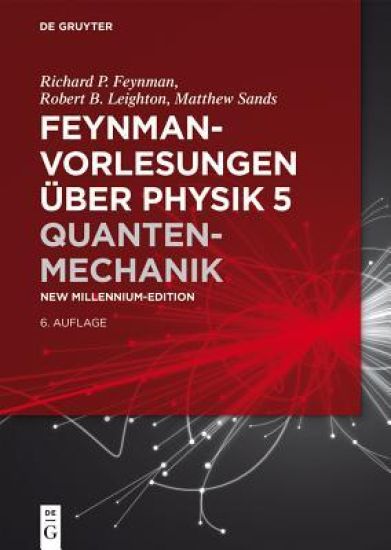
In seinen legend ren Vorlesungen aus dem Jahre 1965 ist es Richard P. Feynman gelungen, die Physik in einer leicht verst ndlichen Form darzustellen, ohne dabei auf Genauigkeit zu verzichten. Der didaktisch geschickte Aufbau h lt den Leser bis zum Schluss gefesselt. Kein Wunder also, dass die Feynman Vorlesungen ber Physik im Lehrbetrieb der Universit ten mittlerweile einen festen Platz eingenommen haben. Band 5 der New Millennium Edition vermittelt die Quantenmechanik. Feynman stellt dabei die physikalischen Ideen in den Vordergrund, eine umfassende Kenntnis der exakten mathematischen Grundlagen ist zum Verst ndnis nicht n tig. Das Buch eignet sich hervorragend zum Selbststudium als auch als Begleiter einer Vorlesung.