Kirjojen hintavertailu. Mukana 12 595 353 kirjaa ja 12 kauppaa.

Kirjailija

Richard P. Kerbrech

Kirjat ja teokset yhdessä paikassa: 6 kirjaa, julkaisuja vuosilta 2012-2024, suosituimpien joukossa The True Transatlantic Super-Liners. Vertaile teosten hintoja ja tarkista saatavuus suomalaisista kirjakaupoista.

6 kirjaa

Kirjojen julkaisuhaarukka 2012-2024.

The True Transatlantic Super-Liners

The True Transatlantic Super-Liners

David L. Williams; Richard P. Kerbrech

THE HISTORY PRESS LTD
2024
sidottu
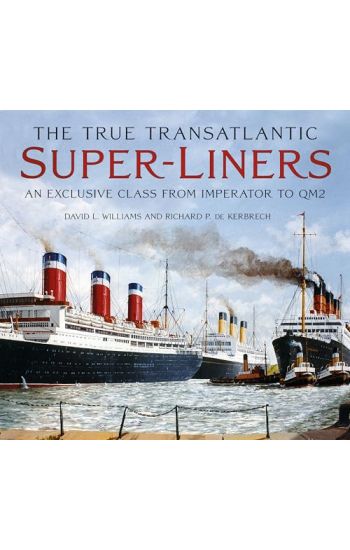
At a time before budget air travel, when the ocean liner ruled the seas, the demand for speed, regularity and luxury on the transatlantic route launched a glorious era of ocean super-liners. They truly were spectacular design icons: stylish, elegant and massive in size, but beautiful to behold. They stirred the imagination; their achievements and exploits were legendary; and they were unique, both as a group and individually, each having a distinctive character and ‘look’ of its own. Unquestionably, they were veritable floating cities, the like of which had never been seen before and, with a solitary exception, have not been seen since.Only thirteen ships were entitled to the ‘super-liner’ accolade: Imperator (later Berengaria), Vaterland (later Leviathan), Bismarck (later Majestic), Bremen, Europa (later Liberté), Rex, Normandie, Queen Mary, Queen Elizabeth, United States, France (later Norway), Queen Elizabeth 2 and Queen Mary 2. In The True Transatlantic Super-liners, maritime authors David L. Williams and Richard P. de Kerbrech tell each ship’s equally singular story in fascinating detail and supplement the tales with stunning photographs of a bygone era.
Harland & Wolff and Workman Clark

Harland & Wolff and Workman Clark

Richard P. Kerbrech; David L. Williams

The History Press Ltd
2021
sidottu
Once, the output of such yards as Harland & Wolff and Workman, Clark was vital business of national and international importance. The Harland & Wolff yard had a long association of building ships for the White Star Line, culminating in the three largest passenger vessels of the Edwardian era, Olympic, Titanic and Britannic, as well as others for the International Mercantile Marine Co.This beautifully illustrated volume from Richard P. de Kerbrech and David L. Williams covers aspects of the construction and the skilled craftsmen that worked on these ships, and many others, from the Edwardian era to the 1920s, revelling in atmospheric views of the boiler shop, foundry, machine shop and slipways, as well as many successful launchings. The rich array of images showcases the labour-intensive heavy engineering and shipyard practices that were once part of Belfast’s major industry, now sadly no more.
Great Passenger Ships that Never Were

Great Passenger Ships that Never Were

David L. Williams; Richard P. Kerbrech

The History Press Ltd
2019
sidottu
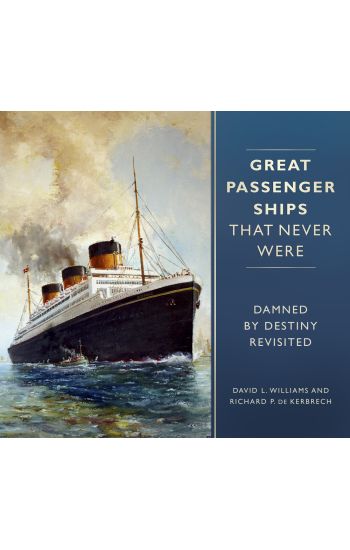
Great passenger ships that never were is a completely revised and updated version of Damned by Destiny (Teredo Books, 1982), a comprehensive account of the large passenger ships that, for one reason or another, never entered commercial service. Some never made it off the drawing board or out of the model shop, some met with disaster after launch and some were diverted to wartime service but didn’t survive, never used for their original purpose. They were all the victims of circumstance, whether due to financial crises, timing or changing technology. Some of these liners and cruise vessels may have become the greatest passenger ships ever achieved. They would have surpassed the most famous, not only in speed and splendour but in size and appearance, besides setting trends that were subsequently adopted for ships that did enter service. With beautiful pictures and detailed diagrams this book is a true insight into what might have been.
Cabin Class Rivals

Cabin Class Rivals

David L. Williams; Richard P. Kerbrech

The History Press Ltd
2015
nidottu
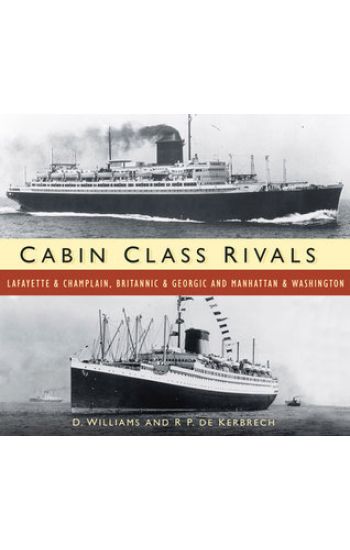
During the late 1920s and early 1930s three pairs of unique and innovative passenger liners emerged from France, the UK and the US designated as cabin-class liners: the Lafayette and Champlain, Britannic and Georgic and the Manhattan and Washington – three steamships and three motorships. Born at the height of the Great Depression and constructed at a time when there was much work needed in the shipbuilding and allied trades, they were overshadowed by the larger, more luxurious express liners on the prestigious North Atlantic route. Their introduction made incursions into the Atlantic passenger traffic, with spacious accommodation and sumptuous public rooms, in effect offering first-class travel in relative luxury at much lower fares and at a longer, slower crossing time. Much overlooked by historians, their impact on the style and standards for Atlantic travel were trendsetting and challenged the major passenger liner companies to re-think their strategies. Here, David L. Williams and Richard P. de Kerbrech have examined the part played by these cabin-class rivals and highlight their rightful place in the history and development of North Atlantic steam – and motor – navigation.
Down Amongst the Black Gang

Down Amongst the Black Gang

Richard P. Kerbrech

The History Press Ltd
2014
nidottu
Down in the fiery belly of the luxury liners of the Titanic era, a world away from the first-class dining rooms and sedate tours of the deck, toiled the ‘black gang’. Their work was gruelling and hot, and here deKerbrech introduces the reader to the dimly lit world and workplace of Titanic’s stokers. Beginning with a journey around some of the major elements of machinery that one might encounter in the giant ships’ engine and boiler rooms, the sheer skill and strength that a man in this employ must have had is brought to the fore. The human side of working for Titanic and her contemporaries is also explored through an investigation of stokers’ duties, their environment and conditions: what it was like to be one of them. An oft-ignored part of Titanic’s story, the importance of the black gang and the job they performed is brought to life, making poignant their fate on the maiden crossing of Titanic. This certainly is a book that no Titanic-era shipping historian or researcher should be without.
J. Samuel White & Co., Shipbuilders

J. Samuel White & Co., Shipbuilders

David L. Williams; Richard P. Kerbrech

The History Press Ltd
2012
nidottu
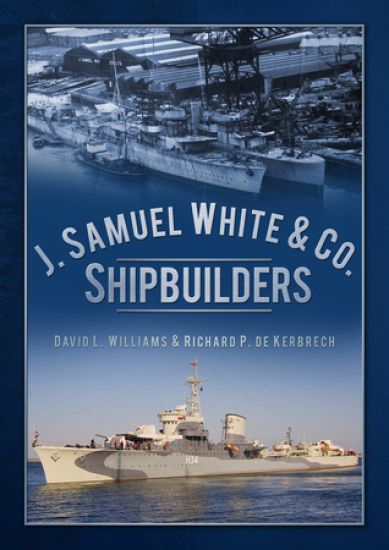
J. Samuel White & Company was the oldest firm on the Admiralty List and built 252 ships for the Royal Navy alone. The yard’s closure in 1966 ended 300 years of shipbuilding during which time the company had gained acclaim from mercantile and naval customers alike. Famed early on for fast Revenue cutters and naval brigs, in its final years Royal Navy destroyers earned it great distinction. Highly innovative, it developed and patented many pioneering products while other innovations included semi-diesel engines, heat exchangers, air conditioners and compressors, besides a range of marine thruster units. Not only did the company build ships and boats but it also constructed a range of marine aircraft. During the First World War, White’s production accounted for 100 ships, including twenty-seven destroyers, and 201 seaplanes. Production during the Second World War added up to 317 ships, among them twenty-six destroyers and a large minelayer. Illustrated with photographs of these and many of the company’s other products, this book tells the story of J. Samuel White and its subsidiary concerns, a business built on a reputation of quality which earned it the slogan: “White’s-built – well-built!”.