Kirjojen hintavertailu. Mukana 12 390 323 kirjaa ja 12 kauppaa.
Kirjailija
Richard Paul
Kirjat ja teokset yhdessä paikassa: 42 kirjaa, julkaisuja vuosilta 1875-2022, suosituimpien joukossa A Critical Thinker's Guide to Educational Fads. Vertaile teosten hintoja ja tarkista saatavuus suomalaisista kirjakaupoista.
The Thinker's Guide to Scientific Thinking focuses on developing the intellectual skills inherent in the well-cultivated practice of every area of scientific research and study. It helps students and practicing scientists come to reason within the logic of science and to see the field as a cohesive whole. From astronomers to zoologists and physicists to chemists, skilled scientists use careful analysis to question data, test theories, draw logical conclusions, and propose feasible solutions. Students in science courses, and scientists themselves will find their analytical abilities enhanced by the engaging framework of inquiry set forth by Richard Paul and Linda Elder in this guide. As part of the Thinker's Guide Library, this book advances the mission of the Foundation for Critical Thinking to promote fairminded critical societies through cultivating essential intellectual abilities and virtues across every field of study across world.
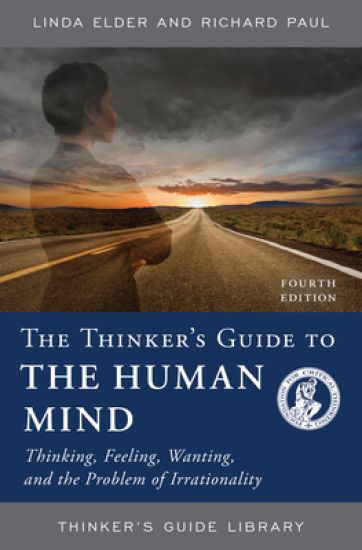
Since all human thoughts are controlled by the mind, understanding our thoughts is essential to personal and societal advancement. The Thinker's Guide to the Human Mind delves into the core functions of the human mind to allow readers to take charge of their intellect and emotions more effectively. Linda Elder and Richard Paul explore the basic impulses that influence our thoughts and can distract us from logical or ethical action. Exploring the dangers of egocentric and sociocentric thinking, this guide presents strategies for strengthening emotional intelligence and developing critical thinking virtues. As part of the Thinker's Guide Library, this book advances the mission of the Foundation for Critical Thinking to promote fairminded critical societies through cultivating essential intellectual abilities and virtues within every field of study across the world.
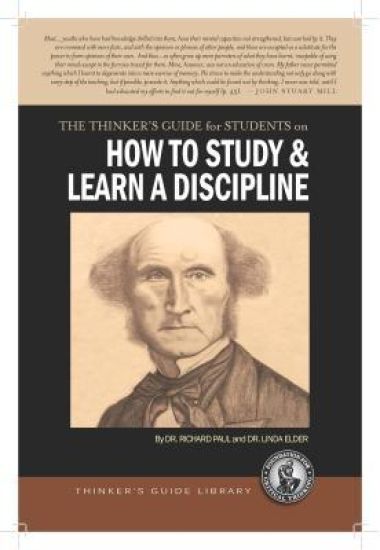
The Thinker's Guide for Students on How to Study and Learn a Discipline empowers students to take control of their own learning by asking questions, challenging assumptions, drawing upon reliable information, and exploring alternative opinions. Making intellectual work more accessible, practical, and engaging, this book fosters minds that question, probe, and can master a variety of forms of knowledge through intellectual perseverance and regular use of critical thinking skills. As part of the Thinker's Guide Library, this book advances the mission of the Foundation for Critical Thinking to promote fair-minded critical societies through cultivating essential intellectual abilities and virtues across every field of study across world.
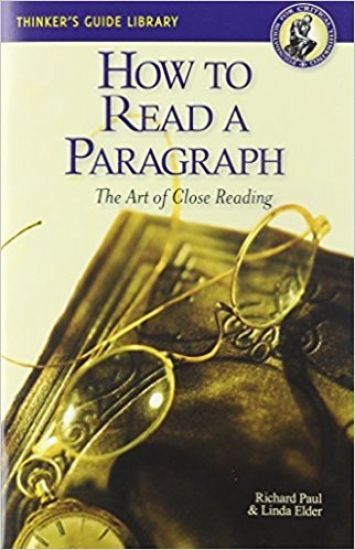
This handbook teaches students to read for deep understanding, properly analyze and assess what they read, and reason within the logic of an author. As part of the Thinker's Guide Library, this guide includes activities for students to work through in developing close reading skills using the tools of critical thinking.
For Student Success and Career Development, or Critical Thinking courses. Written by two of the leading experts in the field, this book's approach to critical thinking is as a process for taking charge of and responsibility for one's thinking. Based in theory developed over the last 30 years, it focuses on an integrated, comprehensive concept of critical thinking that is both substantive and practical; it fosters the development of basic intellectual skills students need to think through content in any class, subject, or discipline, as well as through any problem or issue they face. Simply stated, this text offers students the intellectual tools they need for lifelong learning, and rational, conscientious living. In this edition, several advanced chapters were eliminated, many diagrams have been added or enhanced, and the glossary of critical thinking terms has been more strongly developed. TECHNOLOGY OFFERING: MyStudentSuccessLab is available with this book upon request. It is an online solution designed to help students 'Start strong, Finish stronger' by building skills for ongoing personal and professional development. Go to http://mystudentsuccesslab.com/mssl3 for a Point and Click DEMO of the Time Management module.
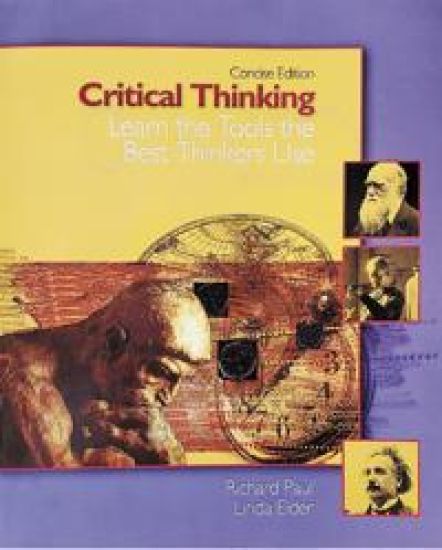
This introduction to critical thinking focuses on an integrated, universal concept of critical thinking that is both substantive and practical. It provides students with the basic intellectual skills they need to think through content in any class, subject, or discipline, and through any problems or issues they face. Now available from Rowman & Littlefield, Richard Paul and Linda Elder's Critical Thinking: Learn the Tools the Best Thinkers Use focuses on the most basic critical thinking concepts. It includes activities that allow readers to apply these concepts within disciplines and to life. An added feature to this brief book is a focus on close reading and substantive writing.Content highlights include:Think for Yourself activitiesDiscovering the parts of thinking and the standards for thinkingLearning to formulate clear and substantive questionsMaking the design of a course work for youClose reading and substantive writingBecoming a fairminded thinker
The Thinker's Guide to Engineering Reasoningapplies critical thinking concepts to the field of engineering. Students and professionals across engineering will find their analytical abilities enhanced by the engaging authoritative framework set forth by Richard Paul and Linda Elder. For engineers to properly reason through engineering projects requires strong analytic skills. The best engineers are clear about their purposes, gather sufficient information, and develop innovations. This requires critical reasoning and this guide offers tools essential to this process. As part of the Thinker's Guide Library, this book advances the mission of the Foundation for Critical Thinking to promote fairminded critical societies through cultivating essential intellectual abilities and virtues within every field of study across the world.
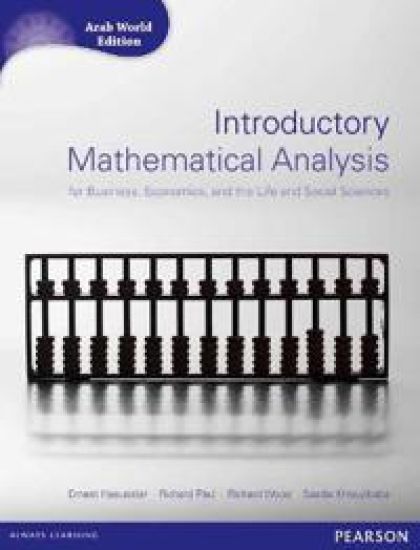
Available in Summer 2012, the Arab World Edition of Haeussler’s Introductory Mathematical Analysis, adapted by Khouyibaba, has specially customized content to align with core mathematics modules being taught across the Arab world. The book’s focused content is an excellent fit with lecturers’ teaching needs in the region. This textbook is set to become an essential tool for lecturers and students studying mathematics in the Arab world.
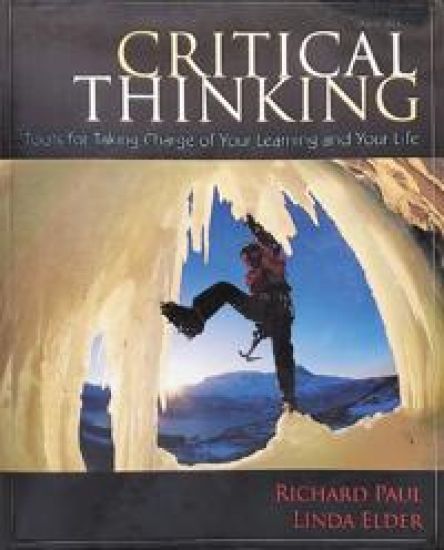
Written by two of the leading experts in the field, this introductory text presents critical thinking as a process for taking charge of and responsibility for one’s thinking. Based in theory developed over the last 30 years, Richard Paul and Linda Elder's text focuses on an integrated, comprehensive concept of critical thinking that is both substantive and practical. It fosters the development of basic intellectual skills students need to think through content in any class, subject, or discipline, as well as through any problem or issue they face. Simply stated, this text offers students the intellectual tools students need for lifelong learning, and rational, conscientious living. Now available from Rowman & Littlefield, the third edition features streamlined chapters, Think for Yourself activities, and a complete glossary of critical thinking terms. The Foundation for Critical Thinking continually offers new supplementary resources on its website (www.CriticalThinking.org) and online critical thinking community.
Haeussler, Paul, and Wood establish a strong algebraic foundation that sets this text apart from other applied mathematics texts, paving the way for readers to solve real-world problems that use calculus. Emphasis on developing algebraic skills is extended to the exercises—including both drill problems and applications. The authors work through examples and explanations with a blend of rigor and accessibility. In addition, they have refined the flow, transitions, organization, and portioning of the content over many editions to optimize learning for readers. The table of contents covers a wide range of topics efficiently, enabling readers to gain a diverse understanding.
The quality of our lives is determined by the quality of our thinking. The quality of our thinking, in turn, is determined by the quality of our questions, for questions are the engine, the driving force behind thinking. Without questions, we have nothing to think about. Without essential questions, we often fail to focus our thinking on the significant and substantive. When we ask essential questions, we deal with what is necessary, relevant, and indispensable to a matter at hand. We recognize what is at the heart of the matter. Our thinking is grounded and disciplined. We are ready to learn. We are intellectually able to find our way about. To be successful in life, one needs to ask essential questions: essential questions when reading, writing, and speaking; when shopping, working, and parenting; when forming friendships, choosing life-partners, and interacting with the mass media and the Internet. Yet few people are masters of the art of asking essential questions. Most have never thought about why some questions are crucial and others peripheral. Essential questions are rarely studied in school. They are rarely modeled at home. Most people question according to their psychological associations. Their questions are haphazard and scattered. The ideas we provide are useful only to the extent that they are employed daily to ask essential questions. Practice in asking essential questions eventually leads to the habit of asking essential questions. But we can never practice asking essential questions if we have no conception of them. This mini-guide is a starting place for understanding concepts that, when applied, lead to essential questions. We introduce essential questions as indispensable intellectual tools. We focus on principles essential to formulating, analyzing, assessing, and settling primary questions. You will notice that our categories of question types are not exclusive. There is a great deal of overlap