Kirjojen hintavertailu. Mukana 12 595 353 kirjaa ja 12 kauppaa.

Kirjailija

Richard R John

Kirjat ja teokset yhdessä paikassa: 7 kirjaa, julkaisuja vuosilta 1998-2015, suosituimpien joukossa The American Postal Network, 1792–1914. Vertaile teosten hintoja ja tarkista saatavuus suomalaisista kirjakaupoista.

Mukana myös kirjoitusasut: Richard R. John

7 kirjaa

Kirjojen julkaisuhaarukka 1998-2015.

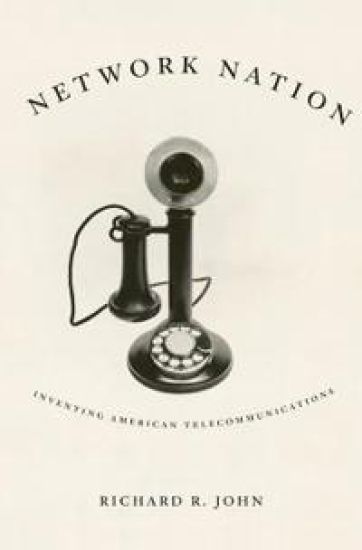
Network Nation

Network Nation

Richard R. John

The Belknap Press
2015
nidottu
The telegraph and the telephone were the first electrical communications networks to become hallmarks of modernity. Yet they were not initially expected to achieve universal accessibility. In this pioneering history of their evolution, Richard R. John demonstrates how access to these networks was determined not only by technological imperatives and economic incentives but also by political decision making at the federal, state, and municipal levels.In the decades between the Civil War and the First World War, Western Union and the Bell System emerged as the dominant providers for the telegraph and telephone. Both operated networks that were products not only of technology and economics but also of a distinctive political economy. Western Union arose in an antimonopolistic political economy that glorified equal rights and vilified special privilege. The Bell System flourished in a progressive political economy that idealized public utility and disparaged unnecessary waste.The popularization of the telegraph and the telephone was opposed by business lobbies that were intent on perpetuating specialty services. In fact, it wasn’t until 1900 that the civic ideal of mass access trumped the elitist ideal of exclusivity in shaping the commercialization of the telephone. The telegraph did not become widely accessible until 1910, sixty-five years after the first fee-for-service telegraph line opened in 1845.Network Nation places the history of telecommunications within the broader context of American politics, business, and discourse. This engrossing and provocative book persuades us of the critical role of political economy in the development of new technologies and their implementation.

The American Postal Network, 1792–1914

The American Postal Network, 1792–1914

Richard R John

Pickering Chatto (Publishers) Ltd
2012
muu
By covering both administrative and non-administrative aspects of the postal network, this four-volume reset edition shows how this system was part of a larger network which included different modes of transport and communication (steamboats, railroads, telegraphs) as well as political parties (the Democrats, Whigs and Republicans).
The American Postal Network, 1792–1914 Vol 2
By covering both administrative and non-administrative aspects of the postal network, this four-volume reset edition shows how this system was part of a larger network which included different modes of transport and communication (steamboats, railroads, telegraphs) as well as political parties (the Democrats, Whigs and Republicans).
The American Postal Network, 1792–1914 Vol 3
By covering both administrative and non-administrative aspects of the postal network, this four-volume reset edition shows how this system was part of a larger network which included different modes of transport and communication (steamboats, railroads, telegraphs) as well as political parties (the Democrats, Whigs and Republicans).
The American Postal Network, 1792–1914 Vol 1
By covering both administrative and non-administrative aspects of the postal network, this four-volume reset edition shows how this system was part of a larger network which included different modes of transport and communication (steamboats, railroads, telegraphs) as well as political parties (the Democrats, Whigs and Republicans).
The American Postal Network, 1792–1914 Vol 4
By covering both administrative and non-administrative aspects of the postal network, this four-volume reset edition shows how this system was part of a larger network which included different modes of transport and communication (steamboats, railroads, telegraphs) as well as political parties (the Democrats, Whigs and Republicans).
Spreading the News

Spreading the News

Richard R. John

Harvard University Press
1998
nidottu
In the seven decades from its establishment in 1775 to the commercialization of the electric telegraph in 1844, the American postal system spurred a communications revolution no less far-reaching than the subsequent revolutions associated with the telegraph, telephone, and computer. This book tells the story of that revolution and the challenge it posed for American business, politics, and cultural life.During the early republic, the postal system was widely hailed as one of the most important institutions of the day. No other institution had the capacity to transmit such a large volume of information on a regular basis over such an enormous geographical expanse. The stagecoaches and postriders who conveyed the mail were virtually synonymous with speed.In the United States, the unimpeded transmission of information has long been hailed as a positive good. In few other countries has informational mobility been such a cherished ideal. Richard John shows how postal policy can help explain this state of affairs. He discusses its influence on the development of such information-intensive institutions as the national market, the voluntary association, and the mass party. He traces its consequences for ordinary Americans, including women, blacks, and the poor. In a broader sense, he shows how the postal system worked to create a national society out of a loose union of confederated states. This exploration of the role of the postal system in American public life provides a fresh perspective not only on an important but neglected chapter in American history, but also on the origins of some of the most distinctive features of American life today.