

Kirjailija
Richard Robinson
Kirjat ja teokset yhdessä paikassa: 38 kirjaa, julkaisuja vuosilta 1963-2026, suosituimpien joukossa Kingdom Soldiers. Vertaile teosten hintoja ja tarkista saatavuus suomalaisista kirjakaupoista.
38 kirjaa
Kirjojen julkaisuhaarukka 1963-2026.

Helsinki: The History of a Nordic City
Henrik Meinander; Richard Robinson
Oxford University Press
2026
sidottu
Over 475 years, the Finnish capital has gone from a sleepy fishing village to a thriving Nordic metropolis, globally renowned for its architecture, design and quality of life. This intricate and expansive new history lays bare the perils--and occasional perks--of Helsinki's position on the Baltic Sea, sandwiched between East and West. In flowing prose and fascinating anecdotes, Henrik Meinander explores all corners of Helsinki's past, from trade and the Olympics to the color of everyday life. He narrates the city's survival through the rise and fall of two empires; its triumph as an independent capital in 1917; and how, since then, it has grown and flourished through language battles, Soviet air raids and Cold War compromises. More than most European capitals, Helsinki has spent centuries at the mercy of geopolitical twists and turns far beyond its control. This book is a timely reminder of how quickly such forces can alter a city's destiny--yet, ultimately, can be overcome.

Great Men Are Slain Here by L on Bloy is a biography of sorts on Ernest Hello. Originally published in AD 1895 (under the French title of Ici on assassine les grands hommes), it was meant to provide a necessary corrective to the "official" biography commissioned by Mme. Hello, after her husbandʼs passing.L on Bloy was not a fan of Mme. Hello (nor she of him), and he was even less a fan of her husbandʼs biography, in which she had a heavy hand. Great Men Are Slain Here is part biography (to set the record straight), part criticism (of how Mme. Hello treated her husband, his friend, in life and death), and part satire. To tell the virtues of the family, of multiple families, the first phrases of the sublime child, the memorable expressions of papas and mamas, the angelic passions of the young man, his marriage plans, the ineffable purity of soul of the fianc s and their union under the watching eyes of seraphim; - things that should have remained in proud obscurity; - to go on and on, finally, about Madame Hello, the divine Mama Zo , in so many pages, great God ... And all that, from beginning to end, in that rheumy form, runny and cold like scrofula, which characterizes the prospectuses of shirtmakers for clergymen or the sacrilegious instructions of propagation excogitated by some libidinous soutanes.... The biographer] strikes a dithyrambic match across his backside and declares to us, among other things, that "Hello, if read and understood, would illuminate the modern mind," that "his glory, which is that of God, would have been the good fortune of a century." In passing, he compares him to the Sun...

The Ungrateful Beggar (The Authorʼs Journal, 1892-1895), published in 1898, is the first in the Ungrateful Beggar series (or "The Journal") by L on Bloy.Edited for publication by the author, it is a day-by-day account of interactions with friends, artists, wife, children, publishers, landlords, and such events as his hiring on with (and getting sacked from) the Gil Blas, his writing for the Mercure de France, the death of his two boys...; it includes his innermost thoughts, fears, torments, joys, - always in the context of a miserable poverty, and a never-dying Catholic faith, where "all that happens in life is adorable."Artists interacted with in this period include Henry de Groux, mile Zola, Fran ois Copp e, Remy de Gourmont, Laurent Tailhade, Auguste Rodin, Paul Bourget, Charles Buet, Georges dʼEsparb s. Works that the author wrote and published during this period include: Salvation Through the Jews, Sueur de Sang Sweating Blood], Histoires d sobligeantes Disagreeable Tales], L on Bloy devant les cochons L on Bloy Before the Swine], Ici on assassine les grands hommes Great Men Are Slain Here].

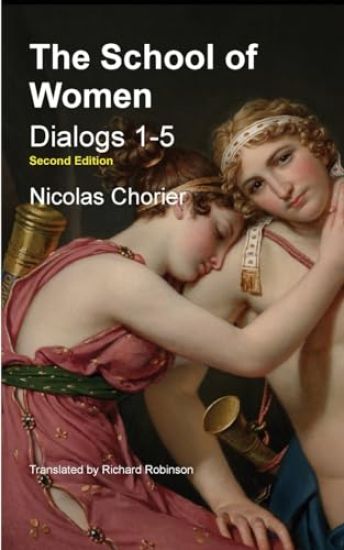
The School of Women, by Nicolas Chorier (AD 1612-1692), is an erotic novel written and published in the mid to late 17th century France. It has a convoluted history, much of it made up: Luisa Sigea, a female Spanish poet, had purportedly written the original in Spanish (Sotadic Satire on the Mysteries of Love and Venus); later Johannes Meursius, a Dutch classicist, purportedly translated it into Latin (Eleganti Latini Sermonis...). From there, it made its way into French and then English, multiple times.This translation in English, from the French, contains the first 5 of 7 dialogs between two young women protagonists, Tullie and her younger companion, Octavie. The plot is simple: Tullie, the more experienced of the two women, has been asked by Octavieʼs mother to instruct her daughter on how best to satisfy her future husband in bed. Unsurprisingly, the dialogs themselves take place in bed. Itʼs a coming of age story of sorts for Octavie, and a paean to tribadism as well as to the heterosexual love between a man and his wife.Very graphic in nature, - if written today, it might have had a subtitle of "How to please your man in bed, while practicing on a woman." Highly erotic - it is definitely not a book for children, and may not be a book for some adults even.
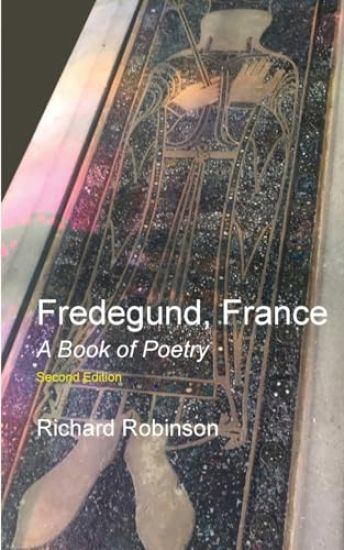
Fredegund, France is the second book of poetry written by American poet Richard Robinson. The poetry is both modern and not so modern. The theme is France, but a different kind of France than what one might visit today, or yesterday even. Itʼs a France in the mind. Or itʼs a place where France and the mind cross. In his own words, in the preface, the author says: "What can I say, France is to me like a woman, the one that got away maybe, or a vintage bottle of wine that one drank once and could never find again. She is to me what Woman is to Villiers de lʼIsle-Adam]..." As for Villiersʼ concept of Woman, L on Bloy describes it as follows: It has nothing to do with a pleading, with a dithyrambic paranymph, with such and such fawning praise for the dangerous Sex. It has to do with a renewal of earthly Paradise, after the harsh winter of six thousand years. It has to do with rediscovering that famous Garden of Voluptuousness, symbol and accomplishment of Woman, which all men search gropingly for throughout the centuries. The Resurrection of Villiers...]That is what Fredegund, France is, and as the author says, it is "very banal."Here is an excerpt from the volume, the poem Laus Perennis: And gone are the days of gestes, and tonnesOf cider, or ambrosia, or fermented meadQuaffed between daybreak and 3, and the needFor damsels in forgotten towers to get undone, The Veleda, and the hordes of blonde leudes, Lying in "wait" in the Septentrion. And I, Like a Sigismund, foreseeing myself deadAt the bottom of a well, and hearing, Above the aqueous and glaucous swell, The stagnant echoes of a laus perennis -Not for me, not for me, not for me...

Ourigan, Oregon is a collection of poems, divided into two distinct groups, distinct in terms of time and temperament, but also wildly different in style, influence, and purpose. They were written by two different authors over two hundred years apart: William Clark of the Corps of Discovery, in 1804-1806, and an anonymous author, possibly posthumous, and seemingly from Portland, Oregon, in the years 2017-2019.Where the two meet is in the places and things found up and down and along either side of the Columbia River, the lifeblood of Oregon, from as far east as Dog River (modern-day Hood River) or even the Dalles, to the western shores of the U.S., where the Columbia River vomits sweet water into the brine of the "great Pacific Octean."To say that William Clark, of Lewis and Clark fame, wrote poetry in his journals sounds far-fetched: he wrote in a prose that is, however, highly poetic in places. These are the Ourigan poems, co-authored, or rather edited, by Richard Robinson. They are 95% pure Clark: misspellings, warts, poetry and all; and 5% Robinson: editing, meter, rhythm, and rhyme where it works.The anonymous poems - the Oregon poems - are written, seemingly, as recollections in tranquility by an author whose background and whereabouts are equally uncertain. The poems were written in the same places along the river that Clark visited. But their themes, although similar, are wildly different. There is, in addition, a very particular pinch of modernness to them, which some might call depravity.We leave it to the readers to judge for themselves whether this collection of poetry coheres, or abruptly falls apart and dies, like water over an edge, or like autumnal leaves dropping, one by one, into the river, as they quietly "mend their way south" and "keep far from the strand."
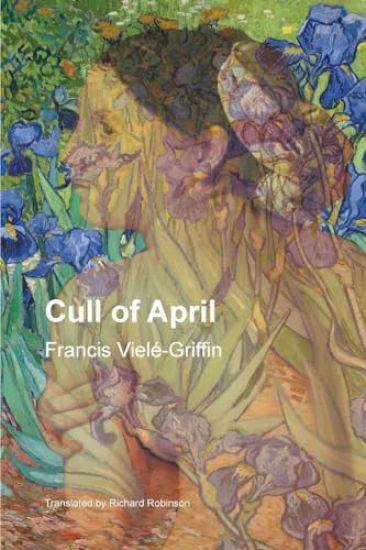
Cull of April (Cueille dʼavril in French) is the first book of poetry written by Francis Viel -Griffin (1864-1937). It was first published in 1885, when Griffin was 21 years old. Griffin was American by birth, born in Virginia. As a boy of seven or eight years old, he was sent to France to attend school; he remained.Cull of April is said to show influences of the Decadent school of poetry, which was in vogue at the time.Here is what mile Goudeau says about the Decadents, in his whoʼs who of Belle Epoque poets and artists, Ten Years a Bohemian: "The newcomers rallied around master Verlaine, or chief Mallarm , and from there come the Decadents (of which the Deliquescents are nothing but parodists), the Symbolists, and the Instrumentalists.... the word decadent implies, beyond affectation of style, a certain disorder fundamentally, a hybrid blend of old religions and refined mores; that was also what the decadents strived for; a particular sadism where Catholic incense is detected in loathsome places, and where the sanctuary has foul smells of face powder or even washbasin water."Perhaps he was right, hereʼs a line from "Euphonies," in Cull of April, which would seem to corroborate: I ramble on return from vain lassitudes, Have we not dreamt of other beatitudes?

Many 21st-century readers and appreciators of French author Paul Verlaine and his poetry will be delighted to learn of the discovery, in December 2004, of a "lost" manuscript by Paul Verlaine, entitled Cellulairement. Cellulely (or "Behind Bars") is the first known English translation to come out. It contains many poems later included in Sagesse, Parall lement, and Jadis et Nagu re.Cellulely is all the more striking and full of wonderment given the circumstances under which the poems in question were written (prison, religious conversion), and the notorious events leading up to those circumstances (Rimbaud, fog of absinthe, pistol). Famous events, and turning points, in the life of the poet.Readers of Cellulely will also be interested to know that these are some of the same poems that are referred to on several occasions in Verlaineʼs autobiographical work, My Prisons, also available in English translation by Sunny Lou Publishing. Lady mouse scampers, Black in the grey of evening, Lady mouse scampers Grey in the black of night. One sounds the bell, Sleep, good prisoners One sounds the bell: You must go to sleep.

A Silver-Grey Death (银灰色的死 in Chinese) and Drowning (沉沦), both by Yu Dafu (郁達夫), are short stories written and published in 1920 and 1921 respectively. Both tell the story of a young man, a Chinese national, living and studying in Japan in the early 20th century. Both are based (in part) on experiences in the authorʼs life.Yu Dafu is perhaps unique, among Chinese writers of the period, as an author of decadence - in the literary sense, and in ways that should interest (if not please) Western readers. In both stories are themes of loneliness, desire (for the opposite sex), frustration, heavy drinking, and (in at least one of the stories, if not both): death. Both are succinct in their descriptions and both are beautifully written, sometimes hauntingly so. The narratives move at a clip.Drowning is hands-down Yu Dafuʼs best-known work (in the West and in the East). It is the story of a young Chinese national who leaves his motherland, China, to study abroad in Japan. A loner by temperament, he soon finds himself "feeling pitifully lonely..." A self-styled poet, he recurs to nature, taking long walks in the countryside outside Nagoya. But dwelling frequently in nature and reading books all alone only go so far for a young man who regularly practices onanism in his room, immediately regrets it, fantasizes about his landlordʼs daughter, and is sexually attracted to just about every girl he meets. It is only a matter of time before he finds himself in a Japanese "tavern" where a young Geisha girl with bad breath serves him too much sake. You can imagine the rest, or you can read the story.
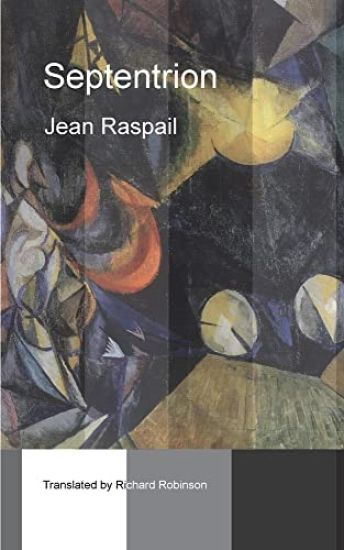
Septentrion by Jean Raspail is a dystopian novel set in the year 2041. Itʼs a story of beauty and sadness, a story of the ugly things that happen in the world, and the courage of an elect few who happen, against all odds, to hold a line, to preserve a culture, a civilization, a way of life that they love and embody, but which is on the verge of extinction, assaulted. The enemy: the demos, the grey masses, todayʼs people. Unwilling to compromise, and unlikely to succeed, they flee - north, the only place left to escape to - on a train, through the dark forests and the snow-clad steppes of Septentrion."The signs were accumulating, all across the north of the country, far from the capital and its golden steeples, without our noticing their exact consequences. Vaguely we understood how, without really knowing why. Everything happened so quickly... We understood barely that a sort of different eternity was advancing rapidly, in an inform and inexorable way. Nothing would be the same, nothing would ever change again, once it happened.""One cannot be a man, fully, from the moment one admits that others exist. For one is no more than a copy, a vague facsimile drawn from a billion examples. One mustnʼt know anything about others, or at least by ruthless choice, unless it is how to invent oneself on oneʼs own, - everything has been so repeated."

Understanding the Financial Industry Through Linguistics
Richard Robinson
Business Expert Press
2021
pokkari
This book is a user guide to financial services and understanding how the various parts need to interact in order to support a functional marketplace, and is an essential read for both seasoned professionals as well as being accessible to those new to the industry.The author presents a new and unique approach to broad industry issues, unparalleled in the area of data, standards and financial services. This book builds on the premise that the financial industry is highly complex and fragmented and the need to understand the financial industry, so vital to business, professional and individual investors, is best solved through an applied linguistics approach. That is, to break the barriers that exist between language and data with the aim to make it easier to understand how the financial industry and regulators operate for professional individual investors in order to be better served through their enhanced understanding of financial data.At first unconventional in the cross-disciplinary pairing of applied linguistics and data in financial services, it is practical and intuitive in pursuing solutions and outcomes. While focused on financial services, the approach could be leveraged for other industries that have similar challenges.
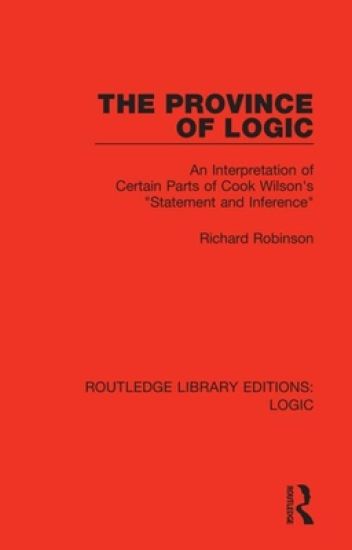
Originally published in 1931. This inquiry investigates and develops John Cook Wilson’s view of the province of logic. It bases the study on the posthumous collected papers Statement and Inference. The author seeks to answer questions on the nature of logic using Cook Wilson’s thought. The chapters introduce and consider topics from metaphysics to grammar and from psychology to knowledge. An early conception of logic in the sciences and presenting the work of an important twentieth century philosopher, this is an engaging work.
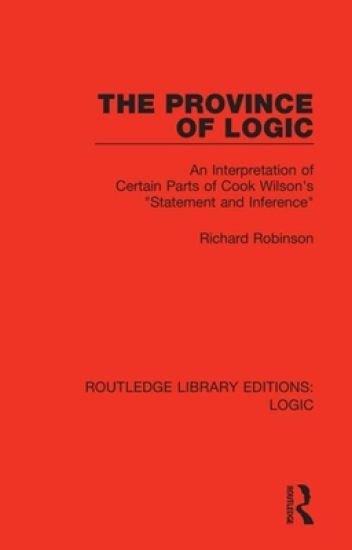
Originally published in 1931. This inquiry investigates and develops John Cook Wilson’s view of the province of logic. It bases the study on the posthumous collected papers Statement and Inference. The author seeks to answer questions on the nature of logic using Cook Wilson’s thought. The chapters introduce and consider topics from metaphysics to grammar and from psychology to knowledge. An early conception of logic in the sciences and presenting the work of an important twentieth century philosopher, this is an engaging work.
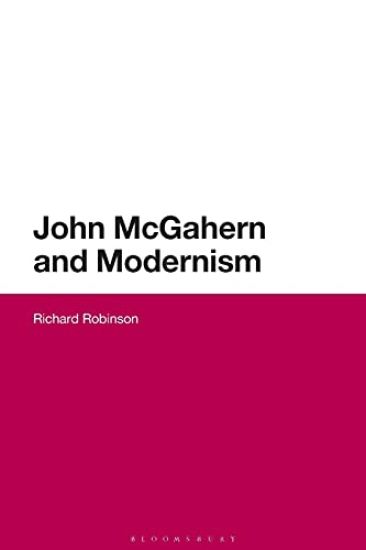
John McGahern’s work is not easily conceived of as belatedly modernist. His memorialising, faintly archaic style implies a concern with ‘making it old’ rather than new, suggesting the symptomatic diffidence of many who wrote in the wake of modernism. Nevertheless, McGahern’s statements about the ‘presence’ of words and the hard-won impersonality of the artwork point to a covert engagement with modernist aesthetics. Offering intertextual interpretations of McGahern’s six novels, and of thematically grouped short stories, Richard Robinson reads McGahern’s fiction alongside writing by Joyce, Proust, Yeats, Beckett, Nietzsche, Lawrence and Chekhov, amongst others. Drawing out the ways in which McGahern’s fiction conceals and reveals its modernist traces, this study considers subjects such as ‘low’ modernism, the complexity of McGahern’s time-writing and his dialectical construction of the relationship between cultural tradition and modernity in Ireland. McGahern’s narratives of melancholic return are often read psycho-biographically, but they also involve a return to the remnants of literature, including that of the modernist canon. This book will be of interest not only to McGahern scholars but also to those who contemplate the compromised legacies of literary modernism in late-twentieth century and contemporary writing.
John McGahern’s work is not easily conceived of as belatedly modernist. His memorialising, faintly archaic style implies a concern with ‘making it old’ rather than new, suggesting the symptomatic diffidence of many who wrote in the wake of modernism. Nevertheless, McGahern’s statements about the ‘presence’ of words and the hard-won impersonality of the artwork point to a covert engagement with modernist aesthetics. Offering intertextual interpretations of McGahern’s six novels, and of thematically grouped short stories, Richard Robinson reads McGahern’s fiction alongside writing by Joyce, Proust, Yeats, Beckett, Nietzsche, Lawrence and Chekhov, amongst others. Drawing out the ways in which McGahern’s fiction conceals and reveals its modernist traces, this study considers subjects such as ‘low’ modernism, the complexity of McGahern’s time-writing and his dialectical construction of the relationship between cultural tradition and modernity in Ireland. McGahern’s narratives of melancholic return are often read psycho-biographically, but they also involve a return to the remnants of literature, including that of the modernist canon. This book will be of interest not only to McGahern scholars but also to those who contemplate the compromised legacies of literary modernism in late-twentieth century and contemporary writing.