Kirjojen hintavertailu. Mukana 12 390 323 kirjaa ja 12 kauppaa.

Kirjailija

Richard Rorty

Kirjat ja teokset yhdessä paikassa: 44 kirjaa, julkaisuja vuosilta 1982-2025, suosituimpien joukossa Filosoofia ja looduse peegel. Vertaile teosten hintoja ja tarkista saatavuus suomalaisista kirjakaupoista.

44 kirjaa

Kirjojen julkaisuhaarukka 1982-2025.

An Ethics for Today

An Ethics for Today

Richard Rorty; Jeffrey Robbins; G. Dann

Columbia University Press
2010
sidottu
Richard Rorty is famous, maybe even infamous, for his philosophical nonchalance. His groundbreaking work not only rejects all theories of truth but also dismisses modern epistemology and its preoccupation with knowledge and representation. At the same time, the celebrated pragmatist believed there could be no universally valid answers to moral questions, which led him to a complex view of religion rarely expressed in his writings. In this posthumous publication, Rorty, a strict secularist, finds in the pragmatic thought of John Dewey, John Stuart Mill, William James, and George Santayana, among others, a political imagination shared by religious traditions. His intent is not to promote belief over nonbelief or to blur the distinction between religious and public domains. Rorty seeks only to locate patterns of similarity and difference so an ethics of decency and a politics of solidarity can rise. He particularly responds to Pope Benedict XVI and his campaign against the relativist vision. Whether holding theologians, metaphysicians, or political ideologues to account, Rorty remains steadfast in his opposition to absolute uniformity and its exploitation of political strength.
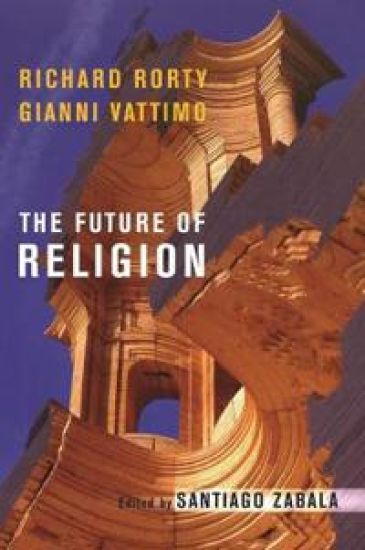
The Future of Religion

The Future of Religion

Richard Rorty; Gianni Vattimo

Columbia University Press
2007
pokkari
Though coming from different and distinct intellectual traditions, Richard Rorty and Gianni Vattimo are united in their criticism of the metaphysical tradition. The challenges they put forward extend beyond philosophy and entail a reconsideration of the foundations of belief in God and the religious life. They urge that the rejection of metaphysical truth does not necessitate the death of religion; instead it opens new ways of imagining what it is to be religious-ways that emphasize charity, solidarity, and irony. This unique collaboration, which includes a dialogue between the two philosophers, is notable not only for its fusion of pragmatism (Rorty) and hermeneutics (Vattimo) but also for its recognition of the limits of both traditional religious belief and modern secularism. In "Anticlericalism and Atheism" Rorty discusses Vattimo's work Belief and argues that the end of metaphysics paves the way for an anti-essentialist religion. Rorty's conception of religion, determined by private motives, is designed to produce the gospel's promise that henceforth God will not consider humanity as a servant but as a friend. In "The Age of Interpretation," Vattimo, who is both a devout Catholic and a frequent critic of the church, explores the surprising congruence between Christianity and hermeneutics in light of the dissolution of metaphysical truth. As in hermeneutics, interpretation is central to Christianity, which introduced the world to the principle of interiority, dissolving the experience of objective reality into "listening to and interpreting messages." The lively dialogue that concludes this volume, moderated and edited by Santiago Zabala, analyzes the future of religion together with the political, social, and historical aspects that characterize our contemporary postmodern, postmetaphysical, and post-Christian world.
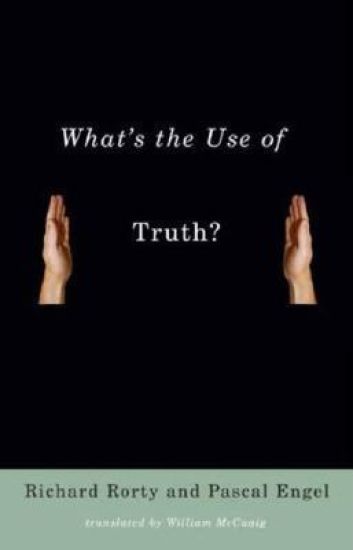
What's the Use of Truth?

What's the Use of Truth?

Richard Rorty; Pascal Engel

Columbia University Press
2007
sidottu
What is truth? What value should we see in or attribute to it? The war over the meaning and utility of truth is at the center of contemporary philosophical debate, and its arguments have rocked the foundations of philosophical practice. In this book, the American pragmatist Richard Rorty and the French analytic philosopher Pascal Engel present their radically different perspectives on truth and its correspondence to reality. Rorty doubts that the notion of truth can be of any practical use and points to the preconceptions that lie behind truth in both the intellectual and social spheres. Engel prefers a realist conception, defending the relevance and value of truth as a norm of belief and inquiry in both science and the public domain. Rorty finds more danger in using the notion of truth than in getting rid of it. Engel thinks it is important to hold on to the idea that truth is an accurate representation of reality. In Rorty's view, epistemology is an artificial construct meant to restore a function to philosophy usurped by the success of empirical science. Epistemology and ontology are false problems, and with their demise goes the Cartesian dualism of subject and object and the ancient problematic of appearance and reality. Conventional "philosophical problems," Rorty asserts, are just symptoms of the professionalism that has disfigured the discipline since the time of Kant. Engel, however, is by no means as complacent as Rorty in heralding the "end of truth," and he wages a fierce campaign against the "veriphobes" who deny its value. What's the Use of Truth? is a rare opportunity to experience each side of this impassioned debate clearly and concisely. It is a subject that has profound implications not only for philosophical inquiry but also for the future study of all aspects of our culture.
Philosophy as Cultural Politics

Philosophy as Cultural Politics

Richard Rorty

Cambridge University Press
2007
pokkari
This volume presents a selection of the philosophical papers which Richard Rorty has written over the past decade, and complements three previous volumes of his papers: Objectivity, Relativism, and Truth, Essays on Heidegger and Others and Truth and Progress. Topics discussed include the changing role of philosophy in Western culture over the course of recent centuries, the role of the imagination in intellectual and moral progress, the notion of 'moral identity', the Wittgensteinian claim that the problems of philosophy are linguistic in nature, the irrelevance of cognitive science to philosophy, and the mistaken idea that philosophers should find the 'place' of such things as consciousness and moral value in a world of physical particles. The papers form a rich and distinctive collection which will appeal to anyone with a serious interest in philosophy and its relation to culture.
Philosophy as Cultural Politics: Volume 4

Philosophy as Cultural Politics: Volume 4

Richard Rorty

Cambridge University Press
2007
sidottu
This volume presents a selection of the philosophical papers which Richard Rorty has written over the past decade, and complements three previous volumes of his papers: Objectivity, Relativism, and Truth, Essays on Heidegger and Others and Truth and Progress. Topics discussed include the changing role of philosophy in Western culture over the course of recent centuries, the role of the imagination in intellectual and moral progress, the notion of 'moral identity', the Wittgensteinian claim that the problems of philosophy are linguistic in nature, the irrelevance of cognitive science to philosophy, and the mistaken idea that philosophers should find the 'place' of such things as consciousness and moral value in a world of physical particles. The papers form a rich and distinctive collection which will appeal to anyone with a serious interest in philosophy and its relation to culture.
Religionens Fremtid

Religionens Fremtid

Richard Rorty; Gianni Vattimo

AARHUS UNIVERSITY PRESS
2007
nidottu
I dag opfatter mange mennesker sig som religiøse, uden at de dermed nødvendigvis tilslutter sig en bestemt relgion, Hvis man ønsker et indblik i den filosofiske og idehistoriske baggrund for dette, er Religionens fremtid og dens dialog mellem to af nutidens største filosoffer et godt sted at starte.Dette unikke samarbejde, som inkluderer to essays og en dialog, er ikke blot bemærkselsesværdigt på grund af dets fusion af pragmatismen (Rorty) og hermeneutikken (Vattimo), men også for dets anerkendelse af grænserne for både de traditionelle religioner og den moderne sekularisering.Den livlige dialog, som følger efter de to essays, analyserer religionens fremtid sammen med de politiske, sociale og historiske aspekter, som karakteriserer vores postmoderne, postmetafysiske og postkristen verden.Bogen afrundes med et kritisk efterord af idehistoriker Jens Viggo Nielsen, som også sætter bogens tema ind i en dansk filosofisk tradition.
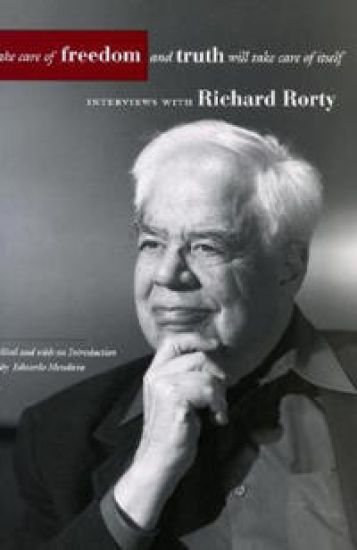
Take Care of Freedom and Truth Will Take Care of Itself

Take Care of Freedom and Truth Will Take Care of Itself

Richard Rorty

Stanford University Press
2005
pokkari
This volume collects a number of important and revealing interviews with Richard Rorty, spanning more than two decades of his public intellectual commentary, engagement, and criticism. In colloquial language, Rorty discusses the relevance and nonrelevance of philosophy to American political and public life. The collection also provides a candid set of insights into Rorty's political beliefs and his commitment to the labor and union traditions in this country. Finally, the interviews reveal Rorty to be a deeply engaged social thinker and observer.
The Future of Religion

The Future of Religion

Richard Rorty; Gianni Vattimo

Columbia University Press
2005
sidottu
Though coming from different and distinct intellectual traditions, Richard Rorty and Gianni Vattimo are united in their criticism of the metaphysical tradition. The challenges they put forward extend beyond philosophy and entail a reconsideration of the foundations of belief in God and the religious life. They urge that the rejection of metaphysical truth does not necessitate the death of religion; instead it opens new ways of imagining what it is to be religious-ways that emphasize charity, solidarity, and irony. This unique collaboration, which includes a dialogue between the two philosophers, is notable not only for its fusion of pragmatism (Rorty) and hermeneutics (Vattimo) but also for its recognition of the limits of both traditional religious belief and modern secularism. In "Anticlericalism and Atheism" Rorty discusses Vattimo's work Belief and argues that the end of metaphysics paves the way for an anti-essentialist religion. Rorty's conception of religion, determined by private motives, is designed to produce the gospel's promise that henceforth God will not consider humanity as a servant but as a friend. In "The Age of Interpretation," Vattimo, who is both a devout Catholic and a frequent critic of the church, explores the surprising congruence between Christianity and hermeneutics in light of the dissolution of metaphysical truth. As in hermeneutics, interpretation is central to Christianity, which introduced the world to the principle of interiority, dissolving the experience of objective reality into "listening to and interpreting messages." The lively dialogue that concludes this volume, moderated and edited by Santiago Zabala, analyzes the future of religion together with the political, social, and historical aspects that characterize our contemporary postmodern, postmetaphysical, and post-Christian world.
Striden om sanningen

Striden om sanningen

Karl-Otto Apel; Albrecht Wellmer; Jurgen Habermas; Richard Rorty

Bokförlaget Daidalos
2004
nidottu
Från de gamla grekerna till idag har filosofer ihärdigt diskuterat hur begreppet »sanning» skall förstås. Denna antologi består av bidrag till en pågående debatt med fokus på förhållandet mellan sanning och rättfärdigande. Bidragsgivare är Richard Rorty, Jürgen Habermas, Albrecht Wellmer och Karl-Otto Apel. Debatten dem emellan om sanningsbegreppet är samtidigt en diskussion om förhållandet mellan pragmatism och pragmatisk språkteori. När vi har goda skäl att hävda ett påstående ligger det nära till hands att säga att vi med fog kan hävda att påståendet är sant. Men samtidigt är det så att det vi vid en bestämd tidpunkt anser vara ett gott skäl senare kan visa sig vara ofullständigt eller felaktigt. Motiveringar är knutna till tid, plats och personer. De är därmed i princip felbara och korrigerbara: Rättfärdiganden kan så att säga gå förlorade. Sanningen, däremot, är inte beroende av tid och plats och av de bestämda personer som hävdar att ett påstående är sant. I denna mening är sanningen »absolut» (den kan inte »gå förlorad»). Men hur skall man då förstå förhållandet mellan sanning och rättfärdigande (motivering)? Hur skulle vi kunna acceptera något som sant annat än genom diskussion och prövning av skäl? Och hur skulle principiellt felbara och kontextuella skäl kunna leda fram till sanning? I en utförlig inledning presenterar och kommenterar Gunnar Skirbekk debatten. Skirbekk är professor i filosofi och vetenskapsteori vid universitetet i Bergen. Hans senaste bok är Praxeologie der Moderne. Universalität und Kontextualität der diskursiven Vernunft. Daidalos har utgivit hans tillsammans med Nils Gilje författade Filosofins historia.
Hopp i stället för kunskap : tre föreläsningar om pragmatism
Richard Rorty är en av samtidens mest omdiskuterade filosofer. I denna lilla bok, bestående av tre föreläsningar, ger han en tillgänglig och elegant presentation av sin version av pragmatismen. Ur författarens förord: Titeln »Hopp i stället för kunskap» är ett sätt att ange att Platon och Aristoteles hade fel i sin uppfattning att människans mest utmärkande och berömvärda egenskap är att ha kunskap om tingen som de verkligen är ? att kunna tränga bakom skenet för att nå verkligheten. Detta påstående belastar oss med den olycksaliga distinktionen sken ? verklighet och med metafysiken: en distinktion och en disciplin som pragmatismen visar hur vi ska klara oss utan. Jag vill degradera sökandet efter kunskap från ett mål i sig till ytterligare ett medel för strävan efter mänsklig lycka. Min kandidat till den mest utmärkande och berömvärda mänskliga egenskapen är vår förmåga att förlita oss på och att samarbeta med andra människor och särskilt att arbeta tillsammans för att göra framtiden bättre. Under gynnsamma omständigheter kulminerar vårt bruk av denna egenskap i utopiska politiska projekt, såsom Platons idealstat, kristna försök att förverkliga Guds rike här på jorden och Marx vision av proletariatets seger. Dessa projekt har som mål att förbättra våra institutioner så att våra avkomlingar kommer att kunna förlita sig på varandra och samarbeta ännu bättre och bli mer anständiga människor än vi själva har lyckats vara. Det rimligaste projektet av det slaget i vårt århundrade har varit att skapa en social demokrati, det vill säga ett klasslöst, kastlöst och jämlikt samhälle. Richard Rorty är född 1931. Han har varit professor i filosofi vid Princeton, senare vid University of Virginia och är idag professor i Comparative Litterature vid Stanford.
A Pragmatist's Progress?

A Pragmatist's Progress?

Richard Rorty

Rowman Littlefield
2000
nidottu
In this volume, a host of distinguished scholars examine Richard Rorty's influence on twentieth-century American pragmatism and its commitment to achieving social democracy. Rorty's reclaiming of the pragmatist tradition and his contribution to the discipline of intellectual history are highlighted; at the same time, each essay finds Rorty's pragmatism (most fully enunciated in Contingency, Irony, and Solidarity) lacking in its privatist vision of the good life. This criticism is drawn out through explicit comparisons between Rorty and his grandfather Walter Rauschenbusch, William James, John Dewey, Randolph Bourne, Richard J. Bernstein, and other twentieth century pragmatist thinkers. This volume offers the most complete historical treatment of this controversial intellectual to date.
Achieving Our Country

Achieving Our Country

Richard Rorty

Harvard University Press
1999
nidottu
Must the sins of America's past poison its hope for the future? Lately the American Left, withdrawing into the ivied halls of academe to rue the nation's shame, has answered yes in both word and deed. In Achieving Our Country, one of America's foremost philosophers challenges this lost generation of the Left to understand the role it might play in the great tradition of democratic intellectual labor that started with writers like Walt Whitman and John Dewey.How have national pride and American patriotism come to seem an endorsement of atrocities--from slavery to the slaughter of Native Americans, from the rape of ancient forests to the Vietnam War? Achieving Our Country traces the sources of this debilitating mentality of shame in the Left, as well as the harm it does to its proponents and to the country. At the center of this history is the conflict between the Old Left and the New that arose during the Vietnam War era. Richard Rorty describes how the paradoxical victory of the antiwar movement, ushering in the Nixon years, encouraged a disillusioned generation of intellectuals to pursue "High Theory" at the expense of considering the place of ideas in our common life. In this turn to theory, Rorty sees a retreat from the secularism and pragmatism championed by Dewey and Whitman, and he decries the tendency of the heirs of the New Left to theorize about the United States from a distance instead of participating in the civic work of shaping our national future.In the absence of a vibrant, active Left, the views of intellectuals on the American Right have come to dominate the public sphere. This galvanizing book, adapted from Rorty's Massey Lectures of 1997, takes the first step toward redressing the imbalance in American cultural life by rallying those on the Left to the civic engagement and inspiration needed for "achieving our country."
Philosophy and Social Hope

Philosophy and Social Hope

Richard Rorty

Penguin Books Ltd
1999
pokkari
Richard Rorty is one of the most provocative figures in recent philosophical, literary and cultural debate. This collection brings together those of his writings aimed at a wider audience, many published in book form for the first time. In these eloquent essays, articles and lectures, Rorty gives a stimulating summary of his central philosophical beliefs and how they relate to his political hopes; he also offers some challenging insights into contemporary America, justice, education and love.
Truth and Progress

Truth and Progress

Richard Rorty

Cambridge University Press
1998
pokkari
This volume complements two highly successful previously published volumes of Richard Rorty’s philosophical papers: Objectivity, Relativism, and Truth, and Essays on Heidegger and Others. The essays in the volume engage with the work of many of today’s most innovative thinkers including Robert Brandom, Donald Davidson, Daniel Dennett, Jacques Derrida, Jürgen Habermas, John McDowell, Hilary Putnam, John Searle, and Charles Taylor. The collection also touches on problems in contemporary feminism raised by Annette Baier, Marilyn Frye, and Catherine MacKinnon, and considers issues connected with human rights and cultural differences. Anyone with a serious interest in contemporary philosophy and what it can do for us in the modern world will enjoy this invaluable collection.
Deconstruction and Pragmatism

Deconstruction and Pragmatism

Simon Critchley; Jacques Derrida; Ernesto Laclau; Richard Rorty

Routledge
1996
sidottu
Deconstruction and pragmatism constitute two of the major intellectual influences on the contemporary theoretical scene; influences personified in the work of Jacques Derrida and Richard Rorty. Both Rortian pragmatism, which draws the consequences of post-war developments in Anglo-American philosophy, and Derridian deconstruction, which extends and troubles the phonomenological and Heideggerian influence on the Continental tradition, have hitherto generally been viewed as mutually exclusive philosophical language games.The purpose of this volume is to bring deconstruction and pragmatism into critical confrontation with one another through staging a debate between Derrida and Rorty, itself based on discussions that took place at the College International de Philosophie in Paris in 1993. The ground for this debate is layed out in introductory papers by Simon Critchley and Ernesto Laclau, and the remainder of the volume records Derrida's and Rorty's responses to each other's work. Chantal Mouffe gives an overview of the stakes of this debate in a helpful preface.