Kirjojen hintavertailu. Mukana 12 381 878 kirjaa ja 12 kauppaa.

Kirjailija

Richard Rose

Kirjat ja teokset yhdessä paikassa: 70 kirjaa, julkaisuja vuosilta 1974-2025, suosituimpien joukossa The Child's Own Story. Vertaile teosten hintoja ja tarkista saatavuus suomalaisista kirjakaupoista.

70 kirjaa

Kirjojen julkaisuhaarukka 1974-2025.

Democracy and its Alternatives

Democracy and its Alternatives

Richard Rose; William Mishler; Christian Haerpfer

Polity Press
1998
sidottu
The collapse of communism has created the opportunity for democracy to spread from Prague to the Baltic and the Black seas. But the alternatives - dictatorship or totalitarian rule - are more in keeping with the traditions of Central and Eastern Europe. Will people put up with new democracies which are associated with inflation, unemployment, crime and corruption? Or will they return to some form of authoritarian regime? Half a century ago, Winston Churchill predicted that people will accept democracy with all its faults - because it is better than anything else that has ever been tried. To find out if Churchill was right, this book analyses a unique source of evidence about public opinion, the New Democracies Barometer, covering the Czech Republic, Hungary, Slovakia, Poland, Slovenia, Bulgaria, Romania, Belarus and Ukraine. The authors find that there is widespread popular support for democracy compared to communism, dictatorship and military rule. People who have been denied democratic freedoms value new political rights more highly. Economic concerns are second in importance. If democracy fails, it will be because political elites have abused their power, not because the public does not want democracy. Looking at post-communist Europe makes us think again about democracy in countries where it is taken for granted. The abrupt transition to democracy in post-communist countries is normal; gradual evolution in the Anglo-American style is the exception to the rule. Complaints in Western countries about democracy being less than ideal reflect confidence that there is no alternative. Post-communist citizens do not have this luxury: they must make the most of what they have. This important book makes an important contribution to current debates about democratization and democratic theory and to the growing literature on the social and political changes taking place in post-communist societies. It will be of particular interest to students and scholars in politics and sociology.
Democracy and its Alternatives

Democracy and its Alternatives

Richard Rose; William Mishler; Christian Haerpfer

Polity Press
1998
nidottu
The collapse of communism has created the opportunity for democracy to spread from Prague to the Baltic and the Black seas. But the alternatives - dictatorship or totalitarian rule - are more in keeping with the traditions of Central and Eastern Europe. Will people put up with new democracies which are associated with inflation, unemployment, crime and corruption? Or will they return to some form of authoritarian regime? Half a century ago, Winston Churchill predicted that people will accept democracy with all its faults - because it is better than anything else that has ever been tried. To find out if Churchill was right, this book analyses a unique source of evidence about public opinion, the New Democracies Barometer, covering the Czech Republic, Hungary, Slovakia, Poland, Slovenia, Bulgaria, Romania, Belarus and Ukraine. The authors find that there is widespread popular support for democracy compared to communism, dictatorship and military rule. People who have been denied democratic freedoms value new political rights more highly. Economic concerns are second in importance. If democracy fails, it will be because political elites have abused their power, not because the public does not want democracy. Looking at post-communist Europe makes us think again about democracy in countries where it is taken for granted. The abrupt transition to democracy in post-communist countries is normal; gradual evolution in the Anglo-American style is the exception to the rule. Complaints in Western countries about democracy being less than ideal reflect confidence that there is no alternative. Post-communist citizens do not have this luxury: they must make the most of what they have. This important book makes an important contribution to current debates about democratization and democratic theory and to the growing literature on the social and political changes taking place in post-communist societies. It will be of particular interest to students and scholars in politics and sociology.
Lesson-drawing in Public Policy

Lesson-drawing in Public Policy

Richard Rose

CQ Press
1993
nidottu
Lesson-drawing in Public Policy introduces readers to a novel way of thinking about the familiar problems of public policy. It sets out the crucial questions that must be asked in order to draw logical and empirically sound conclusions from observing experiences in the past, or in other places.
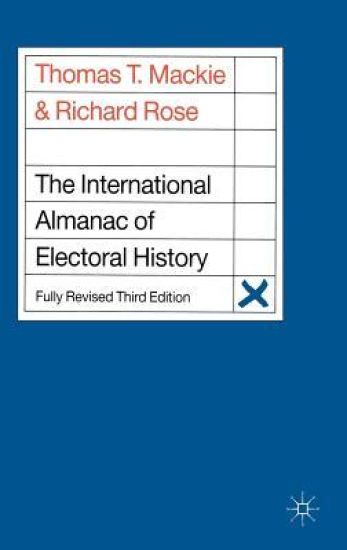
The International Almanac of Electoral History

The International Almanac of Electoral History

Thomas T. Mackie; Richard Rose

Palgrave Macmillan
1990
sidottu
The International Almanac is the only up to date source for the history of election results in the Western world from their origins to the present. It provides clear and authoritative information for 25 different countries, ranging alphabetically from Australia to the USA, and geographically across four continents, including Japan and new Mediterranean democracies as well as old Anglo-American and Scandinavian democracies. Each chapter gives a comprehensive list of all parties that have contested one or more elections, its vote at each election and percentage share of the poll, and the number of seats won in the national assembly. The results have been checked from original sources in more than 15 languages. The new edition of the Almanac brings election results up to date and incorporates fresh materials from historical research, while retaining the features that have made the volume the authoritative book on elections.
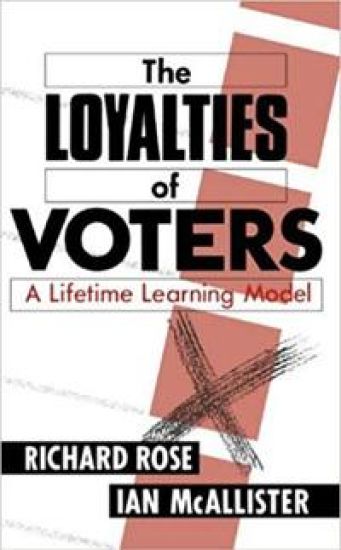
The Loyalties of Voters

The Loyalties of Voters

Richard Rose; Ian McAllister

SAGE Publications Ltd
1990
nidottu
What determines the loyalties of voters? The factors identified by social scientists range from a politician's last-minute television appeal to the social class of the voter's parents. But which of the many influences are most important electorally? For the first time The Loyalties of Voters offers a convincing answer, firmly based on an analysis of three decades of electoral behaviour.