Kirjojen hintavertailu. Mukana 12 595 353 kirjaa ja 12 kauppaa.

Kirjailija

Richard Shiff

Kirjat ja teokset yhdessä paikassa: 12 kirjaa, julkaisuja vuosilta 1986-2024, suosituimpien joukossa Jack Whitten: Cosmic Soul. Vertaile teosten hintoja ja tarkista saatavuus suomalaisista kirjakaupoista.

12 kirjaa

Kirjojen julkaisuhaarukka 1986-2024.

Tobias Pils: Drawings

Tobias Pils: Drawings

Richard Shiff; Tobias Pils

DCV
2024
sidottu
Zeichnungen/Drawings is the first book dedicated exclusively to the painter Tobias Pils's (b. Linz, 1971; lives and works in Vienna) drawings. His graphical forms-- the lines, figurations, even the intervening spaces-- constantly change the direction in which they set out. Their ambivalence destabilizes any attempt at interpretation. One would think that the indeterminacy of Pils's visual idiom must torment him, yet in fact this state of existential tension fills him with absurd pleasure. Rather than conceiving his works with a clear objective in mind, he allows himself to fall into them. He-- his art-- remains open to everything that happens in the creative process. Taken together, Pils's drawings operate along the diffuse boundary between order and disorder, as though, acknowledging the disordered present (the life we lead), they came from an ordered past (the life we have constructed for ourselves).
Writing after Art

Writing after Art

Richard Shiff

David Zwirner
2023
nidottu
In his engaging and penetrating observations of major modern and contemporary visual art, Shiff has written about an impressive range of artists, including Willem de Kooning, Marlene Dumas, Jasper Johns, Donald Judd, Barnett Newman, Pablo Picasso, Bridget Riley, and Peter Saul. A leading scholar and powerful voice, Shiff’s insight into prominent artistic practices spans generation, place, and approach, as seen in this considered selection of essays on twenty-seven artists. These writings first appeared in exhibition catalogues for institutions including the Centre Georges Pompidou, the Solomon R. Guggenheim Museum, The Museum of Modern Art, and Tate Modern. Shiff supplements his unquestionable fluency in art history with insights cultivated from his readings in philosophy, phenomenology, literary theory, and psychoanalysis, among other fields. Shiff’s writing—conceptually rich, meditative, and enjoyable to read—is attuned to the nuances of artistic style and technique, drawing out art’s social implications not merely from broad histories but also directly from artists’ mark making and technical gestures. Actively engaged as a viewer and a writer, Shiff has transformed the act of looking at art into contemplative and captivating writing. Writing After Art includes essays on Georg Baselitz, Mark Bradford, Georges Braque, Jim Campbell, Chuck Close, Willem de Kooning, Peter Doig, Marlene Dumas, Dan Flavin, Suzan Frecon, Lucian Freud, Ellen Gallagher, Jasper Johns, Donald Judd, Ellsworth Kelly, Brice Marden, Julie Mehretu, Barnett Newman, Pablo Picasso, Bridget Riley, Peter Saul, Richard Serra, Joel Shapiro, Richard Tuttle, Cy Twombly, Jack Whitten, and Zeng Fanzhi.
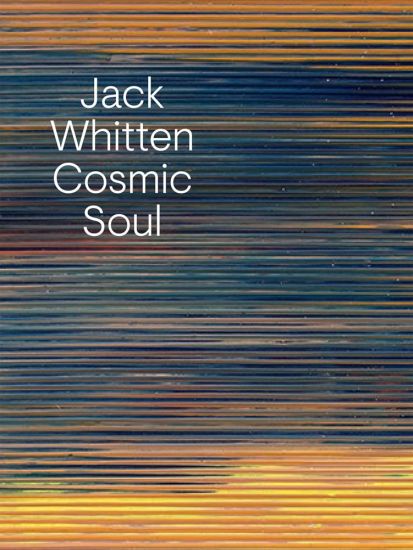
Jack Whitten: Cosmic Soul

Jack Whitten: Cosmic Soul

Richard Shiff

Hauser Wirth
2022
nidottu
A multifaceted, critical interpretation of celebrated American artist Jack Whitten's art and thinking over six decades, informed by the artist's extensive writings and personal conversations with the author. This comprehensive monograph, authored by art historian Richard Shiff, offers a multifaceted and critical interpretation of Jack Whitten’s art-making and philosophy of life. Informed both by Whitten’s extensive writings and his personal conversations with the author, Cosmic Soul offers a close reading of the artist’s outlook. Vividly illustrated and ranging freely through the course of the artist’s remarkable six-decade career, Shiff’s text illuminates the distinctive character of Whitten’s thought and the art it generated.
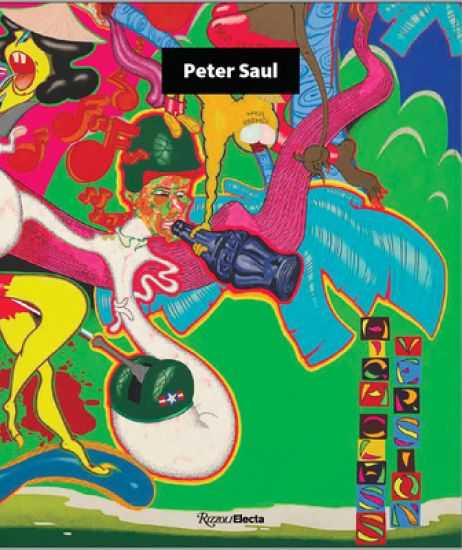
Peter Saul

Peter Saul

Richard Shiff; Annabelle Ténèze

Rizzoli International Publications
2021
sidottu
A Pop Art predecessor, Peter Saul is known for his luridly coloured, contrarian depictions of popular culture and political history. In the 1950s and 60s, reacting against Abstract Expressionism s seriousness and influenced by Surrealist Roberto Matta, Saul began to paint everyday objects like iceboxes, steaks, and toilets in bright colours, along with political works like his series of graphic, cartoonish Vietnam paintings (1960s), which, though they had no clear moral message or political agenda, were evidently anti Vietnam War. Jumbling references like Mickey Mouse, Ethel Rosenberg, and Willem de Kooning, his work also includes darkly humorous self-portraits. His work is often compared to the riotous palettes and caustic wit of artists such as Robert Colescott, Raymond Pettibon, and R. Crumb. The book includes several contributions: Richard Shiff, renowned art historian, writes about the work from a more formalist and historical perspective; Annabelle Teneze provides a substantive essay on every period of the artist s long career; and critic Bruce Hainley addresses the satirical aspect of the artist s work.
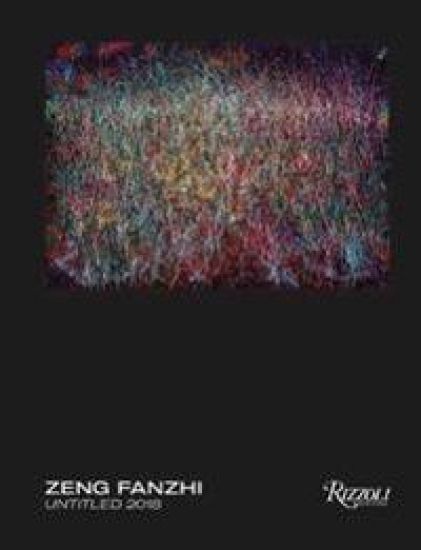
Zeng Fanzhi Untitled

Zeng Fanzhi Untitled

Zeng Fazhi; Richard Shiff

Mondadori Electa
2020
sidottu
This unique book illustrates the complete painting process and development behind a singular work, Zeng Fanzhi's Untitled (2018). Part of the Abstract Landscape series, it was acquired in the permanent collection of the Los Angeles County Museum of Art (LACMA). The volume provides a comprehensive eighteen-year overview of Zeng's painting practices in abstraction, pinpointing the latest changes within the series in particular. It features more than 180 high-resolution images of the painting process, starting from a plain canvas fabric, to the application of layers of paint, down to the meticulous intermingling and layering of different color palettes and strokes, ending in a complex pictorial presentation. As such, it offers the reader an intimate glimpse into how Zeng's abstract art is gradually developed, as if one were in the artist's studio. It presents primary, never-before-seen materials that form an overview of the artist's intriguing painting practice. The book includes essays by Michael Govan and researchers from LACMA, as well as a contribution from Dr. Richard Shiff, who has been researching and analyzing the artist for nearly a decade.
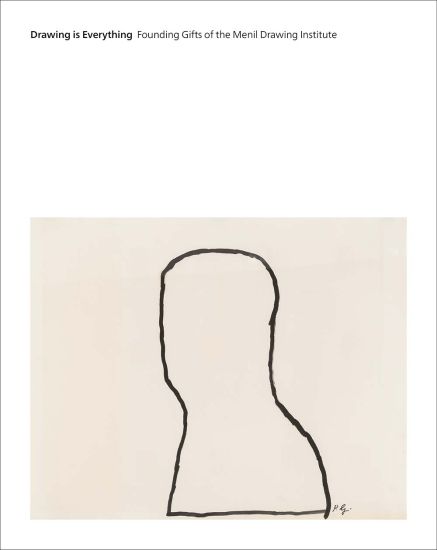
Drawing Is Everything

Drawing Is Everything

Edouard Kopp; John Elderfield; Richard Shiff; Terry Winters

Yale University Press
2020
sidottu
A celebration of the stunning collection of artworks donated in honor of the creation of The Menil Drawing Institute Featuring outstanding 20th-century drawings promised or bequeathed to the Menil Collection for the opening of the Menil Drawing Institute, this elegant volume is a testament to the growing significance of drawings as stand-alone artworks over the past century. The drawings come from the private collections of well-known connoisseurs Janie C. Lee, Louisa Stude Sarofim, and David Whitney, and include works by artists such as Bruce Nauman, Willem de Kooning, Jasper Johns, Eva Hesse, Georgia O’Keeffe, and Jackson Pollock. Its chief curator Edouard Kopp profiles the Drawing Institute’s nature and scope, and noted scholars John Elderfield and Richard Shiff discuss historical aspects of drawing, while Terry Winters muses from an artist’s viewpoint.Distributed for the Menil Collection
Joel Shapiro

Joel Shapiro

Richard Shiff

Scheidegger und Spiess AG, Verlag
2019
sidottu
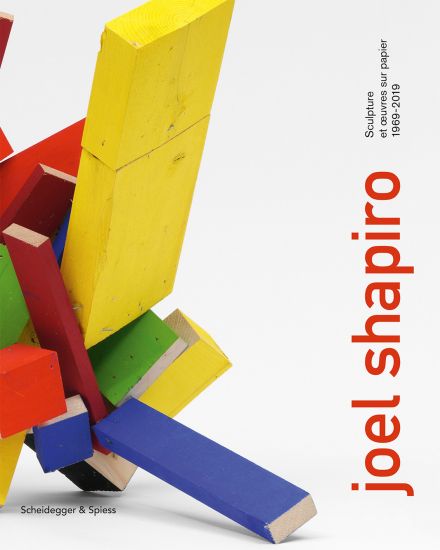
Born in New York in 1941, Joel Shapiro is one of the most significant artists of his generation. Since the first public showing of his work in 1969 as part of the landmark Anti-Illusion: Procedures/Materials exhibiton at the Whitney Museum of American Art, he has been the subject of numerous solo exhibitions in galleries and museums around the world. Most renowned for having developed in the 1980s and '90s a distinctive language of dynamic sculpture that blurs the lines between abstraction and figuration, Shapiro became known through his earliest 1970s New York shows for introducing common forms of often diminutive size. Since then he has continued to push the material and conceptual boundaries of sculpture by working in a number of materials and employing various working methods. Joel Shapiro: Sculpture and Works on Paper 1969-2019 is the first book in over twenty years to survey the artist's entire working career. In an extensive essay, art historian Richard Shiff provides a fresh and incisive examination of Shapiro's oeuvre and working process. With more than two hundred striking full-colour illustrations, this is a long-anticipated and much-needed survey of this vital and essential American artist.
Waltercio Caldas

Waltercio Caldas

Waltercio Caldas; Gabriel Pérez-Barreiro; Richard Shiff; Robert Storr

University of Texas Press
2013
sidottu
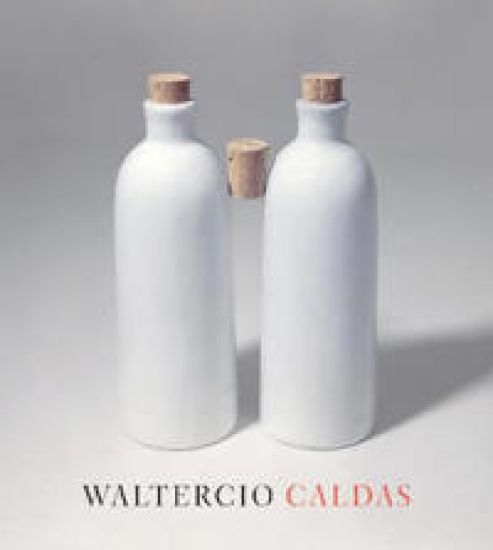
Often simple in composition, the art of Waltercio Caldas invites a host of complex questions about perception and space. Caldas challenges not only the way we look at his objects in the moment, but also our perspectives on art more generally. For decades he has been a central figure in Brazilian art. While his influence extends across much of the art world, he has remained largely underrecognized in the United States. To make this exceptional artist more widely known to the U.S. audience, the Blanton Museum of Art at the University of Texas at Austin and the Fundação Iberê Camargo, a premier art organization in Porto Alegre, Brazil, have organized the exhibition The Nearest Air: A Survey of Works by Waltercio Caldas.The exhibition catalog Waltercio Caldas is the first illustrated English-language publication to fully explore Caldas’s four-decade artistic trajectory, his influences, and his impact. The catalog includes essays by the exhibition’s curator, Gabriel Pérez-Barreiro, director of the Colección Patricia Phelps de Cisneros; leading art critic Robert Storr, Dean of the Yale University School of Art, who investigates Caldas’s work in relationship to that of his international peers and its importance in the history of art; and renowned art historian Richard Shiff, modern and contemporary art professor at the University of Texas, who discusses key Caldas works that epitomize his investigation of the history of art. The catalog also includes a selected chronology of the artist’s career and a selected bibliography.
Doubt

Doubt

Richard Shiff

Routledge
2007
nidottu
In an age where art history’s questions are now expected to receive answers, Richard Shiff presents a challenging alternative. In this essential new addition to James Elkins’s series Theories of Modernism and Postmodernism in the Visual Arts, Richard Shiff embraces doubt as a critical tool and asks how particular histories of art have come to be. Shiff’s turn to doubt is not a retreat to relativism, but rather an insistence on clear thinking about art. In particular, Shiff takes issue with the style of self-referential art writing seemingly 'licensed' by Roland Barthes. With an introduction by Rosie Bennett, Doubt is a study of the tension between practicing art and practicing criticism.
Doubt

Doubt

Richard Shiff

Routledge
2007
sidottu
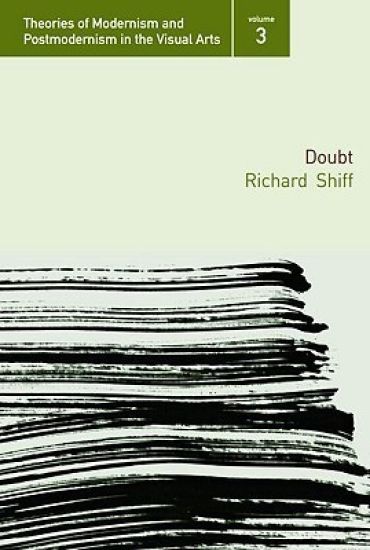
In an age where art history’s questions are now expected to receive answers, Richard Shiff presents a challenging alternative. In this essential new addition to James Elkins’s series Theories of Modernism and Postmodernism in the Visual Arts, Richard Shiff embraces doubt as a critical tool and asks how particular histories of art have come to be. Shiff’s turn to doubt is not a retreat to relativism, but rather an insistence on clear thinking about art. In particular, Shiff takes issue with the style of self-referential art writing seemingly 'licensed' by Roland Barthes. With an introduction by Rosie Bennett, Doubt is a study of the tension between practicing art and practicing criticism.
Cezanne and the End of Impressionism

Cezanne and the End of Impressionism

Richard Shiff

University of Chicago Press
1986
nidottu
Drawing on a broad foundation in the history of nineteenth-century French art, Richard Shiff offers an innovative interpretation of Cézanne's painting. He shows how Cézanne's style met the emerging criteria of a "technique of originality" and how it satisfied critics sympathetic to symbolism as well as to impressionism. Expanding his study of the interaction of Cézanne and his critics, Shiff considers the problem of modern art in general. He locates the core of modernism in a dialectic of making (technique) and finding (originality). Ultimately, Shiff provides not only clarifying accounts of impressionism and symbolism but of a modern classicism as well.