Kirjojen hintavertailu. Mukana 12 595 353 kirjaa ja 12 kauppaa.

Kirjailija

Richard Strauss

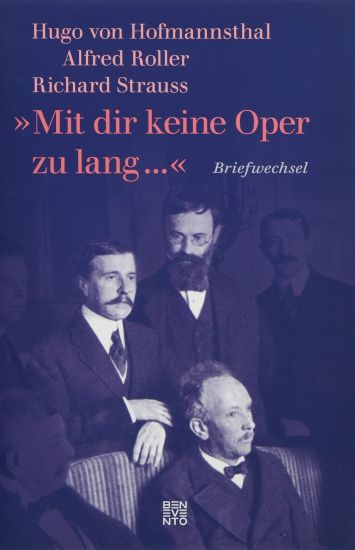
Kirjat ja teokset yhdessä paikassa: 26 kirjaa, julkaisuja vuosilta 1979-2025, suosituimpien joukossa »Mit dir keine Oper zu lang ...«. Vertaile teosten hintoja ja tarkista saatavuus suomalaisista kirjakaupoista.

26 kirjaa

Kirjojen julkaisuhaarukka 1979-2025.

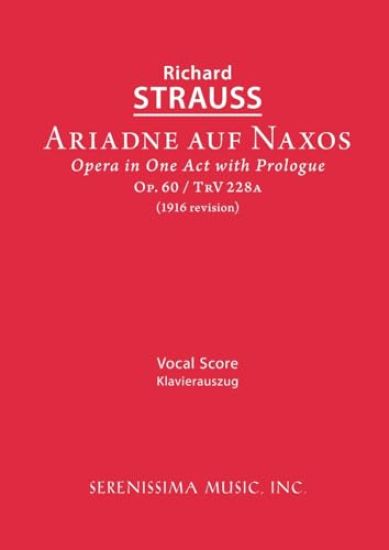
Ariadne auf Naxos, Op.60

Ariadne auf Naxos, Op.60

Richard Strauss; Hugo Von Hofmannsthal

Serenissima Music
2025
pokkari
Strauss' opera was originally composed to serve as a kind of an added commentary to a 1912 performance of Moliere's classic play Le Bourgeois gentilhomme (in German translation), for which he also provided incidental music. This unusual premiere took place in Stuttgart in October of 1912 but was not well-received. After a couple of additional unsuccessful performances, Strauss and Hofmannsthal (who wrote the libretto for the opera) decided to add a prologue to the opera to explain how the classical Greek tragedy ended up mixed with a farce set in Paris performed by a commedia dell'arte troupe. This is the version performed today, and its premiere took place in Vienna's Hofoper on October 4, 1916 with Franz Schalk conducting the cast and orchestra. Offered here is a beautifully reproduced facsimile of the vocal score arranged by Otto Singer which was published in 1916 by the Berlin firm Adolf F rstner. Unlike so many reprints one encounters these days, this one has been very carefully checked to make sure the entire work is present. To enhance its usefulness for performers, students and those interested in opera, it has also been printed in a very readable A4 (8.27 x 11.69) format.
Elektra; Tragedy In One Act

Elektra; Tragedy In One Act

Richard Strauss; Hugo Von Hofmannsthal

Alpha Edition
2021
pokkari
This book has been considered by academicians and scholars of great significance and value to literature. This forms a part of the knowledge base for future generations. So that the book is never forgotten we have represented this book in a print format as the same form as it was originally first published. Hence any marks or annotations seen are left intentionally to preserve its true nature.
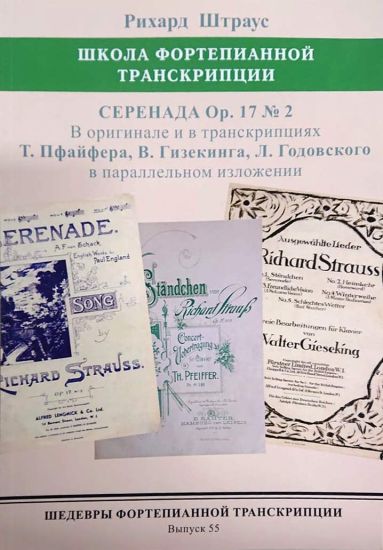
Masterpieces of Piano Transcription Vol. 55. Richard Strauss. Serenade op.17 No. 2. Original version and transcriptions by  Pfeiffer, Giezeking & Godowsky
The Deka-VS Publishing House publishes in two volumes (50 and 51) the well-known and popular cycle "40 Songs by Franz Schubert for Piano by Alexander Dubuc" which has long become a rarity. The first 20 songs are published in this 50th volume.The piano version of the famous songs of the ingenious Austrian composer was made by A.I.Dyubyuk with a delicate taste and deep knowledge of all the instrument's capabilities. At the same time, his arrangements are simple and accessible, pianistically very convenient, which undoubtedly showed a great performing and composing talent and experience of the author - the creator of a huge number of piano arrangements of varying difficulty.Designed for use by students and teachers of the upper grades of children's music schools and children's music schools, music schools and colleges, as well as concert pianists. It is of considerable interest to a wide range of music lovers.Attention! The white parts on pages 46, 49, 50 are not a defect! This is the intention of the compiler of this issue. The author's version and three transcriptions are given in parallel for ease of analysis. A white gap means that the given author did not include this measure in his composition. Why this is done, the compiler explains in the book annotation (in Russian only).Adieu.Der Wanderer.Stündchen.Der Tod und das junge Mädchen.Lob der Tränen.Gretchen am Spinnradc.Der Alpenjäger.Sei mir gegrüsst.Du bist die Ruh.Schlummerlied.Das Ziigenglöcken.Im Dorfe.Die junge Nonne.Morgengruss.Forelle.Ave Maria.Des Mädchens Klage.Ungeduld.Drang in die Ferne.Die Gestirne.
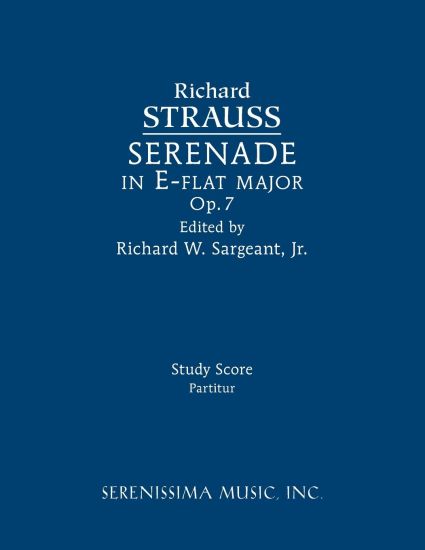
Serenade in E-flat major, Op.7

Serenade in E-flat major, Op.7

Richard Strauss

Serenissima Music
2018
pokkari
Written when he was only 17 years old, Richard Strauss' Serenade in E-flat major for winds has been a staple in the wind repertoire since it was premiered by the wind ensemble of the Dresden Court Orchestra on November 27, 1882 under the direction of Franz W llner. The Dresden performance also marked Strauss' first major premiere outside Munich, the city where he was born and raised. The lush harmonies and exquisite wind writing have made this work a favorite for performers and audiences around the world. In this newly engraved edition by Richard W. Sargeant, Jr. each instrument has it's own staff for easy reading and clarifiaction of the many subtle nuances to heard in this delightful work of a young genius.
Salome/Elektra

Salome/Elektra

Richard Strauss

Overture Publishing
2011
nidottu
Richard Strauss turned his genius to opera at the turn of the twentieth century, and this guide contains the texts and introductions to his first two masterpieces in what was, for him, a new genre. Despite obvious similarities – both operas consisting of one act, centred upon one female title role – the works are quite different in subject and treatment.Salome, based on Oscar Wilde’s notorious play, has a kaleidoscopic range of orchestral colour and a lurid climax. Elektra, derived from the myths of the ancient Greeks and the first collaboration between Strauss and Hofmannsthal, is a study in neurosis, ripe for Jungian comparative analysis.Contents: Richard Strauss and the Unveiling of ‘Salome’, Paul Banks; Salome: Libretto by Hedwig Lachmann; Salome: English translation by Tom Hammond; Hofmannsthal’s ‘Elektra’: from Drama to Libretto, Kenneth Segar; Elektra and the ‘Elektra Complex’, Christopher Wintle; Elektra: Libretto by Hugo von Hofmannsthal; Elektra: English translation by Anthony Hose; Strauss’s Orchestra in ‘Salome’ and ‘Elektra’, Jonathan Burton
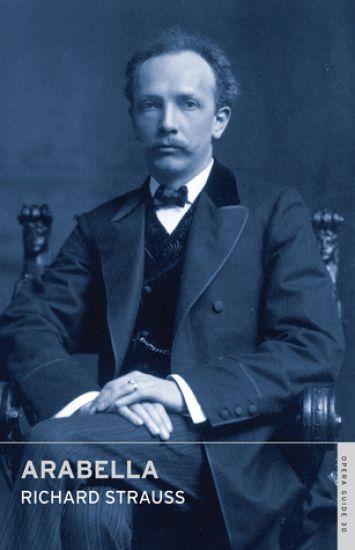
Arabella

Arabella

Richard Strauss

Overture Publishing
2011
nidottu
Written in 1927, Arabella is a portrait – partly romanticized, partly factual – of Habsburg Vienna in the 1860s. It is also a celebration of the profound importance of courage and the ability to forgive in love. Our sympathies are not only drawn to Arabella, who waits for “the right man” to come, but to her younger sister, who breaks with conventional morality in the cause of her love.This opera is a moving testament to Hugo von Hofmannsthal, who died before it was completed, and it remains one of the best-loved products of his twenty-five- year collaboration with Strauss.Contents: The Edge of the Cliff, Michael Ratcliffe; A Musical Synopsis, William Mann; A Profound Simplicity, Patrick J. Smith; Hofmannsthal’s Last Libretto, Karen Forsyth; Arabella: Libretto by Hugo von Hofmannsthal; Arabella: English translation by John Gutman
Der Rosenkavalier (The Knight of the Rose)

Der Rosenkavalier (The Knight of the Rose)

Richard Strauss

Overture Publishing
2011
nidottu
Der Rosenkavalier has one of the longest and most exquisitely crafted texts of all opera. The depth and subtlety of the characterization can only be appreciated after a careful reading. Derrick Puffett notes that the sentimentality and parody of the subject perfectly matched Strauss’s genius. Michael Kennedy’s detailed musical commentary shows how the large orchestra is handled with exceptional skill. Peter Branscombe points out that Hofmannsthal set a new standard of libretto-writing and shows how the ideas in Der Rosenkavalier may be traced to his other works for the stage, in his prose and poetry.Contents: An Introduction to ‘Der Rosenkavalier’, Derrick Puffett; Comedy for Music, Michael Kennedy; Hugo von Hofinannsthal – Man of Letters, Peter Branscombe; Der Rosenkavalier: Libretto by Hugo von Hofmannsthal; Der Rosenkavalier: English translation by Alfred Kalisch
Der Rosenkavalier

Der Rosenkavalier

Richard Strauss

Reclam Philipp Jun.
2008
pokkari
Diese "Komödie für Musik" ist das erste wirklich gemeinschaftlich von Hugo von Hofmannsthal und Richard Strauss verfasste Werk. Dabei ist die ins Wien um 1740 verlegte Handlung der Verwechslungskomödie trotz ihrer literarischen wie musikalischen Tradition in dramatischer wie auch musikalischer Umsetzung ein Werk des frühen 20. Jahrhunderts. Dem Text liegt die Fassung der Partitur von 1910 zu Grunde. Österreichische Wendungen werden erläutert.