Kirjojen hintavertailu. Mukana 12 390 323 kirjaa ja 12 kauppaa.

Kirjailija

Richard Stren

Kirjat ja teokset yhdessä paikassa: 5 kirjaa, julkaisuja vuosilta 1996-2016, suosituimpien joukossa Making Cities Work. Vertaile teosten hintoja ja tarkista saatavuus suomalaisista kirjakaupoista.

5 kirjaa

Kirjojen julkaisuhaarukka 1996-2016.

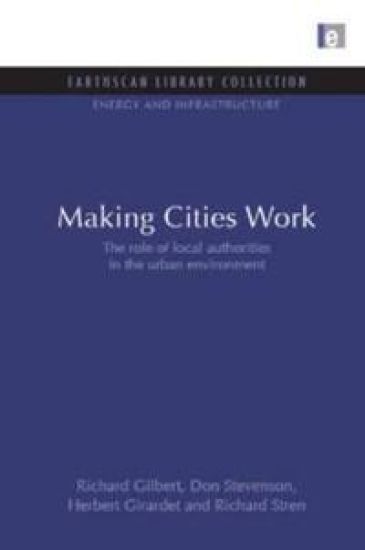
Making Cities Work

Making Cities Work

Richard Gilbert; Don Stevenson; Herbert Girardet; Richard Stren

Routledge
2016
nidottu
For too long, cities have been thought of as environmental blackspots, with high levels of air and soil pollution, overcrowding, poor sanitation and growing waste disposal problems. This book takes a more positive attitude: cities can be made to work sustainably. Their high population density can work in the environment's favour if they can achieve efficient use of resources such as energy and water supplies, and improve transport and infrastructure. The best cities today are clean, resource efficient, green and pleasant, and not only act as cultural and entertainment centres, but also harbour great varieties of wildlife. Making Cities Work looks at the vital role which local authorities can - and must - play in safeguarding and developing our towns and cities. Their role is crucial, and the aim of the book is to make governments, international bodies and local authority associations aware of how potential environmental and social problems can be overcome, and what can be achieved. This book is being written by urban development experts, based on material supplied by the world's leading city associations. It is being edited by one of the world's most highly regarded cultural ecologists, and has been commissioned by UNHCS for the Habitat II conference. Clearly written, accessible, and fully illustrated throughout with photographs, figures and graphs, it is ideal for students, fascinating reading for the general public, and essential for those involved in local authorities, planning and development.
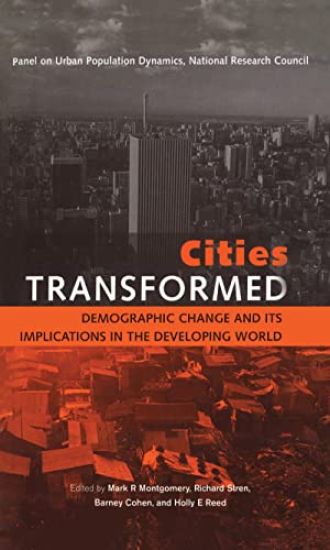
Cities Transformed

Cities Transformed

Mark R. Montgomery; Richard Stren; Barney Cohen; Holly E. Reed

Earthscan Ltd
2004
sidottu
Over the next 20 years, most low-income countries will, for the first time, become more urban than rural. Understanding demographic trends in the cities of the developing world is critical to those countries - their societies, economies, and environments. The benefits from urbanization cannot be overlooked, but the speed and sheer scale of this transformation presents many challenges. In this uniquely thorough and authoritative volume, 16 of the world's leading scholars on urban population and development have worked together to produce the most comprehensive and detailed analysis of the changes taking place in cities and their implications and impacts. They focus on population dynamics, social and economic differentiation, fertility and reproductive health, mortality and morbidity, labor force, and urban governance. As many national governments decentralize and devolve their functions, the nature of urban management and governance is undergoing fundamental transformation, with programs in poverty alleviation, health, education, and public services increasingly being deposited in the hands of untested municipal and regional governments. Cities Transformed identifies a new class of policy maker emerging to take up the growing responsibilities. Drawing from a wide variety of data sources, many of them previously inaccessible, this essential text will become the benchmark for all involved in city-level research, policy, planning, and investment decisions. The National Research Council is a private, non-profit institution based in Washington, DC, providing services to the US government, the public, and the scientific and engineering communities. The editors are members of the Council's Panel on Urban Population Dynamics.
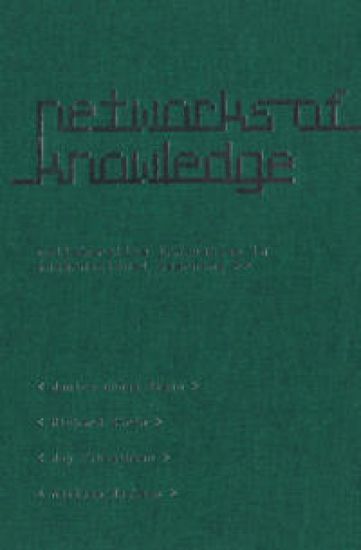
Networks of Knowledge

Networks of Knowledge

Joy Fitzgibbon; Janice Gross Stein; Richard Stren

University of Toronto Press
2001
pokkari
The network is the pervasive organizational image of the new millennium. This book examines one particular kind of network - the 'knowledge network' - whose primary mandate is to create and disseminate knowledge based on multidisciplinary research that is informed by problem-solving as well as theoretical agendas. In their examination of five knowledge networks based in Canadian universities, and in most cases working closely with researchers in developing countries, the authors demonstrate the ability of networks to cross disciplinary boundaries, to blend the operational with the theoretical, and to respond to broad social processes. Operating through networks, rather than through formal, hierarchical structures, diverse communities of researchers create different kinds of knowledge and disseminate their results effectively across disciplinary, sectoral, and spatial boundaries. Analysis of networks in health, environment, urban, and educational fields suggests that old categories of 'north' and 'south' are becoming blurred, and that the new structures of knowledge creation and dissemination help to sustain collaborative research.
Networks of Knowledge

Networks of Knowledge

Joy Fitzgibbon; Janice Gross Stein; Richard Stren

University of Toronto Press
2001
sidottu
The network is the pervasive organizational image of the new millennium. This book examines one particular kind of network - the 'knowledge network' - whose primary mandate is to create and disseminate knowledge based on multidisciplinary research that is informed by problem-solving as well as theoretical agendas. In their examination of five knowledge networks based in Canadian universities, and in most cases working closely with researchers in developing countries, the authors demonstrate the ability of networks to cross disciplinary boundaries, to blend the operational with the theoretical, and to respond to broad social processes. Operating through networks, rather than through formal, hierarchical structures, diverse communities of researchers create different kinds of knowledge and disseminate their results effectively across disciplinary, sectoral, and spatial boundaries. Analysis of networks in health, environment, urban, and educational fields suggests that old categories of 'north' and 'south' are becoming blurred, and that the new structures of knowledge creation and dissemination help to sustain collaborative research.
Making Cities Work

Making Cities Work

Richard Gilbert; Don Stevenson; Herbert Girardet; Richard Stren

Earthscan Ltd
1996
sidottu
For too long, cities have been thought of as environmental blackspots, with high levels of air and soil pollution, overcrowding, poor sanitation and growing waste disposal problems. This book takes a more positive attitude: cities can be made to work sustainably. Their high population density can work in the environment's favour if they can achieve efficient use of resources such as energy and water supplies, and improve transport and infrastructure. The best cities today are clean, resource efficient, green and pleasant, and not only act as cultural and entertainment centres, but also harbour great varieties of wildlife. Making Cities Work looks at the vital role which local authorities can - and must - play in safeguarding and developing our towns and cities. Their role is crucial, and the aim of the book is to make governments, international bodies and local authority associations aware of how potential environmental and social problems can be overcome, and what can be achieved. This book is being written by urban development experts, based on material supplied by the world's leading city associations. It is being edited by one of the world's most highly regarded cultural ecologists, and has been commissioned by UNHCS for the Habitat II conference. Clearly written, accessible, and fully illustrated throughout with photographs, figures and graphs, it is ideal for students, fascinating reading for the general public, and essential for those involved in local authorities, planning and development.