Kirjojen hintavertailu. Mukana 12 657 676 kirjaa ja 12 kauppaa.

Kirjailija

Richard T. Longoria

Kirjat ja teokset yhdessä paikassa: 5 kirjaa, julkaisuja vuosilta 2008-2024, suosituimpien joukossa Celebrities in American Elections. Vertaile teosten hintoja ja tarkista saatavuus suomalaisista kirjakaupoista.

5 kirjaa

Kirjojen julkaisuhaarukka 2008-2024.

Celebrities in American Elections

Celebrities in American Elections

Richard T. Longoria

BLOOMSBURY PUBLISHING PLC
2024
nidottu
Using a case study approach, Celebrities in American Elections contends that celebrities have the talent, fame, and resources to succeed in electoral politics. These factors account for the electoral victories of Ronald Reagan, Clint Eastwood, Fred Grandy, Sonny Bono, Jesse Ventura, Arnold Schwarzenegger, Al Franken, and Donald Trump. However, the author argues that these items are insufficient without a favorable political environment; as many celebrities have lost elections as have won them. They lose because their persona does not match the politics of their time, or they represent the minority party in a one party dominated district or state, or they advocate for unpopular policies. Among those that won, nearly half were elected by a plurality – not a majority – of voters. This does not suggest overwhelming public support for celebrity candidates despite their many advantages. With a few exceptions, celebrities that won tended to also win the fundraising battle, while celebrities that lost tended to raise less than their opponent – the normal laws of politics still apply. The celebrity factor, while helpful, does not fully explain why celebrities win or lose elections.

Celebrities in American Elections

Celebrities in American Elections

Richard T. Longoria

BLOOMSBURY PUBLISHING PLC
2022
sidottu
Using a case study approach, Celebrities in American Elections contends that celebrities have the talent, fame, and resources to succeed in electoral politics. These factors account for the electoral victories of Ronald Reagan, Clint Eastwood, Fred Grandy, Sonny Bono, Jesse Ventura, Arnold Schwarzenegger, Al Franken, and Donald Trump. However, the author argues that these items are insufficient without a favorable political environment; as many celebrities have lost elections as have won them. They lose because their persona does not match the politics of their time, or they represent the minority party in a one party dominated district or state, or they advocate for unpopular policies. Among those that won, nearly half were elected by a plurality – not a majority – of voters. This does not suggest overwhelming public support for celebrity candidates despite their many advantages. With a few exceptions, celebrities that won tended to also win the fundraising battle, while celebrities that lost tended to raise less than their opponent – the normal laws of politics still apply. The celebrity factor, while helpful, does not fully explain why celebrities win or lose elections.
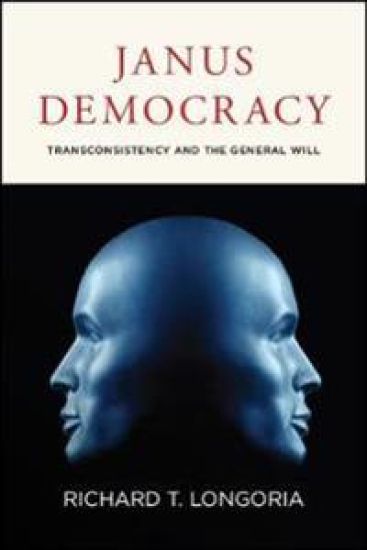
Janus Democracy

Janus Democracy

Richard T. Longoria

State University of New York Press
2019
pokkari
Explores the contradictory nature of public opinion.Combining political philosophy with a study of political behavior, Richard T. Longoria examines the contradictory nature of public opinion on policy issues. He argues that public opinion is often characterized by dialetheial paradoxes-when a statement and the contradiction of that statement are both held to be true. For example, a voter may express a desire for a balanced federal budget but also be against reducing entitlement programs, increasing taxes, or any other solution to achieve that goal. Longoria focuses on various social issues and domestic and foreign policies to explore these types of contradictory and incompatible preferences, arguing that they stem from the pragmatic nature of Americans' worldview, which prefers expediency over consistency. These inconsistencies are typically called "non-attitudes," but Longoria suggests it would be better to call them "bi-attitudes." When people have internalized the contradictions and believe in both ideas even when the two are incompatible, they are being transconsistent rather than inconsistent. Transconsistency, Longoria concludes, leads to perpetual dissatisfaction with the political system because the government often attempts to satisfy the incompatible preferences of a two-faced public.
Janus Democracy

Janus Democracy

Richard T. Longoria

State University of New York Press
2018
sidottu
Explores the contradictory nature of public opinion.Combining political philosophy with a study of political behavior, Richard T. Longoria examines the contradictory nature of public opinion on policy issues. He argues that public opinion is often characterized by dialetheial paradoxes-when a statement and the contradiction of that statement are both held to be true. For example, a voter may express a desire for a balanced federal budget but also be against reducing entitlement programs, increasing taxes, or any other solution to achieve that goal. Longoria focuses on various social issues and domestic and foreign policies to explore these types of contradictory and incompatible preferences, arguing that they stem from the pragmatic nature of Americans' worldview, which prefers expediency over consistency. These inconsistencies are typically called "non-attitudes," but Longoria suggests it would be better to call them "bi-attitudes." When people have internalized the contradictions and believe in both ideas even when the two are incompatible, they are being transconsistent rather than inconsistent. Transconsistency, Longoria concludes, leads to perpetual dissatisfaction with the political system because the government often attempts to satisfy the incompatible preferences of a two-faced public.
Meritocracy and Americans' Views on Distributive Justice
This book focuses on public opinion on issues related to the theory of meritocracy. By researching and studying a variety of sources in an attempt to understand public sentiments concerning meritocracy, Richard T. Longoria highlights the contradictory nature of American public opinion and questions the belief that Americans fully embrace the meritocratic ethos. Previous research has found broad public support for the idea that smart hard working people should be rewarded. Why then don't we actually live in a meritocracy? In part this is explained by the finding that most Americans believe that the United States is already a meritocracy. Another explanations is the fact that race, gender, social background, personal connections and other non-merit factors are believed by many Americans to impact a person's outcome in life. Longoria brings issues of social justice and public opinion the fore, providing a critical analysis of American society and its fascination with the idea—and not the practice—of meritocracy.