Kirjojen hintavertailu. Mukana 12 390 323 kirjaa ja 12 kauppaa.

Kirjailija

Richard T. Rodríguez

Kirjat ja teokset yhdessä paikassa: 5 kirjaa, julkaisuja vuosilta 2009-2022, suosituimpien joukossa A Kiss Across the Ocean. Vertaile teosten hintoja ja tarkista saatavuus suomalaisista kirjakaupoista.

5 kirjaa

Kirjojen julkaisuhaarukka 2009-2022.

A Kiss Across the Ocean

A Kiss Across the Ocean

Richard T. Rodríguez

DUKE UNIVERSITY PRESS
2022
sidottu
In A Kiss across the Ocean Richard T. Rodríguez examines the relationship between British post-punk musicians and their Latinx audiences in the United States since the 1980s. Melding memoir with cultural criticism, Rodríguez spotlights a host of influential bands and performers including Siouxsie and the Banshees, Adam Ant, Bauhaus, Soft Cell, Frankie Goes to Hollywood, and Pet Shop Boys. He recounts these bands’ importance for him and other Latinx kids and discusses their frequent identification with these bands’ glamorous performance of difference. Whether it was Siouxsie Sioux drawing inspiration from Latinx contemporaries and cultural practices or how Soft Cell singer Marc Almond’s lyrics were attuned to the vibrancy of queer Latinidad, Rodríguez shows how Latinx culture helped shape British post-punk. He traces the fandom networks that link these groups across space and time to illuminate how popular music establishes and facilitates intimate relations across the Atlantic. In so doing, he demonstrates how the music and styles that have come to define the 1980s hold significant sway over younger generations equally enthused by their matchlessly pleasurable and political reverberations.
A Kiss Across the Ocean

A Kiss Across the Ocean

Richard T. Rodríguez

DUKE UNIVERSITY PRESS
2022
pokkari
In A Kiss across the Ocean Richard T. Rodríguez examines the relationship between British post-punk musicians and their Latinx audiences in the United States since the 1980s. Melding memoir with cultural criticism, Rodríguez spotlights a host of influential bands and performers including Siouxsie and the Banshees, Adam Ant, Bauhaus, Soft Cell, Frankie Goes to Hollywood, and Pet Shop Boys. He recounts these bands’ importance for him and other Latinx kids and discusses their frequent identification with these bands’ glamorous performance of difference. Whether it was Siouxsie Sioux drawing inspiration from Latinx contemporaries and cultural practices or how Soft Cell singer Marc Almond’s lyrics were attuned to the vibrancy of queer Latinidad, Rodríguez shows how Latinx culture helped shape British post-punk. He traces the fandom networks that link these groups across space and time to illuminate how popular music establishes and facilitates intimate relations across the Atlantic. In so doing, he demonstrates how the music and styles that have come to define the 1980s hold significant sway over younger generations equally enthused by their matchlessly pleasurable and political reverberations.
Queering the Middle

Queering the Middle

Martin F. Manalansan; Chantal Nadeau; Richard T. Rodríguez; Siobhan B. Somerville

Duke University Press
2014
pokkari
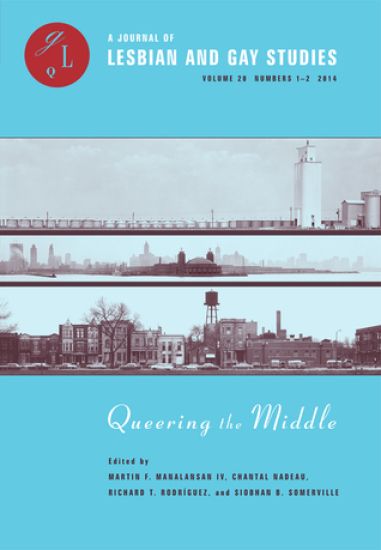
When imagined in relation to other regions of the United States, the Midwest is often positioned as the norm, the uncontested site of white American middle-class heteronormativity. This characterization has often prevailed in scholarship on sexual identity, practice, and culture, but a growing body of recent queer work on rural sexualities, transnational migration, regional identities, and working-class culture suggests the need to understand the Midwest otherwise. This special issue offers an opportunity to think with, through, and against the idea of region. Rather than reinforce the idea of the Midwest as a core that naturalizes American cultural and ideological formations, these essays instead open up possibilities for unraveling the idea of the heartland.The introduction provides a discussion of the theoretical and critical motivations for understanding the middle as a queer vantage, while the six articles focus on social movements, queer community networks, Midwest-based expressive cultures, and local and diasporic rearticulations of racial, gender, and sexual politics.At the University of Illinois at Urbana-Champaign, Martin Manalansanis Associate Professor in the Department of Anthropology, Chantal Nadeau is Professor and Chair of Gender and Women’s Studies, and Richard T. Rodríguez and Siobhan B. Somerville are Associate Professors in the Department of English.
Next of Kin

Next of Kin

Richard T. Rodríguez

Duke University Press
2009
sidottu
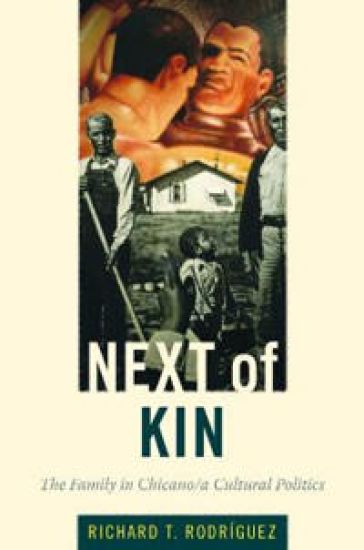
As both an idea and an institution, the family has been at the heart of Chicano/a cultural politics since the Mexican American civil rights movement emerged in the late 1960s. In Next of Kin, Richard T. Rodríguez explores the competing notions of la familia found in movement-inspired literature, film, video, music, painting, and other forms of cultural expression created by Chicano men. Drawing on cultural studies and feminist and queer theory, he examines representations of the family that reflect and support a patriarchal, heteronormative nationalism as well as those that reconfigure kinship to encompass alternative forms of belonging. Describing how la familia came to be adopted as an organizing strategy for communitarian politics, Rodríguez looks at foundational texts including Rodolfo Gonzales's well-known poem "I Am Joaquín," the Chicano Liberation Youth Conference's manifesto El Plan Espiritual de Aztlán, and José Armas's La Familia de La Raza. Rodríguez analyzes representations of the family in the films I Am Joaquín, Yo Soy Chicano, and Chicana; the Los Angeles public affairs television series ¡Ahora!; the experimental videos of the artist-activist Harry Gamboa Jr.; and the work of hip-hop artists such as Kid Frost and Chicano Brotherhood. He reflects on homophobia in Chicano nationalist thought, and examines how Chicano gay men have responded to it in works including Al Lujan's video S&M in the Hood, the paintings of Eugene Rodríguez, and a poem by the late activist Rodrigo Reyes. Next of Kin is both a wide-ranging assessment of la familia's symbolic power and a hopeful call for a more inclusive cultural politics.
Next of Kin

Next of Kin

Richard T. Rodríguez

Duke University Press
2009
pokkari
As both an idea and an institution, the family has been at the heart of Chicano/a cultural politics since the Mexican American civil rights movement emerged in the late 1960s. In Next of Kin, Richard T. Rodríguez explores the competing notions of la familia found in movement-inspired literature, film, video, music, painting, and other forms of cultural expression created by Chicano men. Drawing on cultural studies and feminist and queer theory, he examines representations of the family that reflect and support a patriarchal, heteronormative nationalism as well as those that reconfigure kinship to encompass alternative forms of belonging. Describing how la familia came to be adopted as an organizing strategy for communitarian politics, Rodríguez looks at foundational texts including Rodolfo Gonzales's well-known poem "I Am Joaquín," the Chicano Liberation Youth Conference's manifesto El Plan Espiritual de Aztlán, and José Armas's La Familia de La Raza. Rodríguez analyzes representations of the family in the films I Am Joaquín, Yo Soy Chicano, and Chicana; the Los Angeles public affairs television series ¡Ahora!; the experimental videos of the artist-activist Harry Gamboa Jr.; and the work of hip-hop artists such as Kid Frost and Chicano Brotherhood. He reflects on homophobia in Chicano nationalist thought, and examines how Chicano gay men have responded to it in works including Al Lujan's video S&M in the Hood, the paintings of Eugene Rodríguez, and a poem by the late activist Rodrigo Reyes. Next of Kin is both a wide-ranging assessment of la familia's symbolic power and a hopeful call for a more inclusive cultural politics.