Kirjojen hintavertailu. Mukana 12 390 323 kirjaa ja 12 kauppaa.
Kirjailija
Richard T. T. Forman
Kirjat ja teokset yhdessä paikassa: 14 kirjaa, julkaisuja vuosilta 1986-2019, suosituimpien joukossa Road Ecology. Vertaile teosten hintoja ja tarkista saatavuus suomalaisista kirjakaupoista.
Richard T.T. Forman; Daniel Sperling; John A. Bissonette; Anthony P. Clevenger; Carol D. Cutshall; Virginia H. Dale; Lenore Fahrig; Robert L. France; Charles R. Goldman; Kevin Heanue; Julia Jones; Frederick Swanson; Thomas Turrentine; Thomas C. Winter
A central goal of transportation is the delivery of safe and efficient services with minimal environmental impact. In practice, though, human mobility has flourished while nature has suffered. Awarness of the environmental impacts of roads is increasing, yet information remains scarce for those interested in studying, understanding, or minimizing the ecological effects of roads and vehicles. Road Ecology addresses that shortcoming by elevating previously localized and fragmented knowledge into a broad and inclusive framework for understanding and developing solutions. The book brings together fourteen leading ecologists and transportation experts to articulate state-of-the-science road ecology principles and presents specific examples that demonstrate the application of those principles.
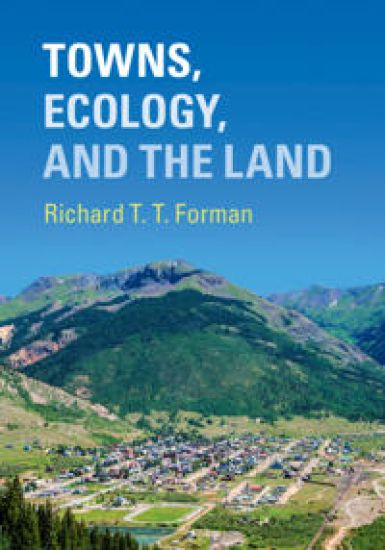
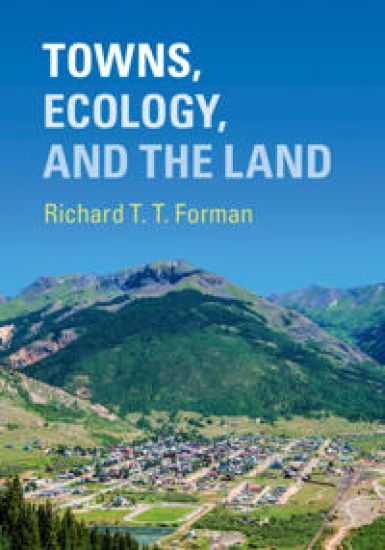
Towns and villages are sometimes viewed as minor, even quaint, spots, whereas this book boldly reconceptualizes these places as important dynamic environmental 'hotspots'. Multitudes of towns and villages with nearly half the world's population characterize perhaps half the global land surface. The book's pages feature ecological patterns, processes, and change, as well as human dimensions, both within towns and in strong connections and effects on surrounding agricultural land, forest land, and arid land. Towns, small to large, and villages are examined with spatial and cultural lenses. Ecological dimensions - water, soil and air systems, together with habitats, plants, wildlife and biodiversity - are highlighted. A concluding section presents concepts for making better towns and better land. From a pioneer in both landscape ecology and urban ecology, this highly international town ecology book opens an important frontier for researchers, students, professors, and professionals including environmental, town, and conservation planners.
Humans have always been influenced by natural landscapes, and always will be, even as we create ever-larger cities and our developments fundamentally change the nature of the earth around us. In Human Ecology, noted city planner and landscape architect Frederick Steiner encourages us to consider how human cultures have been shaped by natural forces, and how we might use this understanding to contribute to a future where both nature and people thrive. Human ecology is the study of the interrelationships between humans and their environment, drawing on diverse fields from biology and geography to sociology, engineering, and architecture. Steiner admirably synthesizes these perspectives through the lens of landscape architecture, a discipline that requires its practitioners to consciously connect humans and their environments. After laying out eight principles for understanding human ecology, the book's chapters build from the smallest scale of connection, our homes, and expand to community scales, regions, nations, and, ultimately, examine global relationships between people and nature. In this age of climate change, a new approach to planning and design is required to envision a liveable future. Human Ecology provides architects, landscape architects, urban designers, and planners, and students in those fields, with timeless principles for new, creative thinking about how their work can shape a vibrant, resilient future for ourselves and our planet.
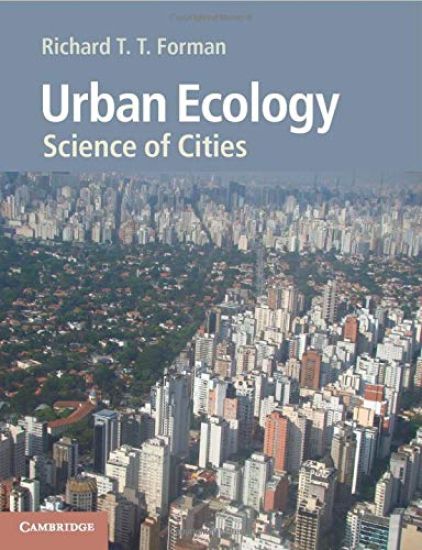
How does nature work in our human-created city, suburb, and exurb/peri-urb? Indeed how is ecology - including its urban water, soil, air, plant, and animal foundations - spatially entwined with this great human enterprise? And how can we improve urban areas for both nature and people? Urban Ecology: Science of Cities explores the entire urban area: from streets, lawns, and parks to riversides, sewer systems, and industrial sites. The book presents models, patterns, and examples from hundreds of cities worldwide. Numerous illustrations enrich the presentation. Cities are analyzed, not as ecologically bad or good, but as places with concentrated rather than dispersed people. Urban ecology principles, traditionally adapted from natural-area ecology, now increasingly emerge from the distinctive features of cities. Spatial patterns and flows, linking organisms, built structures, and the physical environment highlight a treasure chest of useful principles. This pioneering interdisciplinary book opens up frontiers of insight, as a valuable source and text for undergraduates, graduates, researchers, professionals, and others with a thirst for solutions to growing urban problems.
"Safe Passages" brings together the latest information on the emerging science of road ecology as it relates to mitigating interactions between roads and wildlife. This practical handbook of tools and examples is designed to assist individuals and organizations reduce road-wildlife impacts. Detailed case studies span a range of scales, from site-specific wildlife crossing structures, to statewide planning for habitat connectivity, to national legislation. Contributors explore the cooperative efforts that are emerging as a result of diverse organizations - including transportation agencies, land and wildlife management agencies, and nongovernmental organizations - finding common ground to tackle important road ecology issues and problems.
Ask airline passengers what they see as they gaze out the window, and they will describe a fragmented landscape: a patchwork of desert, woodlands, farmlands, and developed neighborhoods. Once-contiguous forests are now subdivided; tallgrass prairies that extended for thousands of miles are now crisscrossed by highways and byways. Whether the result of naturally occurring environmental changes or the product of seemingly unchecked human development, fractured lands significantly impact the planet's biological diversity. In Ecology of Fragmented Landscapes, Sharon K. Collinge defines fragmentation, explains its various causes, and suggests ways that we can put our lands back together. Researchers have been studying the ecological effects of dismantling nature for decades. In this book, Collinge evaluates this body of research, expertly synthesizing all that is known about the ecology of fragmented landscapes. Expanding on the traditional coverage of this topic, Collinge also discusses disease ecology, restoration, conservation, and planning. Not since Richard T. T. Forman's classic Land Mosaics has there been a more comprehensive examination of landscape fragmentation. Ecology of Fragmented Landscapes is critical reading for ecologists, conservation biologists, and students alike.
With land planning, socioeconomics and natural systems as foundations, this book combines urban planning and ecological science in examining urban regions. Writing for graduate students, academic researchers, planners, conservationists and policy makers, and with the use of informative urban-region color maps, Richard Forman analyzes 38 urban regions from 32 nations, including London, Chicago, Ottawa, Brasilia, Cairo, Seoul, Bangkok, Canberra, and a major case study of the Greater Barcelona region. Alternative patterns of urbanization spread (including sprawl) are evaluated from the perspective of nature and people, stating land-use principles extracted from landscape ecology, transportation and hydrology. Good, bad and interesting spatial patterns for creating sustainable land mosaics are pinpointed, and urban regions are considered in broader contexts, from climate change to biodiversity loss, disasters and sense of place.
This volume brings together contributions from leaders in landscape ecology and addresses the issue of how what we know about landscape ecology can help us understand, manage and maintain biodiversity. It is divided into six parts, concluding with a synthesis and drawing conclusions about the utility of the landscape approach to conservation. It is designed as a resource for study and reference for ecologists, conservation biologists and landscape managers.
Instream Flow Protection is a comprehensive overview of Western water use and the issues that surround it. The authors explain instream flow and its historical, political, and legal context; describe current instream flow laws and policies; and present methods of protecting instream flow.
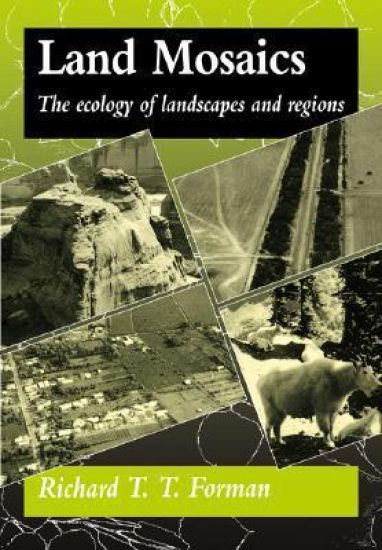
Animals, plants, water, wind, materials and people flow at different rates, according to spatial patterns common to almost all landscapes and regions. This up-to-date synthesis explores the ecology of heterogeneous land areas, where natural processes and human activities spatially interact, to produce an ever changing mosaic. The subject has great relevance to today’s society, and this book reflects the breadth of its importance; there are many ideas and applications for planning, conservation, design, management, sustainability and policy. Spatial solutions are provided for society’s land-use objectives. An appealing book, with a highly-readable text on this major emerging field. Students and professionals alike will be drawn by the attractive and informative illustrations, the conceptual synthesis, the wide international perspective and the range of topics and research covered.
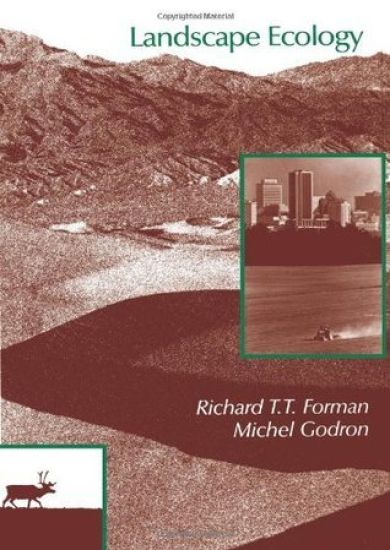
This important new work--the first of its kind--focuses on the distribution patterns of landscape elements or ecosystems; the flows of animals, plants, energy, mineral nutrients and water; and the ecological changes in the landscape over time. Includes over 1,200 references from current ecology, geography, forestry, and wildlife biologcy literature.