Kirjojen hintavertailu. Mukana 12 390 323 kirjaa ja 12 kauppaa.

Kirjailija

Richard Wrangham

Kirjat ja teokset yhdessä paikassa: 7 kirjaa, julkaisuja vuosilta 1997-2023, suosituimpien joukossa The Goodness Paradox: The Strange Relationship Between Virtue and Violence in Human Evolution. Vertaile teosten hintoja ja tarkista saatavuus suomalaisista kirjakaupoista.

7 kirjaa

Kirjojen julkaisuhaarukka 1997-2023.

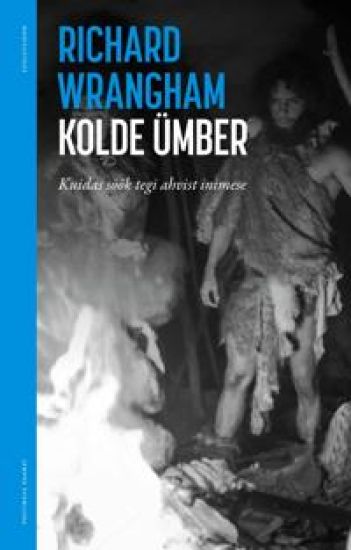
Kolde ümber. kuidas söök tegi ahvist inimese

Kolde ümber. kuidas söök tegi ahvist inimese

Richard Wrangham

Postimees kirjastus
2023
nidottu
Oma ainulaadses raamatus väidab Richard Wrangham, et just keedetud või küpsetatud toit põhjustas meie esivanemate erakorralise muundumise ahvitaolistest olenditest Homo erectus'eks. "Kolde ümber" pakub välja uue huvitava mõtte: kuumutatud toit põhjustas seedetrakti kokkutõmbumise ja aju suurenemise, aitas kaasa inimühiskonna arengule ning meeste ja naiste tööjaotuse tekkele. Kui meie esivanemad kohastusid tule kasutamisega, arenesid toitu kuumutavatest ahvidest inimesed.Hõlmates palju valdkondi alates toidu etikettimisest ja ülekaalulistest lemmikloomadest ning lõpetades toortoidufanatismiga, pakub "Kolde ümber" hämmastavalt omapärast arusaama sellest, kuidas meist selline sotsiaalne ja intelligentne liik, nagu me tänapäeval oleme.Wrangham alustas oma teadlaseteed Tansaanias Gombe rahvuspargis Jane Goodalli pikaajalises tavashimpanside väliuuringus. Koos Elizabeth Rossiga algatas ta 1997. aastal Kasiisi projekti ning on ka suurte inimahvide ellujäämisprojekti GRASP patroon.Raamatut soovitab lugeda Aivar Hanson, restoranijuhi White Guide Estonia väljaandja:"Tule tegemise kunsti ja sellel sooja toidu valmistamise oskuse omandamine muutis inimkonna käekäiku vähemalt niisama palju kui keele teke. Ka mehe ja naise praeguseni kehtivate soorollide kujunemine on sellega seotud. Nii väidab raamatu autor ning tõestab kõike veenvalt rohkete faktide ja näidetega. Teaduskirjanduse kohta on tegemist kergelt loetava ja kaasahaarava sisuga raamatuga. On ju inimkond oma nüüdseks väljakujunenud toitumisharjumustega jälle teelahkmele jõudnud ja "kes minevikku ei mäleta, elab tulevikuta"."Richard Wrangham (snd 1948, filosoofiadoktor, Cambridge'i ülikool 1975) on Harvardi ülikoolis bioloogilise antropoloogia professor, kes algatas 1987. aastal Kibale shimpansiprojekti. Ta on korraldanud laiaulatuslikke primaatide ökoloogia, toitumise ja sotsiaalse käitumise uuringuid.
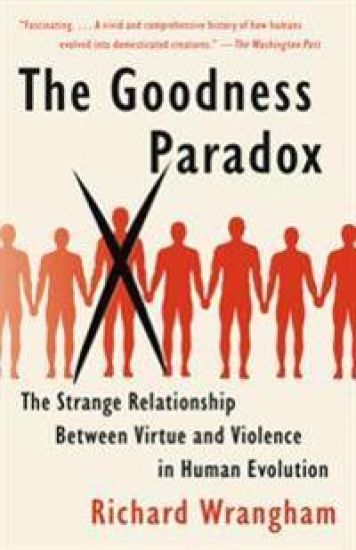
The Goodness Paradox

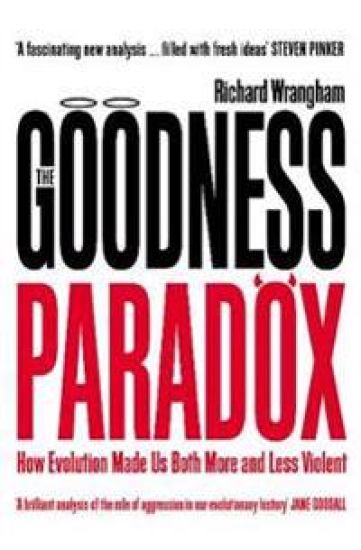
The Goodness Paradox

Richard Wrangham

Profile Books Ltd
2020
pokkari
'A fascinating new analysis of human violence, filled with fresh ideas and gripping evidence from our primate cousins, historical forebears, and contemporary neighbors' Steven Pinker 'A brilliant analysis of the role of aggression in our evolutionary history' Jane Goodall It may not always seem so, but day-to-day interactions between individual humans are extraordinarily peaceful. That is not to say that we are perfect, just far less violent than most animals, especially our closest relatives, the chimpanzee and their legendarily docile cousins, the Bonobo. Perhaps surprisingly, we rape, maim, and kill many fewer of our neighbours than all other primates and almost all undomesticated animals. But there is one form of violence that humans exceed all other animals in by several degrees: organized proactive violence against other groups of humans. It seems, we are the only animal that goes to war. In the Goodness Paradox, Richard Wrangham wrestles with this paradox at the heart of human behaviour. Drawing on new research by geneticists, neuroscientists, primatologists, and archaeologists, he shows that what domesticated our species was nothing less than the invention of capital punishment which eliminated the least cooperative and most aggressive among us. But that development is exactly what laid the groundwork for the worst of our atrocities.
The Goodness Paradox: The Strange Relationship Between Virtue and Violence in Human Evolution
A fascinating new analysis of human violence, filled with fresh ideas and gripping evidence from our primate cousins, historical forebears, and contemporary neighbors. --Steven Pinker, author of The Better Angels of Our Nature We Homo sapiens can be the nicest of species and also the nastiest. What occurred during human evolution to account for this paradox? What are the two kinds of aggression that primates are prone to, and why did each evolve separately? How does the intensity of violence among humans compare with the aggressive behavior of other primates? How did humans domesticate themselves? And how were the acquisition of language and the practice of capital punishment determining factors in the rise of culture and civilization? Authoritative, provocative, and engaging, The Goodness Paradox offers a startlingly original theory of how, in the last 250 million years, humankind became an increasingly peaceful species in daily interactions even as its capacity for coolly planned and devastating violence remains undiminished. In tracing the evolutionary histories of reactive and proactive aggression, biological anthropologist Richard Wrangham forcefully and persuasively argues for the necessity of social tolerance and the control of savage divisiveness still haunting us today.
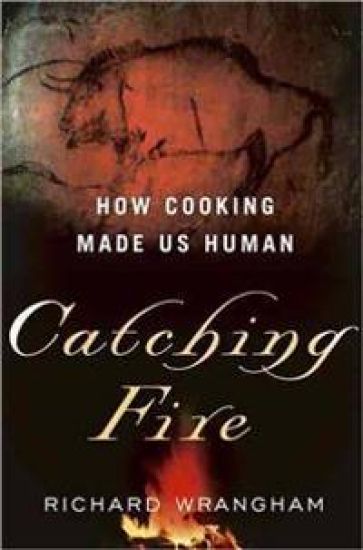
Catching Fire

Catching Fire

Richard Wrangham

Basic Books
2010
pokkari
Ever since Darwin and The Descent of Man , the existence of humans has been attributed to our intelligence and adaptability. But in Catching Fire , renowned primatologist Richard Wrangham presents a startling alternative: our evolutionary success is the result of cooking. In a ground-breaking theory of our origins, Wrangham shows that the shift from raw to cooked foods was the key factor in human evolution. When our ancestors adapted to using fire, humanity began. Once our hominid ancestors began cooking their food, the human digestive tract shrank and the brain grew. Time once spent chewing tough raw food could be sued instead to hunt and to tend camp. Cooking became the basis for pair bonding and marriage, created the household, and even led to a sexual division of labour. Tracing the contemporary implications of our ancestors' diets, Catching Fire sheds new light on how we came to be the social, intelligent, and sexual species we are today. A pathbreaking new theory of human evolution, Catching Fire will provoke controversy and fascinate anyone interested in our ancient origins- or in our modern eating habits.
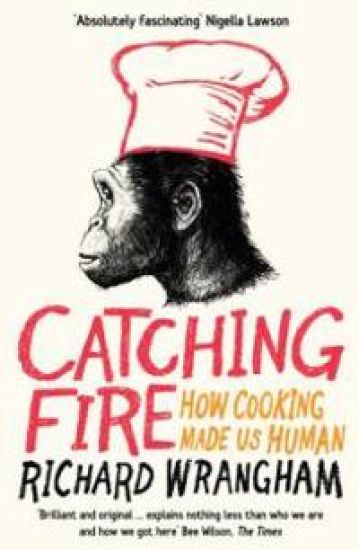
Catching Fire

Catching Fire

Richard Wrangham

Profile Books Ltd
2010
pokkari
In this stunningly original book, Richard Wrangham argues that it was cooking that caused the extraordinary transformation of our ancestors from apelike beings to Homo erectus. At the heart of Catching Fire lies an explosive new idea: the habit of eating cooked rather than raw food permitted the digestive tract to shrink and the human brain to grow, helped structure human society, and created the male-female division of labour. As our ancestors adapted to using fire, humans emerged as "the cooking apes". Covering everything from food-labelling and overweight pets to raw-food faddists, Catching Fire offers a startlingly original argument about how we came to be the social, intelligent, and sexual species we are today. "This notion is surprising, fresh and, in the hands of Richard Wrangham, utterly persuasive ... Big, new ideas do not come along often in evolution these days, but this is one." -Matt Ridley, author of Genome
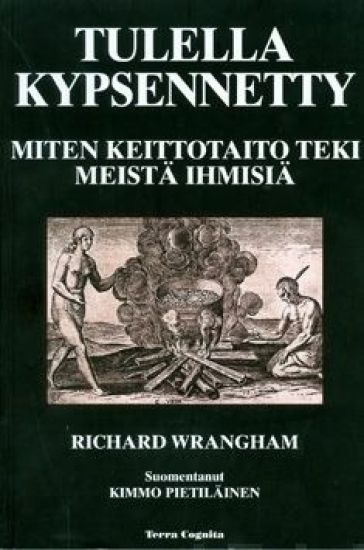
Tulella kypsennetty

Tulella kypsennetty

Richard Wrangham

Terra Cognita
2010
nidottu
Ihmisen olemassaolo selitetään perinteisesti älykkyydellämme ja sopeutuvuudellamme. Tässä teoksessa maineikas kädellisten tutkija Richard Wrangham esittää häkellyttävän vaihtoehdon: menestyksemme evoluutiossa johtuu keitotaidostamme.Tulella kypsennetty jäljittää ihmisen elämän eri piirteet ruokavaliomme kehittymiseen ja tulen käyttöön ja avaa uuden näkemyksen siitä, miten meistä tuli nykyinen sosiaalinen, älykäs ja seksuaalinen ihmislaji.
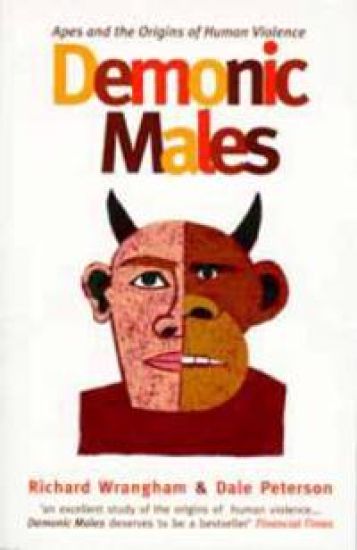
Demonic Males

Demonic Males

Richard Wrangham; Dale Peterson

Bloomsbury Publishing PLC
1997
nidottu
An analysis of the roots of human savagery, dealing with the fundamental questions of why the majority of violence is perpetrated by men; is it a matter of nature or nurture, and can anything be done about it? The book compares male violence among humans and among the great apes.