Kirjojen hintavertailu. Mukana 12 223 711 kirjaa ja 12 kauppaa.

Kirjailija

Richard Yeo

Kirjat ja teokset yhdessä paikassa: 10 kirjaa, julkaisuja vuosilta 1993-2016, suosituimpien joukossa Wisdom from the Monastery. Vertaile teosten hintoja ja tarkista saatavuus suomalaisista kirjakaupoista.

10 kirjaa

Kirjojen julkaisuhaarukka 1993-2016.

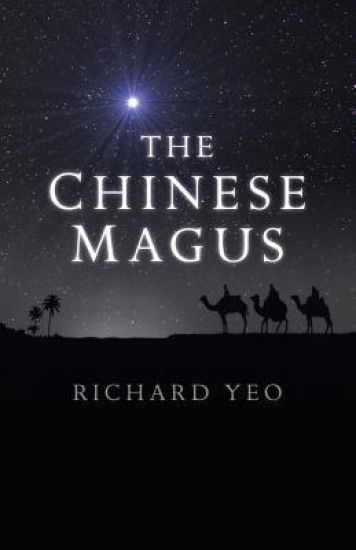
Chinese Magus, The

Chinese Magus, The

Richard Yeo

John Hunt Publishing
2016
nidottu
Xiang Li is a cultured, rational Chinese Mandarin, Governor of Xinjiang Province. He sees a sign in the skies and falls under a compulsion to travel to the west in the depth of winter. Nothing is clear but that he must hurry. His journey takes him through the snow-choked passes of the Tian Shan mountains and the searing heat of the Syrian Desert, through ambush by evil tribesmen and the deadly court of King Herod, while ahead of him rises a light in the night sky...
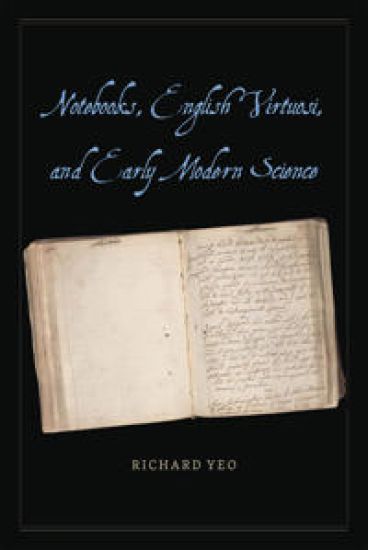
Notebooks, English Virtuosi, and Early Modern Science

Notebooks, English Virtuosi, and Early Modern Science

Richard Yeo

University of Chicago Press
2014
sidottu
In Notebooks, English Virtuosi, and Early Modern Science, Richard Yeo interprets a relatively unexplored set of primary archival sources: the notes and notebooks of some of the leading figures of the Scientific Revolution. Notebooks were important to several key members of the Royal Society of London, including Robert Boyle, John Evelyn, Robert Hooke, John Locke, and others, who drew on Renaissance humanist techniques of excerpting from texts to build storehouses of proverbs, maxims, quotations, and other material in personal notebooks, or commonplace books. Yeo shows that these men appreciated the value of their own notes both as powerful tools for personal recollection, and, following Francis Bacon, as a system of precise record keeping from which they could retrieve large quantities of detailed information for collaboration. The virtuosi of the seventeenth century were also able to reach beyond Bacon and the humanists, drawing inspiration from the ancient Hippocratic medical tradition and its emphasis on the gradual accumulation of information over time. By reflecting on the interaction of memory, notebooks, and other records, Yeo argues, the English virtuosi shaped an ethos of long-term empirical scientific inquiry.
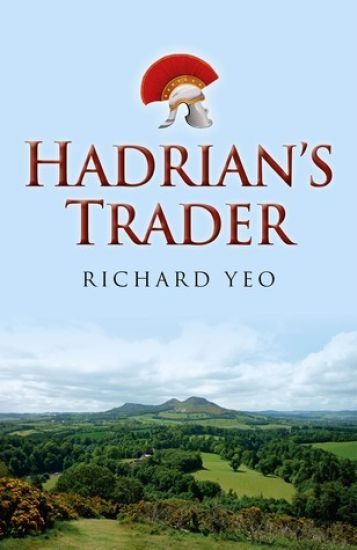
Hadrian`s Trader

Hadrian`s Trader

Richard Yeo

John Hunt Publishing
2013
nidottu
Lucius is a young Centurion in the time of Hadrian, serving at Trimontium, modern-day Melrose in southern Scotland. Trista is a Roman patrician girl, living in Gaul. She is orphaned and becomes a vagrant when her parents are killed by traitors plotting to overthrow the emperor. Following the death of his wife, Lucius becomes an imperial agent, operating beyond the borders of the Empire as a trader, seeking signs of invasion. He meets Trista who is under threat of assassination. The story follows their flight across Gaul, pursued by evil forces, to the German forests in a race to avert invasion and the death of the emperor.
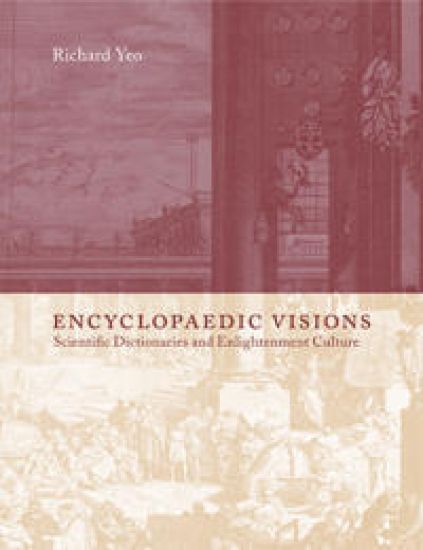
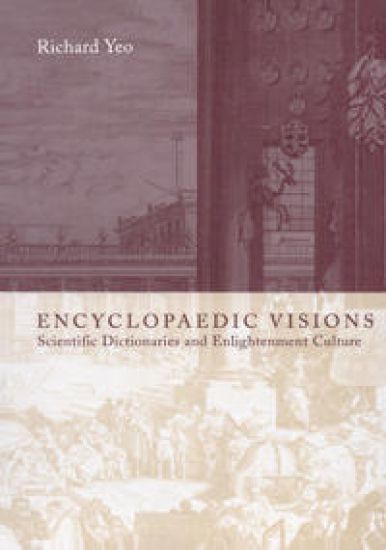
Encyclopaedic Visions

Encyclopaedic Visions

Richard Yeo

Cambridge University Press
2010
pokkari
The eighteenth-century English dictionaries of arts and sciences claimed to contain all knowledge that a person of education should possess. These early encyclopaedias responded to the explosion of information by reducing knowledge to essentials, stressing the need for a coherent account of the sciences, and for some time excluding biography and history. Richard Yeo places these scientific dictionaries in a rich cultural framework of debate that includes the arrangement of knowledge, the Republic of Letters, the Enlightenment public sphere, copyright issues and the specialisation of science. He discusses dilemmas involved in the quest for knowledge to be both organised and readily available, examining assumptions about the organisation, communication and control of knowledge in these works. Elegantly illustrated and accessibly written, Encyclopaedic Visions provides a major contribution to Enlightenment studies and the history of ideas in general.
Wisdom from the Monastery

Wisdom from the Monastery

Patrick Barry; Richard Yeo; Kathleen Norris

Liturgical Press
2006
pokkari
For all who are on a spiritual journey or starting out on a search for meaning in their lives, there is a vast array of competing belief systems, therapies, and guides available. Above the noise and clamor of this busy marketplace, a centuries-old voice speaks words of invitation: Who is there with a love of true life and a longing for days of real fulfillment? If you should hear that call and answer 'I, ' this is the answer that you will receive from God. . . . So begins the ancient Rule of St. Benedict, written fifteen hundred years ago as a simple manual for monks living in community together. Because of its gentle wisdom, realism, and depth, the Rule has always stretched beyond the walls of monasteries. Today, growing numbers of men and women are discovering that it can teach them something invaluable about themselves and how to live meaningful lives. Wisdom from the Monastery contains a contemporary translation of the Rule of St. Benedict and short reflections on the seven basic elements of Benedictine spirituality that are a tried and true recipe for healthy, balanced, and purposeful living. An ideal place to begin a lifetime of exploration and discovery, Wisdom from the Monastery is an excerpt from The Benedictine Handbook, also available from Liturgical Press.
Wisdom from the Monastery

Wisdom from the Monastery

Patrick Barry; Richard Yeo; Kathleen Norris

Canterbury Press Norwich
2005
nidottu
The Rule of St Benedict, just 9000 words long and written 1500 years ago, has proved to be one of the most timeless, influential and lasting of all texts. Its realism about human character, its extraordinary practical wisdom and its original recipe for creating a work/life balance have made it famous way beyond the monastic communities whose lives it has shaped for centuries. Today many secular people are finding that the Rule makes sense of their lives too. This book simply consists of the Rule in a modern language and an introduction to the seven basic elements of Benedictine spirituality.
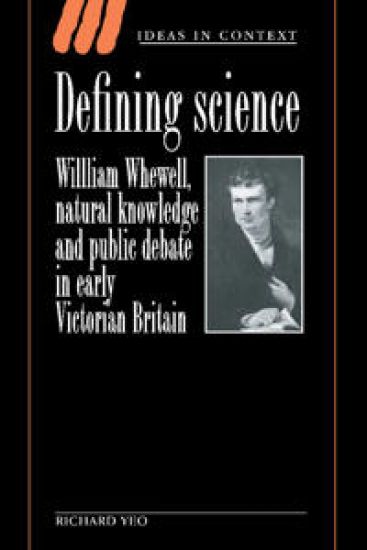
Defining Science

Defining Science

Richard Yeo

Cambridge University Press
2003
pokkari
This book deals with debates about science - its history, philosophy and moral value - in the first half of the nineteenth century, a period in which the ‘modern’ features of science developed. Defining Science also examines the different forms or genres in which science was discussed in the public sphere - most crucially in the Victorian review journals, but also in biographical, historical and educational works. William Whewell wrote major works on the history and philosophy of science before these became technical subjects. Consequently he had to define his own role as a metascientific critic (in a manner akin to cultural critics like Coleridge and Carlyle) as well as seeking to define science for both expert and lay audiences.
Science in the Public Sphere

Science in the Public Sphere

Richard Yeo

Variorum
2001
sidottu
The common focus of the essays in this book is the debate on the nature of science - often referred to by contemporaries as ’natural knowledge’ - in Britain during the first half of the 19th century. This was the period before major state support for science allowed its professionalization; indeed, it was a time in which the word ’scientist’ (although coined in 1833 by William Whewell) was not yet widely used. In this context, the questions about the nature of science were part of a public debate that included the following topics: scientific method and intellectual authority, the moral demeanour of the man of science, the hierarchy of specialised scientific disciplines, and the relation with natural theology. These topics were discussed both within scientific circles - in correspondence and meeting of societies - as well as in the wider public sphere constituted by quarterly journals and encyclopaedias. A study of these debates allow us to see how British science of this period began to cast loose some of its earlier theological supports, but still relied on a moral framework to affirm its distinctive method, ethos and cultural value.
Encyclopaedic Visions

Encyclopaedic Visions

Richard Yeo

Cambridge University Press
2001
sidottu
The eighteenth-century English dictionaries of arts and sciences claimed to contain all knowledge that a person of education should possess. These early encyclopaedias responded to the explosion of information by reducing knowledge to essentials, stressing the need for a coherent account of the sciences, and for some time excluding biography and history. Richard Yeo places these scientific dictionaries in a rich cultural framework of debate that includes the arrangement of knowledge, the Republic of Letters, the Enlightenment public sphere, copyright issues and the specialisation of science. He discusses dilemmas involved in the quest for knowledge to be both organised and readily available, examining assumptions about the organisation, communication and control of knowledge in these works. Elegantly illustrated and accessibly written, Encyclopaedic Visions provides a major contribution to Enlightenment studies and the history of ideas in general.
Defining Science

Defining Science

Richard Yeo

Cambridge University Press
1993
sidottu
This book deals with debates about science - its history, philosophy and moral value - in the first half of the nineteenth century, a period in which the ‘modern’ features of science developed. Defining Science also examines the different forms or genres in which science was discussed in the public sphere - most crucially in the Victorian review journals, but also in biographical, historical and educational works. William Whewell wrote major works on the history and philosophy of science before these became technical subjects. Consequently he had to define his own role as a metascientific critic (in a manner akin to cultural critics like Coleridge and Carlyle) as well as seeking to define science for both expert and lay audiences.