Kirjojen hintavertailu. Mukana 12 657 676 kirjaa ja 12 kauppaa.

Kirjailija

Rita Chawla-Duggan

Kirjat ja teokset yhdessä paikassa: 4 kirjaa, julkaisuja vuosilta 2024-2026, suosituimpien joukossa A Decolonial Curriculum. Vertaile teosten hintoja ja tarkista saatavuus suomalaisista kirjakaupoista.

4 kirjaa

Kirjojen julkaisuhaarukka 2024-2026.

A Decolonial Curriculum

A Decolonial Curriculum

David Scott; Sandra Leaton Gray; Rita Chawla-Duggan

TAYLOR FRANCIS LTD
2026
sidottu
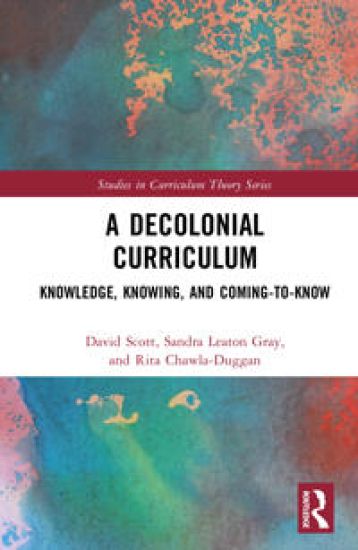
A Decolonial Curriculum advances the claim that a decolonial and transcolonial curriculum must be grounded in a substantive account of what human beings do, have done, and might yet do. It proposes twelve fundamental domains of human life - knowing, communicating, genealogising, positioning, cognising, understanding, enhancing, philosophising, acting in the world, valuing, embodying, and creating - as generative elements for curriculum design. Taken together, these domains offer a non-reductive framework that resists the false dichotomy between ‘colonial’ epistemologies and ‘indigenous’ ways of knowing and being. Rather than opposing knowledge traditions, the book argues for a pedagogy that is dialogical, embodied, and reflexive, while recognising the limits of decolonial critique alone. It therefore advances a transcolonial pedagogy oriented towards hybrid, relational, and productive epistemic formations, capable of preparing learners for materially and historically interconnected futures. It is an essential read for academics, educators, policymakers, and anyone engaged in designing, developing, and rethinking curriculum.
Colonising and Decolonising

Colonising and Decolonising

David Scott; Sandra Leaton Gray; Rita Chawla-Duggan

TAYLOR FRANCIS LTD
2025
sidottu
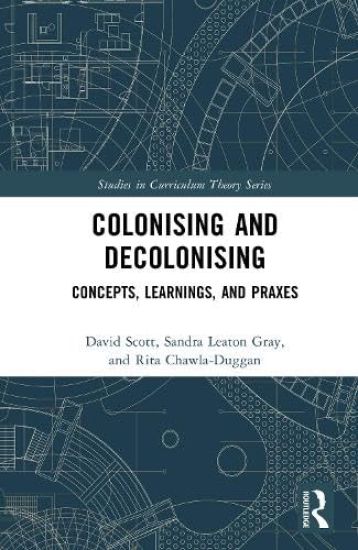
Colonising and Decolonising argues for a decolonised and ethicised curriculum. Grounded in an interdisciplinary approach, it draws upon the fields of history, sociology, education, anthropology, philosophy, indigenous studies, and more, to allow a nuanced and multifaceted exploration of the subject matter. Focusing on the concepts and practices of coloniality and decoloniality, it uses this focus as a framework for positioning concepts as acquired dispositions in the way we live. Philosophical topics addressed include: concepts and descriptors, knowledge, facts and values, free will and volition, coloniality, decoloniality, curriculum, sapience, strong normative evaluations, pedagogy, rationality, freedom, ethics, learning practices, thinking, ecology, imaginative possibility, and inclusion. A robust and erudite exploration of the imperative of decolonisation, this volume will appeal to scholars and researchers across a broad range of disciplines including specialist fields of education research, decolonial theory, sociology, epistemology, and philosophy of education. The Open Access version of this book, available at http://www.taylorfrancis.com, has been made available under a Creative Commons [Attribution-Non Commercial-No Derivatives (CC BY-NC-ND)] 4.0 license.
Using Visual Technology in Educational Ethnography

Using Visual Technology in Educational Ethnography

Rita Chawla-Duggan

TAYLOR FRANCIS LTD
2025
nidottu
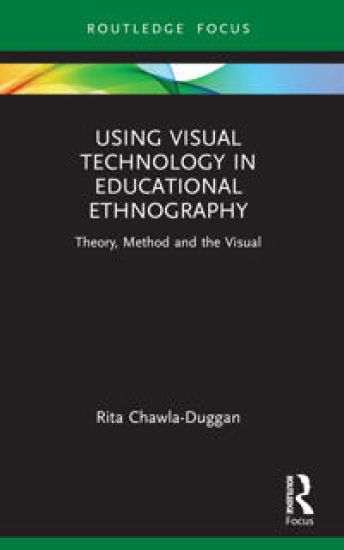
Introducing readers to debates underpinning the uses of visual technology in educational ethnography, this book takes actual research projects across different country contexts to discuss how research designs can use visual technology in educational ethnography; to show connections between theory, method and research problems. The book begins by introducing readers to three epistemological positions underpinning the use of visual technology in social science and educational research: the scientific realist, reflexive, and dialectic. It illustrates the uses of visual technology in the form of digital film and photographs, and how as a source of data, it has potential in developing ethnographic knowledge and representation in a range of educational contexts. The ideas are illustrated through three research projects in the context of classrooms, home environments and intervention work with practitioners. With clear practical applications, this resource considers the part theory plays in research designs, which use visual technology to investigate educational problems. Using Visual Technology in Educational Ethnography is ideal reading for anyone seeking to learn more about the benefits and practicalities of using visual technology within their ethnographic practice.
Using Visual Technology in Educational Ethnography

Using Visual Technology in Educational Ethnography

Rita Chawla-Duggan

TAYLOR FRANCIS LTD
2024
sidottu
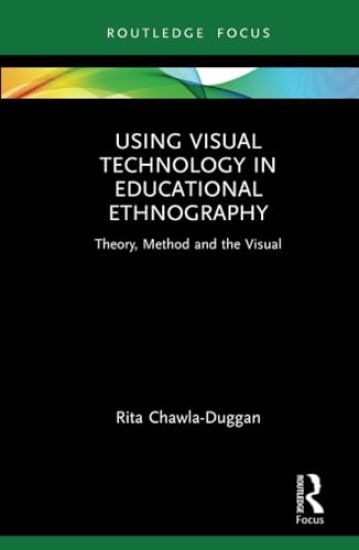
Introducing readers to debates underpinning the uses of visual technology in educational ethnography, this book takes actual research projects across different country contexts to discuss how research designs can use visual technology in educational ethnography; to show connections between theory, method and research problems.The book begins by introducing readers to three epistemological positions underpinning the use of visual technology in social science and educational research: the scientific realist, reflexive, and dialectic. It illustrates the uses of visual technology in the form of digital film and photographs, and how as a source of data, it has potential in developing ethnographic knowledge and representation in a range of educational contexts. The ideas are illustrated through three research projects in the context of classrooms, home environments and intervention work with practitioners. With clear practical applications, this resource considers the part theory plays in research designs, which use visual technology to investigate educational problems.Using Visual Technology in Educational Ethnography is ideal reading for anyone seeking to learn more about the benefits and practicalities of using visual technology within their ethnographic practice.