Kirjojen hintavertailu. Mukana 12 545 052 kirjaa ja 12 kauppaa.

Kirjailija

Ritchie Wood

Kirjat ja teokset yhdessä paikassa: 2 kirjaa, julkaisuja vuosilta 2017-2024, suosituimpien joukossa The Fight for Life. Vertaile teosten hintoja ja tarkista saatavuus suomalaisista kirjakaupoista.

2 kirjaa

Kirjojen julkaisuhaarukka 2017-2024.

The Fight for Life

The Fight for Life

John Dixon; Ritchie Wood

HELION COMPANY
2024
pokkari
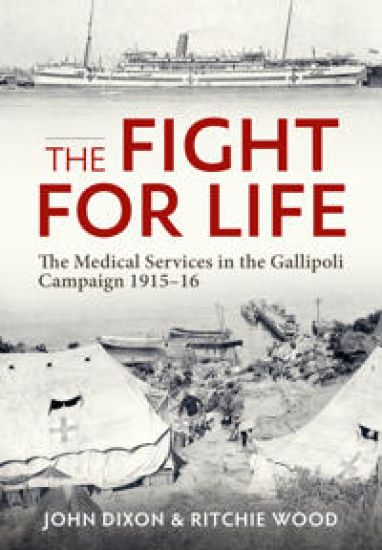
This work looks at the development of the medical services immediately prior to the Great War and its involvement in the failed Gallipoli Campaign of 1915. The medical services were crucial to the whole operation but the planning for their involvement was both late and insufficient and the medical services received considerable criticism both during and after the conflict. This work seeks to explore the actual steps taken in the planning for the campaign and the work carried out by the medical services at each stage of the campaign. The work of the medical officers at each stage of the evacuation of the wounded is considered together with the importance of nursing care in both the Hospital Ships and base hospitals. At the start of the campaign casualties were mainly battle casualties but as it developed the were a large number of sick caused by diseases such as dysentery and enteric fever. Much of this was related to poor sanitation, lack of water and the ever present nuisance of flies. The causes of the diseases are examined and considered in the light of the overall lack of success of the initial landings which prevented the more usual development of sanitation, rest camps and base hospitals. The development of base hospitals is considered in respect of the increasing casualties arriving from the battlefield and the development of such hospitals in Egypt and later in Malta is considered in some detail. Early planning for such hospitals underestimated the casualty figures and this was also a direct result of the lack of success of the first phase of the campaign. The use of hospital ships for transporting the wounded is examined together with the oft criticized use of transports or "Black Ships" for the same purpose. These ships were a vital link in the treatment of the wounded and sick of the peninsula and in many cases they were forced to act as floating casualty clearing stations as their staff treated thousands of casualties, moving some to hospitals at both Lemnos and Imbros before heading for the base hospitals in Alexandria, Cairo or indeed Malta. The importance of nursing care on these ships is considered in some detail as nurses struggled to cope under adverse conditions of shortages of equipment, food and, all too frequently, on the shortage of water. The winter storms are considered from the medical standpoint since these storms added great stress to a system that was working to cope with the day to day casualties arising on the peninsula. The casualties caused by the blizzard almost overwhelmed an overworked service. The role played by the medical services in the evacuation of the peninsula is considered and the organization required for removal of casualties during the preparation for the evacuation cannot be overstated. Finally, a short analysis of the findings of the Dardanelles Commission as it applies to the medical services is given.
Miners at War 1914-1919

Miners at War 1914-1919

Ritchie Wood

Helion Company
2017
sidottu
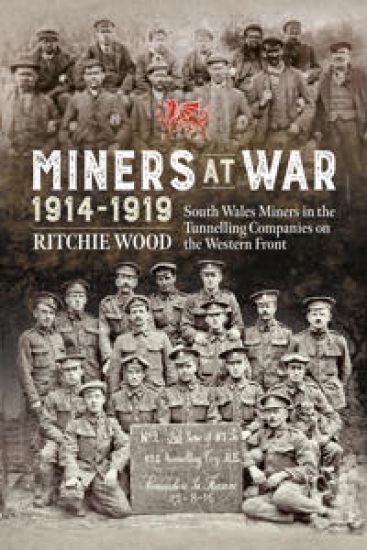
The author’s compilation of a unique register identifying those individual South Wales miners who served in the tunnelling companies has allowed a remarkable story to be told. For the first time, the lives of individual South Wales miners are highlighted from pre-war mining days: their very personal contribution within the tunnelling companies, to the resting places of those who did not survive the war - and, for the survivors, their ultimate despatch home. The underlying theme is of an indefatigable band of men, together with like-minded miners from other British coalfields, asked to carry out multi-tasked duties associated with a form of military mining not foreseen prior to the outbreak of war. Before a major battle, these men constructed large underground dugouts to house troops away from enemy shell fire. In exploding huge mines under German lines immediately before the British attack, they aided the advancing infantry in causing death and confusion in the German lines. During the British advance in 1918, they became experts in the dangerous work of defusing enemy booby-traps, delay-action and landmines in front of the advancing troops. They showed all the resolution, fortitude and determination - if not sheer bloody-mindedness - to see the job through; so reminiscent of the miner at home struggling to earn a decent rate of pay in the most arduous of conditions. There was a price to pay... Details are given of the 207 miners who died whilst on active service and of how many others were repatriated after gunshot wounds, gas poisoning or ill-health. Accounts are given of miners entombed underground as a result of enemy explosions; medals awarded for acts of bravery when attempting to free trapped miners; and of those taken as prisoners of war when the enemy broke into British workings. Old men and young boys lied about their ages to gain acceptance into the tunnelling companies - and suffered the harsh consequences. A unique investigation such as this not only acknowledges the miners’ personal contribution as tunnellers, but also serves as a scholarly and novel addition to the existing literature concerning the history of the Great War, its tunnelling companies, South Wales, its coalfield and the lives of its miners. There can be little doubt that this work will, in years to come, establish itself as a standard text in the history of military mining not only in a specific sense, but also as a work on the Great War in general.