Kirjojen hintavertailu. Mukana 12 390 323 kirjaa ja 12 kauppaa.

Kirjailija

Rob Hoole

Kirjat ja teokset yhdessä paikassa: 5 kirjaa, julkaisuja vuosilta 2012-2022, suosituimpien joukossa Last of the Wooden Walls. Vertaile teosten hintoja ja tarkista saatavuus suomalaisista kirjakaupoista.

5 kirjaa

Kirjojen julkaisuhaarukka 2012-2022.

Send Some King's Ships

Send Some King's Ships

David Bruhn; Rob Hoole

Heritage Books
2022
pokkari
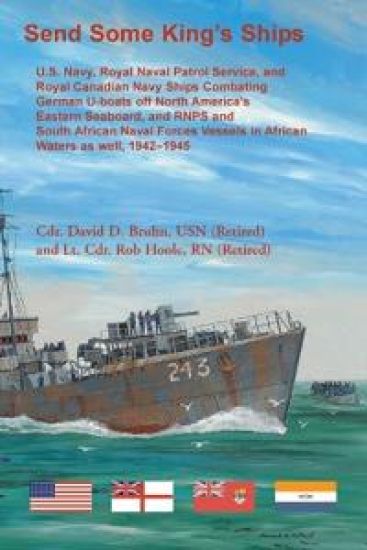
In January 1942, following the United States' entry into WWII, German U-boats began a reign of terror off America's Eastern Seaboard; over the next several months, sinking hundreds of ships almost at will. With the combatant ships of the then-small U.S. Navy, spread thin in distant theaters, Vice Admiral Andrews desperately sought vessels to protect the coast. Those available consisted of Navy remnants of World War I, private yachts and fishing vessels hastily obtained and armed, and a few small Coast Guard cutters. This force was insufficient to protect major ports, let alone escort merchantmen. Andrews needed help, and got it when Great Britain sent twenty-four King's ships to America to operate under his command. Eventually, with a gradual increase in the numbers of aircraft and ships available to search for and find U-boats, the enemy moved on to South African waters where the hunting was easier. The eighteen remaining King's ships followed, and began anew, to assist a small, unprepared Navy to combat the deadly menace. One hundred, thirty-two photographs, maps and diagrams; appendices; a bibliography; and an index to full names, places, and subjects add value to this work.2022, 6x9, paper, index, 398 pp
Enemy Waters

Enemy Waters

David Bruhn; Rob Hoole

Heritage Books
2019
pokkari
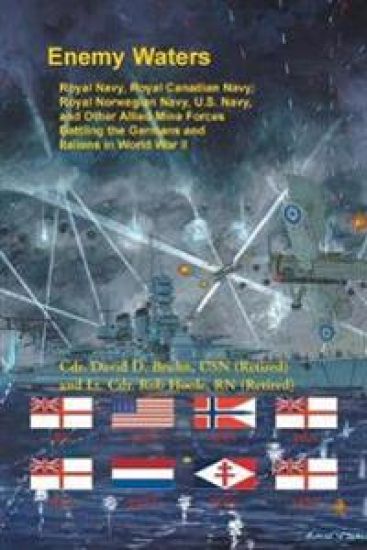
When Britain declared war on Germany in September 1939, the Royal Navy was deficient in minelayers needed to try to hold enemy forces at bay and out of its home waters. Turning first to the Merchant Navy, it requisitioned a liner and two ferries for this use, and a dozen destroyers and submarines were also converted to carry mines. Later, six fast minelaying cruisers joined the force. When Italy entered the war on the Axis side in June 1940, the situation became dire. As U-boats continued to sink shipping in the North Sea and around the British Isles, the Italian Fleet and German and Italian Air Forces controlled the central Mediterranean. Royal Air Force Bomber and Coastal Command planes took up mining, as did old Swordfish biplanes of the Fleet Air Arm. Joining in the fight were units of exiled navies, including the Dutch minelayer Willem van der Zaan, Free French submarine Rubis, and the Norwegian 52nd Motor Launch Flotilla. U.S. Navy mine forces supported the invasion of French North Africa in late 1942, subsequent landings in Italy, and the invasions of Normandy and southern France. The Canadian 31st Minesweeping Flotilla was at Normandy, and joined in later operations. Enemy Waters puts readers in the heart of the action. One hundred and forty-five photographs, maps, and diagrams; appendices; and an index to full-names, places and subjects add value to this work.
Nightraiders

Nightraiders

David Bruhn; Rob Hoole

Heritage Books
2018
pokkari
As war with Japan was imminent, the British laid minefields off Hong Kong and Singapore; the Dutch in the Netherlands East Indies; and the Australians off New Zealand and Australia, in an attempt to prevent enemy invasion. Ships hastily converted to this task were referred to as "night raiders." Duty aboard a "floating ammunition dump" was hazardous enough; missions carried out under the cloak of darkness increased the odds of survival in enemy waters. As MacArthur, Halsey, and Spruance's forces advanced toward Japan, minesweepers worked with "night raiders"--clearing waters off landing beaches, while minelayers strove to deny the enemy freedom of the sea. Australian seaplanes ("Black Cats") flew long, perilous night-missions to mine Japanese harbors, and British submarines and planes joined in the attack on shipping. Late in the war, USAAF bombers ringed the Japanese home islands with thousands of mines. When hostilities ended, war-weary "sweep sailors" remained in Asian waters--ridding the sea of "shipkillers." The little-known efforts of these valiant men are illuminated in this rare look into history. One hundred and forty-four photographs, maps, and diagrams; appendices; and an index to full-names, places and subjects add value to this work.