Kirjojen hintavertailu. Mukana 12 390 323 kirjaa ja 12 kauppaa.

Kirjailija

Robbie Duschinsky

Kirjat ja teokset yhdessä paikassa: 6 kirjaa, julkaisuja vuosilta 2016-2025, suosituimpien joukossa Mentalizing and Epistemic Trust. Vertaile teosten hintoja ja tarkista saatavuus suomalaisista kirjakaupoista.

6 kirjaa

Kirjojen julkaisuhaarukka 2016-2025.

Developments in Attachment Research

Developments in Attachment Research

Robbie Duschinsky

Oxford University Press
2025
sidottu
This is an open access title available under the terms of a CC BY-NC-ND 4.0 licence. It is free to read at Oxford Scholarship Online and offered as a free PDF download from OUP and selected open access locations. Developments in Attachment Research explores the contributions of several research groups in developmental science that have shaped the study of attachment and caregiving in recent decades, each with a different image of the history of attachment research, of the nature of attachment, and why and how attachment research might be valuable. In tracing changes in attachment theory over time, the book examines the development of scientific evidence and breakthroughs. The book also examines attachment research within developmental psychology as a culture, considering its leadership, kinship structures, symbols, conflicts, points of entry or exit, and the pressures and opportunities to which it has responded or failed to respond.

The Psychology of Attachment

The Psychology of Attachment

Robbie Duschinsky; Pehr Granqvist; Tommie Forslund

TAYLOR FRANCIS LTD
2023
sidottu
What do we actually mean by ‘attachment’? How do different caregiving styles impact attachment in children? How do early caregiving experiences impact later development? The Psychology of Attachment is an essential introduction to attachment, offering an accessible explanation of the theory, unpicking common misunderstandings, and providing a balanced overview of key research findings.Topics covered include the following:The development of attachment during the first few years of lifeThe impact of different caregiving behaviours on children’s attachment relationshipsThe influence of attachment relationships on children’s behaviour and developmentThe development of attachment relationships from infancy to adulthoodAttachment in romantic relationships and religionAttachment-based interventionsThis unique book introduces the reader to new ways of thinking about the role of relationships, caregiving, and child development, and the way in which they shape our lives.
The Psychology of Attachment

The Psychology of Attachment

Robbie Duschinsky; Pehr Granqvist; Tommie Forslund

TAYLOR FRANCIS LTD
2023
nidottu
What do we actually mean by ‘attachment’? How do different caregiving styles impact attachment in children? How do early caregiving experiences impact later development? The Psychology of Attachment is an essential introduction to attachment, offering an accessible explanation of the theory, unpicking common misunderstandings, and providing a balanced overview of key research findings.Topics covered include the following:The development of attachment during the first few years of lifeThe impact of different caregiving behaviours on children’s attachment relationshipsThe influence of attachment relationships on children’s behaviour and developmentThe development of attachment relationships from infancy to adulthoodAttachment in romantic relationships and religionAttachment-based interventionsThis unique book introduces the reader to new ways of thinking about the role of relationships, caregiving, and child development, and the way in which they shape our lives.
Mentalizing and Epistemic Trust

Mentalizing and Epistemic Trust

Robbie Duschinsky; Sarah Foster

Oxford University Press
2021
sidottu
This is an open access title available under the terms of a [CC BY-NC-ND 4.0 International] licence. It is free to read at Oxford Clinical Psychology Online and offered as a free PDF download from OUP and selected open access locations. The theory of mentalizing and epistemic trust introduced by Peter Fonagy and colleagues at the Anna Freud Centre has been an important perspective on mental health and illness. Mentalizing and Epistemic Trust is the first comprehensive account and evaluation of this perspective. The book explores twenty primary concepts that organize the contributions of Fonagy and colleagues: adaptation, aggression, the alien self, culture, disorganized attachment, epistemic trust, hypermentalizing, reflective function, the P factor, pretend mode, the primary unconscious, psychic equivalence, mental illness, mentalizing, mentalization-based therapy, non-mentalizing, the self, sexuality, the social environment, and teleological mode. The biographical and social context of the development of these ideas is examined. The book also specifies the current strengths and limitations of the theory of mentalizing and epistemic trust, with attention to the implications for both clinicians and researchers. This book will be of interest to historians of the human sciences, developmental psychologists, and clinicians interested in taking a broader perspective on psychological theory and concepts.
Cornerstones of Attachment Research

Cornerstones of Attachment Research

Robbie Duschinsky

Oxford University Press
2020
sidottu
This is an open access title available under the terms of a [CC BY-NC-ND 4.0 International] licence. It is free to read at Oxford Clinical Psychology Online and offered as a free PDF download from OUP and selected open access locations. Attachment theory is among the most popular theories of human socioemotional development, with a global research community and widespread interest from clinicians, child welfare professionals, educationalists and parents. It has been considered “one of the most generative contemporary ideas” about family life in modern society. It is one of the last of the grand theories of human development that still retains an active research tradition. Attachment theory and research speak to fundamental questions about human emotions, relationships and development. They do so in terms that feel experience-near, with a remarkable combination of intuitive ideas and counter-intuitive assessments and conclusions. Over time, attachment theory seems to have become more, rather than less, appealing and popular, in part perhaps due to alignment with current concern with the lifetime implications of early brain development Cornerstones of Attachment Research re-examines the work of key laboratories that have contributed to the study of attachment. In doing so, the book traces the development in a single scientific paradigm through parallel but separate lines of inquiry. Chapters address the work of Bowlby, Ainsworth, Main and Hesse, Sroufe and Egeland, and Shaver and Mikulincer. Cornerstones of Attachment Research utilises attention to these five research groups as a lens on wider themes and challenges faced by attachment research over the decades. The chapters draw on a complete analysis of published scholarly and popular works by each research group, as well as much unpublished material.
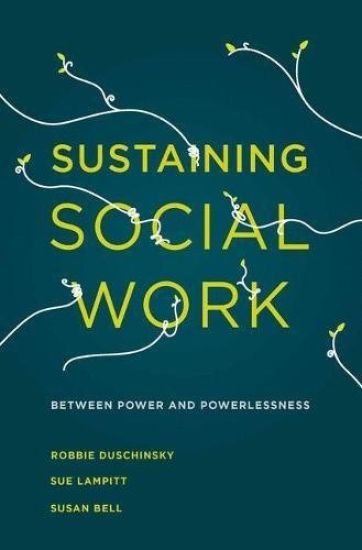
Sustaining Social Work

Sustaining Social Work

Robbie Duschinsky; Sue Lampitt; Susan Bell

Red Globe Press
2016
nidottu
Social work is a profession under strain, and practitioners report finding the role increasingly challenging. What can sustain social work in these times? How can social workers sustain themselves in the role? How can they derive confidence and meaning from what they do? In addressing these questions, Sustaining Social Work is a source of understanding and support for professionals struggling with the tensions of practice. Accessible and engaging , it explores the fallout that results from social workers experiencing these tensions, including feelings of powerlessness, responsibility, optimism and cynicism. Drawing on ideas from social theory and the social sciences, it puts forward a model of sustainable social work that will help practitioners not just cope but flourish – even in the context of ongoing crises. An enlightening, uplifting read in a difficult and uncertain time for the profession, Sustaining Social Work addresses the challenge of finding sustenance and consolation within day-to-day practice, enriching it beyond the short-term.